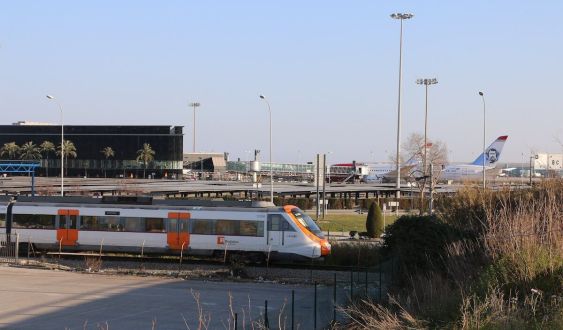
Rejuvenate the fleet, increase capacity, and improve service. Under this premise, Renfe has ordered the construction of a total of 101 trains that will be allocated to Rodalies, both to renew old units and incorporate new ones into the network. This acquisition represents the largest purchase of railway rolling stock in Renfe's history in Catalonia, with a global investment exceeding 1,000 million euros.
The purchase of 101 trains is part of the Rodalies Plan, endowed with more than 6,300 million euros to reinforce this public transport service by 2030. The intense investment effort must serve to increase the offer and be able to respond to the goal of 600,000 daily users, 50% more than currently. The plan will also allow reducing travel time and improving punctuality, accessibility, and the intermodality capacity of the network.
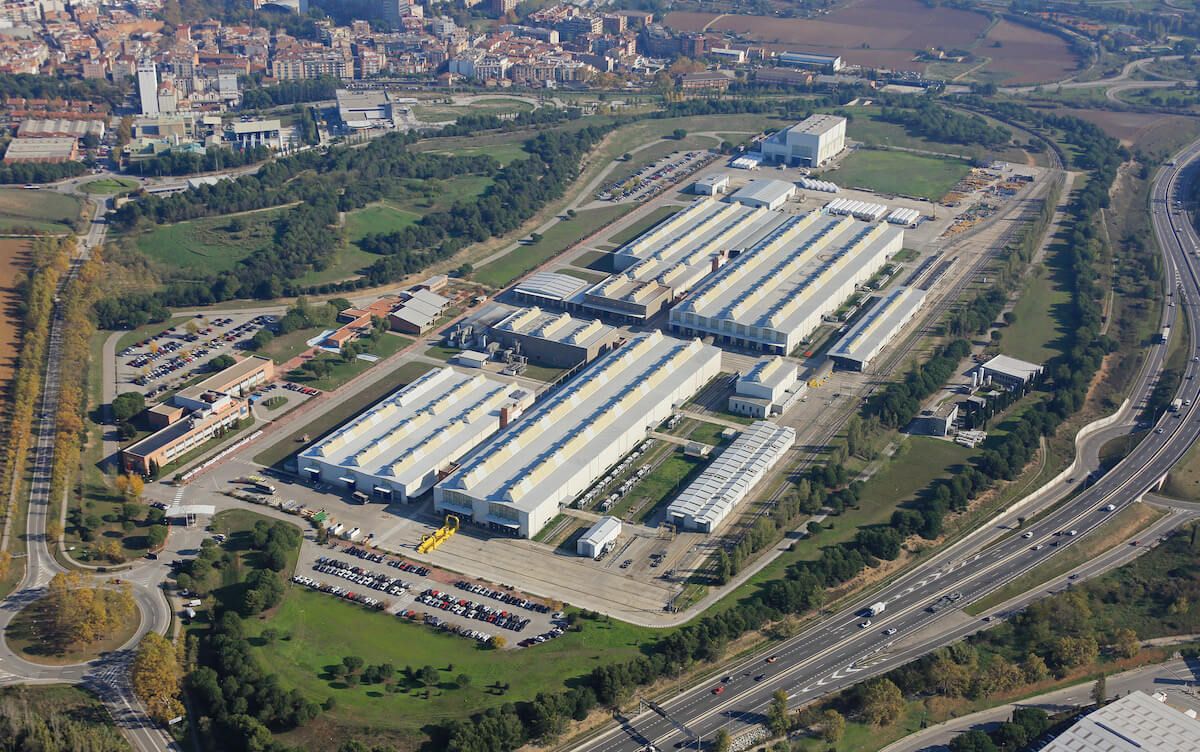
Renfe's budget for the new Rodalies trains stands at a global investment exceeding 1,000 million eurosThe largest purchase of Renfe trains in Catalonia will be distributed between manufacturers Alstom and CAF.Thus, not only will the Rodalies service be improved, but Catalan industry will also be strengthened.The Alstom plant in Santa Perpètua de Mogoda will beone of those responsible for executing Renfe's mega-order, reaching its historical maximum of activity after the halt and the difficulties it experienced with the previous economic crisis. To do this, it will have to reinforce the workforce at the Vallès factory. Last year, it hired 200 new professionals and this year it plans to add 150 more. In addition, it will also impact the local fabric, as the multinational has a portfolio of 325 suppliers to whom it commissions batches of 200 million euros annually.
The Santa Perpètua factory, with its origins dating back to the defunct La Maquinista Terrestre y Marítima (MTM) and Macosa, is already transforming to respond to a large order that is planned years in advance, taking into account that it goes through various phases of design and construction, in addition to multiple validation tests. The plant is expected to reach an annual work capacity of 1 million hours between 2025 and 2026, when the project for manufacturing new high-capacity trains for Renfe is in full swing. The first deliveries are expected for 2025.
Alstom's Santa Perpètua de Mogoda plant will be one of those responsible for executing Renfe's mega-order, reaching its historical maximum of activityThe acquisition of 101 trains for Rodaliesis integrated into an investment by Renfe of up to almost 4,000 million euros in new units for all of Spain, with orders also for Stadler and CAF. The railway company is leading the most ambitious bid in the purchase of rolling stock in recent decades, with the aim of contributing to economic recovery after the pandemic and strengthening the fight against the climate crisis. In this sense, the use of public transport in Renfe services annually avoids the emission of 1.4 million tons of CO2, taking 90 million cars off the roads and, in addition, saving 500 million euros in external costs.
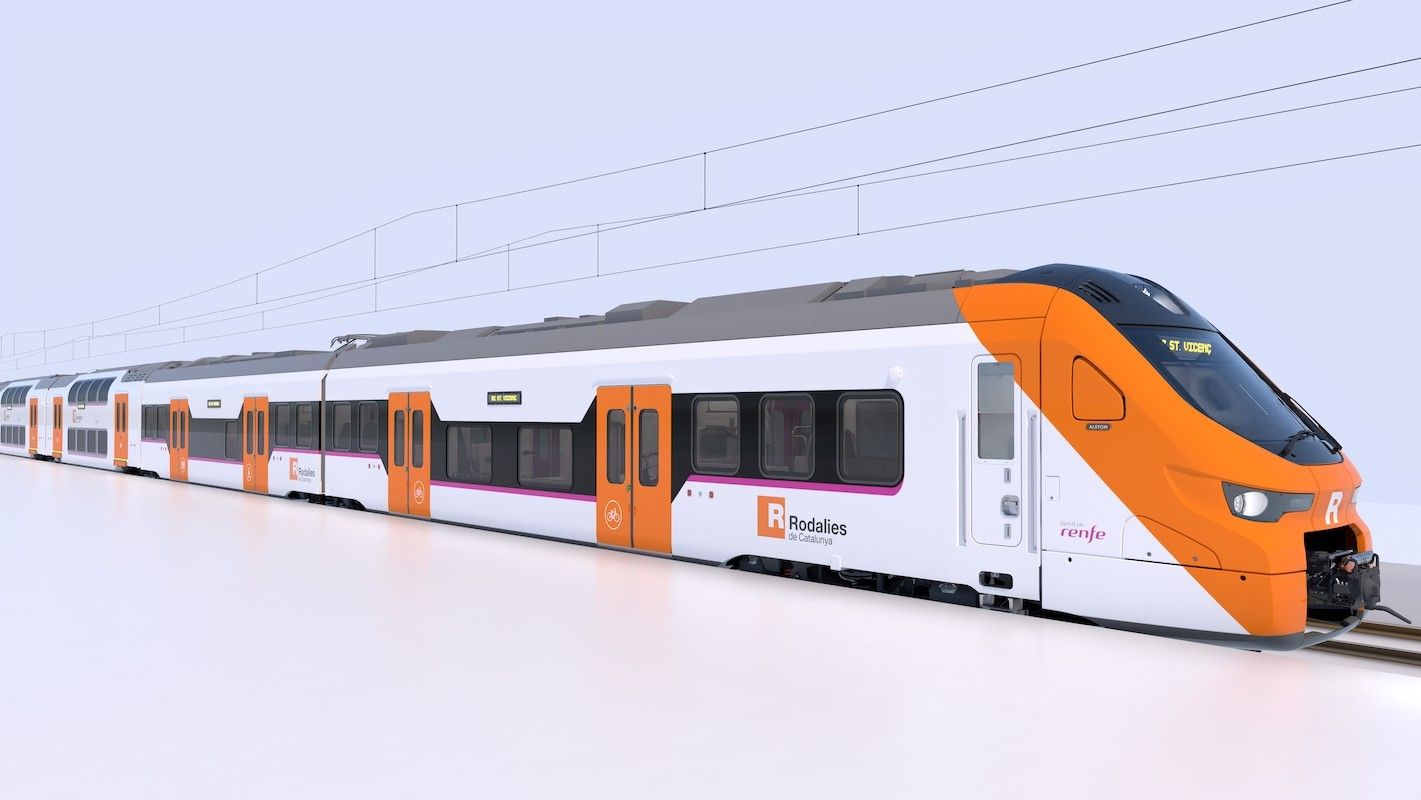
This is what the Rodalies trains manufactured by Alstom will be like
The new units to be manufactured in Santa Perpètua will be equipped with state-of-the-art equipment that will mean an improvement in network reliability and service punctuality. In addition, they will have technology designed to collect the thousands of data emitted by the entire fleet every second, which will allow real-time decisions to be made more efficiently.
More reliable and punctual trains that will also be more comfortable. With a length of 100 meters, the vehicles will consist of six cars, with four single-deck and two double-deck. They will have wide vestibules and 12 doors on each side, homogeneously distributed, which will speed up passenger flows and reduce stopping time at stations.
The future trains will have more than 10 doors on each side, which will reduce stopping time at stationsBut that's not all. The future trains will have Wi-Fi connection inside and will have multifunctional spacesto leave bicycles, suitcases or strollers. They will also be accessible to people with reduced mobility, with spaces specifically designated for PRM chairs. In fact, the inclusive design has had the advice of the ONCE foundation.
With environmental sustainability very much in mind, the units that leave Alstom's Vallès plant will have been developed entirely following ecodesign criteria. This applies both to the choice of raw materials and to the conceptualization of traction systems. But also in pursuing the greatest possible energy efficiency during the manufacturing process and in guaranteeing a recyclability rate of more than 98% at the end of the units' useful life, set at 40 years in the case of trains.
Add The New Barcelona Post as your preferred Google source for free
Stay informed with the latest news.
