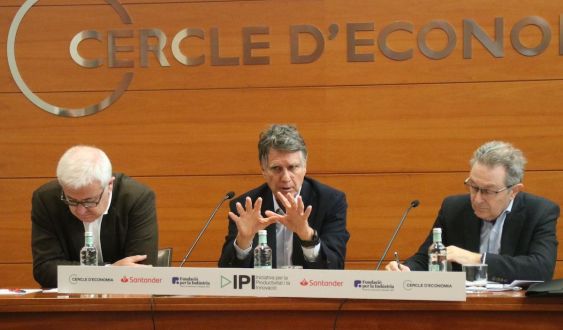
Foster productivity and position Catalonia as a leading European region in innovation by 2030. With this objective, the Cercle d'Economia has launched a think tank that will draw up a plan to advance in this direction. Named the Initiative for Productivity and Innovation (IPI), it will concretize measures and proposals through an independent and transversal advisory council, formed by experts and professionals from diverse fields.
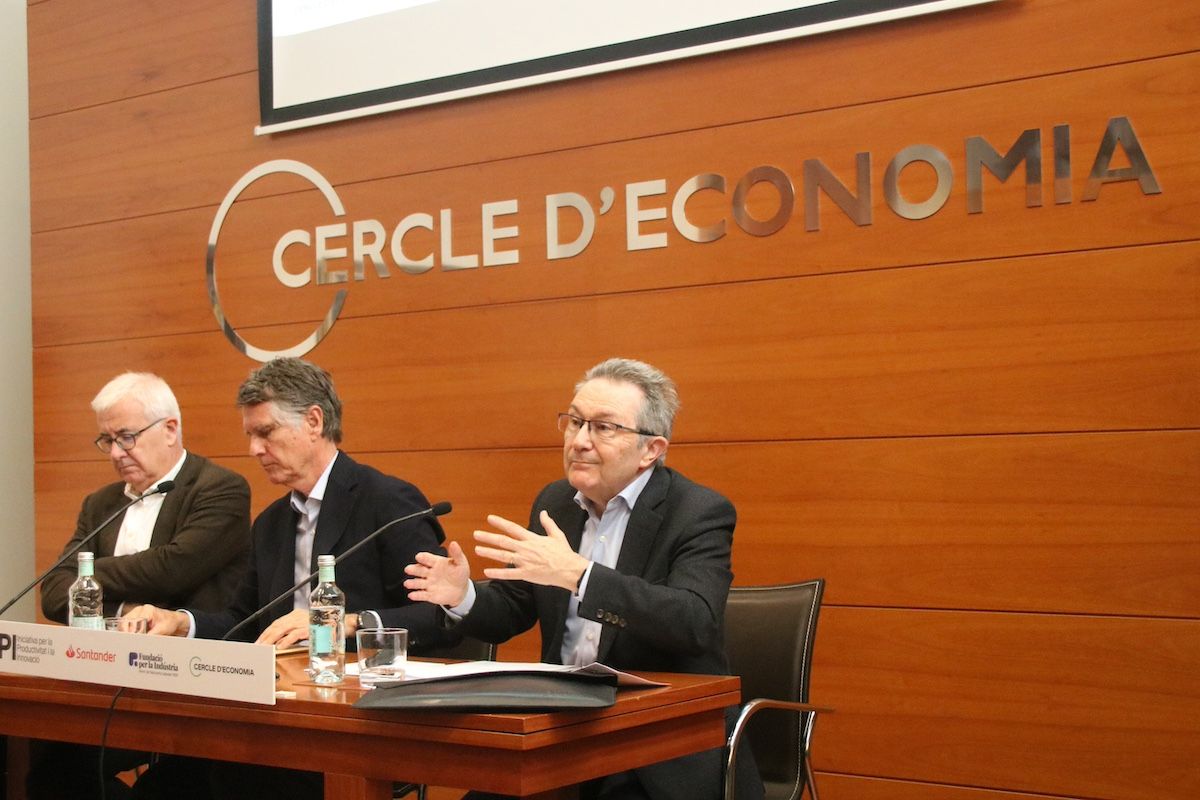
Innovation and productivity are linked to multiple areas and actors, from research centers and universities to business associations and business schools: "All agents have very similar diagnoses, and what is missing is to convert them into measures that transform them," defended the president of the Cercle, Jaume Guardiola, alongside the general director of the institution, Miquel Nadal, and IESE professor Xavier Vives.
To implement these transformative measures that boost productivity and innovation, the IPI will work to identify key areas that "can be catalytic and have a relevant impact" in this regard, according to Nadal. In addition, it prioritizes strengthening the transfer from the university sector to business, as well as promoting disruptive innovation and reversing the deficit of professionals in the scientific and technological fields. The Cercle also proposes to do so by strengthening the connection with the rest of the State and the EU: "The IPI wants to be a window for Catalonia and Catalan companies towards Europe and Spain," added Nadal, who defended that the institution faces the challenge "having accredited the capacity for dialogue with the administration."
The Cercle wants to act as a think tank, generating knowledge from within the institution itself, which in turn will have effects on the Catalan economy. In this sense, the IPI "could be the embryo" of this objective, as Guardiola assessed. And the initiative aspires to go further, as Nadal highlighted: "The IPI wants to have an impact on public policies, so it wants to be a think tank, but also an action tank."
With this objective, the initiative aims to bring together the diversity of actors linked to innovation and productivity improvement through an initiative that aspires to be an "umbrella that brings together the entire ecosystem and helps to energize it," according to Nadal. Thus, the initiative wants to be a meeting point where "the various actors exchange knowledge, align interests, and collaborate," taking into account institutions as well as research centers, universities, and companies, from large corporations to startups.
To establish how it will act as this meeting point, the IPI has equipped itself with an advisory board that aims to reflect the diversity of this ecosystem. Its 15 members include the CEO of MAT Holding and president of Fira de Barcelona, Pau Relat; the president of the Barcelona Institute of Science and Technology (BIST) and former minister Andreu Mas-Colell; the director of the Barcelona School of Economics, Teresa Garcia-Milà, and the managing partner of the venture capital firm Asabys Partners, Clara Campas, as well as the founder of the Institute of Photonic Sciences (ICFO), Lluís Torner, and the associate director of the Barcelona Supercomputing Center (BSC-CNS), Josep Maria Martorell.
Also part of this independent advisory board are Pear VC investor partner José Luis Agell; entrepreneur Elisenda Bou; Innovation Growth Lab director Albert Bravo; IESE Economics director Núria Mas, and Esade professor Xavier Ferràs. Also on the board are the president of Ametic, Pedro Mier; economist Miquel Puig Raposo; CaixaBank's Director of Spanish Economy, Oriol Aspachs, and CaixaBank's Director of Innovation and Digital Transformation, Mariona Vicens.
The members of this advisory council, constituted on January 27, are working to draw up the IPI's work plan. The activity of this council will be complemented by that of an institutional council that will be created between April and May, and will work with the forecast that the initiative will last for three years, for which it already has funding from Banco Santander and the Fundació per la Industria. Through this initiative, the Cercle wants to play a decisive role in improving innovation and productivity, in a context in which productivity in Catalonia has stagnated in the last decade and has fallen below the state and EU average, and in which the R&D budget must be multiplied to equal that of other European regions, as Vives has detailed.
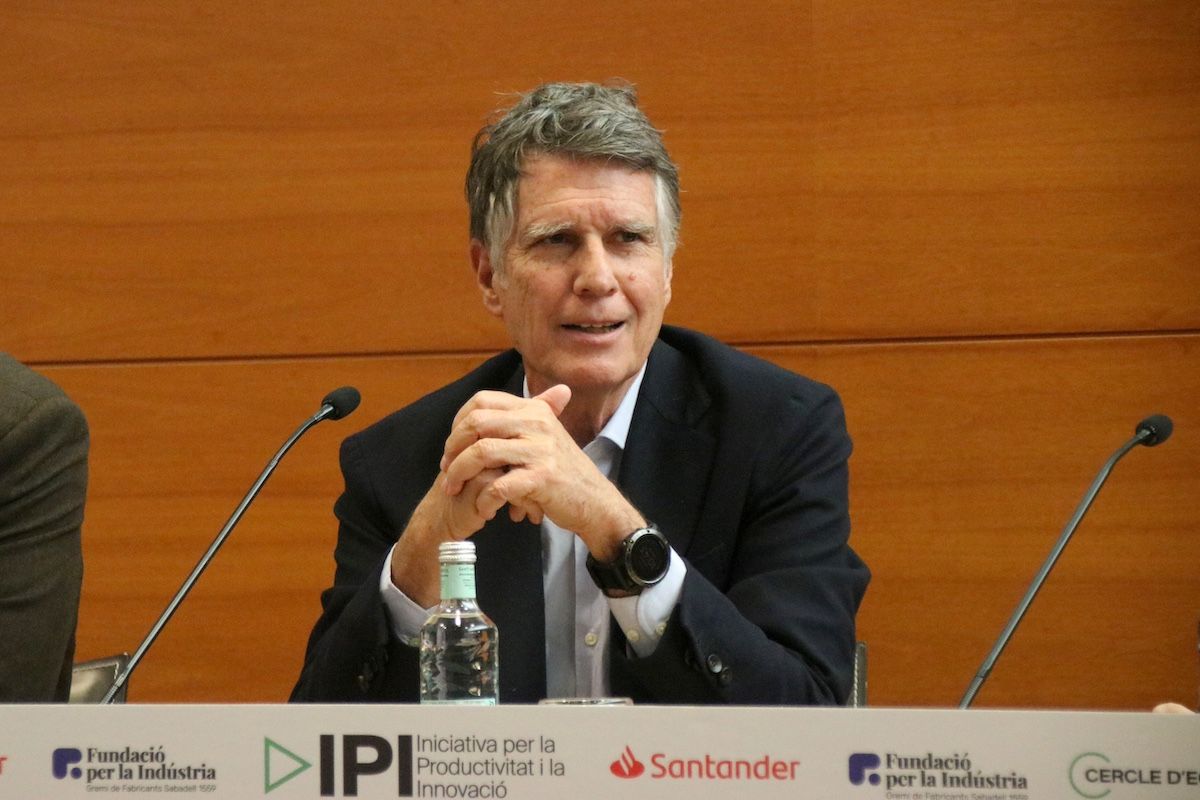
Despite these figures, Guardiola has stressed that the decline in productivity has slowed down in recent years, and has emphasized that it is possible to reverse the situation. In fact, they have pointed out that the announcement by Salvador Illa's Government to mobilize 18.5 billion in the next five years to strengthen Catalonia's economic position can advance in this direction: "It goes in the direction of increasing productivity and innovation," Vives defended. Regarding the debate on the reduction of the working day, the IESE professor pointed out that the measure can lead to an improvement in productivity in some sectors, but also a problem in others: "It is difficult to give a generalized measure, and it would be more appropriate to do it with a collective bargaining process and see the benefits of the measure depending on the sectors and companies."
The model on which the Cercle wants to focus is framed in an economic panorama marked by the trade war unleashed by the President of the United States, Donald Trump, setting tariffs on Mexico, Canada and China. Given the possibility that he will also apply them to Europe, Nadal has called for "a firm and unitary response" from the EU, in the face of a situation that will have effects on the Catalan economy, according to Guardiola: "What any trade war produces is an impact on growth, and that will directly or indirectly reach us."
Add The New Barcelona Post as your preferred Google source for free
Stay informed with the latest news.
