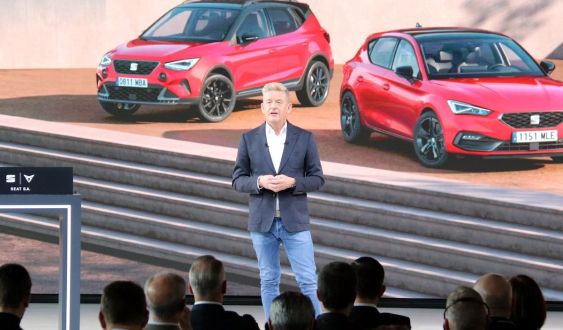
Seat continues to show its resilience, despite the fact that demand for electric cars has not quite taken off and geopolitical uncertainty and Chinese competition are spreading. The car manufacturer based in Martorell has sold more than 558,000 cars in 2024, a 7.5% increase compared to last year, which has led it to register a record turnover of 14.5 billion euros. Despite the historic revenues, profit stood at 522 million euros, about 26 million less than in 2023. Given the good results, employees will receive an extra payment.
"Our ability to grow in such a difficult context demonstrates the strength of our brands, Seat and Cupra," said its CEO, Wayne Griffiths. Especially Cupra, a more expensive brand than Seat that was created in 2018 with the Cupra Ateca and now has seven models. Since then, it has managed to sell more than 800,000 vehicles worldwide, with the forecast of reaching one million units by the end of 2025. Currently, it represents 48% of the Spanish manufacturer's turnover.
Although for years Griffiths had become accustomed to focusing on the new brand, this time he has remembered Seat more, which this year celebrates its 75th anniversary and remains "in good shape," with 310,000 cars sold in 2024. Given this anniversary, the CEO has indicated that, from 2030, it will be decided whether its cars will have an electric version, something now only reserved for Cupra due to its higher margin. "Our focus is on being profitable. With 5% of cars sold in Spain being electric, it is not yet the time to electrify Seat, but I do not rule it out for the future," he said. In addition, he announced the creation of a foundation to encourage new generations in sectors such as culture, sports, and research, giving continuity to already announced initiatives such as support for the Joan Miró Award and alliances such as those it has with director J.A. Bayona and ESCAC.
Beyond a future for Seat that is now beginning to be verbalized, the main cloud for the company this 2025 lies in European tariffs on Chinese cars. This is a measure that affects the company with the Cupra Tavascan, a 100% electric vehicle manufactured at the Volkswagen group plant in Anhui (China). In force since last October, the taxes have had a strong impact on Seat's accounts, preventing its profitability from reaching 5% and staying at 4.4%, having been approved for only three months.
"It's costing us too much money. We cannot continue like this," remarked Griffiths, who pointed out that they are looking for a solution in Brussels throughout this first quarter. According to company calculations, this measure could end up affecting some 1,500 employees. "Protectionism and tariffs do not work," defended the executive, "you gain time but you don't solve the productivity problem." If they remain in place all this year, the company estimates that tariffs will take half of its profits.
In this increasingly polarized world, Cupra's arrival in the United States is also being reviewed, although it remains scheduled for the end of the decade. With Europe generating 90% of its turnover, the automotive company from Baix Llobregat wants to reach the American country and Griffiths assures that tariffs will not change its expansion bet: "Plans have to be long-term."
Pre-series of the first electric cars
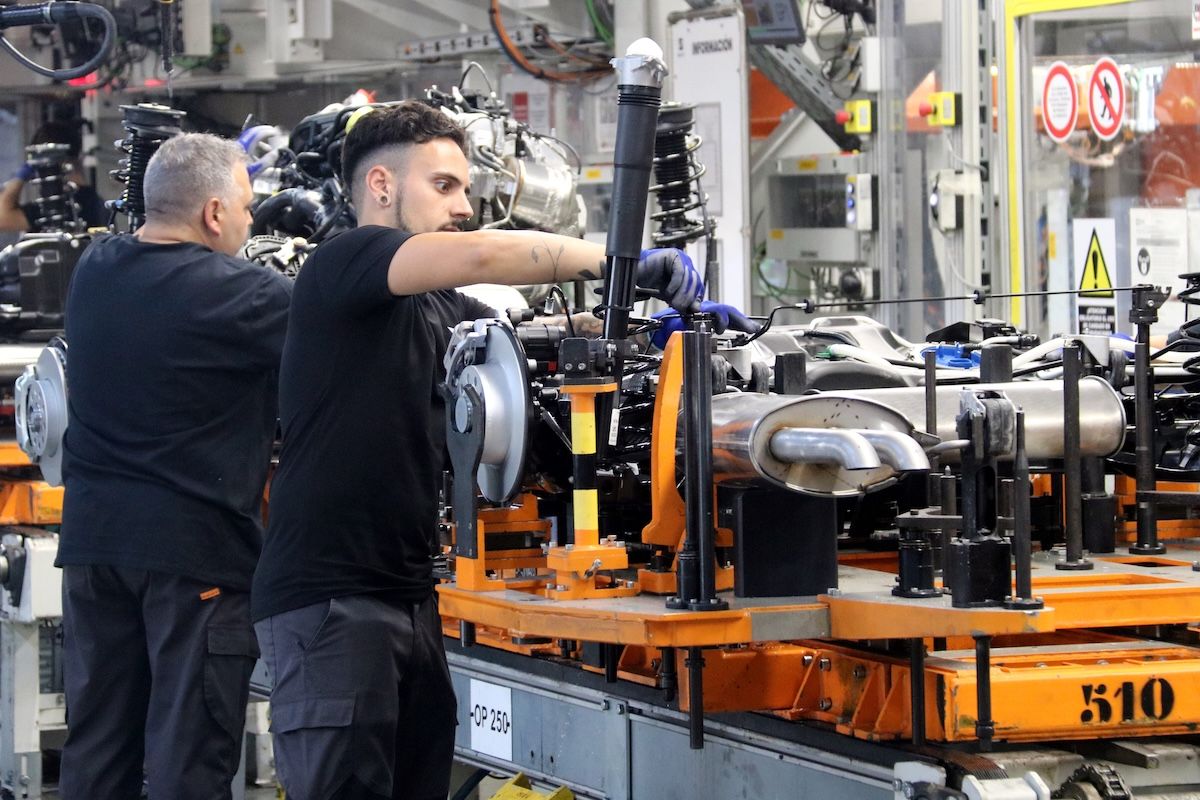
In record time, Seat has built its electric battery assembly plant, where it has invested 300 million euros. With a few months left to complete construction, the automaker will begin manufacturing the first pre-series this week. "It is a historic milestone and a huge step towards the future of the company," remarked Griffiths. The company is investing some 10,000 million euros to adapt its facilities to electrification, with 3,000 million euros staying in Martorell. "There is no alternative to electrification. We are doing our homework and we want others to do the same. If we can, they can too," he warned.
The first batteries will be for the Cupra Raval electric car, which will be globally presented next September in Munich. At maximum capacity, the facilities will be able to assemble 300,000 batteries each year, with a workforce of 500 employees distributed in three shifts. All of them will be previous employees of the company, trained for the new stage.
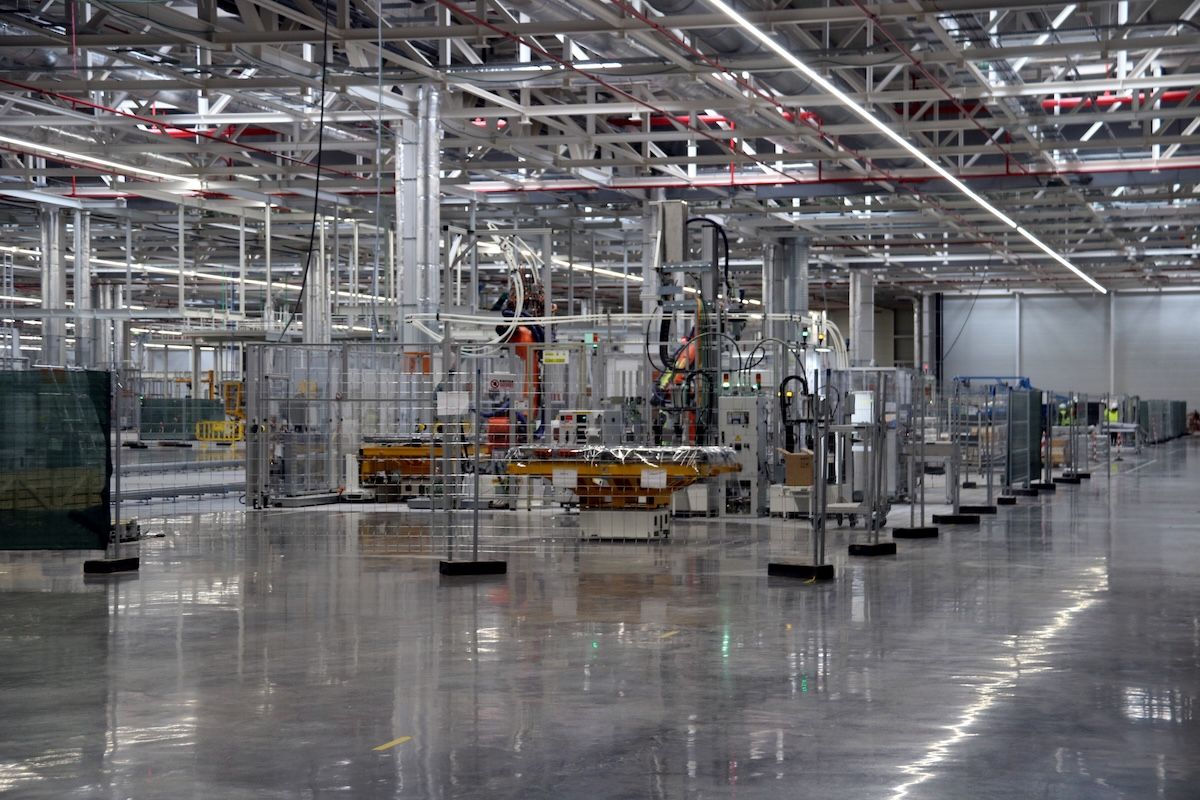
The electric battery cells, manufactured by PowerCo, with gigafactories in Sagunto, Germany, and Canada, arrive at the plant by train. It is in Martorell where they are assembled, considering that each car needs about a hundred cells to form a battery. Their high final weight is one of the advantages of assembling them as close as possible to the assembly lines, considering that each cell weighs two kilos and together they will end up totaling more than 300 kilos, which complicates transport.
Once assembled, the batteries will leave the plant directly via a 600-meter bridge that will connect to the automotive workshops, reaching the corresponding assembly lines. With the arrival of electrification, the three lines of the Martorell plant have been reorganized. Electric cars will be made on line 1, where the Ibiza and Arona were previously made, which have been moved to line 3, where until now only the Audi A1 was manufactured. This year, line 1, with a capacity for about 1,200 cars daily, will focus on producing the pre-series of the two models currently assigned to Martorell, the Cupra Raval and the Volkswagen ID2. Production is expected to begin in series in the first quarter of 2026.
Add The New Barcelona Post as your preferred Google source for free
Stay informed with the latest news.
