
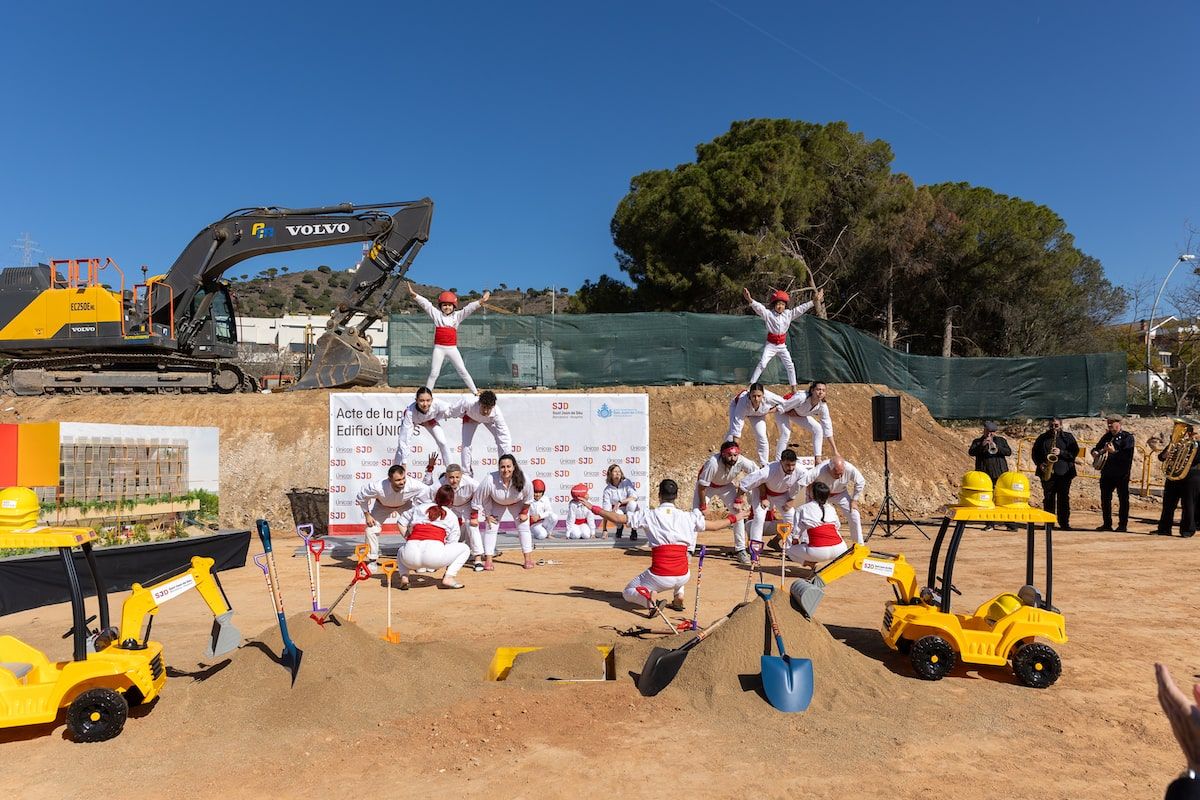
Shovels and excavators have laid the first stone of the future Únicas building, a monographic center for the care and research of rare diseases at Hospital Sant Joan de Déu. And they have done so with a peculiarity: pediatric patients with rare diseases have been primarily responsible for operating the small excavators and have used the shovels to bury what will be the first piece of this center. Unique boys and girls have been the protagonists of an atypical ceremony, and they will also be the protagonists of the future center, which is expected to start operating before the end of 2025.
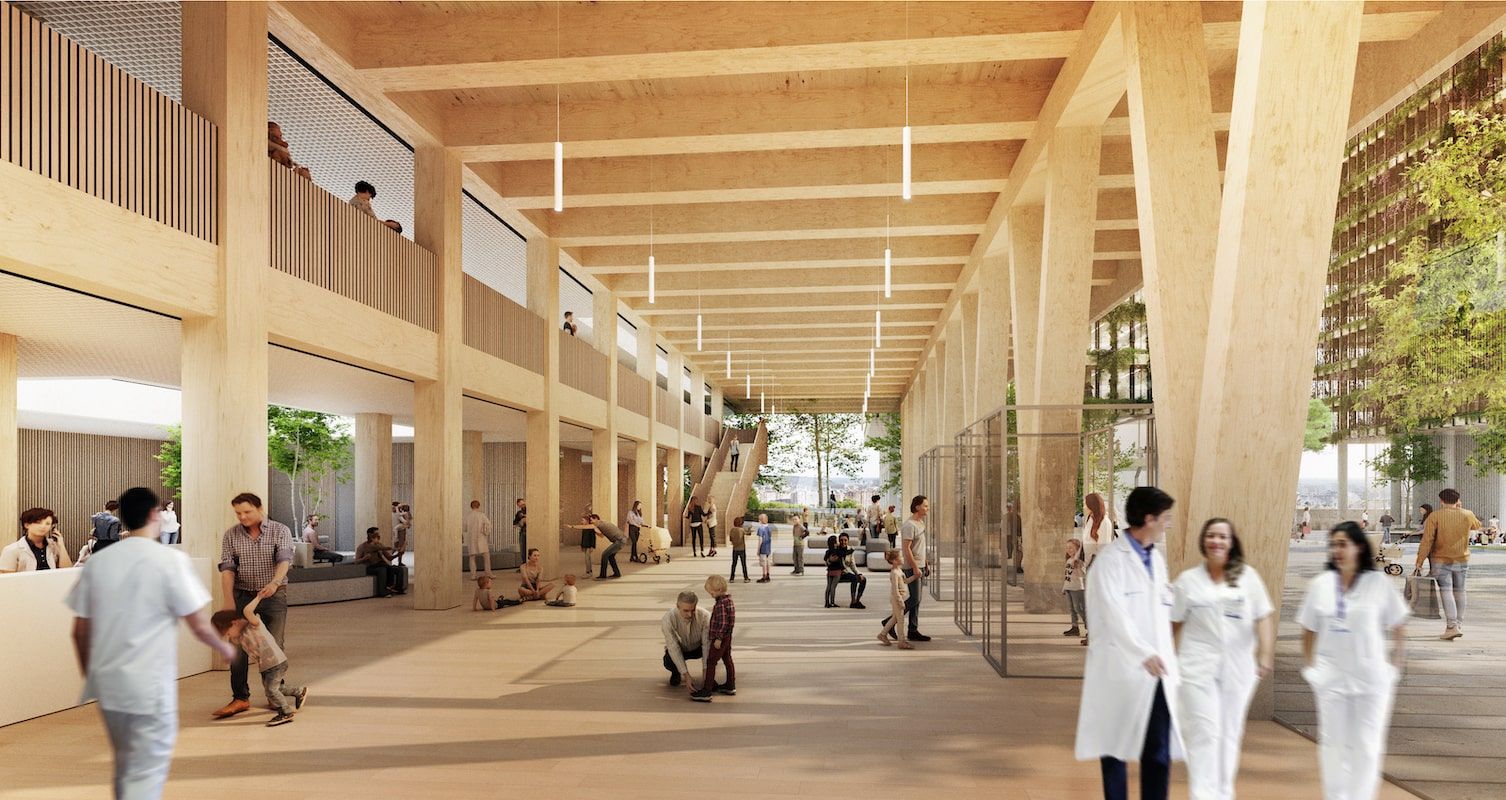
The new building, 250 meters from the hospital a benchmark in pediatrics internationally, will have 13,877 square meters distributed over six floors. In them, it will have all the necessary equipment and spaces to comprehensively care for its patients, and with the aim of facilitating their diagnosis and treatment. The new center will also focus on the research of minority diseases, whose International Day is commemorated on February 29, also an uncommon date.
The center's care spaces have been designed to facilitate that pediatric patients with rare diseases can be visited on the same day and in the same space by professionals from the various areas that must attend to them. The initiative, called one day of care, was launched by Sant Joan de Déu in its current facilities seven years ago for some rare diseases, and has managed to reduce the number of days families have to travel to the hospital. It has also improved patient follow-up, reduced admissions, and facilitated information exchange among professionals.
The center will be built on a plot of land ceded by the Esplugues de Llobregat City Council, and its facade has been designed to offer an image of its function, as it will feature vertical stripes with variable inclinations, in allegory to the geometries found in chromosomes, and spiral-shaped elements, in reference to protein chain structures. The new building is part of the new structures of the urban planning project known as Porta Diagonal, in Esplugues, which foresees the creation of a biomedical campus to accelerate the implementation of emerging technologies focused on the health sector.
To launch this center, the hospital will have the collaboration of the Fundació Privada Daniel Bravo Andreu, as well as the Fundació La Caixa which, through an agreement, will provide recurring funds over the next few years to the Únicas initiative. In addition, the Leo Messi Foundation, the Stavros Niarchos Foundation, and the Stornoway Group have committed to providing funds to partially cover the 42.6 million euro budget that the center will require, half of which is already available. This was explained by the managing director of the Hospital Sant Joan de Déu, Dr. Manel del Castillo, who expressed his conviction that they will secure all the necessary funds to launch this pioneering center.
On this plot that will host Únicas, clowns, music, and a performance by falcons enlivened a ceremony in which children played an unusual leading role. The figures of the Falcons de Barcelona evoked the figure of a network, like the one woven by the Únicas project. The initiative, which encompasses 30 hospitals, aims to expand collaboration between Spanish centers to facilitate the diagnosis and response to rare diseases. The project, now coordinated by the Ministry of Health with regional governments, has 46 million euros in funding linked to European funds, as Del Castillo explained in the Moments Estel·lars series organized by The New Barcelona Post.
The network, through which hospitals already work together, has as its main and ambitious objective the articulation of a platform that brings together information and data on patients with rare diseases from Spanish centers. This platform is expected to start operating by the end of this year, with a clear objective: "To ensure that data moves, not patients," who are often forced to travel to several cities to be treated in different hospitals, Del Castillo recalled.
This shared information platform can be launched once the obstacles involved in integrating all the information systems of the different hospitals are overcome, also taking into account that health is decentralized into 17 different systems in Spain. In this context, the process to articulate the network and launch the platform has not been a bed of roses: "We have walked through many ministries and many general directorates for two years," revealed the hospital's managing director.
Del Castillo has been accompanied on this two-year journey and also at the event by the president of the Spanish Federation of Rare Diseases (Feder), Juan Carrión, who has assured that internationally there is no other project that is at the level of Únicas. In fact, the network of the main pediatric hospitals in Europe, which Sant Joan de Déu precisely presides over, shares the initiative's strategy: "All actors have accepted that this project should be able to scale at a European level, but sharing data between countries is much more complex due to legal issues," Del Castillo lamented.
The new building, 250 meters from the hospital, will have 13,877 square meters distributed over six floorsWhile these legal elements are a stumbling block to sharing vital information to tackle many of these diseases, patients continue to have difficulties accessing an adequate diagnosis and treatment. In Catalonia, 400,000 people are diagnosed with one of these diseases, as estimated by the Minister of Health of the Generalitat, Manel Balcells. The minister recalled that, in the face of these diseases, the Network of Clinical Expertise Units (Xuec) for rare diseases has also been deployed, precisely to exchange information about them and facilitate their approach.
"Today we lay the first stone of a future success," proclaimed the mayor of Esplugues de Llobregat, Pilar Díaz, who praised the work of the hospital and the future hub that will be located in the area and will include a hotel, offices, and this Únicas building. Regarding the property, the Provincial Superior of San Juan de Dios of Spain, Amador Fernández, recalled that "buildings are important, but more important are the people who give them life; they are the stones that sustain them."
And the people who will give life to this future center will be above all doctors, researchers, and, especially, patients and their families. Like Mateo, whose family is still searching at nine years old for the genetic basis of his disease: "There is nothing worse than not knowing what is happening to your child and not knowing what will come or happen; there is no worse feeling than not being able to tell his older sister why he is like this or if he will grow up like her," said his mother, Lluïsa Martínez, who recalled the "hard, lonely, and dark path" that rare diseases entail.
It is a path shared by Arturo's mother, Pilar, who lives in Zaragoza and went through a "calvary" of four years of tests until she achieved a diagnosis, which was finally provided to her at Sant Joan de Déu. Now, she argues that a project like Únicas "can save time and anguish for many families who are currently desperately searching for a diagnosis for their child." It was in the same hospital where, at three years old, Alexandra, who suffers from a minority rheumatic disease, received her diagnosis. "For me, life is like a pizza: my diseases are a difficult slice of the pizza, but they are just a slice," illustrated the young patient. "I hope this project helps other children, so that the disease does not define them, so that it is just a slice of their pizza."
Add The New Barcelona Post as your preferred Google source for free
Stay informed with the latest news.
