
The old world is dying and the new one is slow to appear, and in that chiaroscuro the monsters of history emerge. This famous phrase by the Marxist philosopher and Italian political theorist Antonio Gramsci, which he wrote in his Prison Notebooks in 1930, anticipated the rise of fascism in Europe and can well X-ray the moment we are living in the year 2025. In a very short time we have moved from a multilateral world ---with its imperfections and shortcomings---, to a multipolar, fragmented and much more violent one. A new geopolitical and geoeconomic context characterized by the struggle between the US and China, Russia's aggression against Ukraine and new threats for Europe, the conflict in the Middle East and the genocide in Gaza, the climate and energy crisis, the rise of migrations, growing North-South inequalities, new coups d'état in the Sahel region or the chronification of certain conflicts. All this seasoned with a new layer of complexity provided by the geopolitics of technology and data. The race for chips, AI, cybersecurity and large digital platforms also become new instruments of power and influence.
We live in a world that is mutating very rapidly in geopolitical terms while global value chains and supply chains are being reconfigured at the whim of the new security economy and identity retreat. In this new scenario, the old diplomacy of States led by their foreign ministries and supported by embassies established throughout the world, are no longer enough to defend our interests or those of companies. For its part, the European Union remains anchored in a culture and political forms of a world that is ceasing to exist. Europeans ---and our values--- have been left practically alone in a much more transactional and aggressive world. It is no longer enough to be a declarative or well-intentioned power, one must also be a power from a functional, material and military point of view.
Europe trusted in a globalized world based on open trade and multilateralism. It outsourced its factories to Asia, entrusted its energy sufficiency to Russia, and comfortably sheltered under the US umbrella for security and defense. Today, that world has imploded and forces Europe to catch up on lost time by building strategic autonomy at a frantic pace. We Europeans did the first part of our homework well. We commissioned Mario Draghi to develop a strategy on the future of European competitiveness to curb economic decline against other powers.
Likewise, a second report by former Italian Prime Minister Enrico Letta detailed the measures to be taken on the future of the single market to boost the internal market and European competitiveness. Two years later, we are still thinking and making strategies while our erstwhile ally, the US, reflects in its foreign policy strategic document that Europe faces the disappearance of its civilization for not following its dictates, which are none other than those of the far-right and technological oligarchs.
Despite the complexity of the context, we must react and get to work on building new coherences and alliances. This involves thinking differently, overcoming the traditional approaches of states and their traditional think tanks that are mostly established, financed, and oriented to the interests of their respective capitals. Today, thinking must be done with a European and international dimension. And it is there that Barcelona, as one of the new global reference cities, has the opportunity and the responsibility to take a step forward to position itself as a center for international strategic thinking.
The city has an ecosystem of think tanks in various non-negligible subjects that can allow it to take a leap forward and highlight its capacity to rethink the new world. CIDOB, the Barcelona Centre for International Affairs, founded in 1973 by a group of civil society individuals, has a track record and installed capabilities and is recognized as one of the top 100 think tanks in the world by the Global Go To Think Tank Index. It needs to be strengthened and nurtured, and although institutions have set to work, it is necessary for large Catalan and Spanish companies to get involved in its funding to provide it with the necessary means to exercise strong leadership both in Europe and internationally.
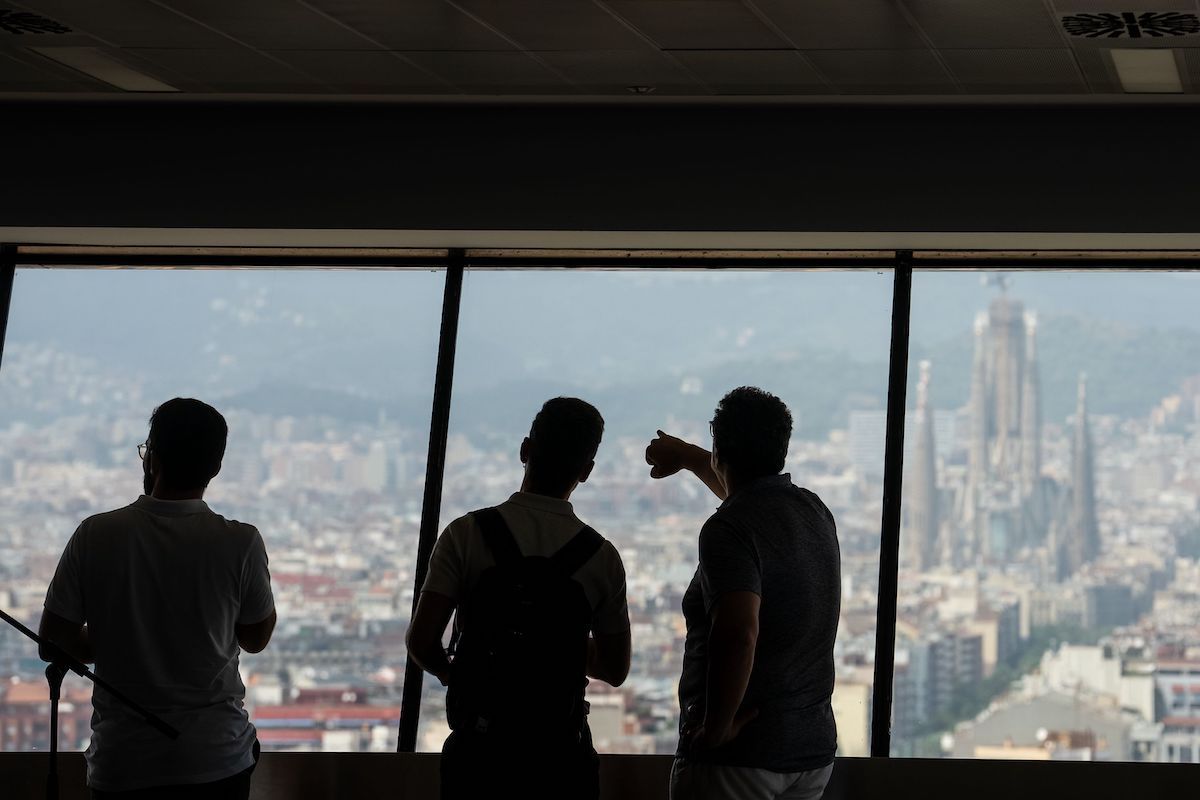
In a world that needs to be reinterpreted, a quality contribution from a global city that is not a state capital can be very useful for a Europe in need of new ideas. The EU needs thinking based on realistic idealism, that is, with global ethical and moral ambition, while taking into account the state of the world and diverse values and interests, distancing itself from attachments and subservience to various national governments. Facing the old and new challenges we confront requires a much more innovative, daring, and creative vision, and Barcelona is a city that quintessentially embodies a series of multiple capitalities and has notable public diplomacy tools such as city networks, economic, cultural, or scientific-technological.
On the one hand, it exercises the capitality of the Barcelona Process and Euro-Mediterranean cooperation, and is home to institutions and networks such as IEMed, the Union for the Mediterranean, or MedCities. It is also a Euro-Latin American reference capital, as demonstrated by the success of the Guadalajara Book Fair, being the headquarters of Casa América de Catalunya, the first to be created in Spain at the beginning of the 20th century and which is pending a headquarters it deserves. The city is also the main gateway from Asia to Southern Europe, with an important Chinese community, as well as direct intercontinental connections and strategic economic and political relations with Singapore, South Korea, India, Japan, or China, being the main headquarters of Casa Asia.
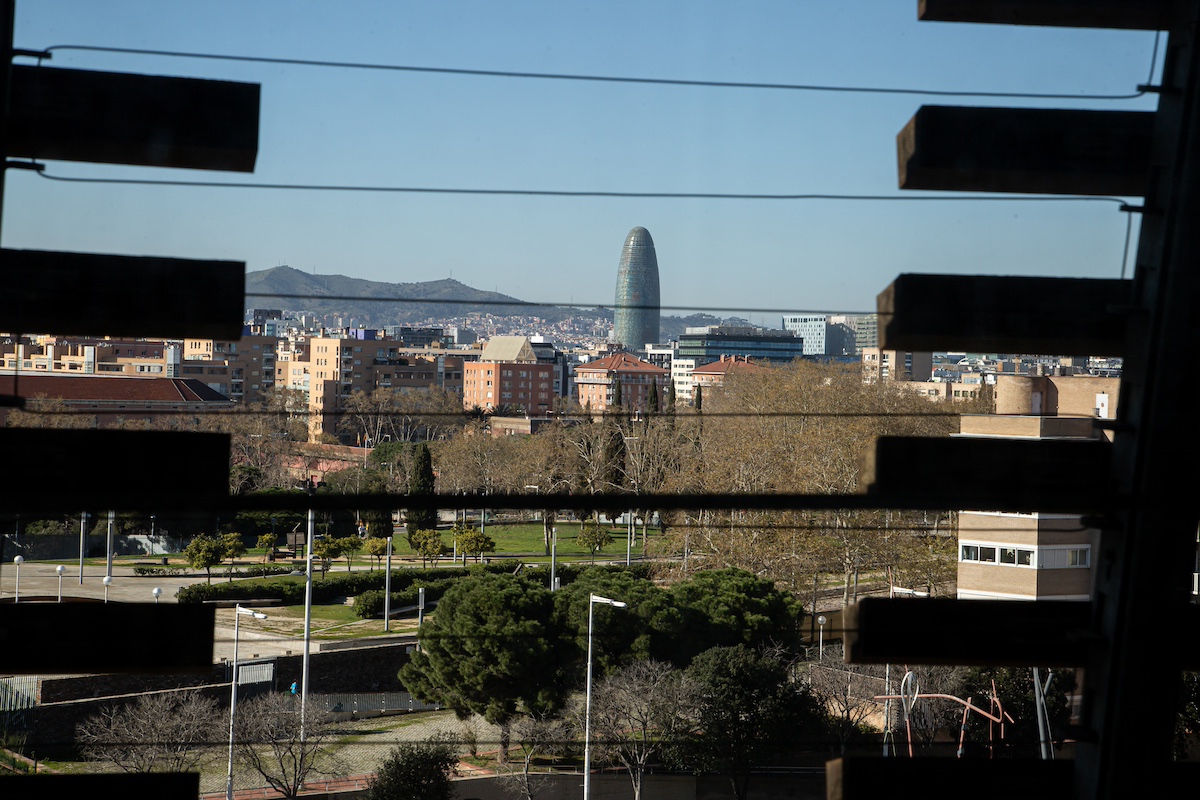
On the other hand, Barcelona has consolidated itself in recent years as a European hub for science, technology, and innovation with world-renowned institutions such as the BSC, globally leading events such as the Mobile World Congress, the Integrated Systems Europe (ISE) or the Smart City World Congress, and a powerful ecosystem of research and science parks. Finally, its educational and associative ecosystem positions it as a hub city that attracts investment, talent, and business networks. The annual Financial Times 2025 ranking of the 100 best European business schools includes three centers from Barcelona: IESE, Esade, and EADA.
It is time, therefore, to reactivate the best of Barcelona's spirit as a reference city that projects dialogue, cooperation, and a capital of the geo-economy of knowledge adapted to the 21st century at a time when countries like the US are driving away and despising a good part of progressive or liberal talent. Using science, technology, culture, or city networks as tools for a new diplomacy based on non-state actors can generate new platforms and dynamics that create strategic ideas and new alliances for Barcelona, Catalonia, Spain, and Europe. If we intelligently combine idealism (human rights, ethics, and democracy) with realism (a world of transactional relationships, the economy of security, and the AI era), among others, we can become one of the world capitals of the club of free cities.
Barcelona has to step up, and jointly with other cities and institutions, generate alternative narratives to the logics of fear, identity retrenchment, and securitization that dominate many geopolitical discourses today. The alternative can be the promotion of new schools and training programs in city diplomacy and global leadership, scaling up existing initiatives such as public policy laboratories that test new solutions to global problems like the climate crisis, the impact of digitalization, the updating of democratic governance, or integrative models for welcoming immigration. We can and must do it, as long as we generate synergies and complicities among all because we work with limited resources. Let's not fall into the temptation of creating "chiringuitos" or capelletes where everyone fights their own battle. It is a time for efficiency, collaboration, and impact, not for self-referential egoisms. Much is at stake, in reality almost everything. If we fail, the new monsters will prevail.
Add The New Barcelona Post as your preferred Google source for free
Stay informed with the latest news.