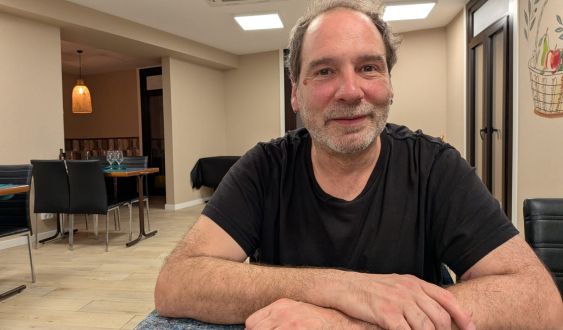
If knocking on wood is really a way to prevent any evil, Òscar Llobet Doroteo has got it right. He has become a carpenter. He has chosen the trade with which his professional path has taken a turn, a desired change, an evolution from the screen as a graphic designer he had been for more than twenty years, to the artisanal work of working with wood to create furniture and tools that improve spaces and solve needs. With his hands.
Plastic arts, drawing, painting and sculpture, had always interested him, and this helped him choose graphic design studies. He did them at Escola Massana, between 1995 and 1999. And from then until a couple of years ago, he dedicated himself to laying out magazines, and designing the packaging of food products and advertising publications.
A part of the work he has done all these years he liked very much. He had the opportunity to create, give color, shape, dimensions and balance to combinations of texts and images. Perhaps we have held in our hands magazines or brochures of supermarket product offers that came from the studio where Òscar worked for more than twenty years. The creative aspect that made his imagination fly accompanied his desire to continue doing the same. Another thing was the pressure for work deliveries, proofs and retouches, redoing proposals to adapt them to the taste of clients, that became more cumbersome.
So, accumulating a bit of tiredness from the less pleasant things and so many years of doing the same, he began to think of work alternatives in case one day he wanted to allow himself the luxury of saying: enough.
His carpenter's wood began to emerge the day that, at his grandparents' house, in Montrodón, in the municipality of Taradell (Osona), he wanted to keep an old piece of furniture. He looked at it with a desire to restore it. And he did. He recovered it, keeping all its peculiar design features quite faithful, he updated it respecting how it was. He thus prevented the wood degraded over the years from falling apart.
That was the first of several other restorations. And very satisfied with the work he was doing, he decided to train as a carpenter. "I started looking at intermediate degrees because I saw that in the degree there is more presence of the computer and design, which was precisely what I didn't want to do. I wanted to work with my hands, start from scratch, be in a workshop and saw wood," says Òscar.
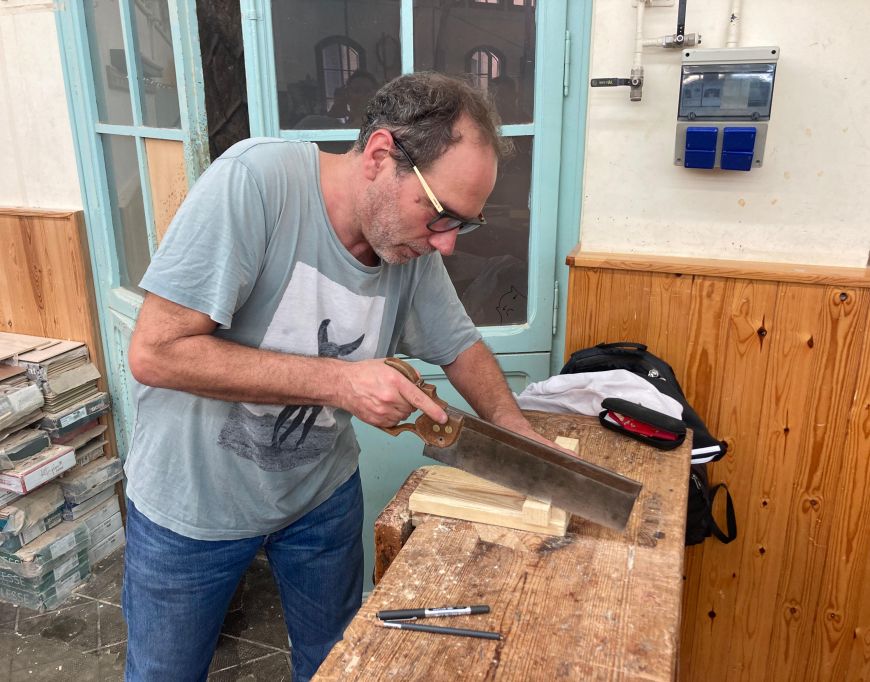
Then, he had already left the design studio where he worked, and designed as a freelancer, and he saw that at the Escola Industrial, which was close to his home, they offered the intermediate degree in carpentry and that he could easily follow the schedules, combining it with his continued dedication to graphic design. It has been two years of learning with some teachers older than him, teaching him workshop tasks, and other teachers his age or younger.
"Well, none of them were under forty," he says. However, all his classmates were much younger. "In the class, we were about thirty per class, almost all of them were sixteen and I was fifty. Some told me: you're like my dad, but cooler. So, of a profile like mine, people with a similar story of changing direction, there were only three or four."
Training, as adults, he says, to make a career change "is very common in the United States, but here perhaps we are not so used to it," he comments. When he had a clear idea of his new occupational landscape, he explained it to friends and family. His brother's response, for example, he liked: "He told me: if you're clear about it, go for it! ". And also "in the closest circles where I explained that I wanted to be a carpenter, everyone told me: do it! , you'll make a very good living, because there's a shortage of people in these trades, electricians, welders, manual labor is needed."
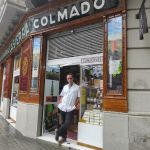
Òscar has been a carpenter since before last summer, when he finished his carpentry degree. Now he is already working, and that's when, truly, he is becoming a carpenter. It is a much more physically demanding job, especially if he compares it to the comfort of sitting in front of a screen all day, and that changes. "Working as a carpenter is much more physical. You're on your feet for eight hours, and you carry heavy pieces, you pick up a door, you lift wood to the squaring machine... Sometimes I heard a student say, if we had studied more, we wouldn't be here. But, in reality, you see that studying today doesn't guarantee you a living."
In reality, you see that studying today doesn't guarantee you a living
Restore and not throw away
After his first restoration, the furniture of the family home, Òscar has been doing other rehabilitations in the last six or seven years. "On Entença street with Sepúlveda, there is a service called Repaired, better than new, from the Barcelona Metropolitan Agency (AMB) where they teach and accompany in the repair of everything that can continue to be used once fixed. Òscar became fond of it.
And this previous experience repairing furniture also made him take the classes at the industrial school with a desire to perfect himself. "I liked going to class and during the week I would go into the workshop and we would saw. Feeling that smell of pine seemed magnificent to me because on Monday, Tuesday..., working days, it was like being in the countryside. And, on the other hand, that was my daily life in the city."
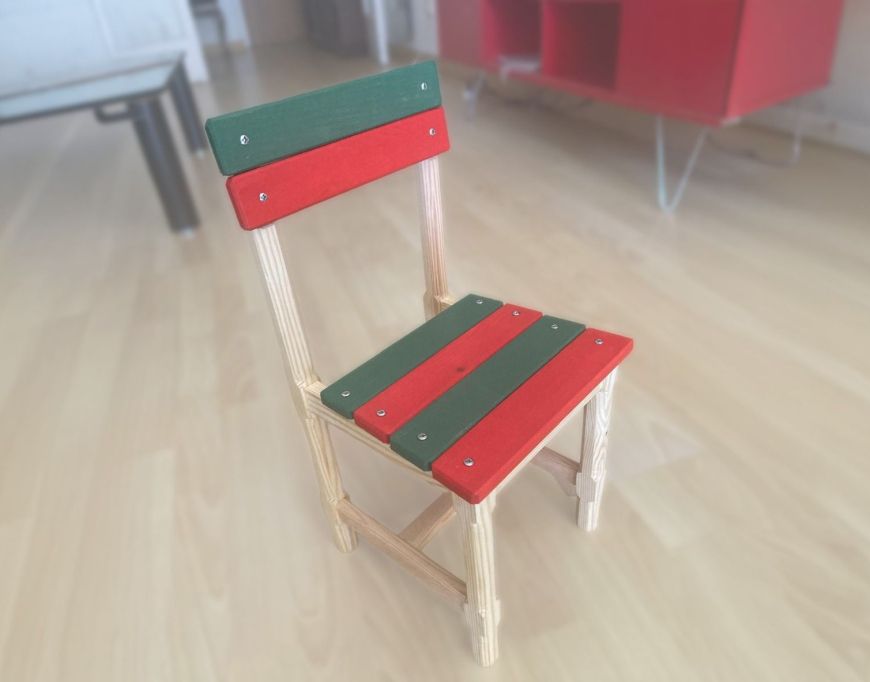
And what do you learn in a carpentry class? "I found the properties of wood very interesting, although now I know that carpenters know all this from their own experience. For example, how wood responds depending on how you cut it, they learn all this by working. There is a physical explanation for everything, but the carpenter learns it because it has happened to him several times, or his father or his teacher has told him."
The other subject he enjoyed a lot was sustainability. "Talking about processes and projects with wood to make them sustainable, locally and worldwide. The contents went from micro to macro. We saw how to build a house with insulation that was much more efficient than a brick construction, which means less heating is needed because it's less cold and less hot too, the temperature is much more stable. I remember we watched a documentary about prefabricated houses that are assembled like Lego and in three months you have the house built."
In the workshop practices -he says- "the first thing we did was saw. You take a wooden plank and divide it into ten parts, and you have to saw in a straight line." Learning the tools that he now uses was also a very important part of learning about the trade. "We have manual tools, manual but mechanical ones, like mechanical screwdrivers, and large machinery," he explains.
It is very encouraging to see so many ideas, but at the same time it is very frustrating because not everything is as easy as it seems.
The endless digital world that allows sharing tutorial videos where carpenters also show how small or large DIY jobs are done, infects anyone with the desire to start making arrangements at home. "It's very encouraging to see so many ideas, but at the same time it's very frustrating because not everything is as easy as it seems." The Japanese precision of fitting woods without using nails, for example, inspires any carpenter like him.
For those who wanted to become self-employed like so many carpenters and artisans with their own workshop, the introduction to the world of work also took its place among the subjects of the vocational training degree. "In the first year, we studied the Workers' Statute, rights and duties in the world of work, what types of workers there are: self-employed, general regime and the differences. Generically, we touched on legal issues and, in the second year, we saw how to create a company and the advantages and disadvantages." They simulated the creation of a company, with its viability plan, how to apply for a loan, taxes... "The viability part helped me a lot, I proposed a furniture restoration and manufacturing company, how to reach customers with a local advertising campaign, so that people know that you make the best furniture in Barcelona."

Studies as a starting point
Òscar had to do an internship as part of his degree, but since he continued working as a graphic designer, he didn't have time. But he was able to do some time with a master. "It went very well for me, but I lacked practice hours and through the school I found the place where I now work, a company dedicated to interior repairs of yachts, decks and all topics related to boats, in the port of Barcelona," he explains. After completing the remaining internships to finish his studies, he was hired.
Now, everything he does goes out to sea with a boat, consequently, as he says, "we work with woods that must be more or less exposed to water, therefore, we must apply very specific finishes to them." Wood, the sea, and the architecture of large vessels is now the world that fills his daily working life. "I like it a lot and I feel right now like a sponge, filling myself with new knowledge. I work with people who have been doing this job for twenty years and they are a well of knowledge. They give me super logical answers, which I would only arrive at with time. There is a technology and knowledge behind everything that is done that makes the solutions to everything that comes our way flow in a logical and simple way. I am very grateful because every day I discover little things and others that I realize I am already integrating," expresses the carpenter.
Moving from the digital dimension to working with one's hands, and touching wood, becomes originally revolutionary today
Moving from the digital dimension to working with one's hands, and touching wood, becomes originally revolutionary today. "When I was dedicated to graphic design, however, I really liked choosing colors and textures by experimenting with physical samples to then be inspired on the screen and, after all, everything I drew digitally, then ended up also being a material product, a label, a bag, a magazine...".
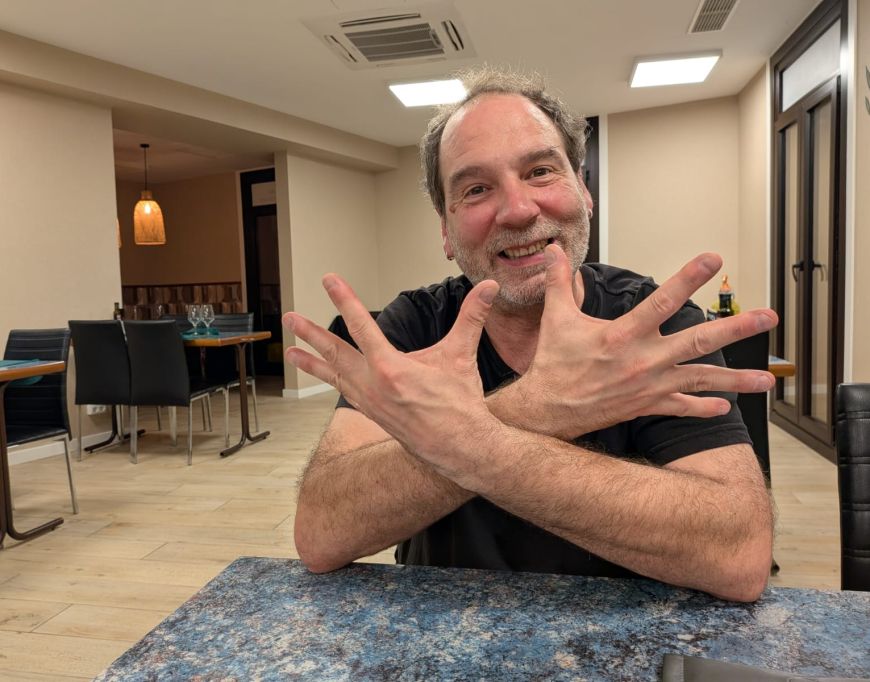
Now everything he does arises from three dimensions. "I identify it with what Gaudí said. He spoke of the 'return to origins'. We are in an era where everything is much more digital and virtual, and I suppose it happens to more people, not just me: we are tired of mobile phones, computers, and screens, in general. And, then, touching things is what we miss," he says. And he believes that is why "the physical dimension of objects is gaining presence in our daily lives," due to this need or longing.
"For example, the digital book is very good, it opens up a universe of thousands of books in a single device, but the pleasure of opening a book, the smell, the feel of the pages, the digital will never have that," concludes Òscar, "happy to have left his comfort zone and started a new professional path, with many things still to discover."
Add The New Barcelona Post as your preferred Google source for free
Stay informed with the latest news.