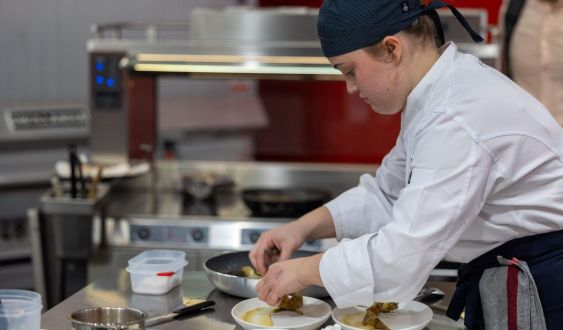
Are we facing a New Catalan Cuisine? This question is, precisely, the guiding thread of Gastronomic Forum Barcelona, the great meeting point for the hospitality, gastronomy, and foodservice sector that these days is set up at Fira de Barcelona. 180 speakers and 72 chefs —who together hold 52 Michelin stars— participate in this great gastronomy fair to address the past, present, and future of a living cuisine in continuous transformation. An innovative gastronomy that is only possible thanks to producers and suppliers (local and international) of ingredients, machinery, and other tools. Suppliers also present at the gastronomic fair with more than 400 exhibiting companies, the largest offering in its history.
Amidst the smell of grilled meat, a continuous noise of stoves and chefs cooking non-stop, as well as visitors delighting in impromptu tastings and live showcookings, the New Catalan Cuisine has become the central axis of the gastronomic fair, coinciding with the year in which Catalonia asserts itself as a World Region of Gastronomy. A gastronomic movement that, in the style of the French Nouvelle Cuisine of the seventies or the New Basque Cuisine of the eighties, fuses tradition and innovation, peasantry and experimentation, and small producers with great international chefs.
"In recent years, Barcelona has become an international gastronomic reference city thanks to the revolutions of great Catalan chefs, but also to a new generation of chefs who continue to innovate and surprise diners," remarked Paolo Casagrande, head chef of Barcelona's Lasarte (Three Michelin stars) in a conversation with The New Barcelona Post. As an Italian who has been living in the Catalan capital for years, Casagrande emphasizes that the city has "some of the best restaurants in the world," in addition to a great variety of producers, markets, and companies without which it would not be possible for Catalan cuisine to project itself, today, as one of the most prestigious in the world.
Producers and suppliers who make it possible for teams like Lasarte's to create menus of such quality as Il Mondiale, which the prestigious restaurant's team has presented and showcased within the framework of the salon. This gastronomic experience by Lasarte, which has consolidated itself as the most exclusive and expensive menu in the Catalan capital, is inspired by Marco Polo's travels around the world, but reinterpreted from the perspective of its kitchen team, bringing diners closer to the wonders created from the three great cuisines that can be found among the restaurant's team and that define the menu: Basque cuisine by Martín Berasategui, Italian by Casagrande, and Catalan.
Because Catalan cuisine and the creations of world-renowned Catalan chefs would not be possible without an excellent foundation: quality ingredients. Precisely, Gastronomic Forum Barcelona has consolidated itself as the great showcase for all these producers and suppliers —not only of ingredients for cooking, but also of all the tools to do so: from machinery to reservation software— who, whether local or international, supply restaurateurs worldwide.
An experience for all the senses
Precisely, Gastronomic Forum Barcelona offers the largest exhibition in over 25 years of history: with 18,500 m² of surface area at Fira de Barcelona's Montjuïc venue and 10% more companies than the previous year.An exhibition offer that allows visitors to live an experience for all the senses, letting themselves be carried away by the smell of marine products or the aroma of freshly ground coffee, but also by the intensity and greenness of extra virgin olive oil. And that, in addition, not only provides a unique gastronomic experience to the visitor, but also the opportunity to generate contacts and alliances between suppliers and restaurateurs, accompanied by business cards, demonstrations and improvised live tastings.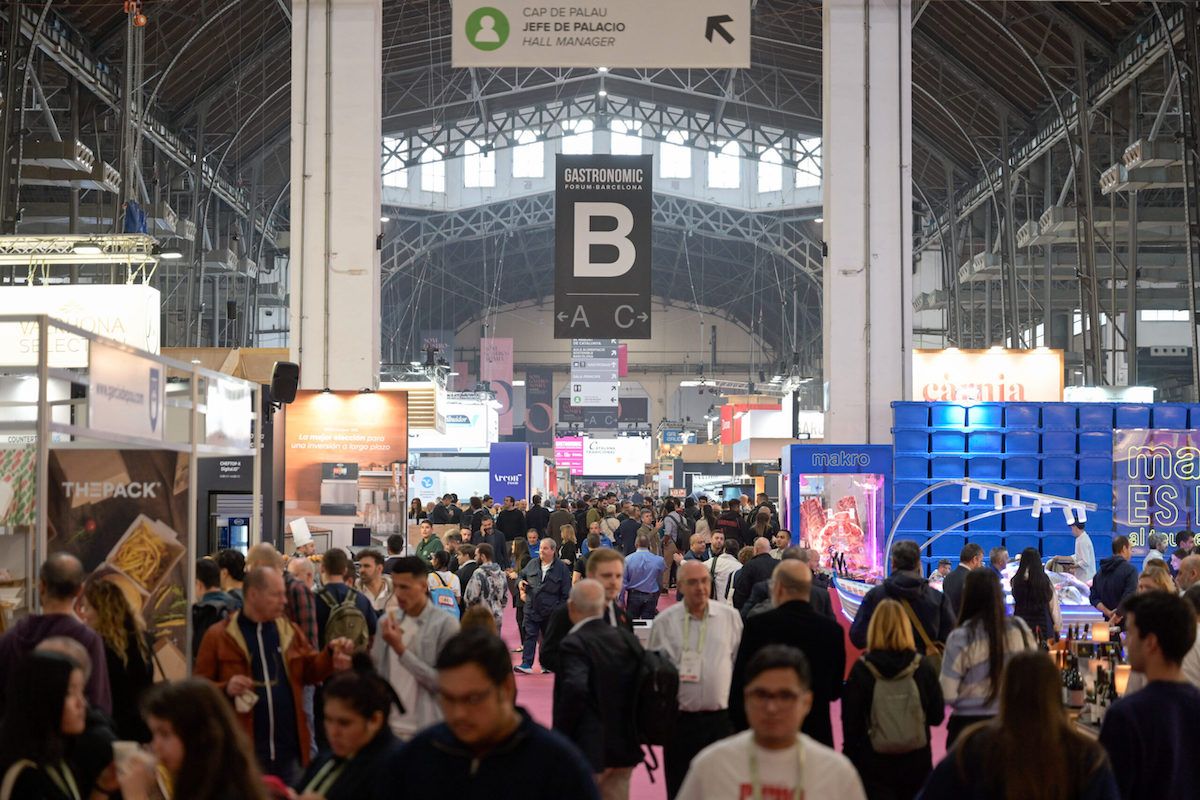
Gastronomic Forum Barcelona is the meeting point for local products and those made in the territory, but also for the best ingredients from kitchens everywhere: from products from other parts of Spain (Galicia, Menorca or Castilla y León), to companies from different regions of the world, with 7% of exhibitors from countries such as Germany, Lithuania or Portugal. Thus, along with acorn-fed ham or homemade croquettes, visitors can try everything from the popular bubble tea in Asia to Mexican Tajín.
If Catalan and international suppliers coexist in the hall, small and innovative producers —and even local cooperatives— also manage to coexist harmoniously with large companies, with an international presence, that have a long history in the sector. Thus, large companies such as Torrent i fills, Europastry, Josper or bonÀrea, share space and exchange knowledge with small producers or cooperatives from all over the territory and beyond.
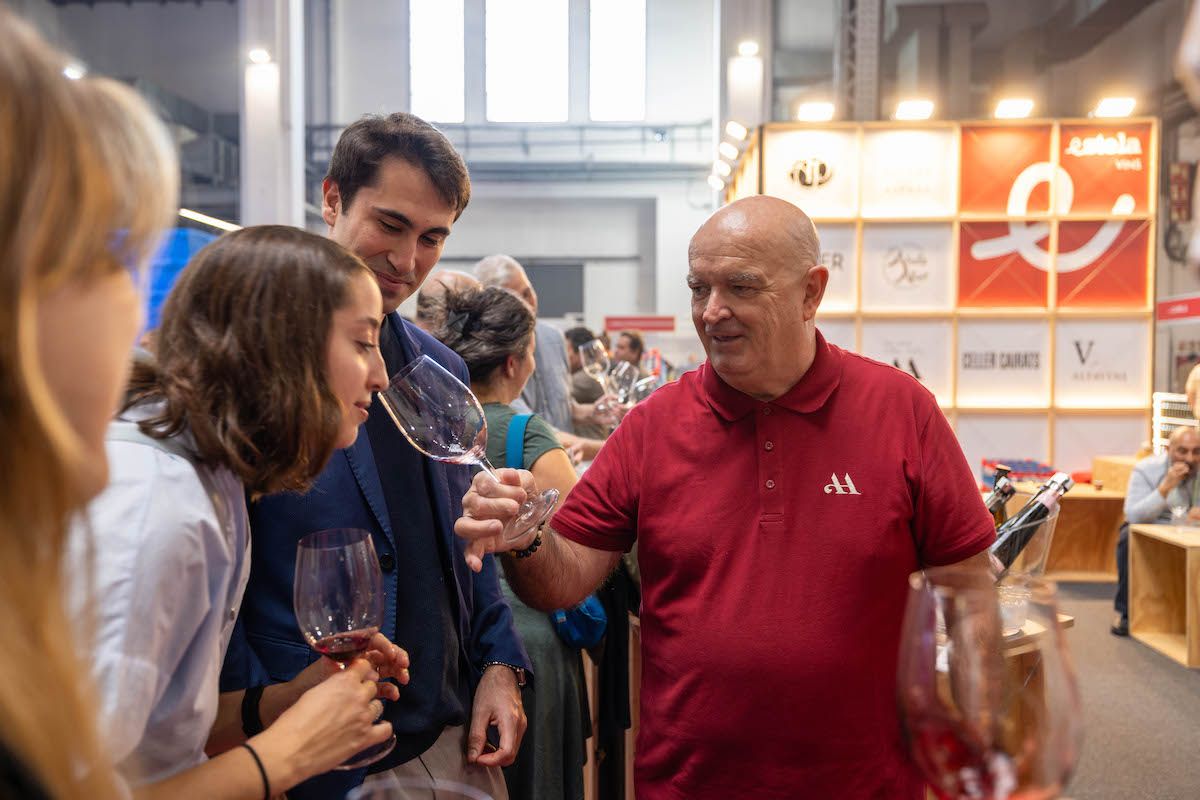
The exhibition offer of the gastronomic fair, in fact, also revalidates it as a great showcase for novelties and launches from different companies, as many of the represented companies take advantage of the commercial space to present their latest innovations. Innovations such as the edible shrimp paint with which Caviaroli surprises, an emulsion made exclusively with Mediterranean red shrimp that serves to decorate, season and enhance the flavor of multiple dishes, from rice to carpaccios.
The Esparreguera company has a long history of more than 14 years designing innovative products, with products such as the drops from Ferran Adrià at El Bulli. "Catalan cuisine has an innovative spirit in its DNA, and it is a spirit that has also penetrated Caviarioli from the beginning," emphasizes Eric Díaz. "The goal is to continue designing products to offer tools to chefs and cooks around the world so that they surprise their diners," remarks the Caviarioli commercial, a company that works mainly with restaurateurs and chefs from all over the world, but which can also be found in some Catalan stores and commercial areas.
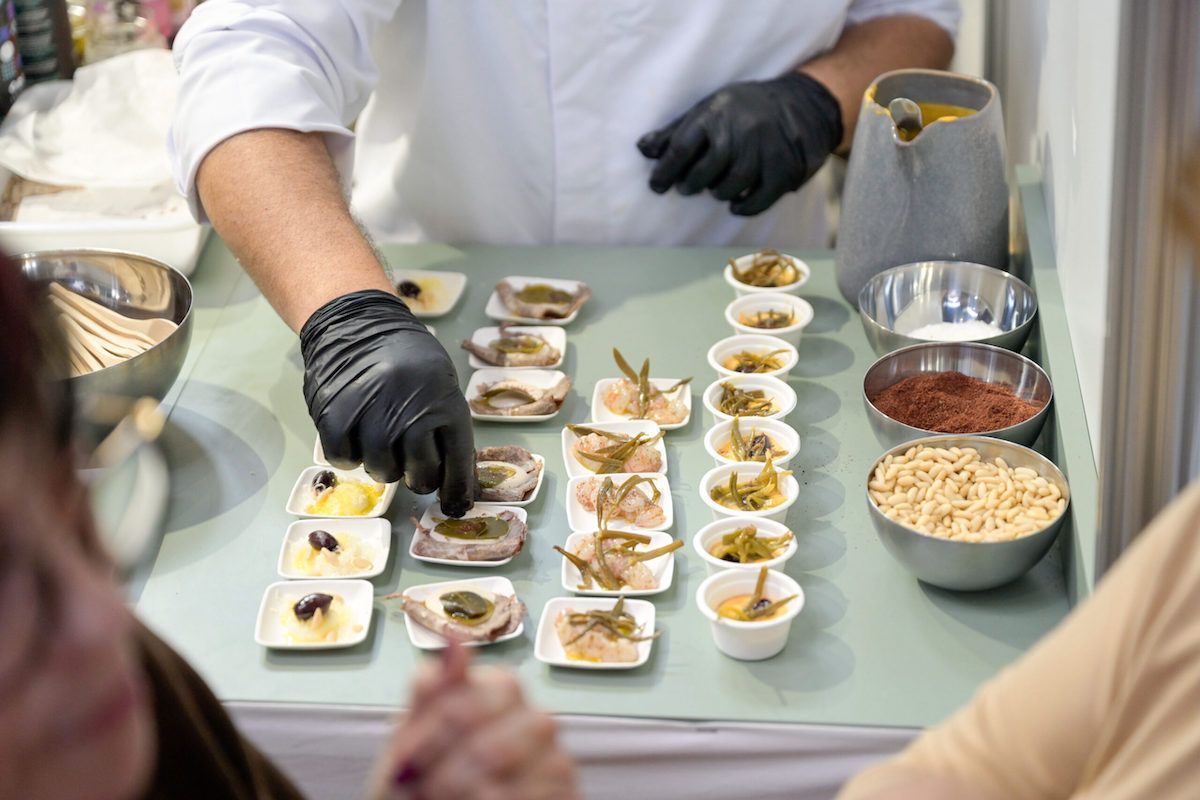
In addition to the shrimp paint, the restaurateur visiting Gastronomic Forum Barcelona can also find many other tools and ingredients with which to continue surprising diners: from the carob nougats from MenjaMiques to the 100% natural caper leaves from Ad Olivetum. An innovation from the different producers that, however, draws on ancient techniques and recipes, which also occupy a primordial part of the exhibition area and which, in fact, coexists harmoniously with innovation and constant renewal.
Outside of local products, undoubtedly one of the great protagonists of the fair has been Italian ingredients and dishes: with wood-fired ovens cooking the best artisan pizzas and even international competitions for this product, with Pizza Bit Competition Spain. In fact, there are even Catalan producers who dare with Italian classics, such as the Mas Guri farm. With a daily production of 35,000 liters of milk, the producer decided three years ago to grow and also work as a cheese factory to convert its fresh milk, freshly milked, into products that could reach the final consumer directly.
Thus, the company from Cassà de la Selva (Girona) decided to produce some of the most consumed cheeses in the world: burrata and mozzarella (from pearls to buffalo mozzarella). Two Italian cheeses that, despite their popularity, no other Catalan supplier produced. "This is a product that is of higher quality if consumed fresh and, therefore, it makes sense for it to be produced locally. We convert our fresh milk milked on the farm into a product that reaches the consumer directly and, therefore, has a higher quality," summarizes the manager of Mas Guri, Albert Boadella. Boadella acknowledges, however, that they are also working on a multi-product strategy, so that alongside Italian cheeses they can continue to innovate and offer consumers local products that tell the story of the territory that has seen them grow.
Understanding and respecting origins
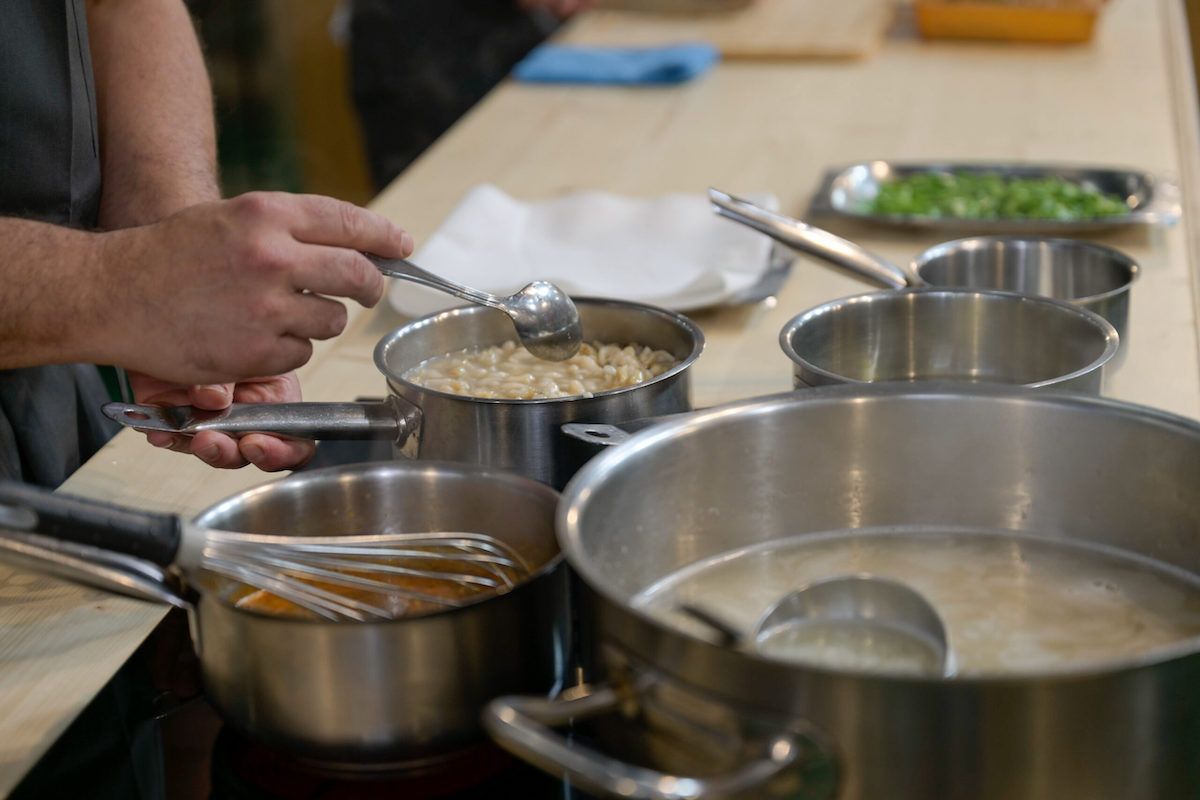
With this richness and variety of exhibits, Gastronomic Forum Barcelona stands asan essential meeting point for the sector.Because without these ingredients, suppliers, and quality machinery as a base, Catalan cuisine would not be, today, one of the most prestigious in the world. Nor would it be without its creators: all those chefs who are revolutionizing the way of cooking and understanding gastronomy.These chefs are also present these days at the fair with workshops, talks, and live showcookings to review the past and present of Catalan cuisine and to jointly project and draw its future. Even so, to advance towards innovation, chef Jordi Vilà warned that first we must know our tradition: "tradition and heritage tell us who we are, what our origins are, our way of living and understanding cuisine, but it also tells us, and is the basis, for defining how far we can go."
"To innovate, we must first understand where we come from," added the chef of the Barcelona restaurant Alkímia (one Michelin star), within the framework of one of the gastronomic fair's workshops, and while presenting dishes that highlighted game meat, without forgetting to innovate and revolutionize. In addition to Vilà, a total of 180 speakers —including 72 chefs— are participating in the fair's different activities, ranging from workshops with final tasting to book presentations or round tables.
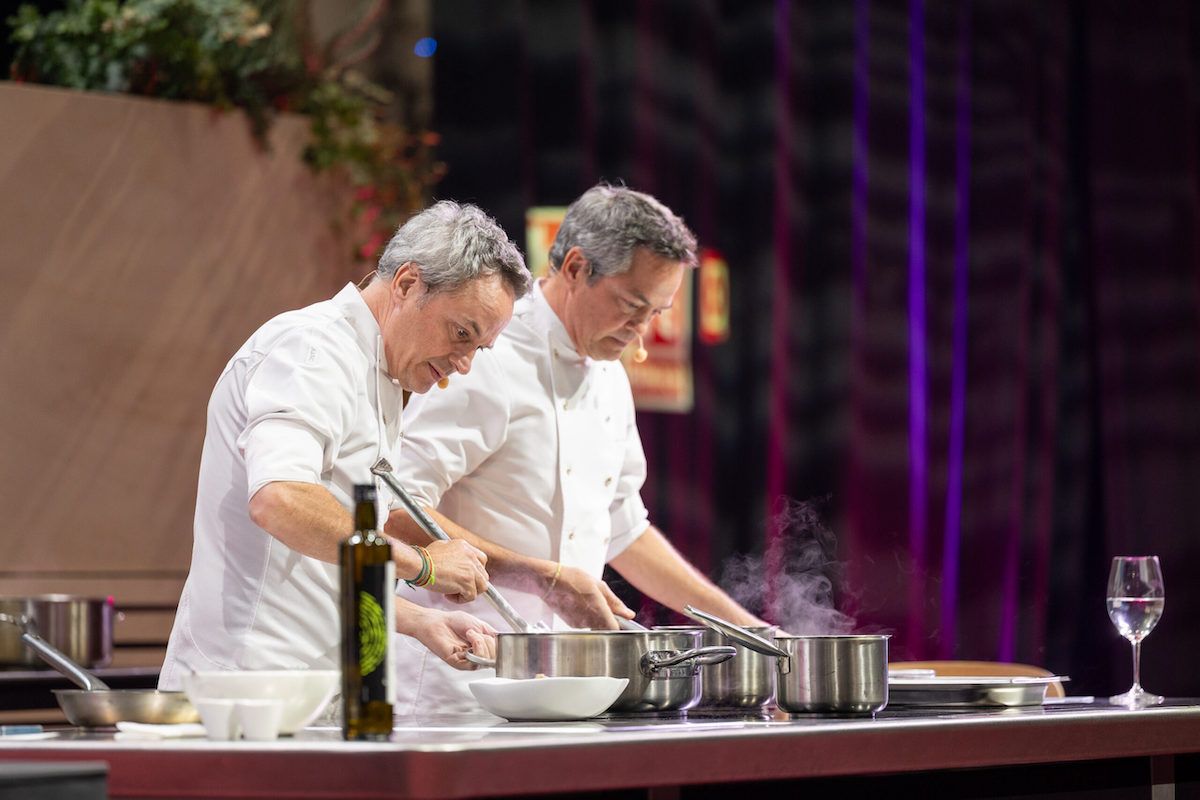
Among the speakers, the presence, for the first time, of all Catalan chefs with three Michelin Stars stands out. Thus, names like Joan Roca, Jordi Cruz, Paolo Casagrande, Oriol Castro, Mateu Casañas, Eduard Xatruch, Ramon Freixa, Albert Franch, and the Torres brothers are being seen these days at Gastronomic Forum Barcelona.
These names and chefs draw a gastronomic future, undoubtedly, promising. Even so, we must not forget that great gastronomic transformations and revolutions, like a good traditional stew, cooked with love and dedication, require time and patience. For now, however, Barcelona and Catalonia have all the ingredients and agents, as demonstrated by Gastronomic Forum Barcelona, to continue advancing towards the New Catalan Cuisine and perfect a gastronomic tradition that has already become a global benchmark.
Add The New Barcelona Post as your preferred Google source for free
Stay informed with the latest news.
