We are stardust. Nothing more scientific and more poetic at the same time. Stardust in a universe of energies that make life beat, a simple compound orchestrated by atoms that has given scientists arguments to explain almost everything to us.
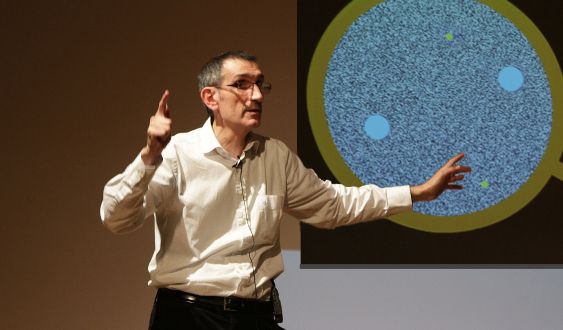
How these atoms have expanded from stars that the force of gravity has made explode, and have given rise to planets and life, are the kind of explanations with which Josep Lladó Guilera is capable of leaving an entire audience speechless. He links all the whys in such a way that one ends up feeling part of this common totality that is life, a game of interests from the smallest atomic expression to the most powerful beings on the planet.
An example: The correlation between mathematical questions and animal life is found in prime numbers. Divisible only by one and by themselves, prime numbers are related to the biological cycle of a certain type of cicada. And from the absurd that it may seem, we move to the most logical possible understanding with the explanation of science enthusiasts like this Barcelona native who, after spending more than thirty years working for a large multinational, said: enough.
Enough because he felt all the desire in the world to dedicate himself to disseminating aspects of science that had captivated him personally. And yet, as a child, no matter how good grades he always got, nothing foreshadowed any tendency to dedicate himself to it. At the Claretians where he studied, it was rather languages that he was good at. But he chose Chemistry as a university degree. And after finishing his studies, he still had to complete a few months of military service, before sitting down one Sunday to read job offers in La Vanguardia. Three days later, he was already starting at La Seda de Barcelona, in El Prat de Llobregat. Knowledge of chemistry, in the textile industry, specifically in acrylic fiber, was very necessary.
The life of an employee had nothing to do with student life, "I realized that the notables and excellents came naturally to me, but life was more difficult, and no one had taught me about it," he declares. But the early death of his father forced him to concentrate on it, without being able to combine it anymore with the athletics races that he had enjoyed so much.
It was the time when computing was starting to emerge, and an engineer from the company knew how to read in him the necessary potential to become in charge of that new dimension that was landing, that technological 'artillery' that was approaching to make everything faster. The first artificial intelligence gave its role to the first computer scientists in the country. And he was precisely positioned to be one of them. With one of the first IBMs that arrived in this country, Josep's potential explored the potential of the device that would revolutionize the world of business, relationships with work and with people.
The keys to a new way of doing everything, the suppression of distances, of linguistic barriers and the welcome to economic transactions and commercial relations, at a distance, would also put an end to the tool that gave more wings to Josep's relationship with Cecília during six of their years of courtship: the letter.
The thread of an epistolary relationship
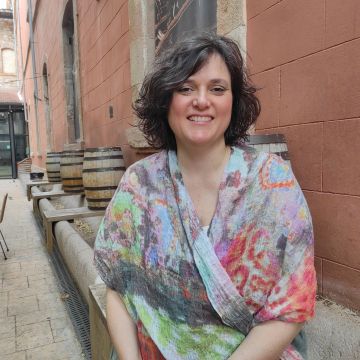
She was born in Oviedo, but lived in Madrid when she met Josep in 1966. For three years, they wished each other happy holidays and saints' days, until the summer of 1969, she came with her sister to visit some friends in Barcelona and met Josep again. From then on, they began an intense epistolary relationship that lasted six years. Up to eight hundred and fifty letters were exchanged.
Up to eight hundred and fifty letters were exchanged.
They had met at fourteen and thirteen years old respectively, and with all those missives, Josep and Cecília built mutual knowledge by explaining not only what they did every day, but, as she says, "we learned to express what we had felt doing things, not to describe them". They were letters full of feeling that, with all their capacity for expression, wove a personal immersion of each of them that forced them to acquire vocabulary to describe sensations, feelings, desires, doubts, uncertainties... of everything that life is made of.
All the letters from that long and fruitful epistolary relationship were kept until one day, not long ago, they decided to destroy them. "We thought: if we leave them here, when our children are no longer here, where will they end up? And we bought a paper shredder to shred them all. We had boxes full of them," explains the couple.
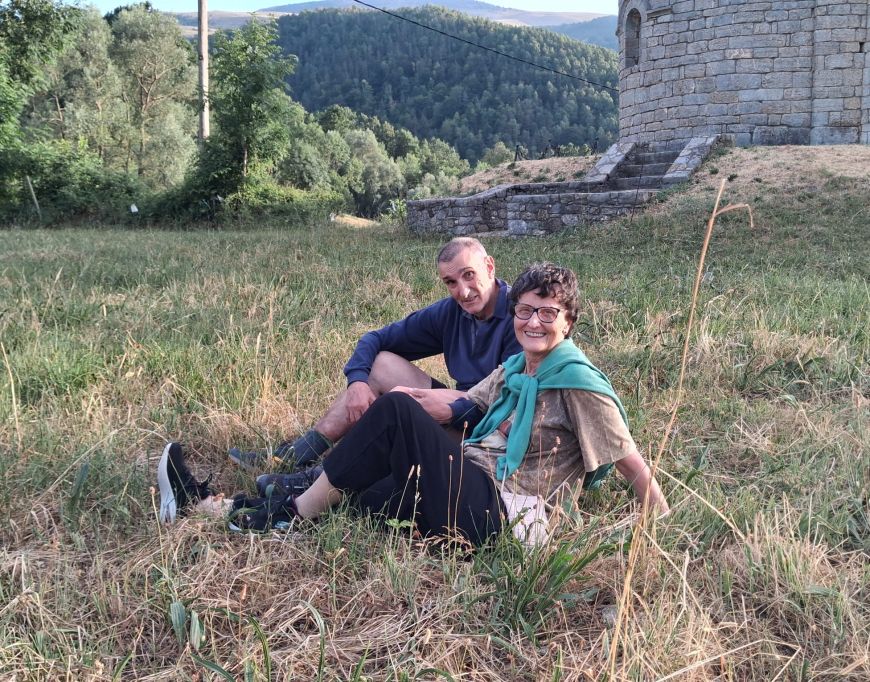
The pulse of stars crumbled a heap of moments of calm and concentration, of illusion and of calligraphy of this man and this woman. “I will remember all my life the moment I received her first letter. I was with my best friend, Enric. We arrived home together and, before opening the mailbox, I already read some letters of the name: Ceci... and I jumped for joy, as if no one was there, but my friend, who is no longer with us, witnessed it.”
I will remember all my life the moment I received her first letter.
The first letters they sent each other -says Josep- “were very tender, very clean, even a nun could correct them without being scared. Over time, the tone changed.”
The letters “made us grow,” they say. “You were expressing things you had never said, they weren't routine. And, little by little, they ended up being replaced by calls.” Now, Josep expresses: “In the fifty-one years we have been walking together, our letters are not on paper nor do they need a stamp, the recipient is always there. The words are not written, they are in the glances, in the gestures, in the laughs.”
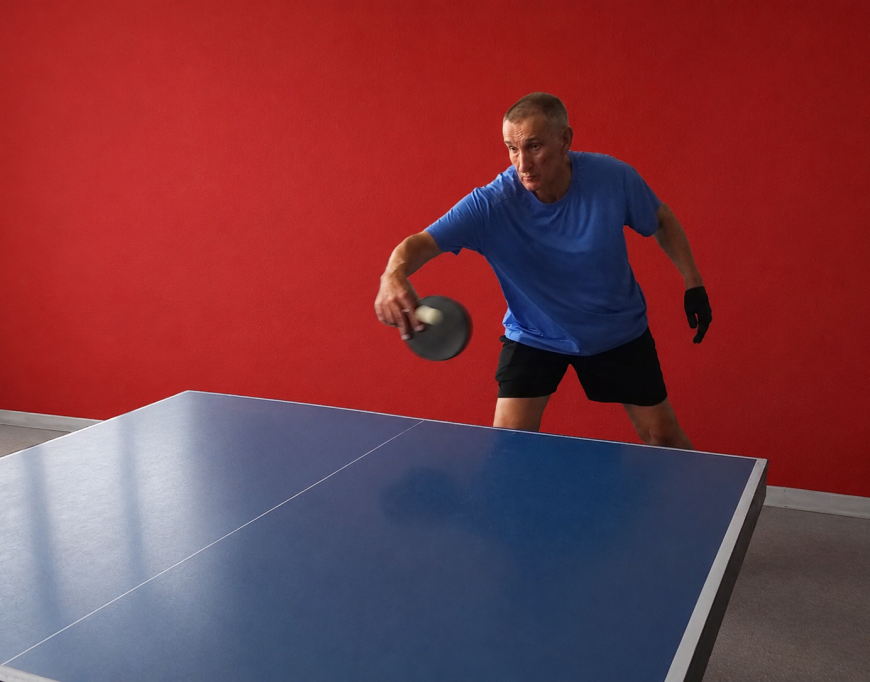
Fifty-one years together is easily said. More than half a century of the closest and most sincere ‘good night’ and ‘good morning’. “It was a lottery,” Josep expresses, “and we have been very lucky.” Luck and two children, with his renunciation of athletic competition, the middle-distance races of 800 and 1500, his marks, his position in the ranking... Already as a couple, however, Josep began to enjoy fronton, tandem competing with a very brave Cecilia with the ball in hand. And currently they challenge each other in table tennis.
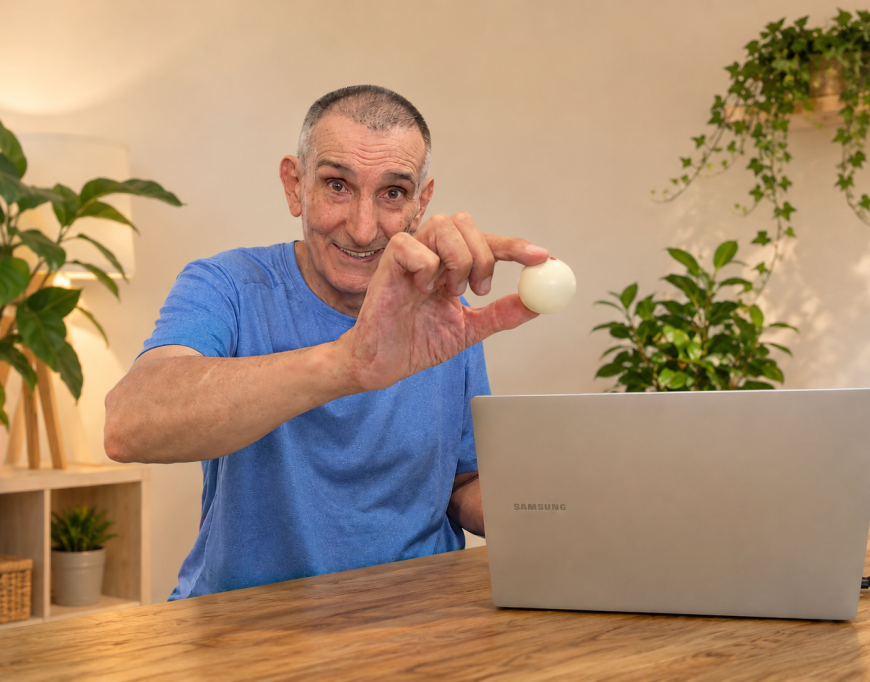
Together they have raised and educated two children and created a small company dedicated to producing materials for educational centers, interesting materials about science that, from Josep's passion for it, become content broken down with great clarity and attraction. In fact, having been on the front line interacting with the first computers, in addition to having given Josep the possibility of jumping from La Seda to lead the IT department of the Torras Group (later, TORRASPAPEL), facilitated his technological mastery to annex science and computer science. This is how he manages to give his conferences, courses, and seminars at the University Extension Classrooms for the Elderly of Barcelona (AUGG BCN), -also in those of other places in Catalonia- a surprising approach, with the digital and interactive support of content that, otherwise, would be difficult to understand.
After having learned about chemistry, that fresh start that algorithmic learning for programming digital solutions meant for him, was a gift from life with which he can now bring science closer to everyone. He does this by explaining the Big Bang, and basic and fundamental concepts to understand quantum physics, the theory of relativity, mathematics, and chemistry, and to know what function and importance all this takes in our lives. "Electrons, photons, and quarks that spend the day negotiating energy, the ALBA synchrotron particle accelerators in Cerdanyola and Geneva, how we interact with chemistry in our daily lives, relativity, quantum physics..." all this is, explained by Josep, a continuum of 'aha' moments: the instant in which the brain understands.
It was worth it, at fifty-one, that leap of faith, abandoning an excellent salary in his position in a multinational to do "what I knew I would do well." Cecilia's support encouraged him and, to this day, she has been helping him prepare the materials for his talks and seminars. "A magic formula has been revealed: my passion for science, my ability to teach, and an advanced mastery of computer science, of programming, the one that now deals with algorithms. I am a good programmer of interactive, advanced computer science. Those who program AI don't know much about science, and those who master science don't master computer science. Therefore, in me there is a happy contact."
Those who program AI don't know much about science, and those who master science don't master computer science.
Where lies the appeal and utility of science? "In the pleasure of understanding, because the satisfaction of understanding, intellectual joy, generates a hormonal release like those that create addiction. What makes us feel cold or hot, feel stomach acidity, how we breathe, all this is explained to us by science and is what students of the University Extension Classrooms sign up to learn, "learning for the pleasure of learning, I teach seminars on scientific topics, but there are also on cinema, literature, music... They are aimed at people over fifty-five, without any pretension of getting a degree, just with a desire to know about a topic."

With his feet firmly planted in science, this chemist presents quantum physics without making it flirt with esotericism. Why? "Quantum physics is fascinating enough on its own, which, in a scientific way, already demonstrates things to us. It requires, however, a paradigm shift, a change in the mentality of Homo sapiens. But the pleasure of understanding is not the reception of something supernatural, but, based on hypotheses, seeing that something works and, if not, other hypotheses are tested. That is science. And it doesn't need any esotericism. It is the popularizer who has to make people fascinated by it," explains Josep Lladó.
Quantum physics does not try to understand love, because it cannot, nor predict it, nor imagine it.
And, to the question of whether there is any point where quantum physics and love meet, Lladó answers a resounding no. "No matter how much many insist, quantum physics does not try to understand love, because it cannot, nor predict it, nor imagine it. Love is an emergent property, which emerges when elementary particles are many. So many, that only then do sapiens find some meaning in such subtle behavior."
He still adds: "Perhaps we should agree on what we call love. Once this immense purpose is achieved, not without renunciations or concessions, we would see how far we would still be from knowing (and being able to measure) the necessary causalities for it to occur, and we would find that, for now, none. Neuroscience is already doing what it can, but in the 21st century, the hottest is in the sink."
Add The New Barcelona Post as your preferred Google source for free
Stay informed with the latest news.