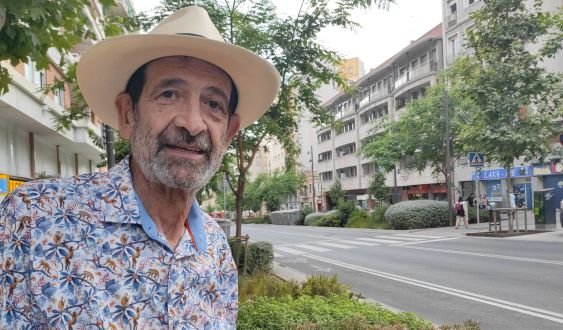
After more than forty years working as a tailor for a multinational luxury fashion company, at the age of seventy-five, Ramon Piqué feels as though he has never worked a day in his life. "I've had such an enjoyable work: I traveled and went to see very distinguished clients.To me, it was a privilege, not work".
An optimist by nature, Ramon learned the trade without leaving home. He was the tailor's son in Pont de Suert, when in the Ribagorçana capital there were six tailors making custom-made trousers, jackets, shirts, coats, and overcoats, when prêt-à-porter had not yet arrived. In many homes, thread and needle and sewing machines did as much work as any appliance does now, and men's suits were cut, sewn, and fitted by the tailor from the neighborhood, the town, or the capital.
Until he was eighteen, Ramon watched his father take measurements from the neighbors of Pont, choose fabrics, and cut following a pattern. He liked it enough to decide that he would also dedicate himself to it. At sixteen, he already knew. His father, however, wanted him to 'fly', and go to learn another way of working, alongside other tailors. And so he did. First, he spent four years in Lleida with a tailor and then rented a room near Plaça de Joanic, in Barcelona, very close to where he worked as an apprentice alongside another good tailor.
When he was twenty-seven, he was presented with the opportunity to be hired as a tailor by a large multinational that would truly make him fly, traveling the world doing what he loved most: imagining a well-dressed man and providing him with his hands and talent all the pieces of clothing needed to make it a reality. Ramon has not only greatly enjoyed being a tailor, but he has also lived very conscious of the value and meaning of his trade, of the virtue of being able to choose materials, colors, and patterns that personalize dressing, that make clothes look better because they fit well because they have been designed taking into account that body and that person and no other.
So great is his consideration for the benefit and contribution of tailor-made clothing that, at one point, he proposed trying to have tailoring included in Vocational Training as a degree with its own entity in the academic system. He did not succeed, but his intention was to try. As he himself says, "you buy a very well-made suit, but who adjusts the length of the sleeves, legs, or chest? Who makes the alterations if no one knows how to sew?"
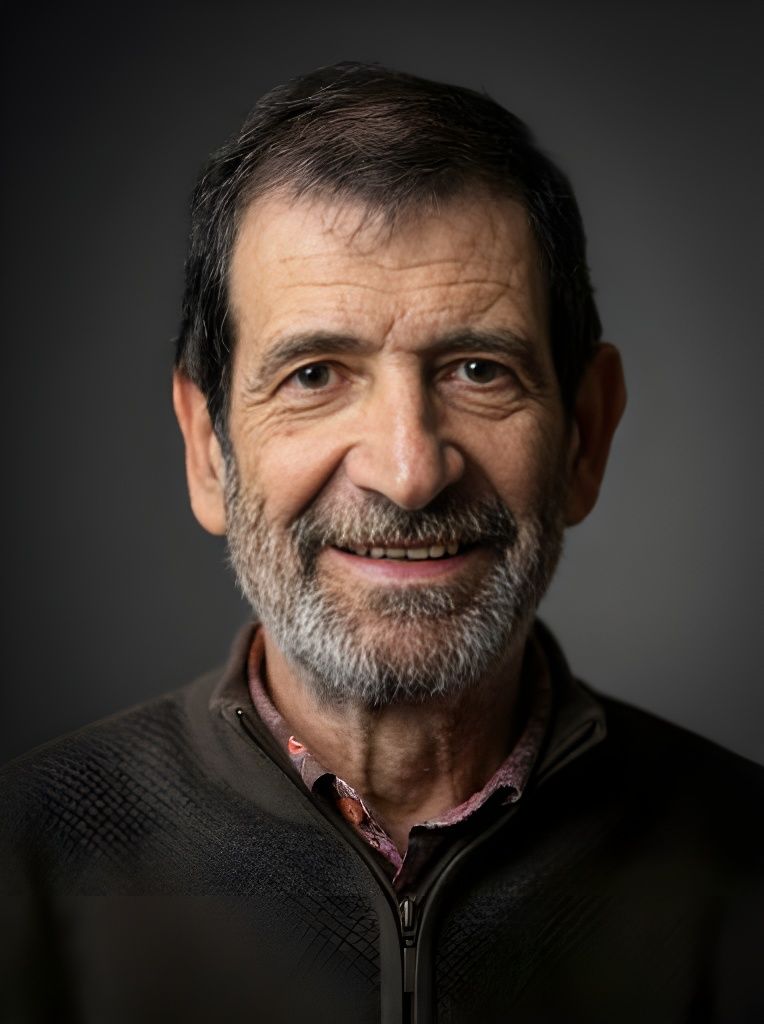
And sewing still matters. For forty-two years, he was doing it for those who prioritized dressing well as a sign of good social standing. Ramon has been with kings, princes, nobles, and great businessmen from many countries. As head of tailoring for an important firm, in addition to meeting clients and taking their measurements, he also visited the most reputable fabric factories in the world, whether in India or America. "For me, work was like a hobby, and every day of my life was different. In Spain, I traveled to all cities," he says. And to visit the clients assigned to him, he traveled to Brazil, Argentina, Chile, Peru, Colombia...
It can truly be said that in that tailoring workshop in El Pont, amidst Pyrenean mountains, the seed of the trade found its way into Ramon's pockets. He took pattern-making courses and specialized in sewing, while, in parallel, he also specialized in sales. Now, when he thinks about it, he realizes that, in reality, he has been "a rare species." And he explains: "because of my significant technical training, on the one hand, and for knowing the commercial side well," he comments. In fact, one thing cannot be understood without the other. Thanks to his vast knowledge of the theory and practice of fabrics, patterns, and the fact of knowing how to sew so well, he immediately intuited the best clothing options and the most suitable styles for each client. "If you don't know the technique well, you can't convey to the client what you can do for them," he states.
"How you dress is the best business card, therefore, you must know how to dress correctly"
Then there is the style and taste of this client, two concepts that Ramon believes are blurring today. "Taste and style have been lost," he says. These are the two starting points for choosing what we wear every day and that involve "knowing yourself and being aware of what you do, who you need to please. If you are looking for a job, you must know that the way you dress is already a letter of introduction." In fact -Ramon assures- "how you dress is the best business card, therefore, you must know how to dress correctly."
Taste is another thing, something that "can be educated much more than style, but both things have to do with self-knowledge and with each moment of life. You cannot go to the opera in a tracksuit, nor to the beach in a tuxedo. You have to know how to sell your image, depending on what interests you at each moment."
And today, opportunities to dress well, for little money, are also there. "People who don't wear a jacket and tie are because they don't want to," he says. He doesn't understand, however, "that someone spends one hundred and ninety euros on a pair of jeans and doesn't want to spend three hundred on a jacket." Speaking of styles, tastes and moments in life, Ramon brings up a meeting he once had with an acquaintance: "He was someone who had always been immaculately dressed, in a suit and tie. And one day I met him and he was dressed casually. The reason, he told me, was not that he had changed: I have changed my client, not my style, he told me. Working at the same company, his client had stopped wearing a jacket and tie and it would not be elegant for me to wear one, if he doesn't wear one, he explained." With this, Ramon emphasizes "the importance of knowing who your client is, the image of yourself that you want to sell or which one will benefit you most at each moment. Now I also remember some lawyers who always had a couple of suits and seven or eight ties in their office and, depending on who they were meeting, they changed, because they knew that it is very important to adapt according to who you have to deal with."
The value of listening
In the sales training sessions he had also given, he always told his students: “dedicate 80 or 90% of your time with the client to listening to them, and 10% to selling what you think suits them best”. He also knows that “you learn much more by listening than by talking”. And he remembers how with each client he listened as if the sale wasn't important. “If they've come to see you, the sale will come, but with the conversation, the relationship is so close that you practically talk about everything”. Thus, Ramon had become like a confessor for clients, “and you can never betray their trust”.
"You can't go to the opera in a tracksuit, nor to the beach in a tuxedo. You have to know how to sell your image, depending on what interests you at each moment"
He lived what he told his students: “It's not good to base the sale only on the sale itself, because that way, maybe you'll sell once. If you're lucky, maybe twice. On the other hand, if in the sale what you do most is contribute and help, you won't just be selling, but also building loyalty with that client”. He built such loyalty that today, even though he is no longer in the workforce, there are still some who call him for advice, counsel, and recommendations. “That is a true honor,” he says. Clients who become friends is a sign of this 80-90% attention, listening... and then: discretion.
Ramon has used, and still uses, a great deal of discretion. “Working alongside each client - in total intimacy with very public figures - I have been deaf, mute, and blind, because with such well-known people, if I wanted them to trust me to be able to do my job comfortably, I had to be discreet about everything I saw and heard,” he points out.

And he put his gift for social relations at the service of his profession. As a trainer, being a good communicator helped him a lot. It's a shame, going back to training, that there are fewer and fewer trainers in his sector. “It has been a bad planning by governments to prioritize university professional paths as the best future. This made all parents want their children in university, and a trade was not prestigious. For me, this is an academic error, that no one studies the textile industry, nor pattern making, and that everyone wants to be a designer, I don't understand it. My godmother Concepció always said: walk on winding paths where there is less traffic. And I have thought about it many times.”
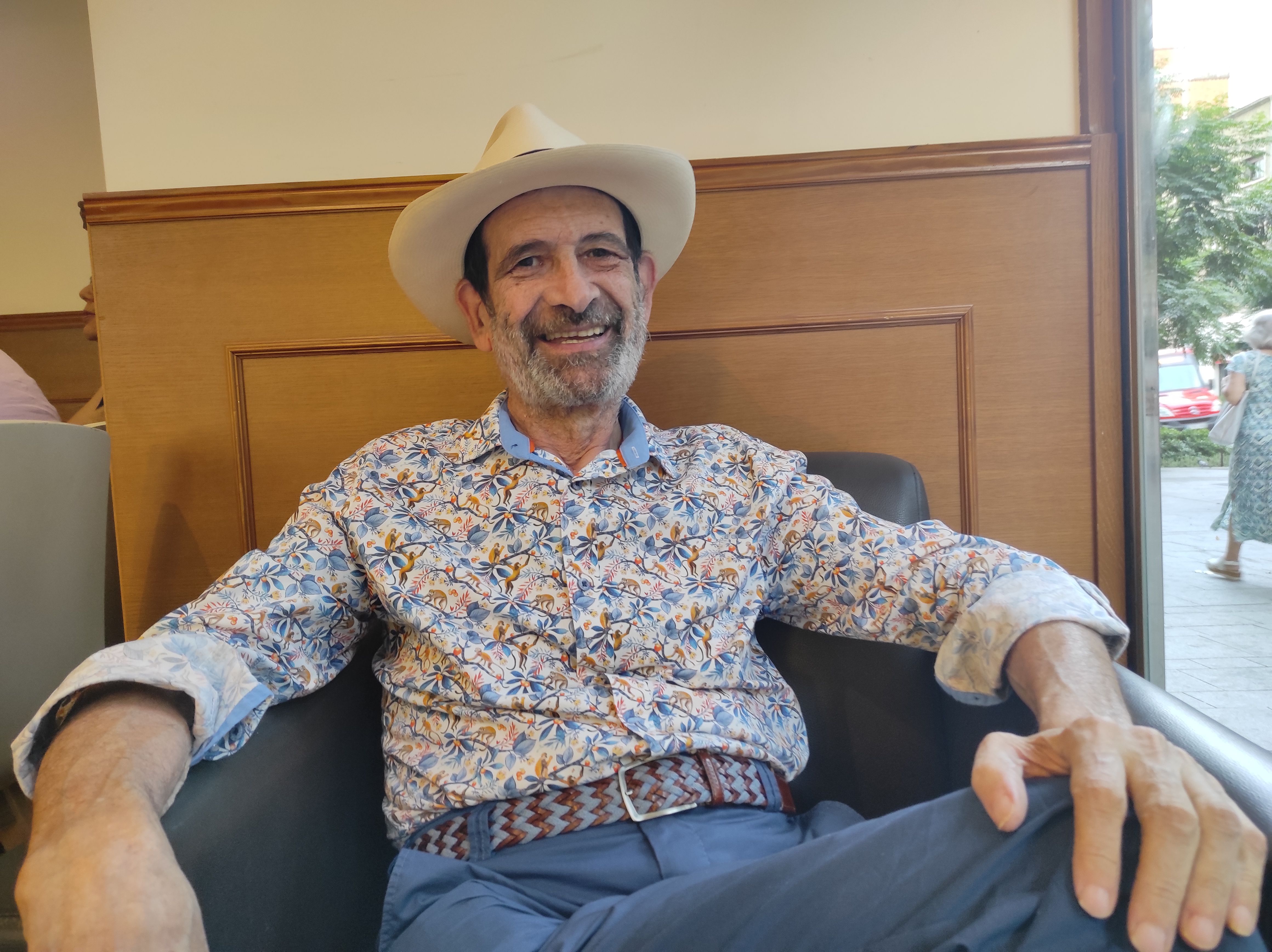
The hat, the shirt, and the jacket continue to dress Ramon in his daily life. This is in Barcelona, because when he is in Sopeira, a beautiful village twenty minutes from his own, and where he met his wife on the day of the main festival, the attire can be more relaxed, like life itself. In his case, a life made of so many acquaintances, that he dares to say that the saying of the six degrees of separation, according to which we are all connected to a person on the planet through a chain of five other people in between, in him, not only is fulfilled, but perhaps even shortened. Who would have thought that needle and thread could have stitched together so many personal ties in a world, that of tailoring, which -he says- "will not return".
Add The New Barcelona Post as your preferred Google source for free
Stay informed with the latest news.