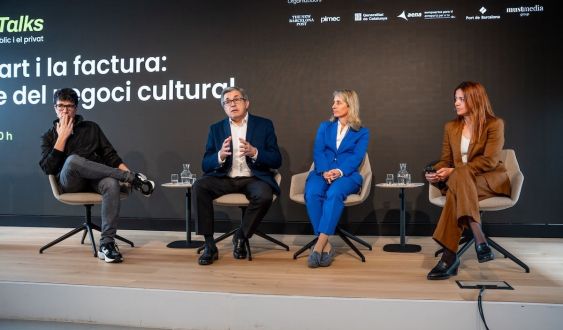
A bus suspended in the air, held by a hot air balloon, flies over an unknown territory. Inside, dozens of players await the moment to jump. When they do, they don't know exactly where they will land or what resources they will have. "You launch yourself and you don't really know where you're going to end up," explained Jordi Sellas, executive director of IDEAL and founder of Layers of Reality, in a new session of the Eixample Talks series. The metaphor, taken from the video game Fortnite, served to illustrate the uncertainty with which the cultural sector operates today and, at the same time, to introduce a round table focused precisely on the mechanisms —public, private or mixed— that seek to accompany that leap into the void and provide it with a support network.
"The cultural sector is probably one of the most structurally fragile sectors because, on the one hand, it demands constant innovation —every season you have to present a new program—, but also because it requires a very high prior investment, even before knowing if it will work," Sellas emphasized. "Even before the curtain rises, you have already made the entire investment," added the cultural manager.
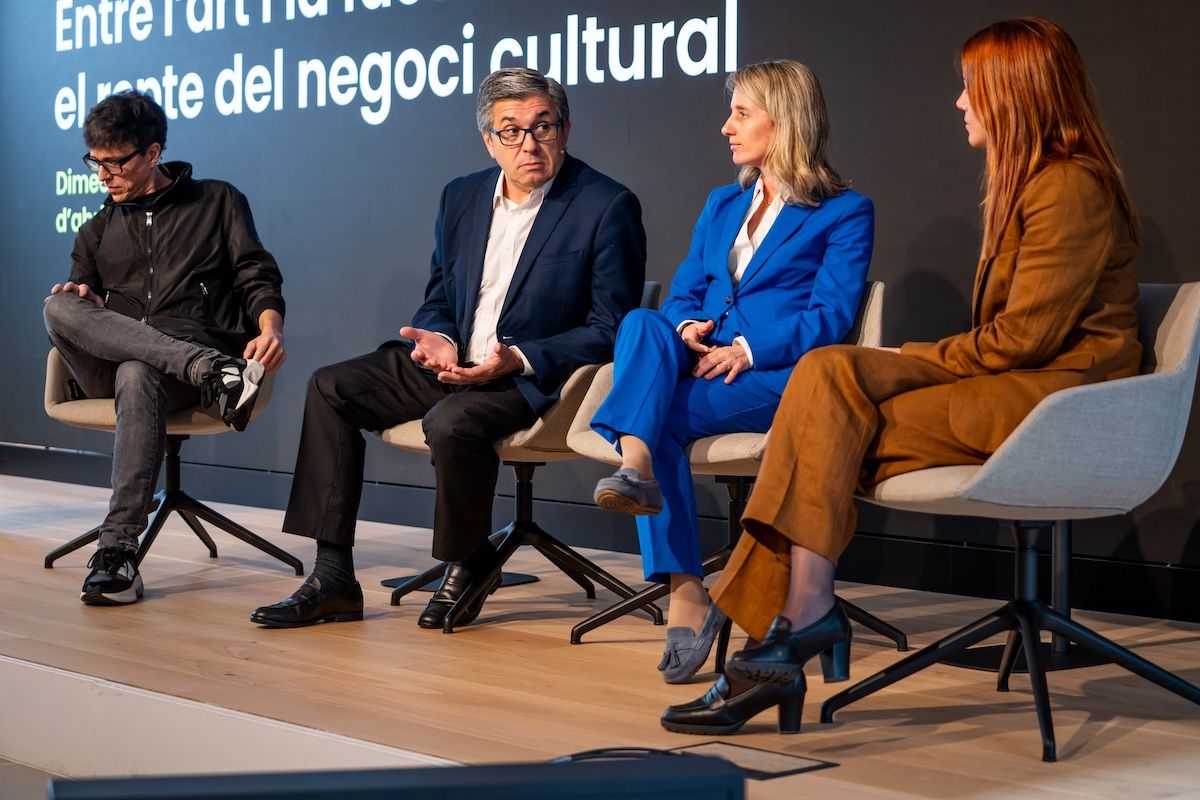
This condition, shared by the rest of the speakers —Maite Esteve, director of the Fundació Catalunya Cultura, and Juan Manuel Sevillano, expert in cultural investment and assets and current director of Stoneweg Experience & Places, promoter of the future Thyssen Museum in the city—, largely explains the fragility of the cultural system and the need to articulate specific support instruments. This has precisely been the common thread of the session, organized by The New Barcelona Post together with Pimec, with the collaboration of the Generalitat, the Port of Barcelona, AENA and Mustmedia Group.
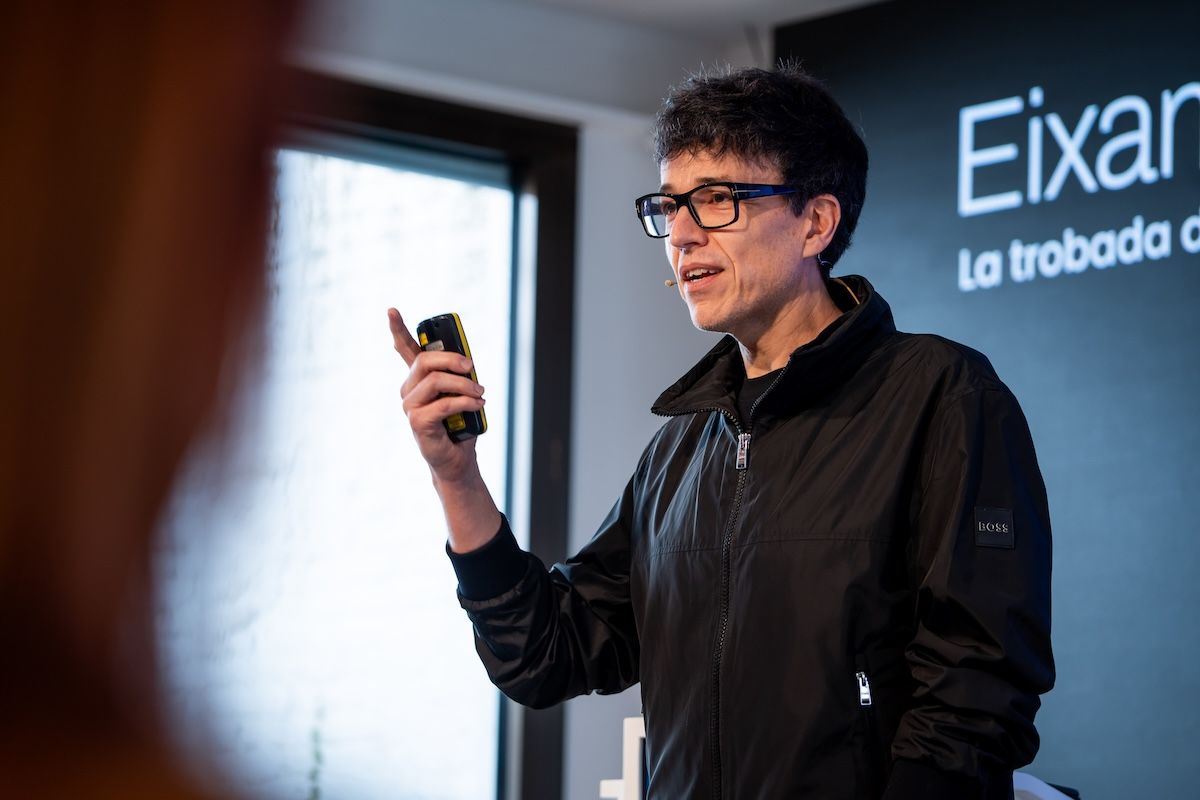
But investing in culture is more than a sectoral debate. As Sellas emphasized during the inaugural presentation, it is a strategic issue for Barcelona and Catalonia. "Most tourists come to the city attracted by its architecture and culture," said the cultural manager. Barcelona therefore starts from a privileged position: it has a solid creative ecosystem that, in a transforming global context, has a clear opportunity for growth. And it is precisely this global context that is redefining the rules of the game.
"Fifteen years ago, we didn't know what streaming was," Sellas recalled. Today, however, the rules of the game are global, and content circulates without barriers. Series like La Casa de papel or Squid Game have shown that productions in non-English languages, in Spanish or Korean, can become global phenomena. However, far from replacing the in-person experience, this new digital and hyperconnected environment has generated a multiplying effect for live events. "The more social networks and platforms we have to connect and consume content online, the more we want to share it with other people," Sellas pointed out. The data corroborates this: major global theater circuits, such as the West End or Broadway, have reached historical highs after the pandemic. The same goes for Catalan theaters, which closed 2025 as a record year with 3.1 million spectators.
However, for this creative ecosystem to leverage this global momentum, it needs viable funding models. That is, mechanisms that allow cultural projects to assume the initial risk and sustain themselves over time. Because the challenge is not to prevent that player —the cultural manager or the artist— from jumping, but to ensure that, in that leap into the void, they don't do it alone. Sellas knows this firsthand. As the founder of Layers of Reality, a company born in 2017 with the goal of applying immersive technology to heritage dissemination, he promoted an innovative model that has also borne fruit today at IDEAL Centre d'Arts Digitals and has attracted more than 9 million spectators in over 60 cities worldwide. But the beginnings were not immediately profitable: during the first two years, the project generated no income.
From the leap into the void to sustainability
This journey exemplifies well the nature of the sector: projects with high growth potential, but which require time, investment, and a structure that allows sustaining the initial risk. For Maite Esteve, director of the Fundació Catalunya Cultura, the key is to understand that culture cannot depend only on vocation or creative talent, but also on management capacity. "In Catalonia there is a lot of talent and creativity, but often there is a lack of structure," she pointed out. The solution, according to Esteve, requires generating alliances and incorporating management profiles into cultural teams. It is not about creators assuming all functions, but about projects being able to count on diverse competencies. In short, adding players to this cultural management game to reduce its risk.
Juan Manuel Sevillano: "We have to be very good at explaining the additional intangible benefits of cultural investments."
These alliances are also decisive in the field of financing. It is about weaving a support network that accompanies the initial risk, both from the public sector —traditionally central in cultural policies— and from the private sector, increasingly present in the city. In Barcelona, several projects driven by private capital already stand out, such as the Moco Museum or the IDEAL Centre d'Arts Digitals, and the arrival of a new relevant actor is being prepared: the Thyssen Museum on Passeig de Gràcia.
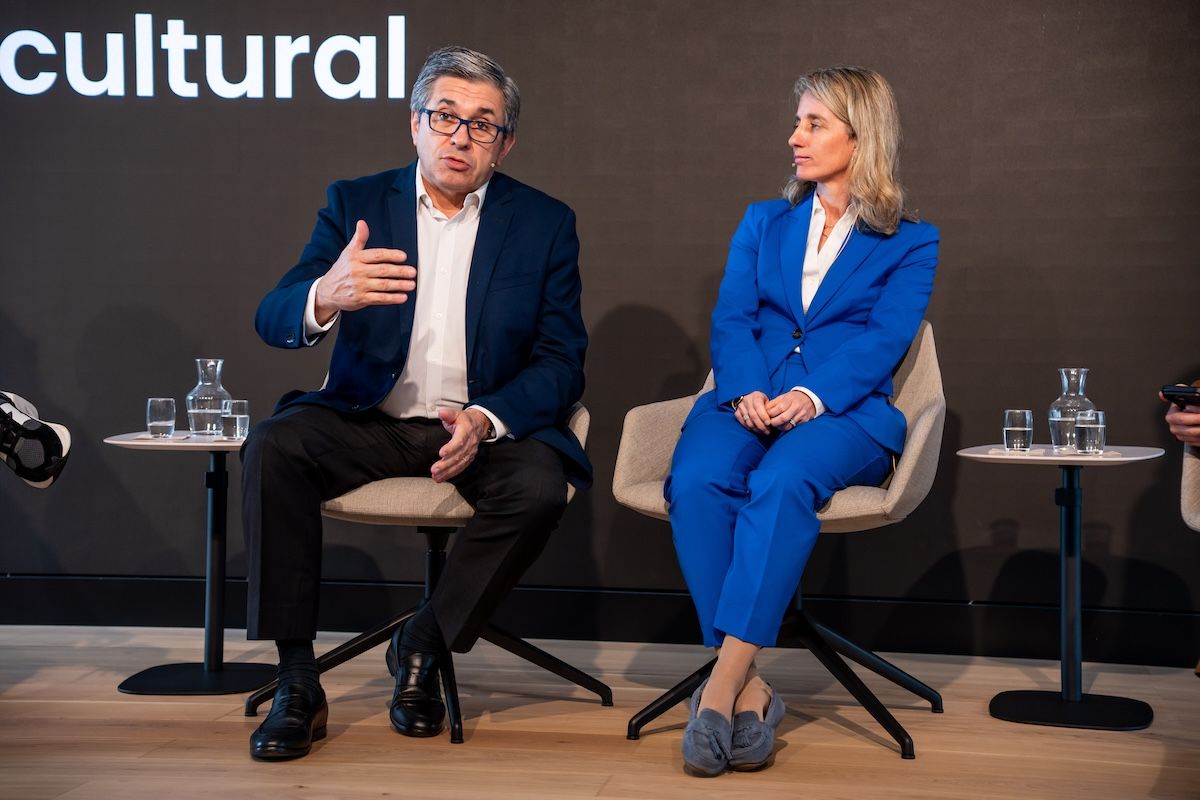
For Maite Esteve, the challenge is bidirectional. "Companies must understand that investing in culture is a sustainable and beneficial investment, but the cultural world must also better incorporate management tools." In this sense, she pointed out that often the business world does not fully perceive the value of culture, and for this reason, from the Fundació Catalunya Cultura, they demand the incorporation of specific training in culture within business school programs. But at the same time, she also warns that the cultural sector has not yet fully integrated the management tools necessary to guarantee the sustainability of projects. "Bringing in business, bringing in management, does not prostitute or belittle culture," she defended. "It is a necessity for sustainability."
A mixed system for a balanced culture
Because culture and business must go hand in hand, just as the public and private sectors must. Not all projects can be strictly private, as in the case of the Thyssen, nor depend exclusively on public subsidies. In fact, large cultural facilities such as the Palau de la Música or the Liceu would not exist today without these alliances. "No cultural project today would exist if it were not for public-private collaboration," Esteve affirmed.
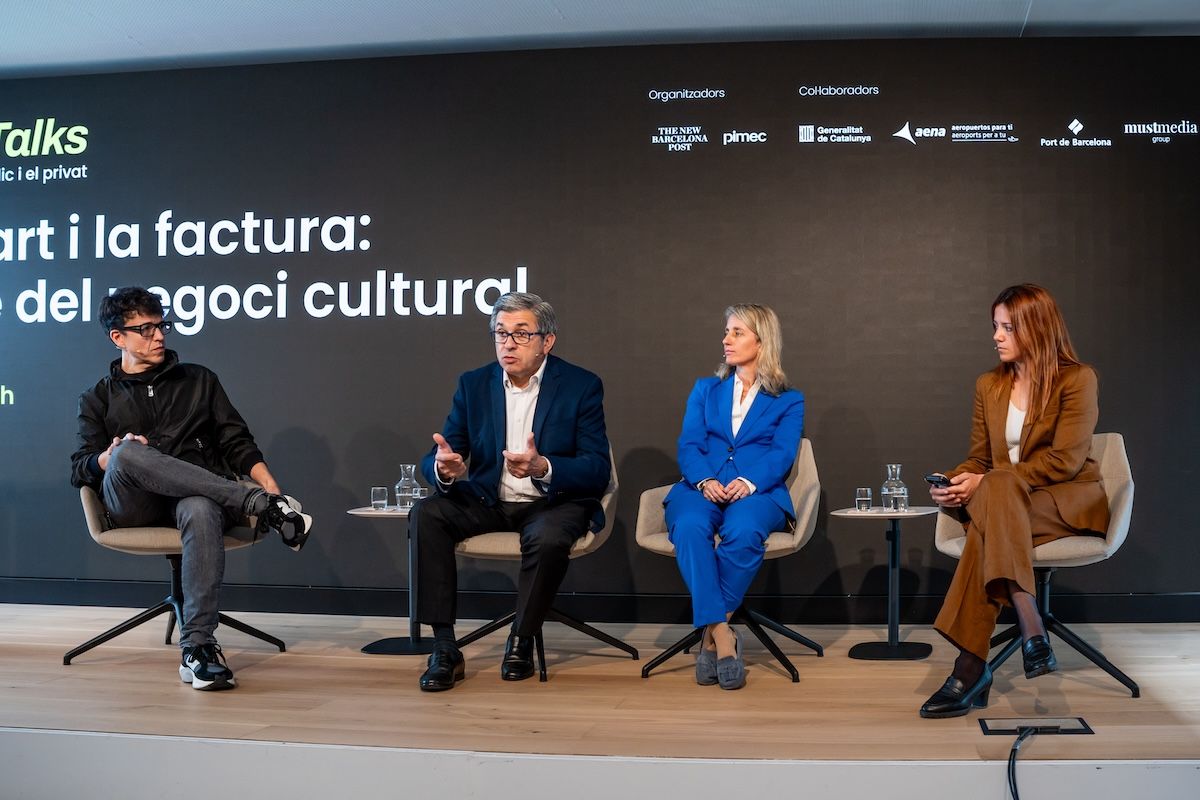
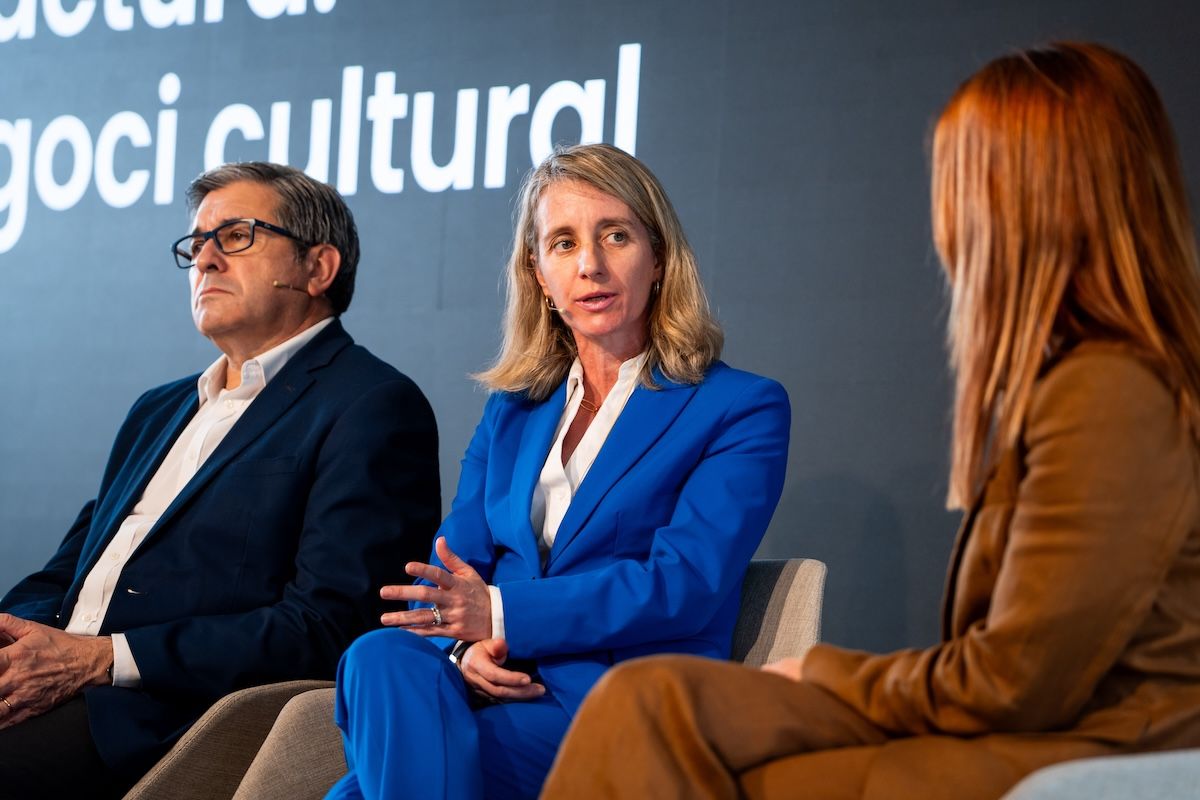
In Catalonia, therefore, there is not a single model or solution, but a combination of formulas. "Projects that must be public, others that can be mixed, and some that can operate with private logic. A balance of all these would give us a robust fabric," concluded Sevillano. It is, in short, about cultural creators and managers being able to continue taking the inherent risk of the sector and leaping into the void, but with more tools, more information, and a more solid support network that makes the descent safer.
Add The New Barcelona Post as your preferred Google source for free
Stay informed with the latest news.