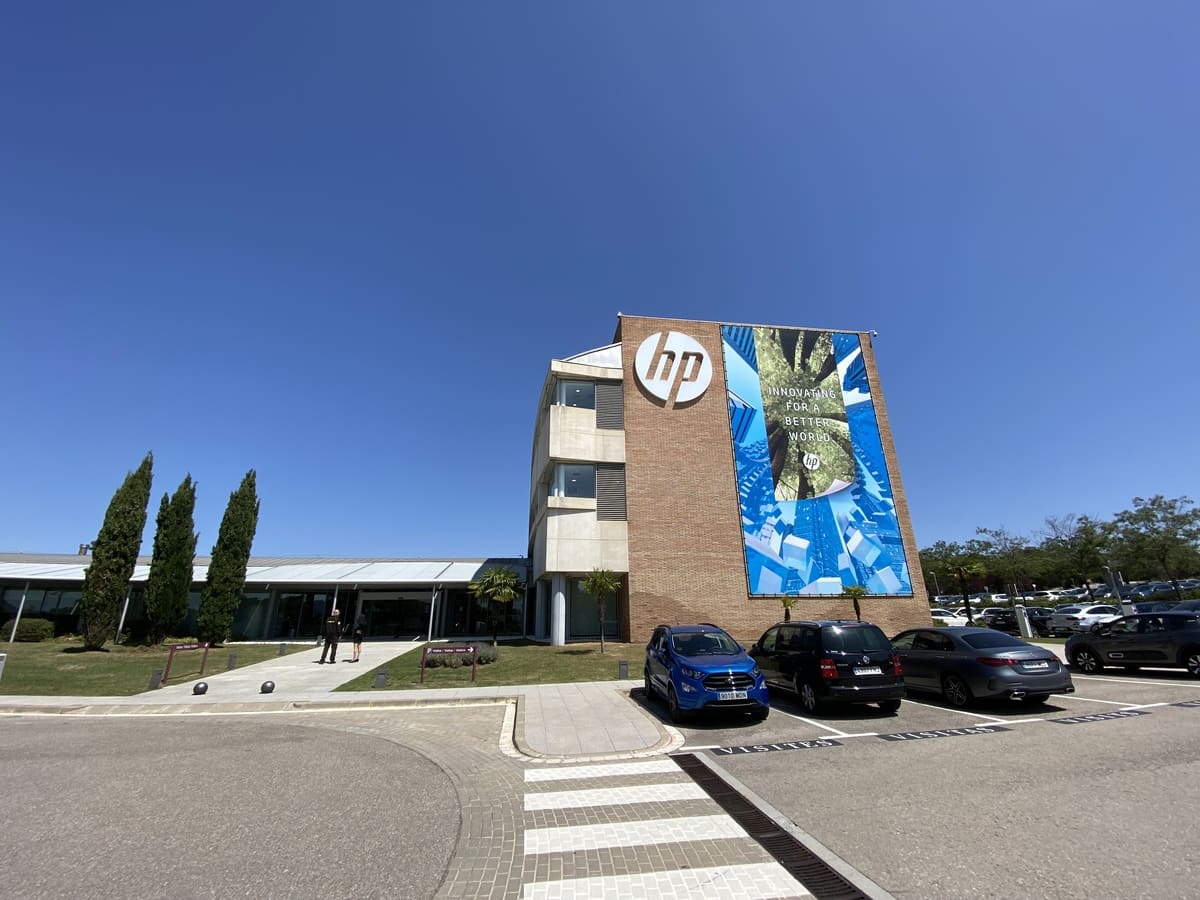
HP has set out to revolutionize the global industry sector from its campus in Sant Cugat del Vallès (Barcelona), home to the world headquarters of its 3D printing or additive manufacturing division. As the company tells The New Barcelona Post, the engineers working at these facilities "have developed between 2011 and 2022 more than 600 inventions in the field of 3D printing, which has resulted in more than 2,000 registered patent applications that have decisively contributed to the evolution and acceleration of this business worldwide."
"3D printing is going to reinvent the entire industry." This is how emphatically Didier Deltort, president of HP's Personalization and 3D Printing division, expresses himself. He receives us in a room full of all kinds of parts that have been manufactured with this innovative technology, which the American multinational decided to embrace less than a decade ago and which has already become one of the fastest-growing business areas within the group.
"This unit was born just seven years ago, and, since then, HP has made a very significant investment to turn it into one of its fastest-growing areas. I am confident that, in the future, it will become one of the group's largest divisions; the potential of additive manufacturing, which now moves 15 billion dollars worldwide, is enormous. We are facing an industry that is growing globally driven by HP and by the developments carried out by the engineers at the Sant Cugat campus, where we have concentrated the global R&D for the 3D area," explains Deltort, who this month completes two years in the position.
According to the executive, "personalization is the future" and, thanks to 3D printing technology, which will reach all sectors, "everything can be customizable" and a multitude of new business models will emerge. "We will no longer buy a pair of shoes; we will buy a footwear service and will receive new personalized shoe models at home based on our gait or data captured by sensors inside the soles," he exemplifies.
In one of his first interviews since his arrival in Catalonia, Deltort shows us all kinds of articles printed with the machines that HP has developed in Sant Cugat thanks to more than 600 inventions and 2,000 patents developed by the center's engineers. Sports footwear, insoles, dental aligners, ski goggles, golf club putters, rings, earrings, air filters, valves, medical equipment, orthopedic prostheses or precision molds to manufacture sophisticated paper pulp packaging, are just some of the pieces manufactured with the group's printers.
A year ago, HP only commercialized printers for the production of plastic parts, but in September 2022 it launched the HP Metal Jet, a printer that manufactures stainless steel parts, which exponentially multiplies the scope of additive manufacturing. At the head of this new area of 3D metal printing is the Catalan executive Ramon Pastor, who also serves as general manager of the entire HP campus in Sant Cugat, where more than 2,500 people from up to 65 nationalities work.
It should be noted that, in addition to being the global headquarters of the 3D printing division, Sant Cugat also houses the global headquarters for large-format printing of the multinational based in Palo Alto (California). It is precisely this great experience accumulated with industrial printers for the graphic arts sector that has allowed the development of the new 3D machines in the Barcelona center, which are assembled in a factory located in Singapore. In this transfer of knowledge from large format to 3D, engineers such as David Claramunt, head of R&D for the 3D area, who has worked for 30 years at HP Sant Cugat, have been key.

Didier Deltort announces that the group's engineers are already working on the incorporation of new metals so that their printers can also manufacture parts from copper, aluminum, or titanium. "3D printing represents a major industrial disruption. In addition to mass customization and the emergence of new business models, it allows for value creation in multiple sectors and a more efficient and flexible supply chain," highlights the French executive, who has developed his entire professional career in the field of medical technology. Before joining HP in 2021, he had worked in multiple countries for companies such as Zimmer Biomet, Boston Scientific, GE Healthcare, Philips, and Agilent, although his beginnings were linked to the former Hewlett-Packard.
"I have returned to HP after 25 years to lead a division that is intellectually super exciting and allows me to learn new things every day," he explains, after pointing out that his long period in the medical technology sector has allowed him to understand "the power" that additive manufacturing has when applied to multiple industrial sectors.
Deltort details some of the great competitive advantages offered by 3D production, which he summarizes as "greater speed, cost reduction, fewer CO₂ emissions, and greater proximity to customers":
- It provides speed, more agility in product development. There is no need to use molds and dies, which are very costly and time-consuming, as each prototype requires a different mold. In addition to speed, 3D printing offers the freedom to design and customize anything; there are no limits, as there are with traditional techniques such as forging or plastic injection.
- Lightens the weight of materials, which translates into energy savings and, consequently, greater sustainability.
- Enables a more flexible and efficient supply chain, which allows production to be brought closer to the end customer. Consequently, transport costs are reduced, and less CO₂ is emitted.
- There is no need to manufacture spare parts, as parts can be printed when needed. That is, spare parts will no longer occupy warehouses and will be replaced by a digital catalog of parts.
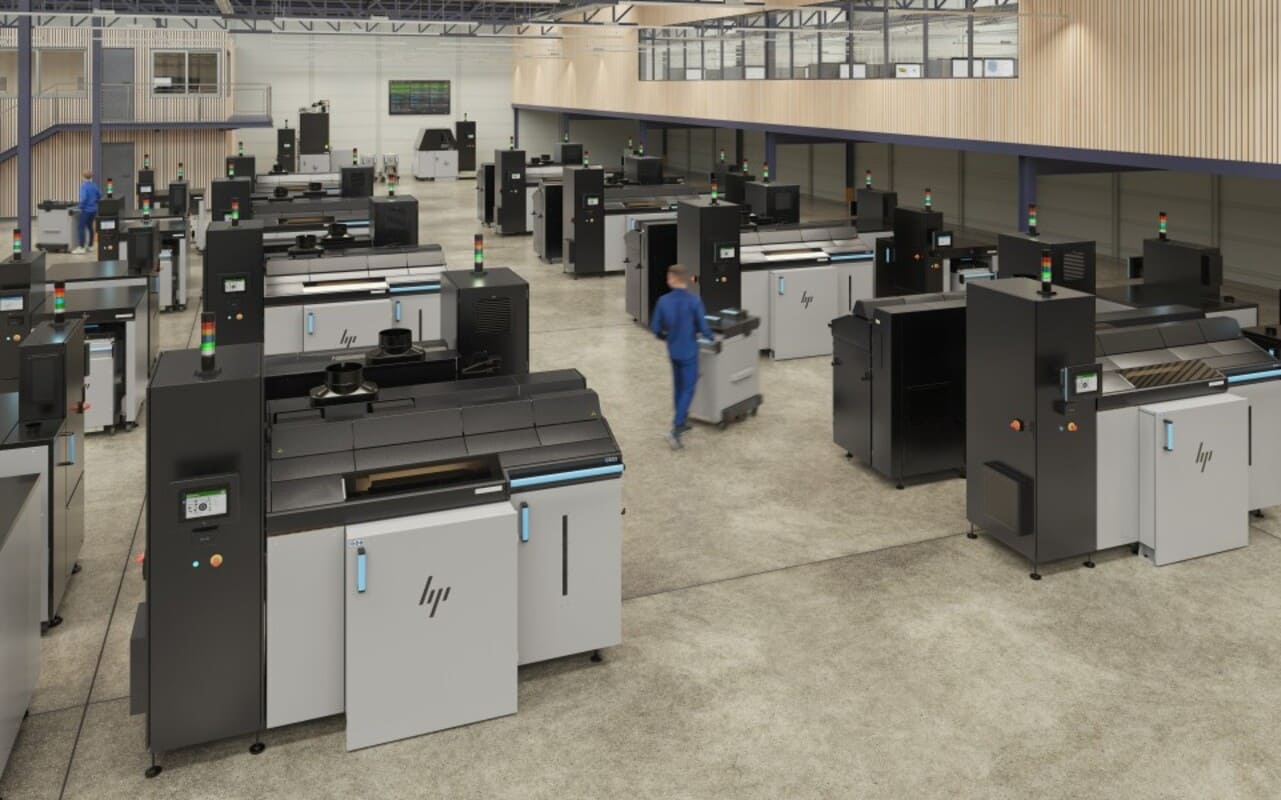
According to the executive, the size of the additive manufacturing business will grow exponentially, but it will not replace the traditional industry; instead, there will be "a coexistence." "I don't think the day will come when everything is done with 3D, I don't think so. But factories will be hybrid; both technologies will coexist for a long time", he assures.
Although it has not even been a year on the market, he points out that large manufacturers such as Volkswagen ---for its T-Roc model---, John Deer or Scheider Electric have already adopted metal 3D printing technology, along with several consumer electronics manufacturers or the golf club brand Cobra. In some cases, they have bought machines for their own factories and, in others, the 3D printers have been acquired by supplier companies or by companies specialized in contract manufacturing.
Production for third parties at the DFactory
In this sense, HP has also opted to promote the use of this technology by operating as a producer of parts for third parties from the factory it has launched at the DFactory, the complex dedicated to industry 4.0 driven by the Consorci de la Zona Franca (CZFB). "We have selected a series of high value-added verticals in which we also act as manufacturers for sectors such as sports footwear, sustainable packaging, medical devices or insoles. This activity allows us to be very close to customers and learn," Deltort emphasizes.
The custom insole company Podoactiva, the orthopodology company Edser, and the custom climbing shoe (gatos) design startup Athos, are two of HP's clients. The manufacturer of clear aligners and orthodontic treatments Impress, which has launched a factory in the Zona Franca of Barcelona, or the company of automation solutions for microbiology laboratories IUL, have also opted for the brand's printers.
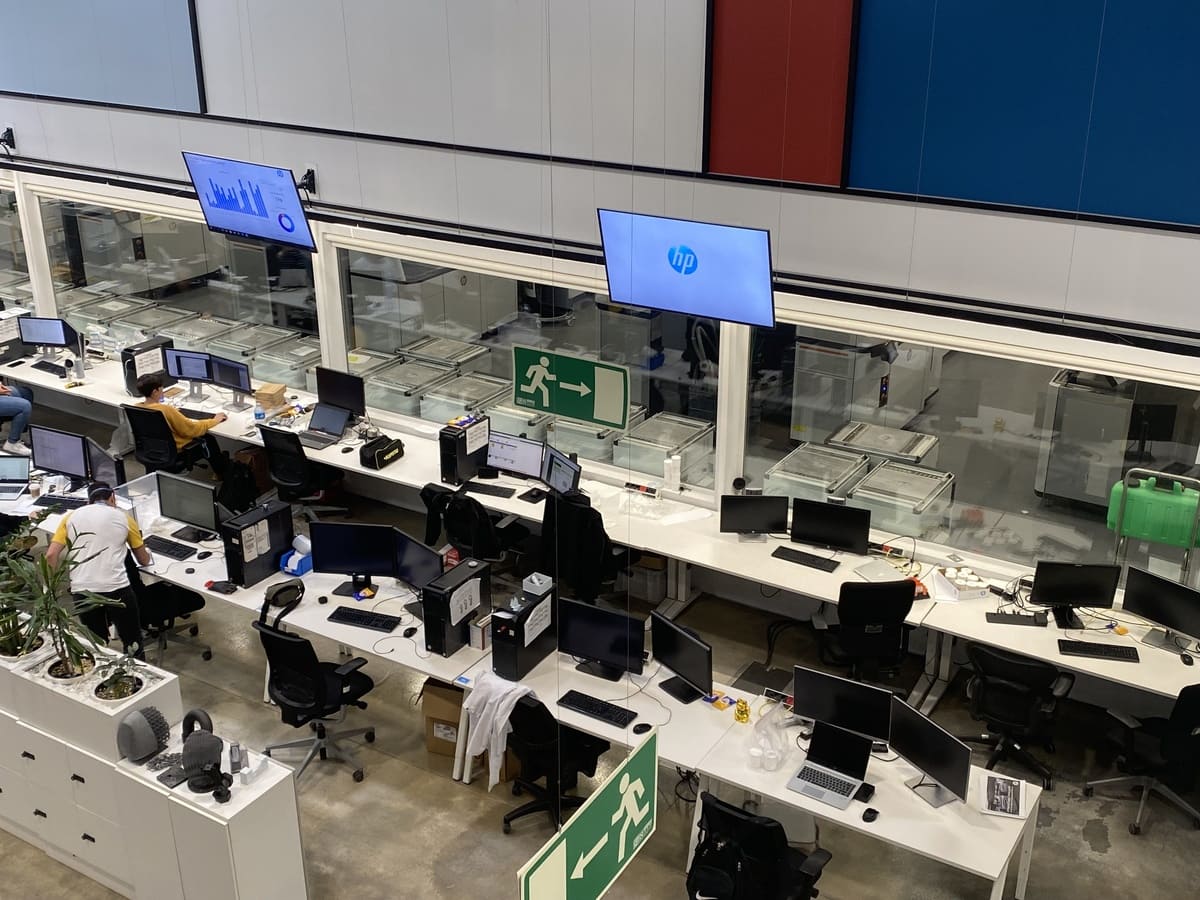
The 3D printing division depends, within HP, on a business area called New Business Strategy & Incubation, since its size is still small in relation to the divisions of PC sales, screens and other accessories (35 billion dollars) and traditional printing (20 billion dollars).
Sant Cugat, the largest HP site outside the US
Didier Deltort predicts a great future for the Sant Cugat campus, which is the most important complex that HP has outside the United States. "We will maintain the growth of this center, which is very important within HP's field of innovation; our global CEO, Enrique Lores, started here," he recalls. "Barcelona, Catalunya, has become a very important hub for attracting talent, it is the Silicon Valley of Southern Europe. It is easier to attract talent here than in other locations," he notes.
Founded in 1985, the Barcelona campus started with 15 people and today exceeds 2,500, with 700 high-level engineers who make up the largest R&D center of the group outside the US. They work in close coordination with the laboratory that the multinational has in Corvallis (Oregon), where the inkjet printer was invented, whose printheads are the same ones used for additive manufacturing. The 3D printing division occupies the newest building of the six on the Sant Cugat campus, as it was inaugurated in 2019. In total, the complex, which receives more than seven thousand visitors a year, has a built area of 68,407 square meters on land of 282 hectares.
Add The New Barcelona Post as your preferred Google source for free
Stay informed with the latest news.