When the author of this series once ran into Gabriel Escarrer, he could not help himself and put a curious question directly to him: “I have a question that might sound completely off-the-wall. Is the helipad in Pedralbes staying?” The CEO and chairman of Meliá did not find the query odd in the slightest. He confirmed that it was, and that it would remain the only urban hotel in Spain with one.
With that matter-of-fact answer to an offbeat question begins chapter 30 of Hotels with History and Hotel Stories, the fortnightly series we publish in The New Barcelona Post. Today’s protagonist is called Torre Melina Gran Meliá, an establishment that half of Barcelona – and a fair share of its taxi drivers – will keep calling “the Juan Carlos” for quite some time yet. We leave the city centre of recent chapters behind to head up into the upper reaches of town.
A masia that never lived to see the hotel
Before the hotel stood there, the site was a seven-hectare estate next to the Real Club de Polo, home to a masia that lent its name to one of the boundaries between Barcelona and L’Hospitalet. Its age is open to debate: the 1990s press placed it in the seventeenth century, while hotel lore traces it back to the twelfth. The developers, the Saudi-backed company Barcelona Project’s, had pledged to restore the farmhouse as a health club, yet tore it down in December 1991 without a permit.
The chairwoman of the Les Corts district slapped them with the maximum fine within her remit – 25,000 pesetas – and recounted that Dr Radi Shuaibi, representative of the Saudi investors, had phoned her weeks earlier deeply offended that his word had been doubted. The developers blamed the demolition on the state of the walls and promised to rebuild it as an office headquarters. That never happened. The fine was raised to 10 million pesetas, though the masia survives only in photographs.
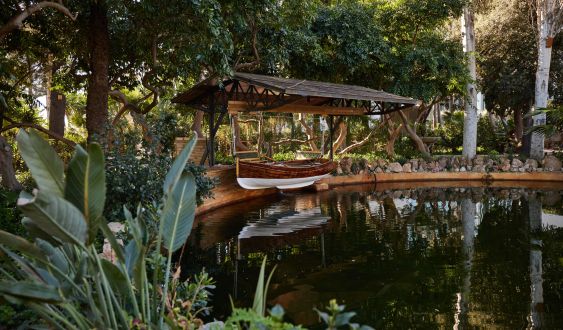
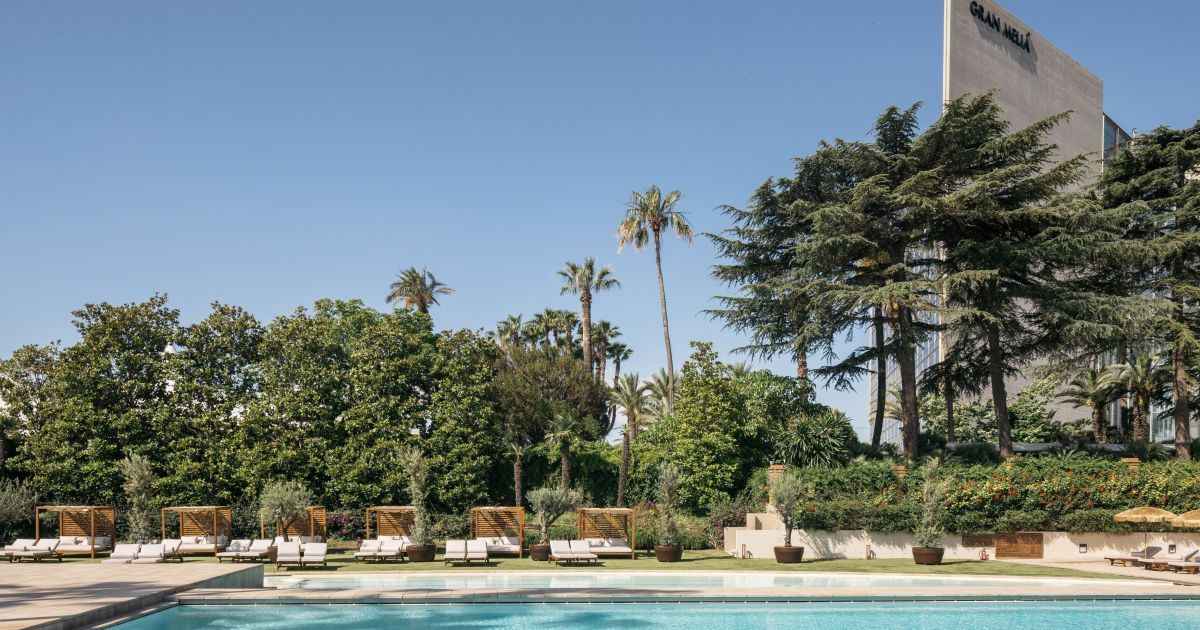
What was saved was the romantic garden – 25,000 square metres that today rank among the complex’s finest treasures. More than thirty years on, Meliá has restored to the hotel the name of the farmhouse swept away by its construction.
Olympic haste
Barcelona Project’s wanted to open in May or June 1992. Building work had begun in September 1990, following controversy over the municipal hotel plan of the era, and was halted for a month by a dispute with small-scale local manufacturers. Finding labour in a city bristling with cranes proved tough: the investment jumped by 40%, rising from 10,000 to 14,000 million pesetas (from €60.1 million to €84.1 million).
On 19 July 1992, six days before the opening ceremony, the King and Queen inaugurated the hotel – the largest opened in the city for the Games. The next day, La Vanguardia ran the headline “Juan Carlos, at the Juan Carlos”. They were welcomed by Mayor Maragall, civil and military authorities, Dr Radi, and Joan Gaspart, president of Husa, the chain managing the property. They unveiled a plaque, signed the book of honour, and toured the suites, including the 500-square-metre royal suite on the top floor. They did not sleep there. That suite had been conceived with them in mind, though whenever they stayed overnight in Barcelona, they did so at the Palau de Pedralbes.
The hotel was still not entirely finished. The Arts, the other grand hotel that sought to capitalise on the Games, also opened half-finished that year, closed to complete works, and reopened with all its floors operational. What separates them is the outlook: the Arts gazes out to sea, whereas the Juan Carlos looked across Diagonal, Pedralbes, and Camp Nou from a triangular silhouette of faceted façades.
Its name paid tribute to the head of state of the day. In Barcelona, almost nobody ever said “Hotel Rey Juan Carlos I”, not even while Juan Carlos Alfonso Víctor María de Borbón y Borbón-Dos Sicilias still reigned, prior to his 2014 abdication. It was simply “the Juan Carlos”. A quirk of being a hotel in Barcelona rather than Madrid? We shall leave that question hanging.
A Xanadu on Diagonal
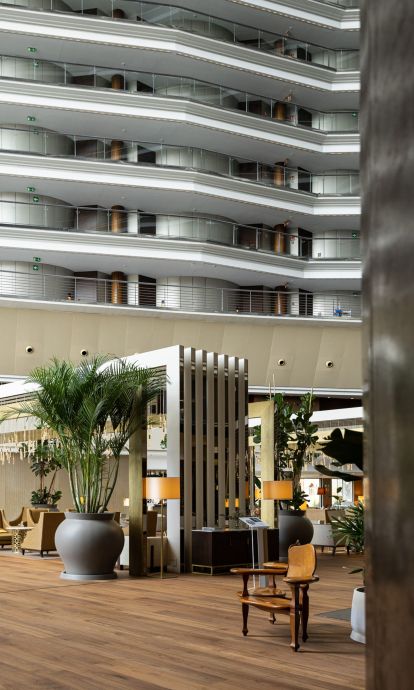
According to the blueprints, the lobby rose 52.5 metres high and was entirely glazed. The guest-room floors look down onto the central atrium, through which glass lifts glide up and down. Architects Ferrater and Cartañà achieved this by offsetting the floor plates in an interplay of polygons that governs the lobby’s acoustics. That atrium had something of a hotel Xanadu about it, in the very best sense of the word: a vision of nineties modernity that left anyone stepping inside open-mouthed.
Heads of State, a Gorbachev, and a polo pitch
The Games saw a curious allocation of accommodation. The IOC and its president stayed at the Princesa Sofía alongside Nelson Mandela, while it was decided that heads of state and members of royal families attending the opening ceremony would lodge at the Juan Carlos.
After a glorious summer came the hangover. In 1993, only 40 rooms were occupied on average, as management acknowledged. By 1998, occupancy had climbed to 80%. Somewhere between those two figures, Mikhail Gorbachev passed through in May 1994, spending two nights in the royal suite. Some fifty people attending a conference greeted him with applause in the lobby when he arrived unannounced. He was scheduled to deliver a lecture in the auditorium before 1,600 people, with Infanta Cristina billed among the audience, followed by a dinner at the Círculo Ecuestre from which he slipped away early: by the time the main course reached the tables, Gorbachev and his wife were already heading up Diagonal in a Mercedes bound for the hotel.
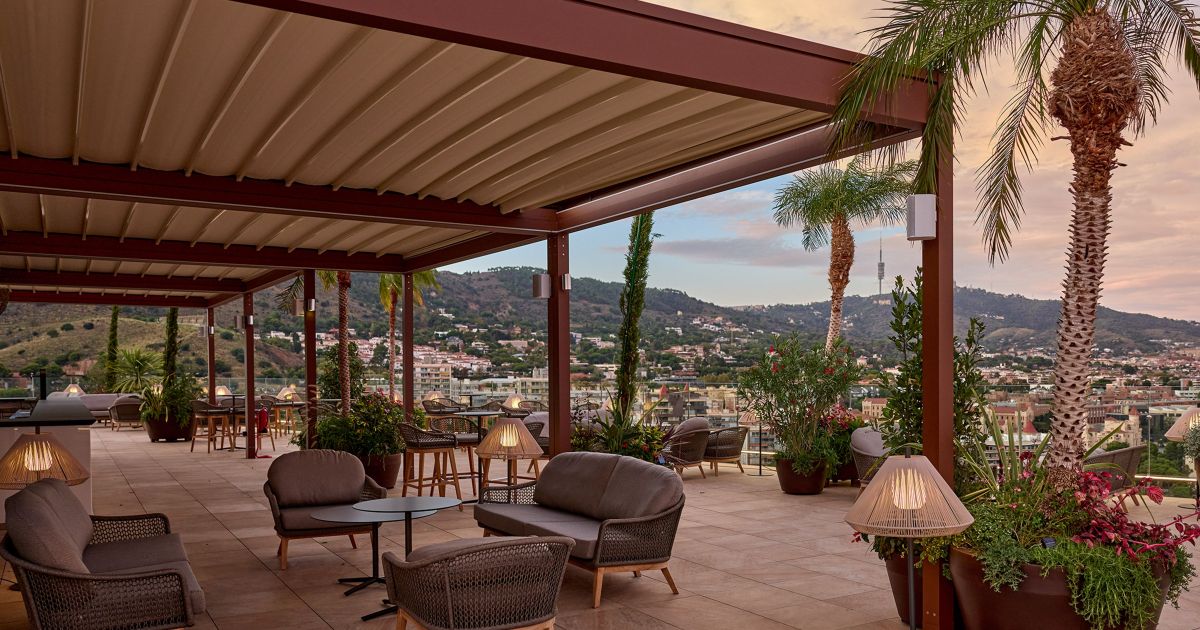
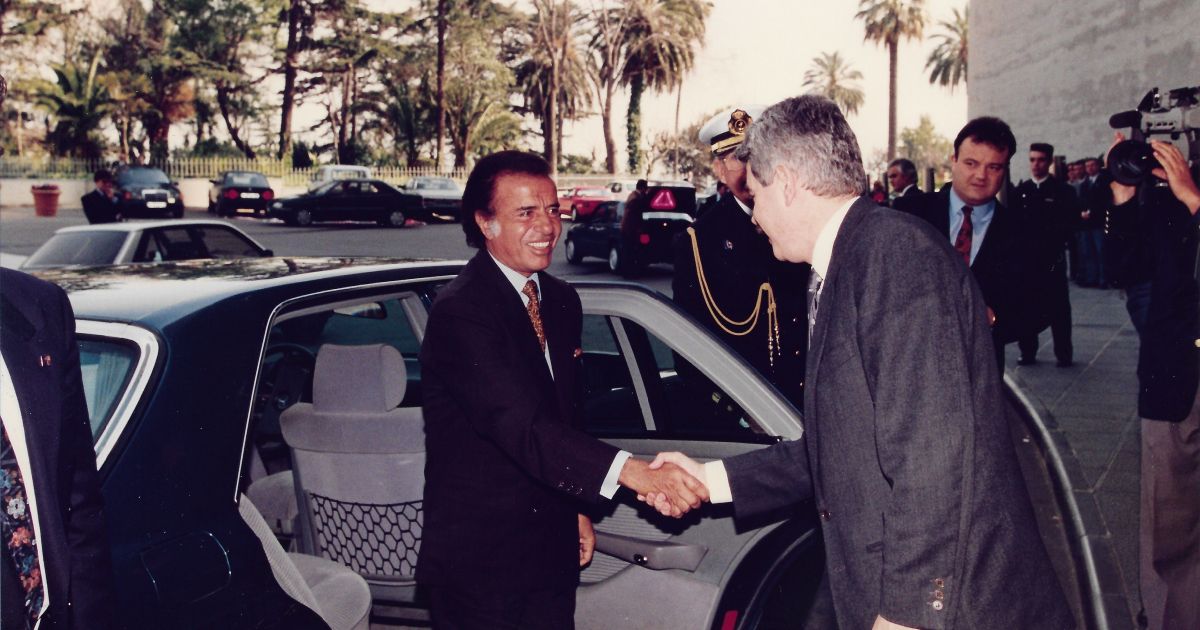
That same year, Argentine president Carlos Saúl Menem stayed there, arriving from Madrid to be welcomed at the entrance by then-mayor Maragall. Those were the Pujol years at the Generalitat, when many foreign leaders added Barcelona to official visits to Spain that originally rarely ventured beyond Madrid – something rather less common today. Menem, a keen polo enthusiast, was bowled over by the views across the neighbouring club’s pitch, whose proximity had been decisive in the Saudi prince’s choice of estate. From certain rooms, one can look out over the polo field, alongside the gardens, the Olympic Stadium, and Camp Nou.
Behind so many illustrious guests stood a discreet figure: Palestinian physician Radi Mahmud Shuaibi, Prince Turki bin Nasser’s trusted representative in Spain, who managed the hotel and chaired several Palestinian associations in Catalonia. He died in August 2025, aged 85, and was bid farewell with a memorial tribute held at Torre Melina itself.
Changing hands, lingering debts
Husa, Joan Gaspart’s chain, ran the hotel from its opening. In 1996, management switched to Hilton, under its Conrad brand, though by the mid-2000s Husa was back. Gaspart’s company operated it until mid-2013 and filed for insolvency at the start of 2014. According to published reports, much of the hotel’s debt originated during that spell – a legacy that weighed on its balance sheet for years.
After Husa, the arrival of InterContinental was announced but never materialised, and in 2014 Fairmont – one of the luxury flags of the Accor group – took over, making it Spain’s first Fairmont. Some €46 million was invested via a twelve-year loan. The hotel kept “Rey Juan Carlos I” in its name – in the very year the monarch abdicated.
Alonsomania and a helipad
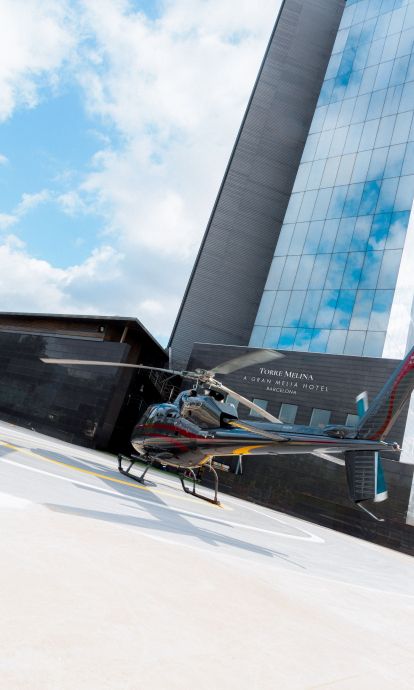
The first decade of the 2000s brought Alonsomania, and with it the Formula 1 Grand Prix at Montmeló turned into mass fever. In 2007, a thousand people flew to the circuit aboard fifty helicopters to watch Massa take the chequered flag. A year earlier, the hotel had inaugurated its helipad at the rear of the building, opposite the RACC headquarters. Certified as a permanent facility, it was assigned an International Civil Aviation Organization code: LEJC. Its final two letters, JC, still nod to the hotel’s former name.
Its use is occasional and strictly VIP, much like the vineyard helipads at hotels such as Marqués de Riscal or Abadía Retuerta. BG Helicopters, which manages the helipad at the Circuit de Barcelona-Catalunya, also operates the facility with on-demand flight programmes. Arrivals require prior authorisation from the property and specific helicopter types. As Escarrer confirmed, it remains unique among Spain’s urban hotels.
Four years in the dark
When Covid hit in 2020, the hotel closed its doors and never reopened under Fairmont. Its owner filed for pre-insolvency protection, and the property was even put up for sale at the symbolic price of one euro, saddled with €75 million in debt. In September 2022, Barcelona Project’s entered formal insolvency proceedings, and a judge ruled in the owner’s favour to terminate Fairmont’s contract. The investment fund Tyrus Capital stepped in to save it from liquidation.
One after another, the city’s other grand hotels reopened following the health crisis. The Juan Carlos was the last. The Diagonal giant spent four years with its shutters drawn and its gardens deserted while the rest of the city regained its pulse.
A king by another name
It reopened on 24 January 2024 as Torre Melina Gran Meliá. The overhaul cost €40 million, trimmed the room count from 438 to 391, and gave Barcelona its first Gran Meliá. A high-profile official launch party was held in the gardens on 5 September – and the taxi drivers ferrying the first guests still called it by its old name.
Once a symbol of grand eras and a fair share of mismanagement, today it stands for a second chance: a revitalised hotel boasting a garden that outlived the masia that gave it its name, and a sparingly used helipad that sets it apart from every peer. That airborne perk remains, in its own way, a glorious hospitality eccentricity on the national stage. And Barcelona, one feels, needed that eccentricity to stay right where it is.
Add The New Barcelona Post as your preferred Google source for free
Stay informed with the latest news.