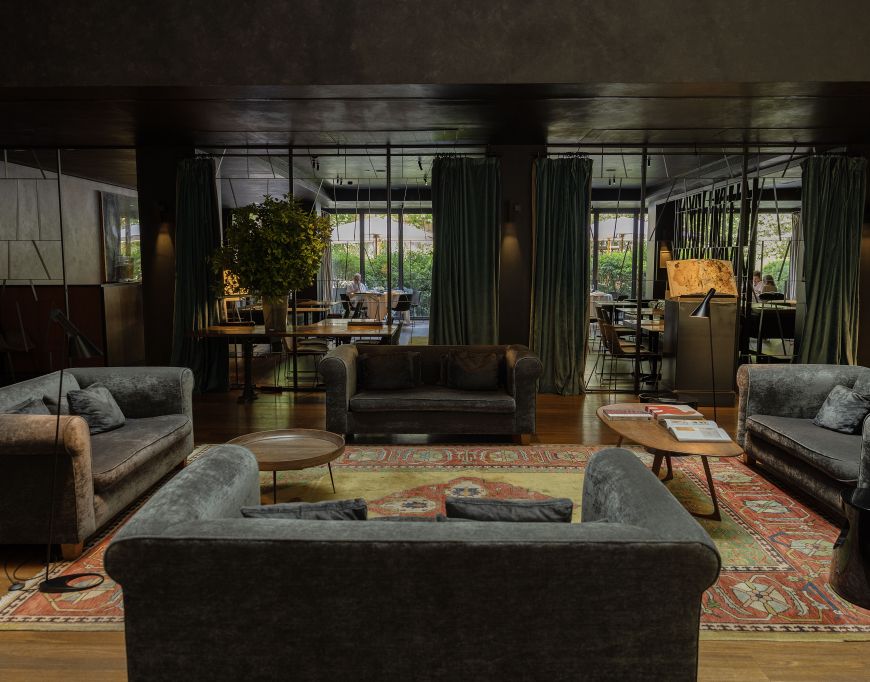
There is a grand piano in Alma's restaurant that is barely visible. For much of the day, it remains behind an elegant curtain that protects it and only appears when the room is in operation. Nevertheless, it plays. It plays with the precision and warmth of a great concert pianist, because it is a Steinway & Sons with a Spirio system, the technology that the company itself manufactures so that the instrument can interpret, in high resolution, the recordings of the world's best pianists.
There is no musician in the room. Only the piano, the piece, and whoever wants to listen to it. It is such a discreet detail that it is almost philosophical, and it says a lot about Hotel Alma, protagonist of chapter 24 of Hotels with History and Stories, the series we publish every two Fridays in The New Barcelona Post.
Discretion: this is the word that defines everything here. And it is also, if one stops to think about it, a radical choice in the context of the most touristy and exhibitionist Eixample of the 21st century.
Dreta de l’Eixample
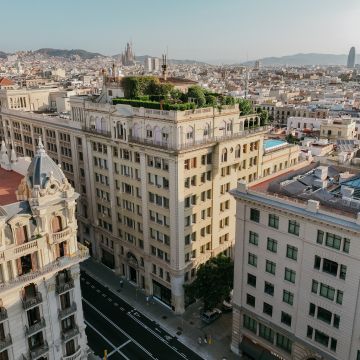
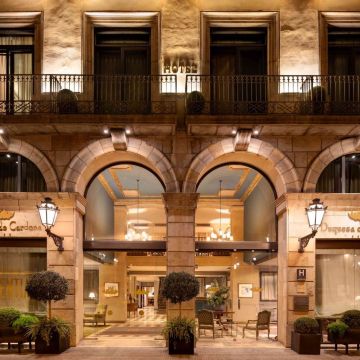
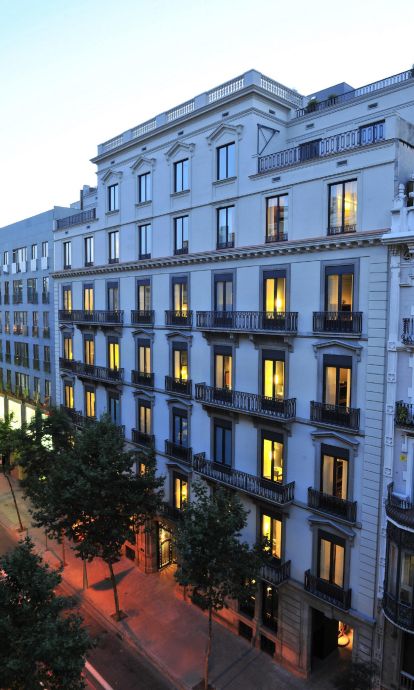
The building at Mallorca 269-271 has the year of its birth: 1910 engraved in stone above one of its entrances. It was built in the early years of the century, when the Eixample grid was still being filled and each plot was a new house for the Barcelona bourgeoisie. The facade is canonical Eixample: contained stone, correct proportion, and presence without ostentation. The type of building that in Barcelona in 1910 marked a social position without needing to attract too much attention.
Thirty-seven years after its construction, in 1947, an tenant arrived who perfectly fit this spirit: Solvay Ibérica, the Spanish subsidiary of the Belgian giant, installed its General Management and offices for the peninsula there. Solvay was (and still is) one of the great European chemical companies. It was founded in 1863 by the Belgian engineer Ernest Solvay based on a revolutionary process to produce sodium carbonate.
Its first Spanish factory had opened in 1904 in Torrelavega, with the presence of King Alfonso XIII. A technical, discreet company, not given to display (nor did it need to be) chose this corner of the Eixample as its Iberian headquarters for almost six decades. In 2005, when Solvay moved to the L'Illa building on Diagonal, number 269 of Mallorca became vacant. And someone knew how to read it well.
Shortly after, Alma Hotels bought the property and commissioned its rehabilitation to the Habitan Architecture studio, with interior design by Nori Furlan and Paco Llonch, from Studio Coriumcasa. The project made a decision that defines the character of the result: they did not want to create a new hotel hidden under an old skin, but rather tried to merge the classic with the contemporary.
The façade on Mallorca Street preserves the classic style of the Eixample and the one facing the interior garden is contemporary, with glass, steel, and cedar wood. In the center of the establishment, a seven-story atrium illuminated by a skylight acts as a 'hinge' between the two façades, flooding with natural light corridors that otherwise might have remained closed in on themselves.
The hotel opened its doors in 2011, and since then it has been managed by the Ausejo family, who have maintained this blend of tranquil luxury and discretion intact from day one.
The garden
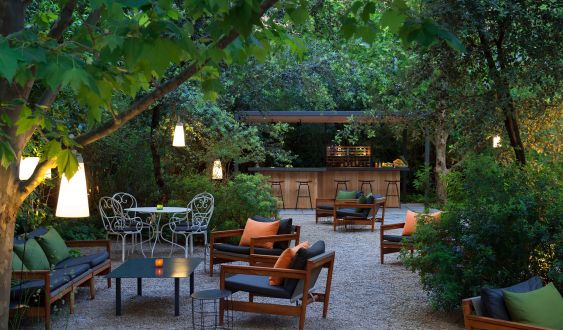
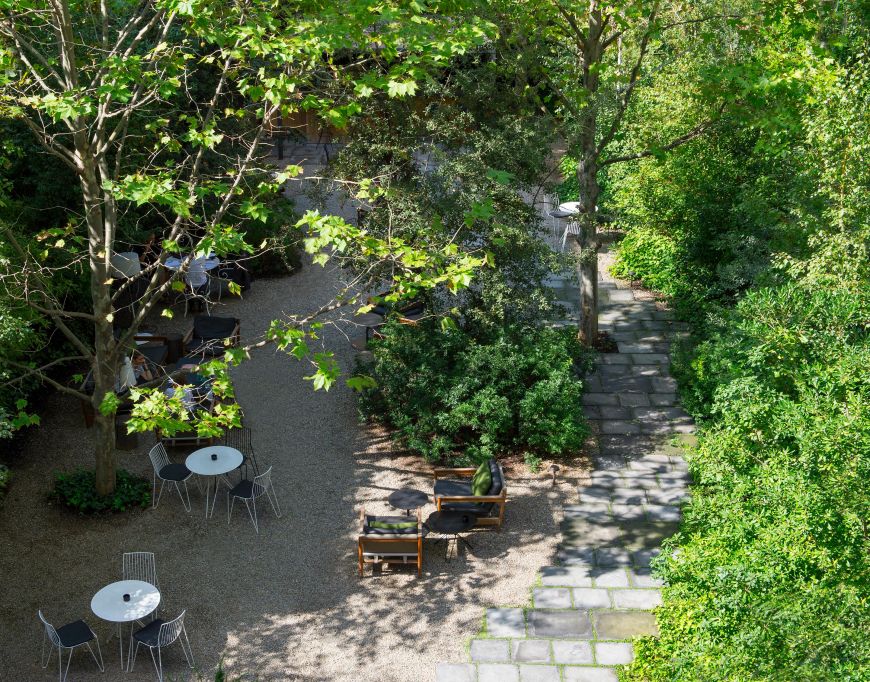
It could be said that the most important gesture of the project is not strictly architectural, but rather landscaping. It is, almost, an act of urban justice with the history of the city. The interior garden, this green lung that guests contemplate from their rooms, and where one can have breakfast or a drink in the late afternoon, was recovered just as Ildefons Cerdà had imagined it in 1860.
When the engineer drew the grid of the Eixample, the interior blocks were conceived as green and semi-public spaces: shared gardens. Real Barcelona almost systematically betrayed this dream: the interior courtyards were devoured by warehouses, workshops, extensions, or parking lots. The city gained square meters, although it lost green areas and air.
The Alma is one of the very few cases in which this garden was not only preserved, but was returned to its original spirit. The Barcelona City Council recognized this and included it in the Architecture Weeks precisely for this reason. If Cerdà could peek in there today, he would recognize something of what he imagined in his idea of the city.

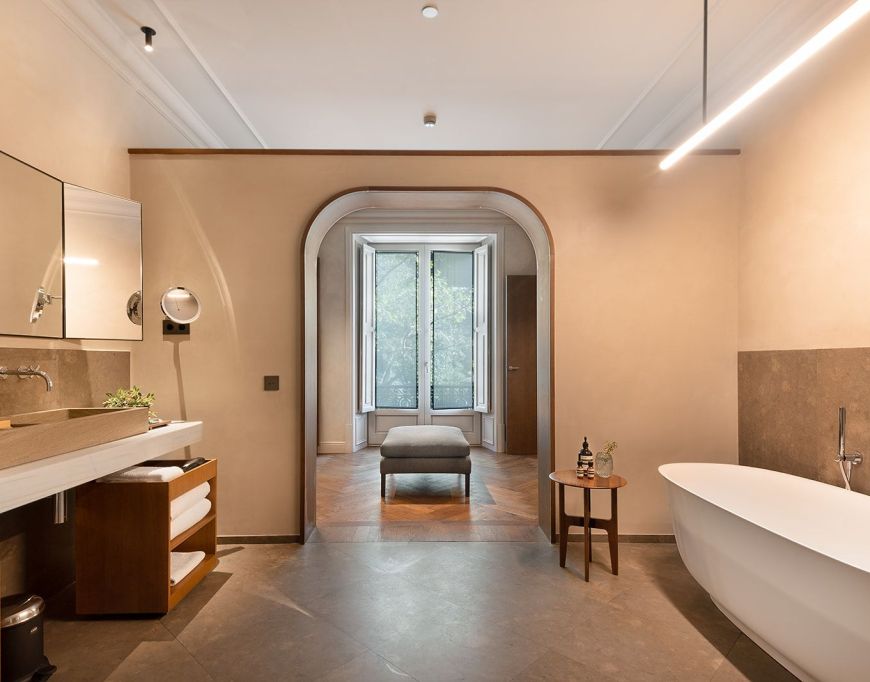
The Eixample has these curiosities. A few steps from Passeig de Gràcia, which is one of Barcelona's most photographed, transited, and tumultuous avenues, there is a hotel where silence is a policy. Not just silence, but inhabited silence: that of the garden, that of the piano playing without a pianist, that of the 70 rooms of more than 50 square meters that look out onto greenery and the street, isolated from its noise. Even access to them is discreet: they open with a fingerprint, without cards or the sound of keys at the door.
This discretion also has official recognition: the Alma holds a Michelin Key, the distinction with which, for just a couple of years, the guide has been pointing out unique accommodations, apart from the stars it reserves for restaurants. And there are guests who value, above all, not being recognized.
Chef and writer Yotam Ottolenghi, who is not lavish with hotel praise, has publicly recalled that at the Alma he tasted the best breakfast of his life. It is not the kind of publicity a discreet hotel seeks, although it is exactly what it deserves.
Sant Jordi
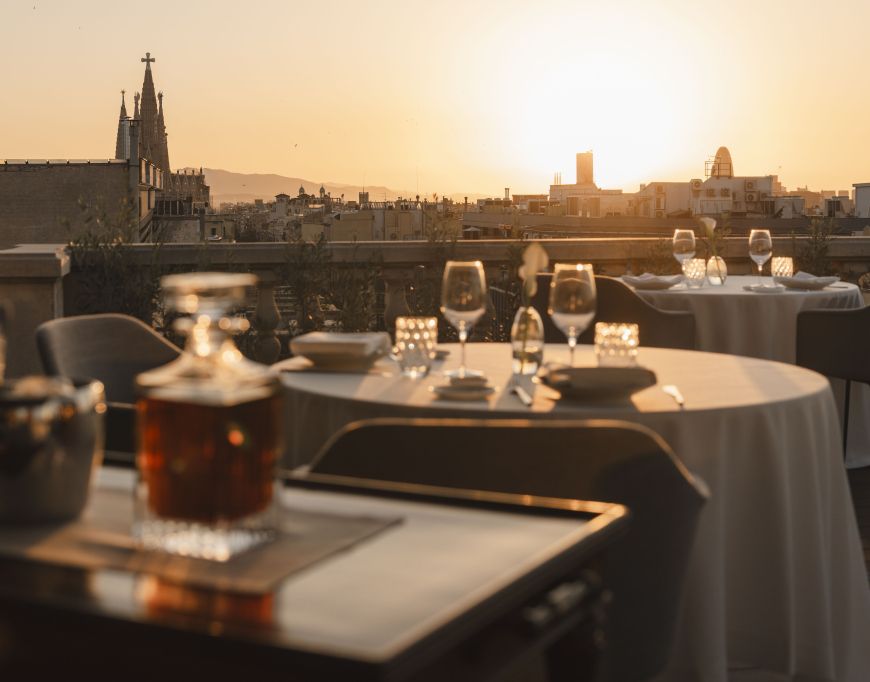
This house rule, however, is broken once a year, and deliberately so. On the eve of Sant Jordi, La Vanguardia moves its literary party to the gardens and rooftop of the Alma. Here the hotel becomes, for one night, one of Barcelona's social epicenters: publishers, authors, politicians, and a good part of the city's high society mingle among the same plants that the rest of the year only see guests determined to go unnoticed.
It is the exception that confirms the rule, and perhaps that is why it works: a garden designed for silence, lent for one night to the year's most boisterously literary party.
Outside of this date, discretion is once again law, and it applies above all to guests. In most luxury hotels, management never reveals who is staying in their rooms; at the Alma, this rule is lived almost as a matter of faith. Bringing to light an anecdote starring a well-known face is practically an impossible mission: there are some, since in its 70 rooms or suites and more than fifteen years of history, something always happens, although the determination of all the staff, from reception to cleaning or management, ensures that these stories stay exactly where they should: within its walls.
Next to Passeig de Gràcia, without being there. With the whole city within reach, so close and so far. A piano playing, even if it's not seen. A garden that existed in the 1860 plans and took one hundred and fifty years to materialize.
Silence, discretion and elegance. This, in today's Barcelona, is perhaps the most difficult luxury to find.
Add The New Barcelona Post as your preferred Google source for free
Stay informed with the latest news.