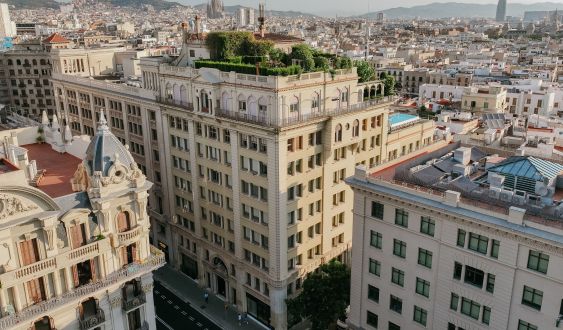
In 1924, Francesc Cambó commissioned the construction of his new Barcelona home on a street that didn't quite exist yet. Via Laietana had been carving its way through the medieval fabric of Ciutat Vella for years, by means of demolition, and most investors waited for the avenue to be completed before committing. Not Cambó. He put his money on number 30 before there were neighbors, before there was traffic, and before anyone could know for sure if it would work.
Furthermore, he did something no one had done in the city: he placed his bedroom, office, library, and private life in the attic of what was at the time the tallest building on Via Laietana. This place is today the Grand Hotel Central, protagonist of chapter 23 of Hoteles con Historia, the series we publish every 15 days in The New Barcelona Post.
Until then, the Barcelona bourgeoisie preferred the noble floors of the Eixample: hence the "principals" and mezzanines, homes with high ceilings and easy access. Attics were for the service. Cambó inverted the order. He installed his family home on the top floor, and reserved the intermediate floors for offices. It was not a whim but a declaration of principles from someone who understood that technology had just changed the rules of the city and that those who understood it first would win.
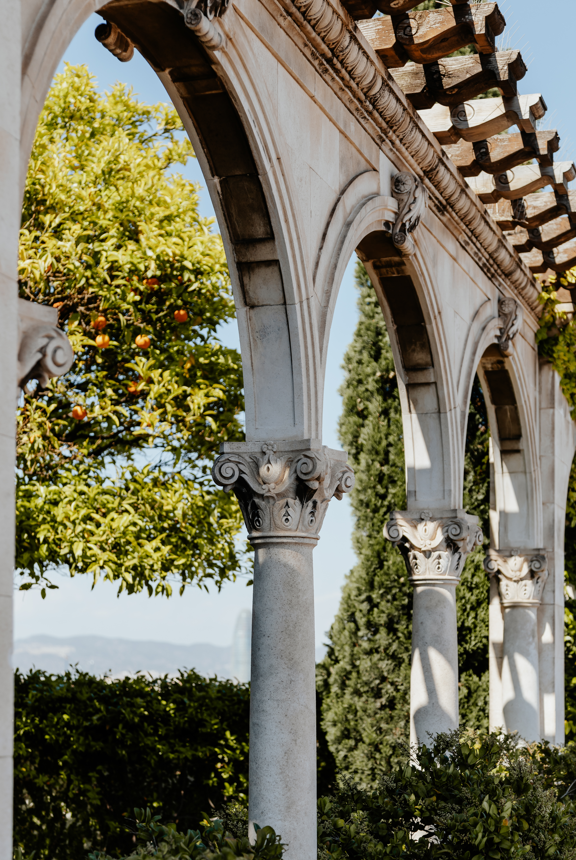
He further upped his bet on heights. On the rooftop, above the rooftops of Barcelona, Cambó asked for a garden to be built that was invisible from the street. It was designed by Jean Claude Forestier (the landscape architect who had transformed Montjuïc), together with his collaborator Nicolau Rubió i Tudurí. Orange trees, lemon trees, cypresses, bougainvillea, fountains, sculptures… more than a thousand square meters of Mediterranean suspended over the city. The first garden on an urban rooftop built in Barcelona. A place about which almost no one knew anything and to which almost no one had access.
The first garden on an urban rooftop built in Barcelona.
This taste for the elevated, for what is not seen from the street, for what must be deserved to be found, defines Cambó better than any official biography. Businessman, politician, and patron in proportions difficult to separate, he was the most influential figure of conservative Catalanism in the first third of the 20th century. He founded the Bernat Metge, a foundation responsible for translating almost 450 Greek and Latin classics into Catalan, he also gathered an art collection that upon his death he distributed between the MNAC and the Prado, and he promoted cultural institutions with the same energy with which he negotiated votes in Madrid. He also had a relationship with Francoism that history has judged harshly. He was that: a complex figure, like almost all those who leave a mark.
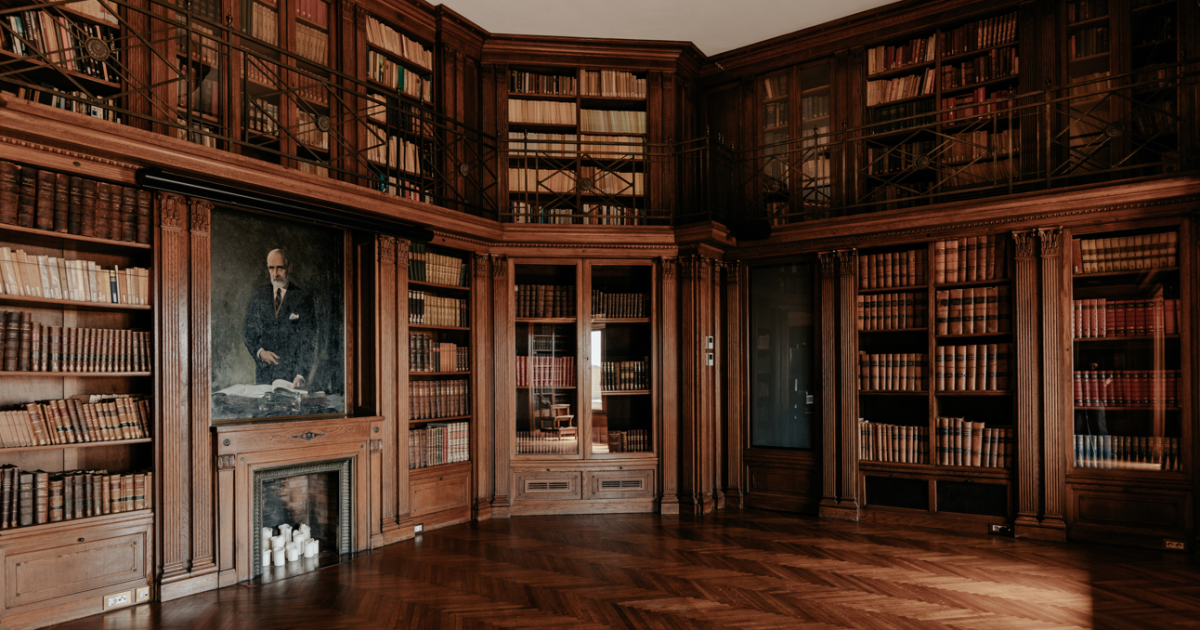
Of that bibliophile passion, a direct testimony remains within the hotel itself. Located on the eighth floor of the building, Cambó's Library has remained intact. Floor-to-ceiling bookshelves, wooden panels, parquet floors, and mahogany moldings on the ceiling remind us of the aesthetics of the 1920s. It houses part of his personal collection of books and today functions as a space for private events. It is, along with the rooftop garden, the corner that best summarizes the character: cultured, reserved, and select.
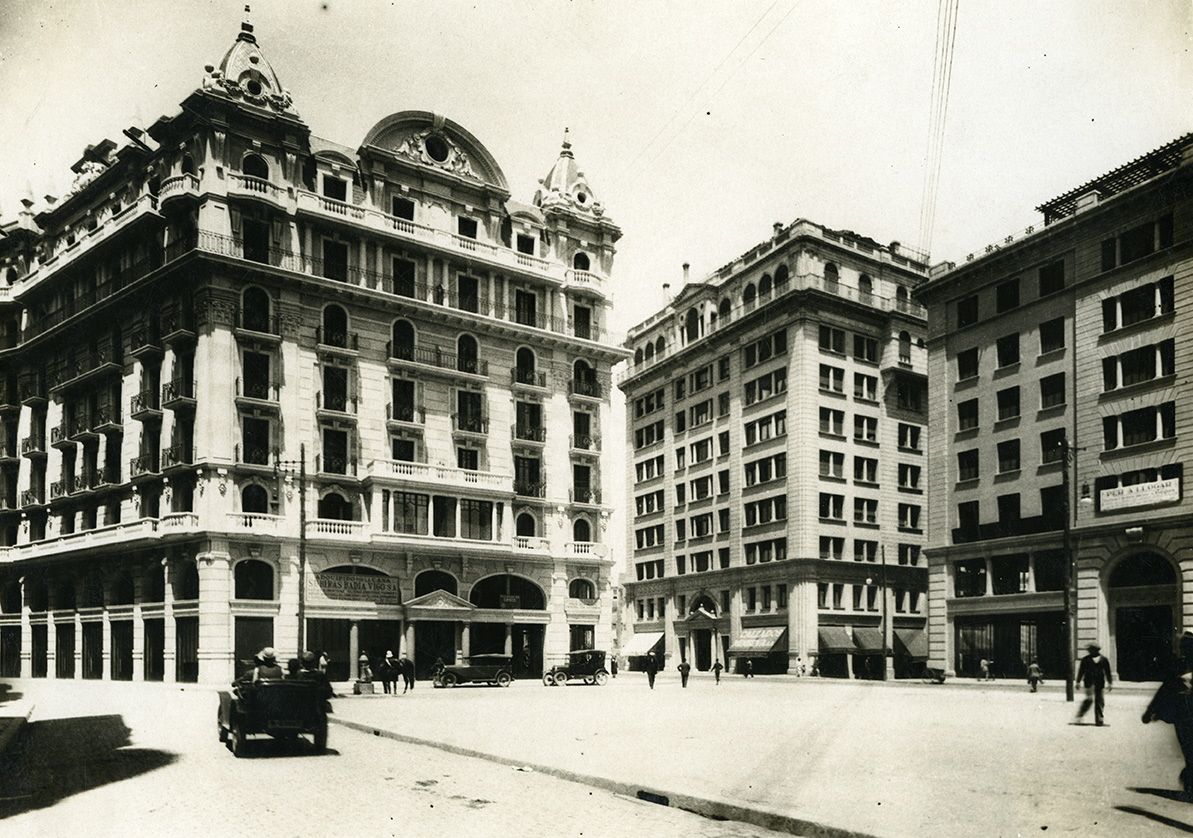
The materialization of the building fell to Adolf Florensa, one of the names that has most shaped Barcelona and appears least often in guides. Born in Lleida in 1889, graduated in 1914, Florensa was appointed municipal architect of the Barcelona City Council in 1924, the same year Cambó commissioned him the building on Via Laietana. From this dual position as private and city architect, he left a mark that today is measured in linear kilometers of facade and centuries of preserved heritage. If you look at the facade, on the right you will see his name signing Cambó's house.
Florensa opted for order and proportion. He drew from Noucentisme, but had also carefully observed the Chicago School: the new American architecture that favored steel, concrete, pillars without load-bearing walls, and large horizontal windows. The facade of 30 Via Laietana elegantly summarizes this: a neoclassical-inspired base, a rationalist office body, and a palatial-style crowning. By the way: the politician's building is not the only one of his on this same street: number 28, the Immobiliària Catalana, the Casal del Metge, the Foment del Treball building. For the observer, the Via Laietana of the 1920s is, to a large extent, a catalog of Adolf Florensa.
The Via Laietana of the 1920s is, to a large extent, a catalog of Adolf Florensa.
The leap to a hotel came in 2005. However, Cambó's house took longer to completely shed its past: his only daughter, mother in turn of his fourteen grandchildren, occupied the upper floors of the building until 2021, with direct and private access to the rooftop garden. An apartment that for almost a century has been exclusively family territory and whose future, now that it is empty, is still to be decided.
The most recent renovation, completed in 2024 with the London studio Sagrada at the helm (the firm behind projects such as the London Art's Club, the Maison Breguet in Paris, or the St. Regis in Venice), has managed not to err on the fundamental: the rooftop continues to be the heart of the building. Cataloged as a Cultural Asset of Local Interest, Cambó's garden, with its Mediterranean vegetation and sculptures, continues to be what it always was: a secret in the heights.
From this same terrace, one can contemplate, to the right, a large sgraffito mural from the 1920s, an artistic jewel only fully visible from here. Commissioned by Cambó to compensate for the loss of sea views when the adjacent building at number 28 was erected, it is an example of the sgraffito revival promoted by Noucentisme: the superposition of plaster layers of different colors that, when the upper one is removed, reveals elegant decorative forms. Today it is cataloged as a Cultural Asset of National Interest by the Generalitat de Catalunya.
Also at the top, an iconic infinity pool (considered one of the most beautiful urban pools in Europe) and the terrace bar and restaurant, one of the best places in the city for sunrise over the Born or sunset over the Gothic Quarter. A gong marks each sunset, as if the building remembers that here, from the beginning, the best was always at the top.
From the terrace, you can see the Barcelona that Cambó helped to imagine.
One hundred years after that commitment, the Grand Hotel Central, with 57 rooms and suites, two restaurants, spa, gym, the period library, and this terrace, once again looks beyond the obvious. Coinciding with the building's centenary and with Barcelona's designation as World Capital of Architecture, the hotel offers its guests this year the Noucentisme Tour. Beyond Gaudí, a guided tour that follows the Via Laietana, tracing the footsteps of Sagnier, Domènech i Mansana, or Puig i Cadafalch until reaching the Post Office Building. In the face of Gaudí's omnipresent prominence, the route vindicates what Cambó understood first: that Barcelona's modernity was also built with order, proportion, and restraint.
From the terrace, you can see the Barcelona that Cambó helped to imagine. A city that decided to be modern before knowing exactly how to do it. And for that very reason, it continues to surprise, just as the wonderful flan that can be tasted at Can Bó, the Mediterranean-Italian restaurant at its entrance, surprises. Allow me this sweet note. The fact is that the writer of this has never tasted richer and simpler desserts in their life.
Add The New Barcelona Post as your preferred Google source for free
Stay informed with the latest news.