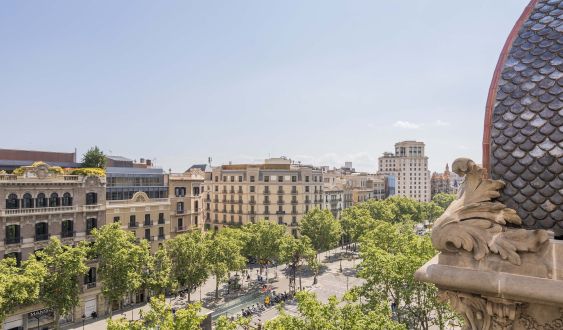
On Passeig de Gràcia there are buildings that have accumulated history over time. Number 29-31 is one of them. Built between 1880 and 1890 and patrimonially protected by the City Council, it has gone through different stages of the city without losing its place on one of Barcelona's most recognizable axes. Now, that journey adds a new chapter.
The real estate group Alting has signed the lease of the property with Hidden Hotels, which will develop its first hotel in the city in this enclave: a five-star hotel in the heart of the Quadrat d'Or, a few meters from Casa Batlló and Casa Amatller, and in front of one of the great international luxury references in the city, the Mandarin Oriental.
More than an opening, the project is conceived as a reinterpretation of the building. With nearly 6,000 square meters distributed over six floors, the future hotel will combine rooms with views of Passeig de Gràcia and the interior courtyards of the Eixample, a rooftop terrace oriented to the skyline and a restaurant with access to a private interior garden. A configuration that seeks to balance exposure and seclusion, two of the most valued elements in the high-end segment. The operation fits with an increasingly visible trend in the premium segment: the interest in spaces with identity, where luxury is not built only from design or service, but from the history that sustains them.
In the case of Alting, the relationship with the building goes back a long way. The company acquired the properties in 1998 in one of the most relevant operations on the axis at that time, and since then has carried out active management of the asset, including its comprehensive rehabilitation —internationally recognized— and different contracts with hotel operators. Before this new stage, the building had passed through the hands of chains such as Hotusa or Sonder.
"Historic buildings not only preserve memory, they also have the capacity to continue writing new stories," says Carolina Marcos, deputy general manager of the company, referring to a project that seeks to maintain the identity of the property while projecting it towards a new stage.
For Hidden Hotels, the city was a pending piece within its map. Founded in 2013 in Palma de Mallorca by Carmen Cordón and Ignacio Jiménez, the chain has built its trajectory from the recovery of unique buildings in high-value urban enclaves. Its portfolio includes assets such as the Gran Hotel Inglés in Madrid —the oldest in the capital—, the Seda Club in Granada or projects in Seville and Mallorca, all of them with the same logic: luxury hotels with a strong local identity.

The arrival in Barcelona also occurs at a time of brand expansion, with new developments in cities like Lisbon. In this context, the Passeig de Gràcia project is not an isolated move, but part of a broader strategy of positioning in key urban destinations in Southern Europe.
The interior design of the future hotel will be handled by Jean Porsche, whose career stands out precisely for his ability to reinterpret heritage from a contemporary perspective. His work combines rich materials, historical references, and a timeless aesthetic that fits the character of the building and the type of experience the chain seeks to offer. The hotel's concept is inspired by the city's textile past and the rise of private clubs in the late 19th century, incorporating elements such as velvets, stained glass, and silks to recreate an atmosphere that connects with that imagery.

All of this in a context where luxury tourism continues to gain weight in the city. Barcelona maintains high levels of occupancy and rates, while the scarcity of product in prime locations reinforces the value of operations like this one. Passeig de Gràcia, in particular, has consolidated itself as one of the main axes of high-end hospitality in Europe, concentrating both international brands and more boutique proposals aimed at travelers seeking differentiated experiences.
Add The New Barcelona Post as your preferred Google source for free
Stay informed with the latest news.