Pale girls with striking, colorful hair. Felines with hypnotic eyes and dark fur that surround them, stalk them, and watch them. They remain motionless, with a lost gaze, very white skin, and eyes fixed directly on the viewer, as if piercing the painting, far from the danger that seems to be lurking nearby. Around them, nature seems about to devour them. Or perhaps it is protecting them. All of it rendered in large-scale oils — some more than three meters across — in pastel, almost naïve tones that soften the scene and, precisely for that reason, make it even more unsettling.
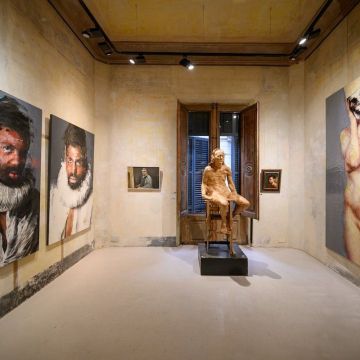
That mix of fascination and unease is the first thing you feel in front of Guillermo Lorca's paintings, to whom Barcelona's MEAM (European Museum of Modern Art) is dedicating a retrospective exhibition until 27 September, the first major show of its kind to be staged in Spain. Lorca is a painter who fills his enormous canvases with girls with colorful hair and felines in apparently sweet scenes that conceal a disturbing tension between innocence, the violence of adult life, and a nature that can be as protective as it is ruthless. From the moment you walk in, one thing about his work becomes clear: Lorca's paintings stir up strong feelings, though not necessarily the same ones in every viewer. They fascinate, unsettle, seduce, or disturb.
Beyond these — sometimes contradictory — feelings, it might also be a surprise to find, in a modern art museum, a painting in which every object is so immediately identifiable: a girl, a tiger, a cat. There is no effort required to know what we are looking at. Accustomed to finding abstract forms, performances, installations, or digital art in contemporary art museums — works that often force us to look for what lies behind what we see — Lorca takes the opposite path: he paints figures that we recognize instantly. The girl is a girl, the tiger is a tiger, the cat is a cat. No complications. And yet, nothing is so simple to interpret.
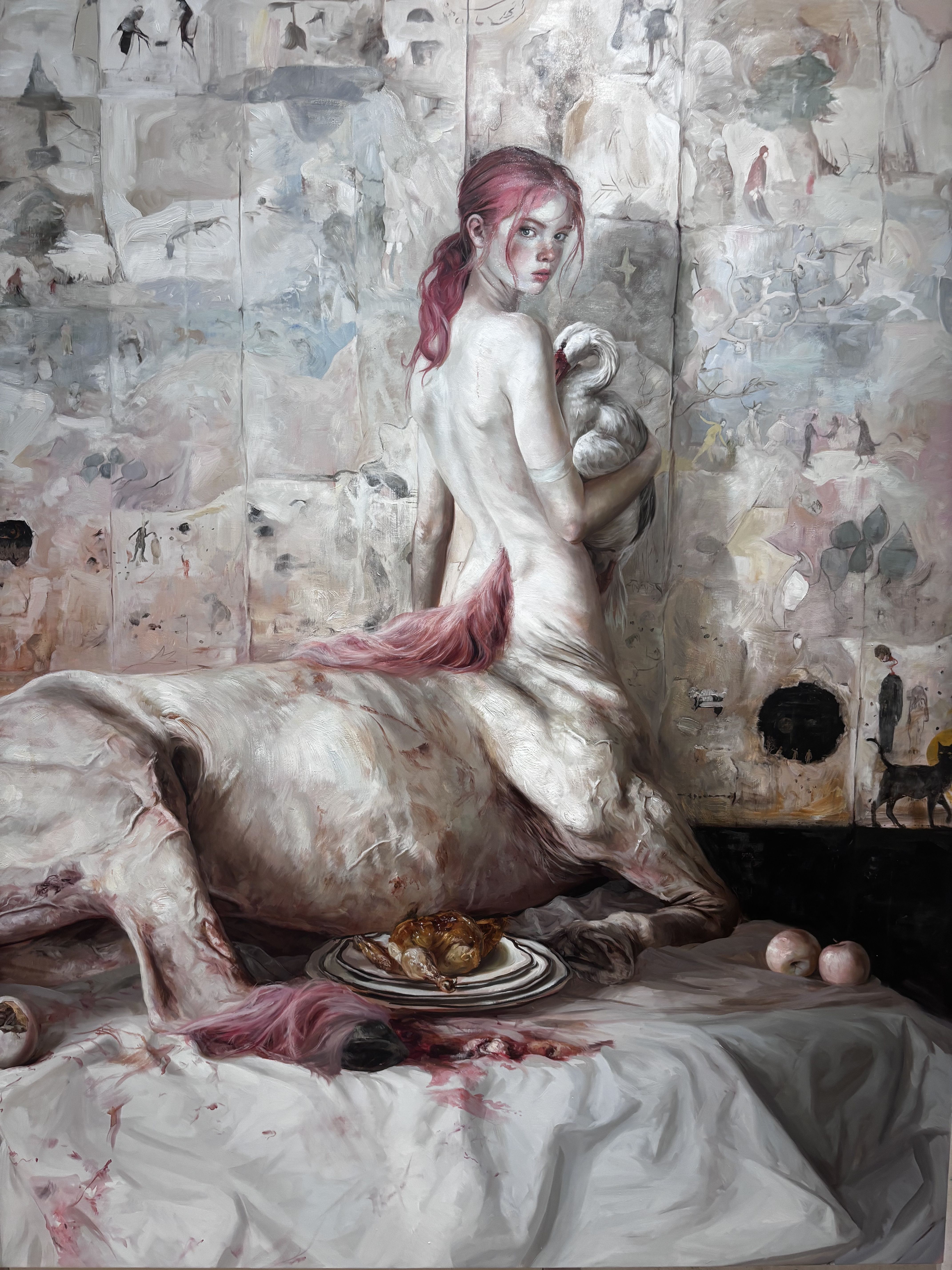
That's why his paintings feel less contemporary than as though they've arrived from another time altogether. There are echoes of great classical masters like Rubens, Velázquez, and Caravaggio, which can be seen in a technical virtuosity evident in every fold of the sheets, every strand of hair, every detail of the girls' skin, and the animals' eyes. The rooms in which many of his scenes take place also seem to belong to another era, far removed from our present. But one only needs to look a little closer to discover that contemporary references — from Japanese art and manga to the imagery of Studio Ghibli — are also added to that classicism.
Therefore, although seemingly classical, Lorca's paintings have much that is contemporary. And, although they require no effort to understand, they do call on the viewer to interrogate their meaning. Are the girls being attacked or protected by the felines? Is there a metaphor behind these scenes about the loss of innocence, about a childhood that is slowly being devoured by the ferocity of adult life? Are his works simply dreams, nightmares, or even small apocalyptic scenes?
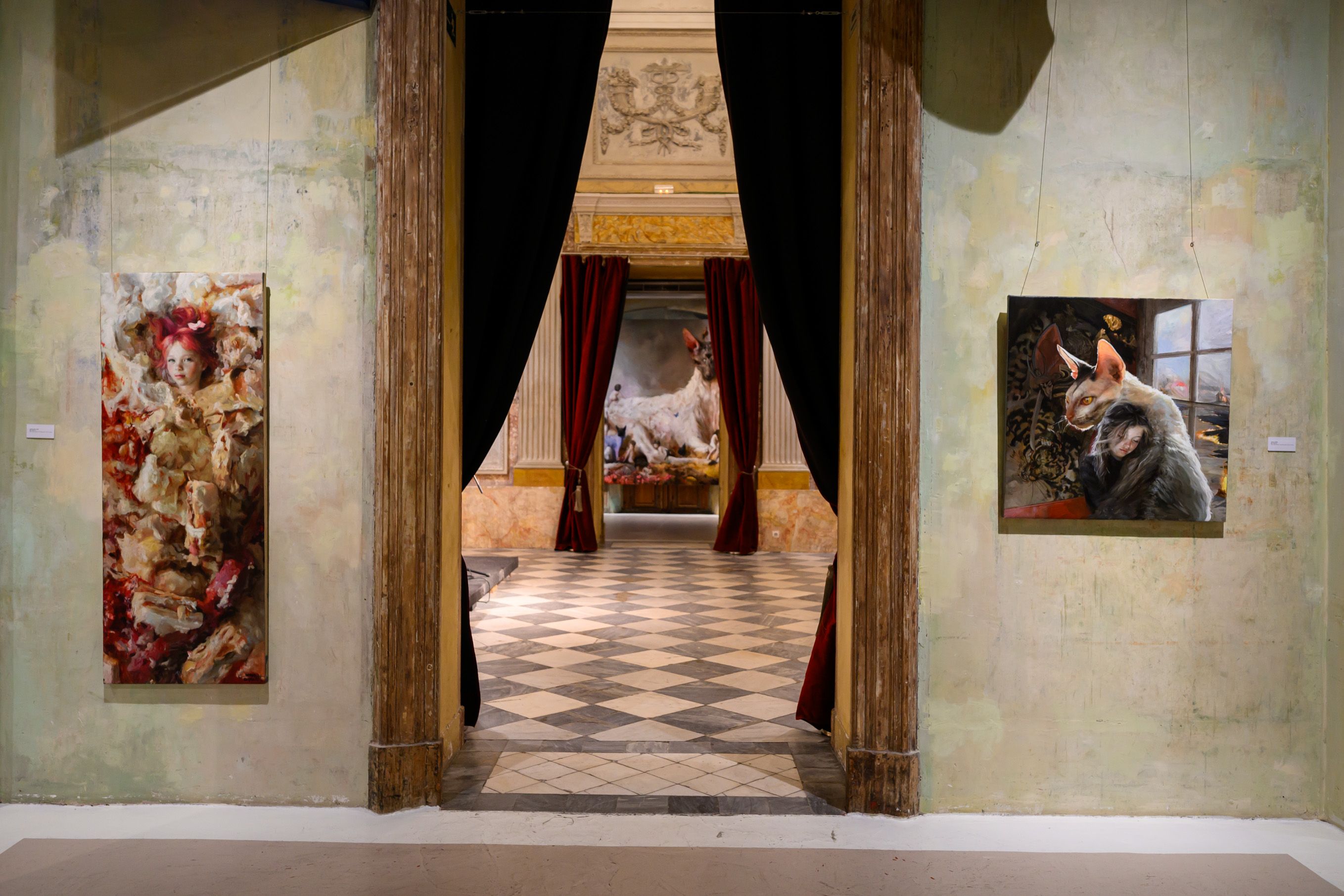
Entering Lorca's universe
Behind the apparent clarity, which allows us to recognize the figures on the canvas, lie scenes that do not lead to a single definitive interpretation. What some visitors may find disturbing, others may see as a sweet or even tender image. A girl next to a tiger may seem about to be devoured or, on the contrary, protected by it.
That's also the point the MEAM wants to make with its permanent collection, which can be visited on the upper floors and is included in the same ticket: contemporary art does not have to be abstract or difficult to recognize. It can just as easily be expressed through figures, characters and scenes that, even when we know exactly what we're looking at, we don't always know how to read.
In addition to the surprising stories told by the paintings, the way they are painted is also surprising. Lorca's technical virtuosity is especially astonishing if we consider the artist's youth. Born in Santiago de Chile in 1984, he began painting at just eight years old and considers himself, to a large extent, a self-taught painter. However, he also studied Arts at the Pontificia Universidad Católica de Chile, and his training was also shaped by the great masters he discovered as a child and, later, by his experience as an apprentice and assistant to the Norwegian painter Odd Nerdrum.
Since then, his work has made its way across Europe, Asia, and Latin America. He is also not unknown in Barcelona: his works are part of the MOCO Museum collection and he has previously taken part in collective exhibitions at the MEAM. But La casa de arena is different. For the first time in Spain, the exhibition brings together a broad selection of works from across his career, allowing visitors to contemplate the different pieces of his universe together, in the same space.
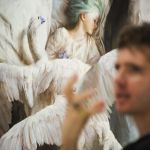
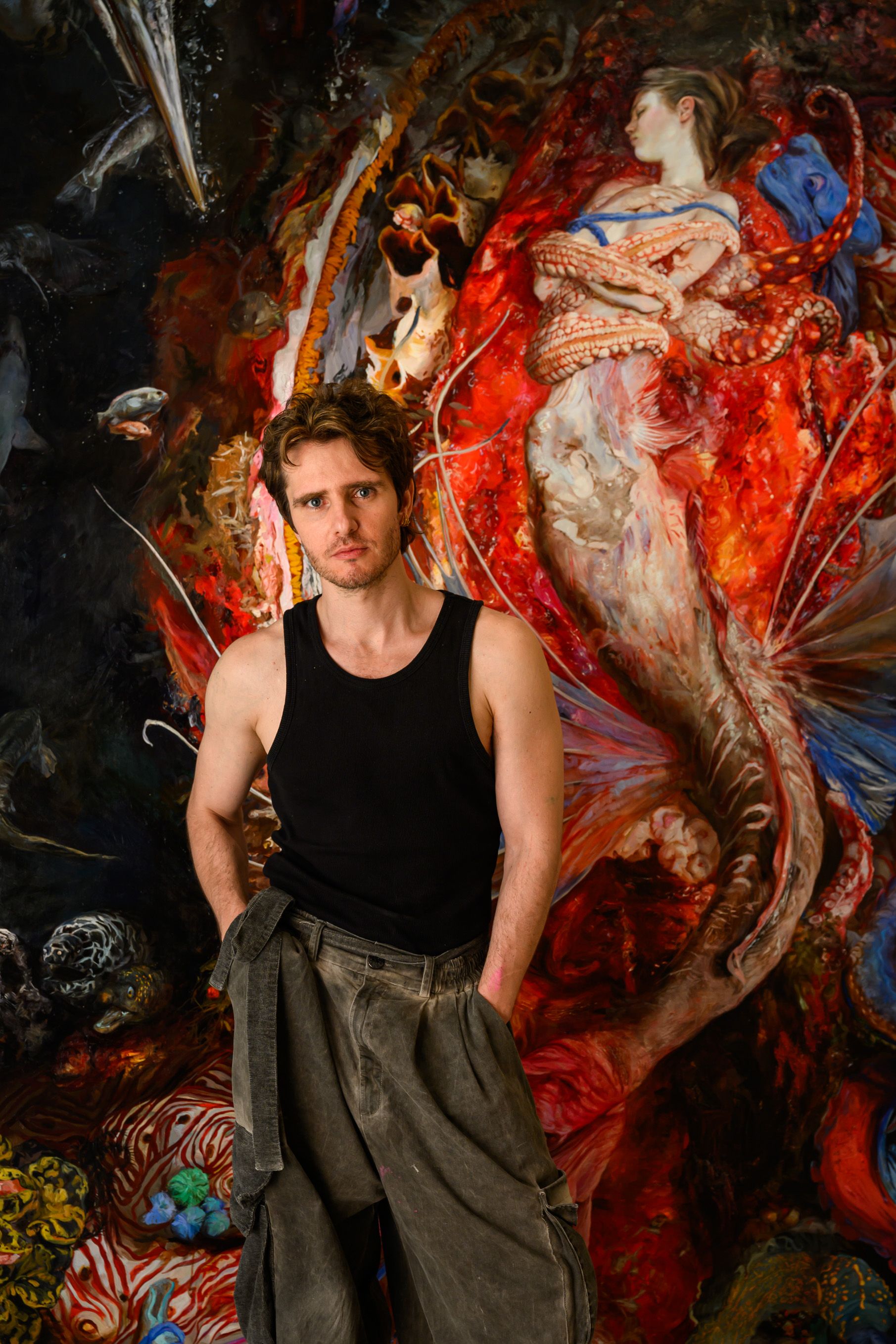
But one painting in particular allows us to delve deeper into this universe, into the particular house of sand he has created in the exhibition: La Sirena, the most recent painting in the exhibition (painted earlier this year). On the reverse of the canvas, Lorca allows visitors to see what normally remains hidden: photographs, annotations, references, and images that form part of the creative process. Because his paintings are not born from a single image. Lorca starts from an idea, a landscape, or a sensation and incorporates elements. It is almost like a kind of diary of his unconscious, a way of organizing and transforming into images what happens in his inner world.
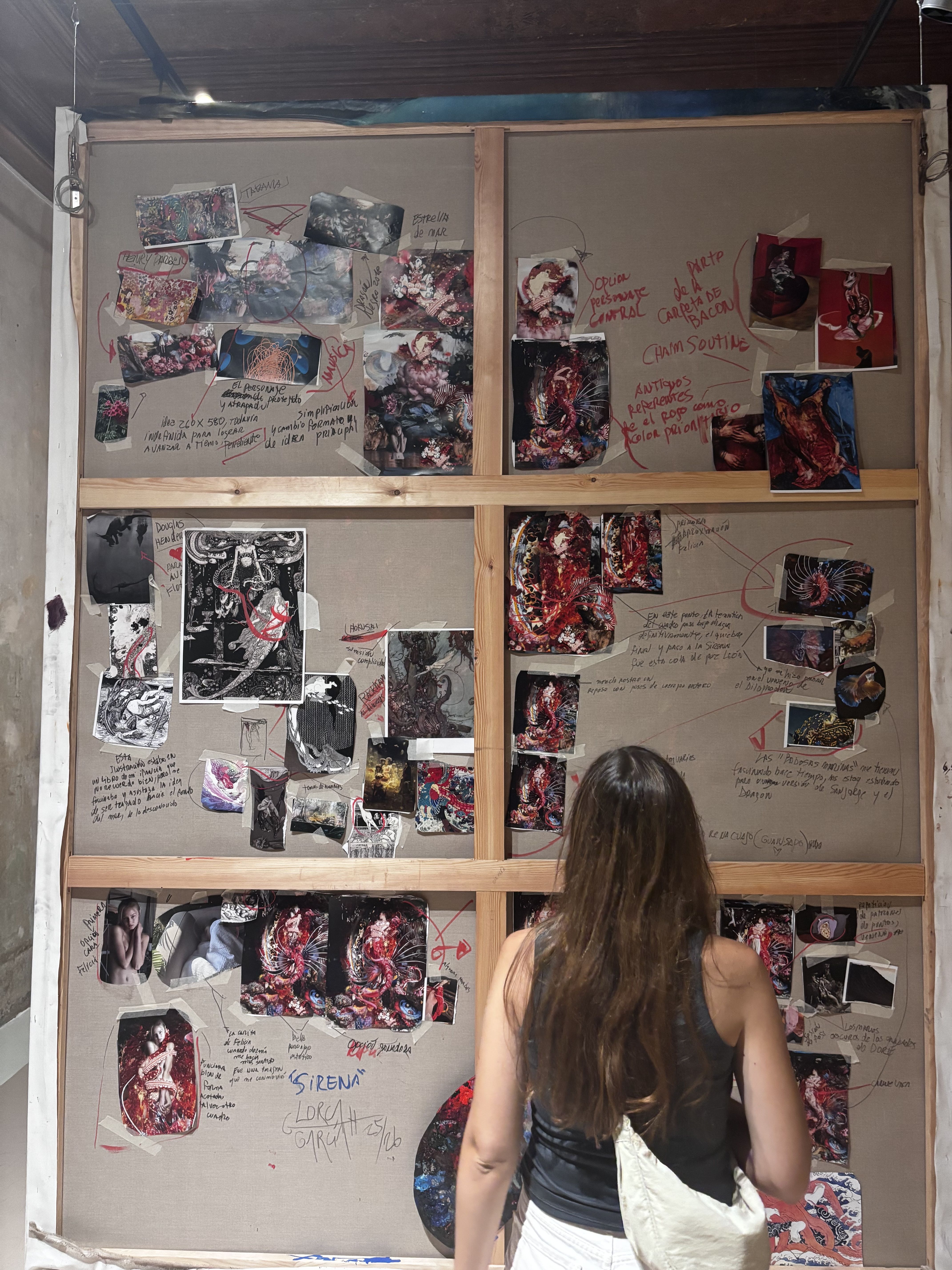
When childhood begins to be devoured
And within that world, there is a recurring presence: childhood. Girls with pale faces, fragile bodies —sometimes naked, which adds even more discomfort to the already ambiguous scenes — and colored hair appear surrounded by animals that seem to protect and threaten them at the same time.
The loss of innocence that comes with the transition to adulthood thus becomes one of the possible interpretations of his work: that moment when the world of fairy tales and games begins to be devoured by the fear and violence of adulthood. In the paintings, the girls are still in that world of childhood and fantasy — reinforced by their colored hair — but they already appear surrounded by that violence represented by the animals. It's an image that also echoes Petit Indi, Marc Recha's film, featured in this week's Lights, Camera, and... Barcelona!, where the protagonist's innocence is suddenly torn away by an animal: a fox that teaches him that the transition to adult life can be ferocious.
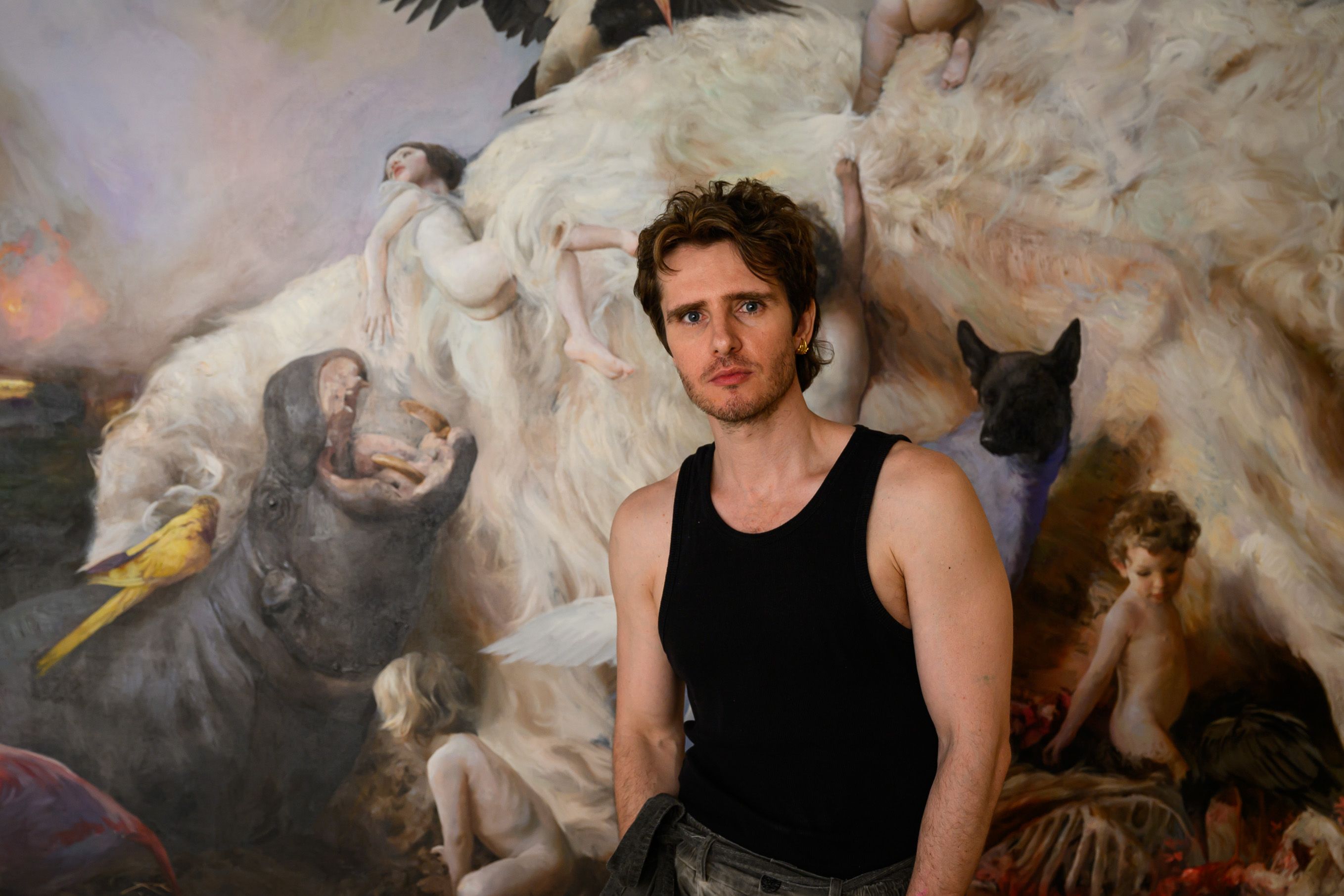
But this interpretation does not exhaust the possibilities of Lorca's paintings. Because perhaps the conflict is not only between childhood and adulthood, but also between human beings and nature itself.
Childhood and adulthood, humanity and nature, beauty and violence. Lorca's paintings always seem to be constructed between worlds that at first glance should be opposites, but which in his work find coexistence. Like those girls with colored hair who remain motionless next to the felines: we don't know if they are about to be devoured or if, somehow, they have found shelter in these animals. And maybe it doesn't matter whether we resolve that question. Sometimes, it's enough just to look, and to feel.
Add The New Barcelona Post as your preferred Google source for free
Stay informed with the latest news.