
The Port of Barcelona has launched the old sheds of the Moll Oriental, which have been enabled as America's Cup hospitality after a thorough restoration. They were almost in a state of ruin and with a recovery project with a calendar and budgetary allocation in limbo. The presence of the queen of sailing competitions in Barcelona waters has allowed the investment to be accelerated and today the city has gained a privileged space for events and cultural uses.
Engineer Gemma Peñalver has led the team that has been in charge of restoring the centenary sheds. And they have converted a set of very deteriorated buildings into almost a work of art, a kind of large architectural sculpture that has brought life back to the final area of Barceloneta, next to the Club Natació Barcelona and the W Hotel, which has gone from being abandoned to having good public transport communication ---several bus lines have a beginning and end--- and even maritime, through the Bus Nàutic that connects with the Portal de la Pau.
Peñalver and her team wanted to make an exemplary intervention in the sheds. And they have succeeded. The restoration is one of the best of a space of these characteristics in recent years. They have been scrupulously rigorous in respecting the original architecture, when they were built from 1904 as a service structure for the new repair dock with which the port was expanded at the beginning of the century.
They were the work of the then deputy director of works, engineer Julio Valdés y Humarán, also the author of the building of the old passenger terminal and restaurant of the Portal de la Pau, also in the rehabilitation phase to house a port interpretation center. Valdés wanted to give a certain architectural singularity to the Portal de la Pau building, as it was the one that received passengers upon their arrival and departure from Barcelona. In the sheds, he could have opted for a merely functional and industrial architecture, but he made an effort to give it a singular aesthetic with a series of decorative elements that Peñalver's team has strived to respect.
Over the years, the sheds ended up being warehouses, workshops, a coal bunker, offices, and even homes for some workers. In recent years, their condition was almost in ruins, until Peñalver's team resurrected them and white shines again on the facades. It has been a complicated job, with many unforeseen events and difficulties, but it has been possible to maintain all the original elements and reconstruct the missing ones, such as balconies and balustrades. The roofs had to be new. And all in just over a year of work.
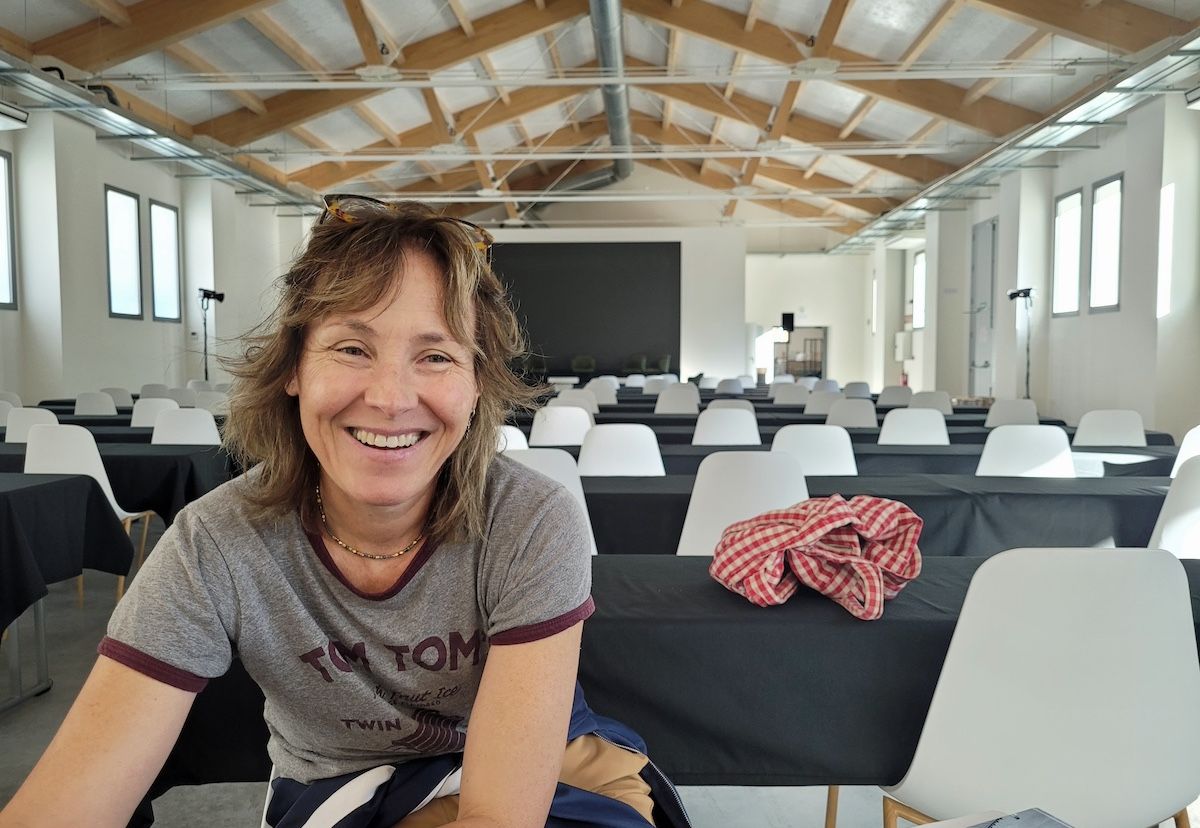
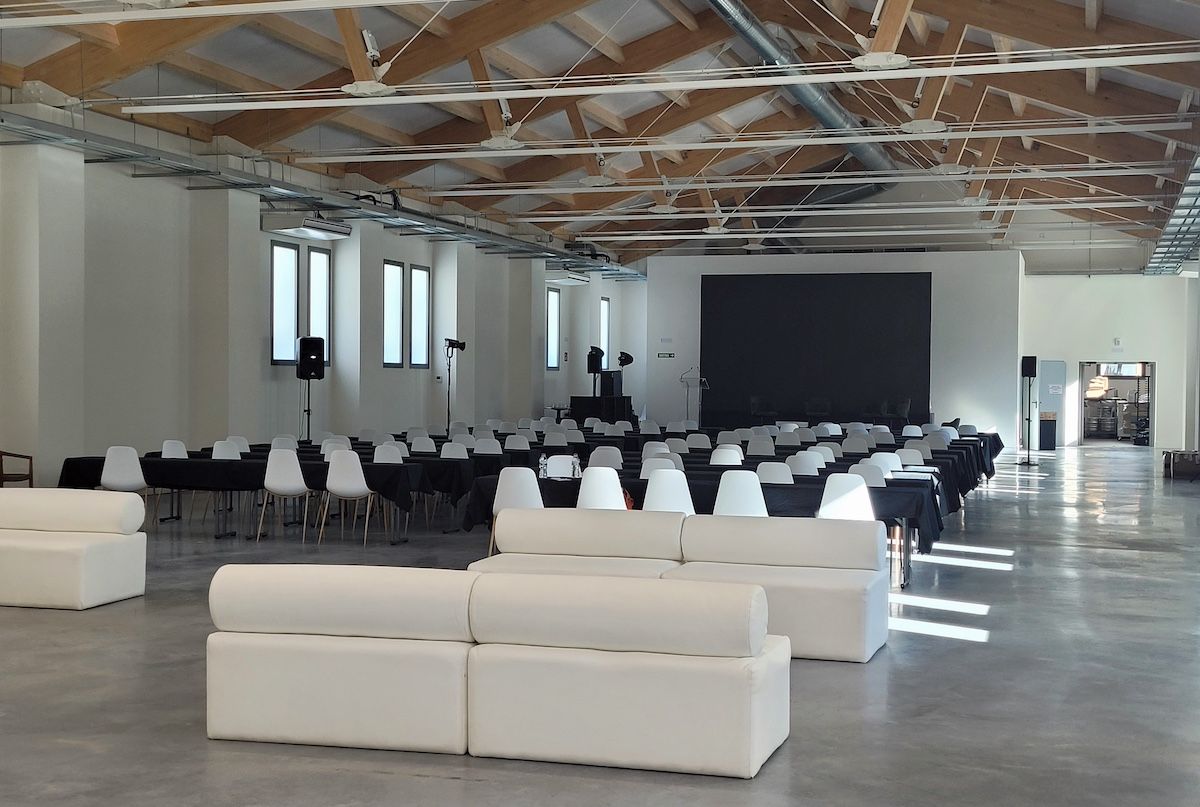
Originally, the sheds are five buildings. The restoration has focused on four of them. The fifth, the closest to Barceloneta, has long been occupied by Marina Barcelona 92 (MB92), a company that manages the large yacht repair shipyard. Three of the buildings, named Carbonera, Taller, and Fusteria, have been designated for hospitality for the America's Cup. These are open-plan spaces presided over by an exterior light that, filtered through the windows, provides warmth to a decoration dominated by the white of the walls and the subdued colors of the furniture, the floor, and the roof structure.
The restoration of the sheds has been a complicated job, but it has been possible to maintain all the original elements and reconstruct the missing onesThe Fusteria building is set up as an ephemeral auditorium, while the Taller and Carbonera have until now had a more gastronomic use.The three are equipped with screens through which the competition could be followed. The fourth building, at the opposite end from MB92, has been enabled as a maritime station for the Bus Nàutic. The buildings have been joined by greenhouse-shaped access areas that are perfectly integrated into the historic sheds. The complex is complemented by four annexed towers that provide monumentality. Each tower has a usable floor for offices or other services.
With the recovery of the sheds, Barcelona gains a space that, after the America's Cup, will be commercialized for events and cultural uses that can accommodate up to a thousand people. In fact, the port already has a major art exhibition confirmed for 2025 that will inaugurate the new life of this facility, which will be integrated into the Port Vell complex.
Don't miss it. You have to see it.
Add The New Barcelona Post as your preferred Google source for free
Stay informed with the latest news.
