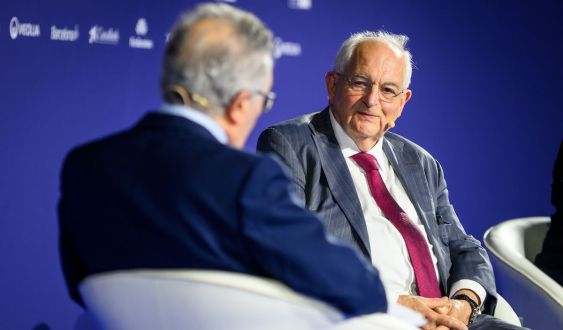
Journalist Martin Wolf assures that "critics are useful." He says it with knowledge of the facts after receiving the Cercle d'Economia award for European construction. It is a good recognition considering that European leaders such as Mario Draghi and Ursula Von Der Leyen have also received it. I would add, however, that criticism is useful if it is constructive and, above all, if it is heard. Thus, it is always worth reading Martin Wolf's columns in the Financial Times where he delves into the chiaroscuros of democracy, capitalism, freedom, or truth with independence and intellectual rigor. "More than a journalist," says a colleague of his, John Carlin, referencing our beloved Barça.
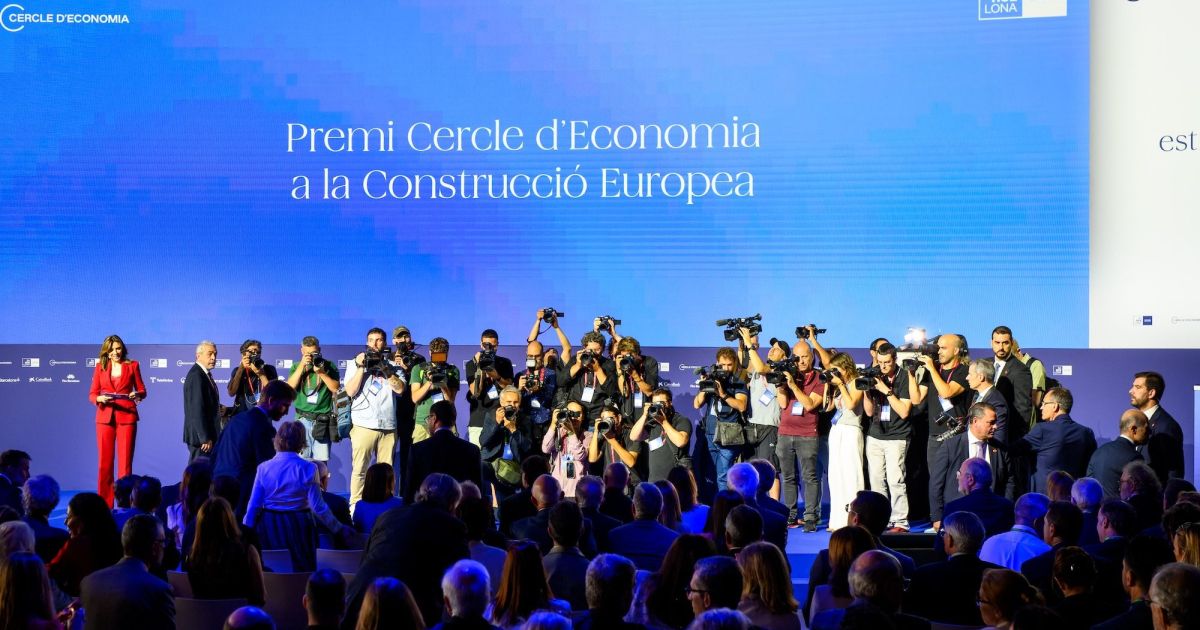
Europe's strategic autonomy: myth or reality? The headline question was, in no case, rhetorical, and will define the future of our city, our country, and our continent. In the same way, the other four key questions of the 41st Meeting of the Cercle d'Economia have not been rhetorical either: Can Europe have technological sovereignty? Can Europe decarbonize without losing competitiveness? In which sectors can Europe lead? Who will finance Europe's transformation?
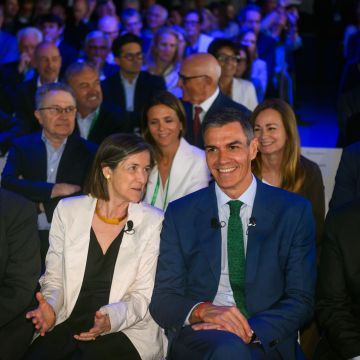
"Europe's strategic autonomy is not a myth. But it is not a reality either. It is an imperative that requires brave decisions, massive investments, and an execution capacity that Europe has not yet demonstrated. It is a real and urgent need." This was stated by the president of the Cercle d'Economia, Teresa Garcia-Milà, in her inaugural speech and she reaffirmed it in a spectacular closing that was strongly applauded by the business audience before the attentive gaze of the President of the Government, Pedro Sánchez.
Definitely, trust in institutions and civil society is one of the most important assets in a democracy. The Japanese political scientist Francis Fukuyama asserted that citizens need to believe that their government knows what it is doing in the face of complexity. That is why the Cercle d'Economia is committed to leading, acting, and advancing on the path of a common defense or a single European market, replicating the cases of the Schengen Area or the Euro, promoted in the late 20th century by German Chancellor Helmut Kohl and French President François Mitterrand. Draghi's famous Whatever it takes also comes to mind. It is better to remember where we come from to understand where we are going.
Teresa Garcia-Milà's recipe for consolidating the welfare society in turbulent times of geopolitical disruption includes ingredients such as a productive system of greater value ---not volume---, a federal system of autonomous community financing, sensible regulation, an authentic migratory policy, or a better housing policy, and ultimately, it implies broad consensuses for major national and continental issues that cannot be built in any case from partisan confrontation. "Strategic autonomy is a long-term project that transcends electoral cycles," she warns.
It is a pity, however, that Alberto Nuñez Feijóo dodges a journalistic question by saying he wants to "talk about serious things" or that Pedro Sánchez takes advantage of the discursive refuge of the lectern and the teleprompter, which during the colloquium lost signal at the Palau de Congressos de Catalunya, to avoid responding to the prominent list of demands from the Cercle d'Economia.
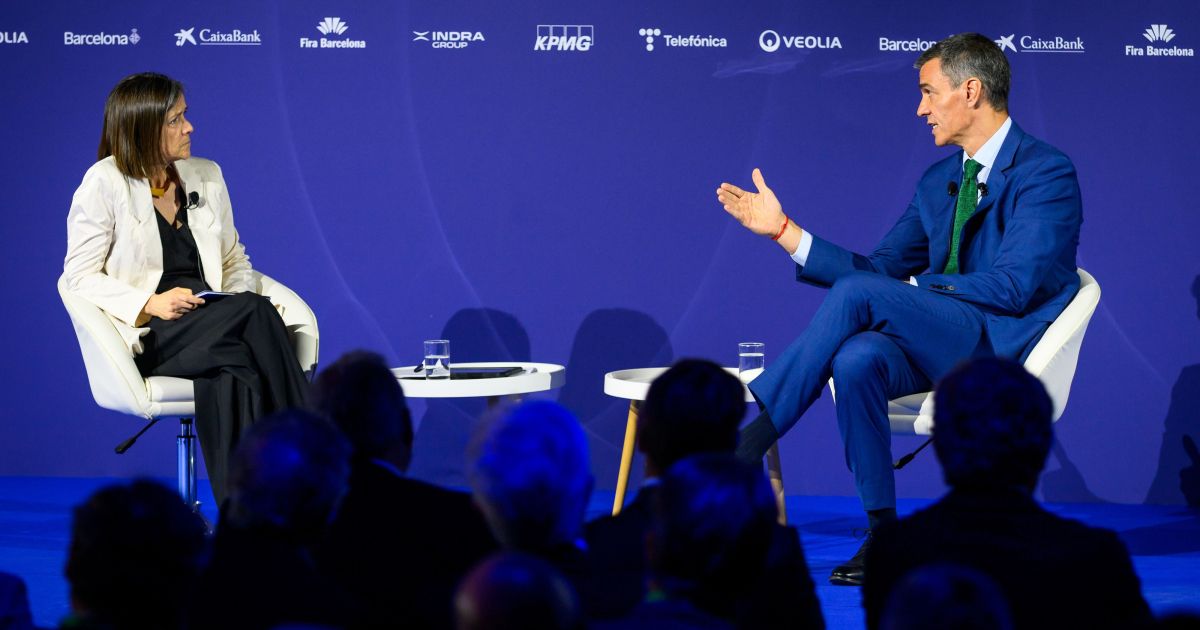
Redundancy aside, we will all agree on the importance of agreements, generosity, consensus, commitment, or stability. Words must be filled with meaning. It seems, then, that the clock starts ticking with the processing of the budgets or that the melon is opened with the autonomous financing model. Sánchez says that "if we talk about the State, we are all of us" or that "when there is a problem, the one above is always blamed." In fact, the ghost of the no-confidence motion ---instrumental or not--- has hovered over the 2026 edition of the Cercle d'Economia Meeting in the same way it was consummated at the 2018 Cercle d'Economia Meeting in Sitges, then starring Mariano Rajoy's presidency and Pedro Sánchez's opposition. PP and PSOE, now with roles reversed. It is true that history is cyclical or that we move in a politics of eternal return in search of a European agenda of reunion.
Leading in times of uncertainty is not the title of a novel, but it has been the title of the last session of the 41st Meeting of the Cercle d'Economia. A whole declaration of intentions captained by the CEO of Penguin Random House, Núria Cabutí, with the president of Ingka Group | Ikea, Juvencio Maeztu, and the vice-president of Acciona, Juan Ignacio Entrecanales. Maeztu defines himself as a rebel and explains that long-term decisions are where competitive advantage is found or that leadership must be humble and determined because it is precisely from humility that complexity is understood and resolved. "Complaining is necessary, but it is not enough. The world needs more humanism," he claims. Entrecanales adds that "everyone should want to be an entrepreneur and that entrepreneurs live well in uncertainty."
The opinion note from the Cercle d'Economia has outlined different horizons that must continue to be explored from strong leaderships: geopolitical change, technological sovereignty, the construction of the single market and European champions, selective trade policy, state aid, Europe's role in the world and its governance problem, or the implications for Spain and Catalonia, among others.
In short, critics are even more useful if they succeed with leadership, humility, humanism, and a long-term vision. As Telefónica's executive chairman, Marc Murtra, says, all roads lead to Rome and life is about trade-offs. Let us move, then, from dream and myth to European reality.
Add The New Barcelona Post as your preferred Google source for free
Stay informed with the latest news.