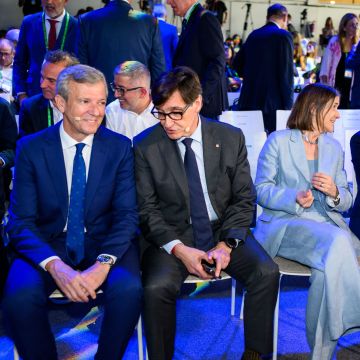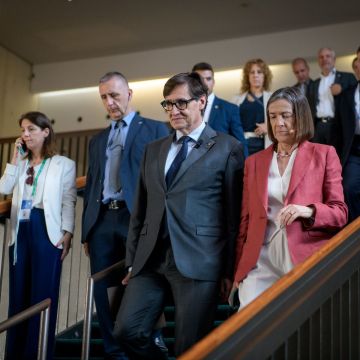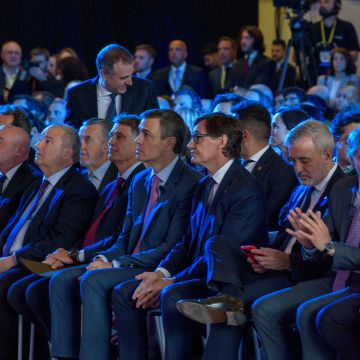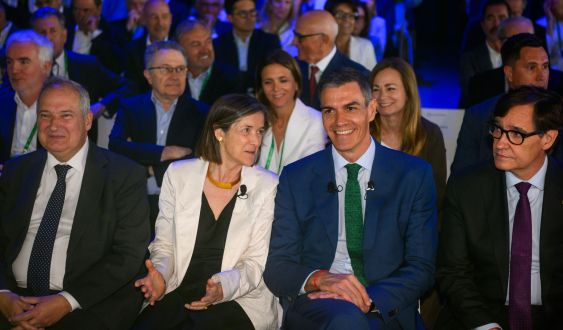
"The Annual Meeting of the Cercle d'Economia has the capacity to bring together the right people at the most uncomfortable moment," stated Alberto Núñez Feijóo, president of the Popular Party, during his speech on the second day of the 41st edition of the economic gathering. These sessions, despite having as their central theme the question Europe's strategic autonomy: myth or reality?, once again demonstrated that economic indicators are not always the only protagonists of the debate. At several moments, in fact, the audience's attention seemed to shift to another less explicit but more persistent scenario.
According to the leader of the PP, this reality took the form of an elephant in the room, a presence as evident as it was uncomfortable. At the Annual Meeting of the Cercle d'Economia, however, attendees are already aware that these elephants are not exceptional. Exactly one year ago, the elephant took the form of a takeover bid. The possible acquisition of Banco Sabadell by BBVA monopolized conversations in the corridors and conditioned a large part of the economic debate.
This year, however, the animal has changed shape. It no longer has to do with the future of the banking sector, but with the future of the Spanish legislature. The alleged corruption cases that in recent months have splashed the PSOE's circle and the growing pressure for a possible early election call, forced by a no-confidence motion from the opposition, have become a constant backdrop to the meeting, present in both debates and corridors. An elephant as invisible as it is persistent that has made Pedro Sánchez's intervention at the closing of the 41st Meeting even more anticipated.
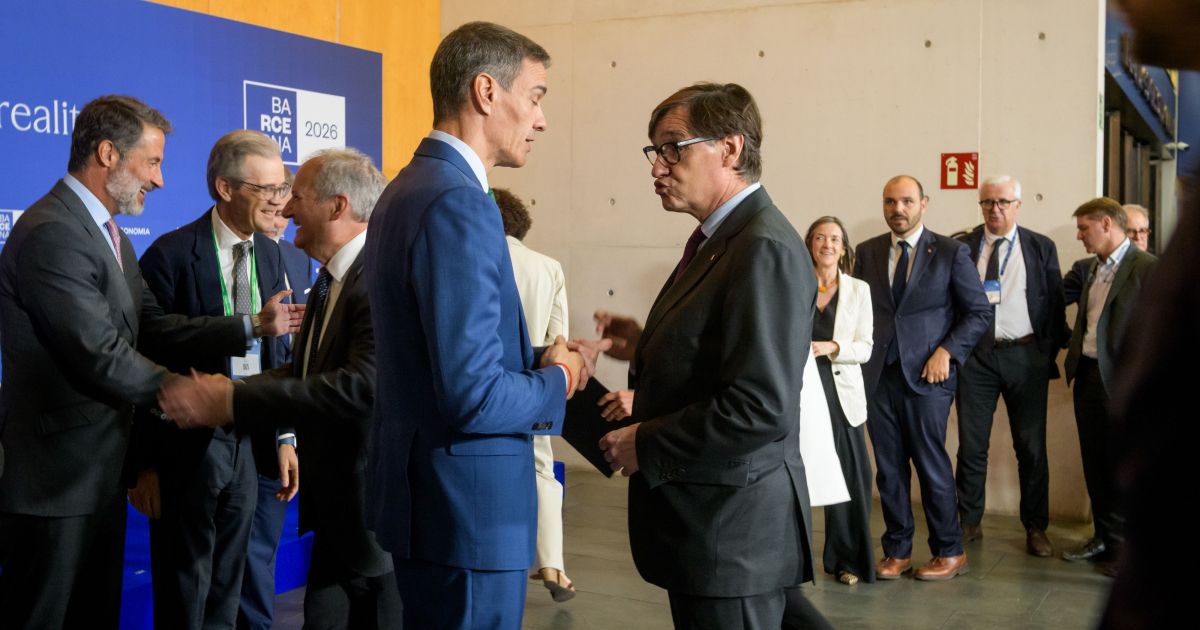
"Some are here just to know if someone will talk about this elephant," Feijóo had warned during the previous day. And the Spanish Prime Minister has ended up taking on the challenge. Implicitly, he referred to the political climate that hung over the meeting and expressed confidence in the continuity of the legislature. A confidence that, in fact, he materialized in a significant announcement: this very week the Government will begin the procedures to present the General State Budgets for 2027.
An announcement that, beyond the political reading, once again highlights one of the singularities of the Cercle d'Economia Annual Meeting for more than four decades: its ability to shape public debate. Not only because it brings together for three days the main political and business actors —turning its corridors into informal meeting spaces between figures who rarely coincide in other contexts— but because it has consolidated itself as one of the few forums where leaders tend to take advantage of the stage to announce decisions or set priorities.
The Cercle, between economic debate and political message
Thus, if the elephant in the room for this edition was the uncertainty about the duration of the legislature, Sánchez wanted to respond by projecting a horizon. The start of the processing of the budgets for 2027 precisely reflects the will of the Spanish Prime Minister to exhaust the mandate and culminate the two great priorities that, he has argued, define this political stage: the completion of the European recovery funds and "the agenda of re-encounter between Catalonia and Spain."
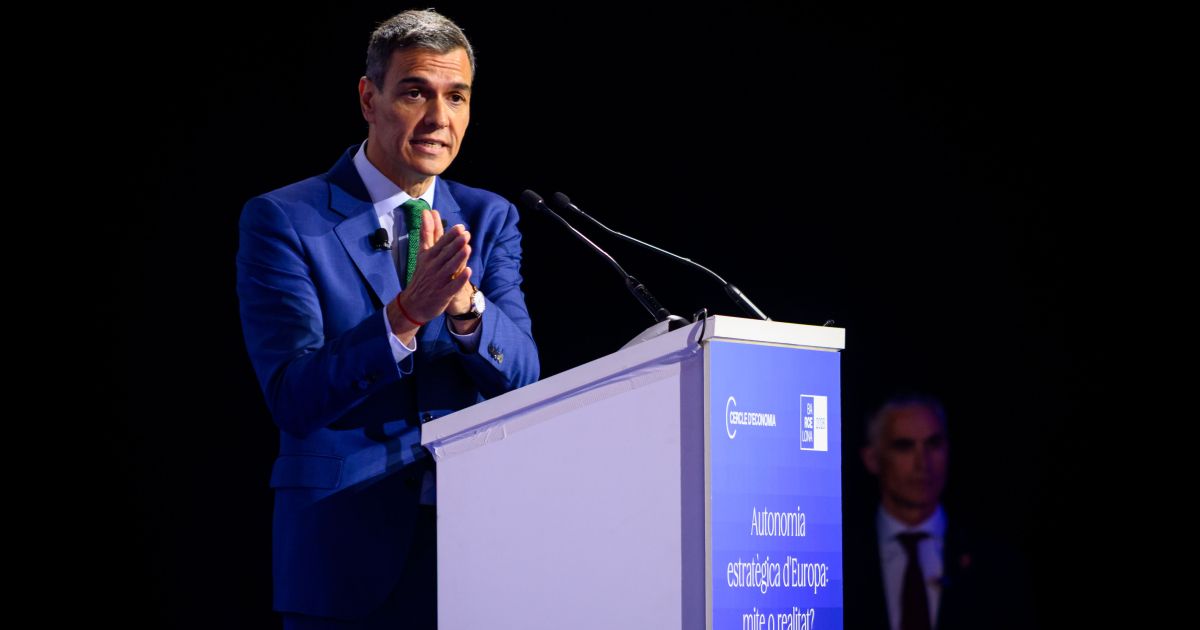
For this reason, Sánchez has asked for "an effort of generosity, responsibility, and commitment from the parliamentary forces" to get these budgets processed, in a direct appeal to Junts and ERC. According to the Spanish president, this effort "is worth it" because it should serve to continue the improvement of economic indicators, both for Spain and for Catalonia.
In this regard, he cited the OECD forecasts, which point to a growth of 2.2% for the Spanish economy in a context of global slowdown. In the Catalan case, he celebrated that exports have exceeded 100,000 million euros and highlighted some milestones that, he argued, are signs of political understanding between Spain and Catalonia, after years of estrangement, such as the recent agreement for the Generalitat and the Barcelona City Council to strengthen their weight in the Consorci de la Zona Franca.
But with the aim of further strengthening the relationship between the State and the autonomous communities, Sánchez has also wanted to emphasize "the importance of progress in conversations about the regional financing model". As he has argued, the Spanish Government's proposal represents an "enormous sacrifice", as it implies a transfer of 21,000 million euros to the autonomous communities, but also "allows progress towards a more homogeneous response to the needs of the different territories".
Beyond this debate, the future budgets also incorporate macroeconomic objectives. In this sense, Sánchez has set the ambitious challenge of continuing to reduce the public deficit and closing the legislature with a debt below 100% of GDP.
Europe as a background framework
All in all, the future budgets will be "more ambitious, more social and more fiscally responsible", according to the Spanish president. Housing will play a prominent role. Sánchez has assured that they will represent "the most ambitious deployment of public resources in this area ever seen in the history of democracy".
A matter that also concerns the Cercle d'Economia since, despite not having starred in any of the major debate sessions, access to housing has appeared transversally throughout the meeting, becoming a shared concern for both businessmen and institutional representatives. In fact, stepping outside the framework of the budget announcement, the president of the Cercle d'Economia, Teresa García-Milà, has taken advantage of Sánchez's intervention to convey these concerns, especially regarding housing and immigration, two areas in which she has called for more structural policies.
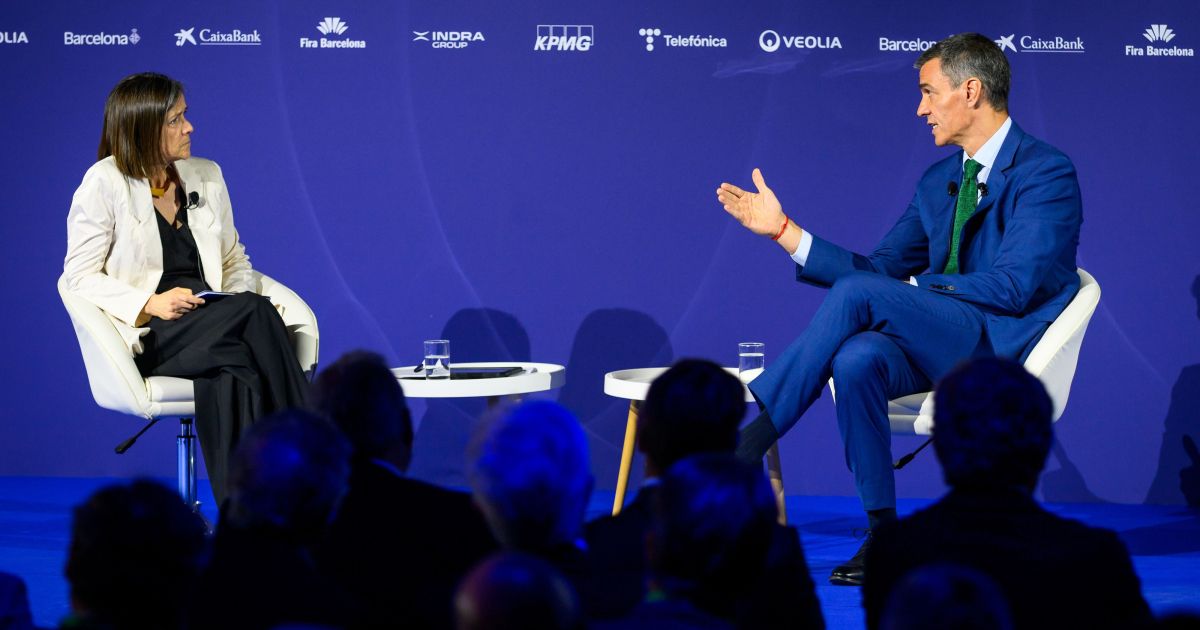
All this, without losing sight of the general framework that has permeated the entire meeting: the need to advance in European strategic autonomy. "The diagnosis is clear. The problem is that Europe cannot agree to act," lamented García-Milà. For this reason, the president of the Cercle has raised the need to explore new forms of cooperation between European countries, recalling that projects such as the euro or the Schengen area also began with small groups of States willing to move forward.
Sánchez has agreed with the diagnosis, emphasizing that Spain, with Catalonia as a prominent asset, has the capacity to lead some of Europe's economic challenges, such as the energy transition, digitalization, and the strengthening of industrial capacity. It is no coincidence that, during his visit to Barcelona, the Spanish president took the opportunity to visit and focus on two sectors he considers strategic for this goal of European leadership: the pharmaceutical sector, with the start of works by Grifols in Lliçà de Vall as a paradigmatic example, and the automotive sector, with the new CUPRA Raval as a symbol of innovation, becoming the first 100% electric vehicle designed, developed, and manufactured entirely in Spain.
Add The New Barcelona Post as your preferred Google source for free
Stay informed with the latest news.