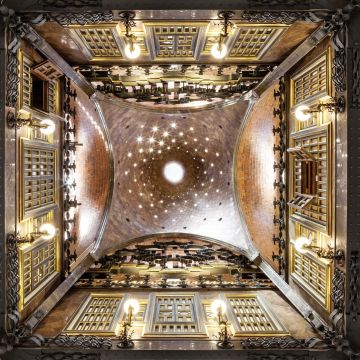
It is difficult to walk through Barcelona without wondering what might be inside the many unique buildings that dot its streets and squares. Palaces, stately homes, medieval palaces, and modernist emblems are often protagonists of its neighborhoods, but sometimes they play another less visible role, which awakens the interest of the curious without being easily visitable. Coinciding with the World Capital of Architecture, we want to peek into the interiors and stories of some of these unique buildings in the city that are not usually accessible to the general public, and that hold stories and architectural gems inside.
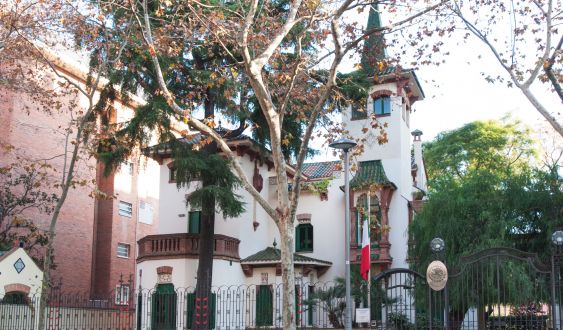
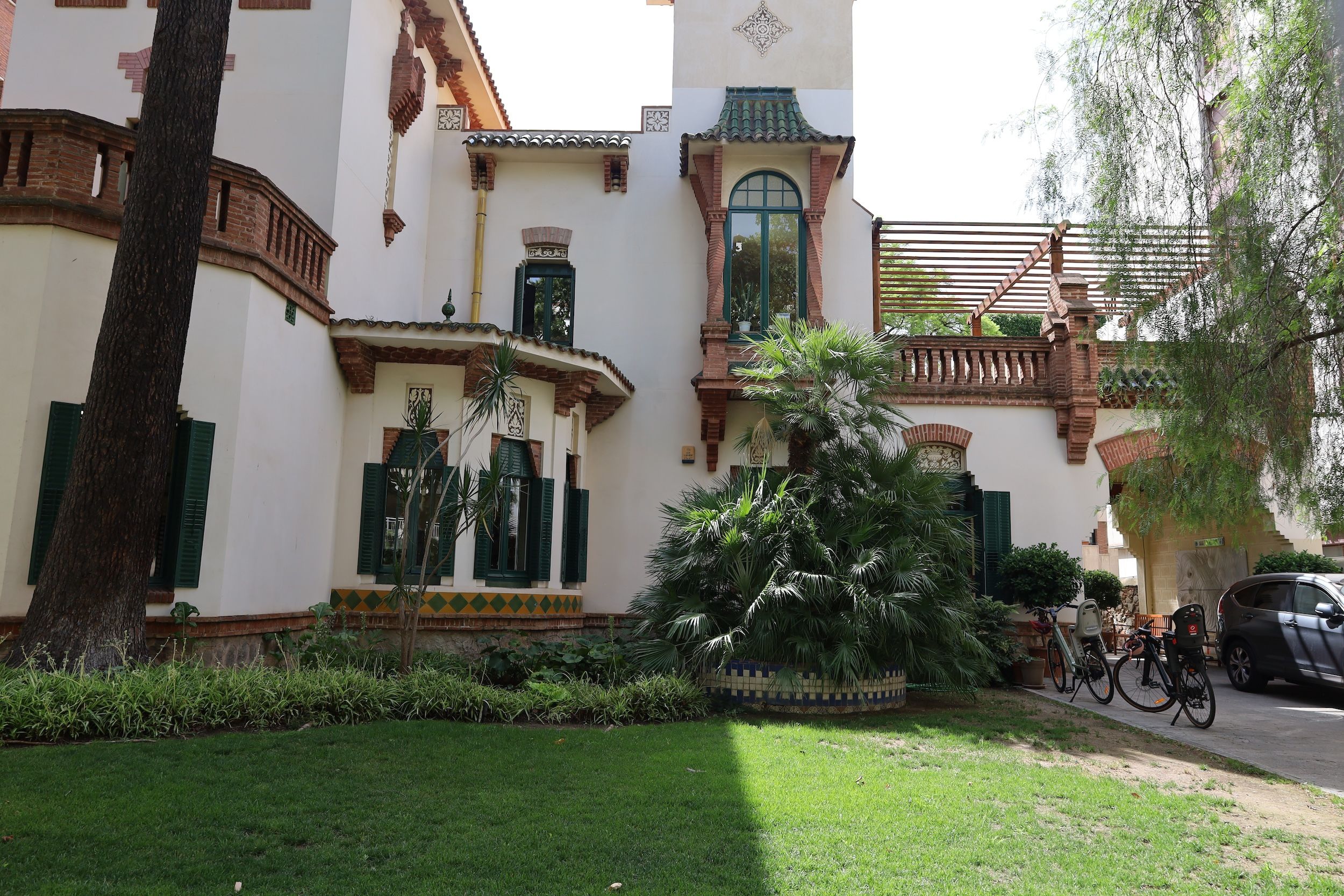
And among these stories and architectural gems, one stands out that intertwines sultans, elephants, extravagances, war, a stopped clock, and a consulate. The Casa Muley Afid, at number 55 Bonanova and now home to the Consulate of Mexico in Barcelona, attracts glances with its fairytale silhouette crowned by its quadrangular tower and its spire of green ceramic scales. The same color splashes clean white walls, in elements such as windows, tiles, and even downspouts, which contrast with the reddish-orange of exposed brick details, in the railings and in undulating columns that snake across the facade.
The modernist house has been attracting glances in Bonanova for over a hundred years. It was commissioned by the person who still gives it its name and had been Sultan of Morocco, Muley Afid, in 1911 to one of the most renowned architects of the time —and of today—, Josep Puig i Cadafalch. It was completed in 1914, and then became not only the sultan's residence but also the scene of peculiar social gatherings: “Muley Afid's parties were legendary, for being extravagant and noisy,” recounts the Acting Consul of Mexico in Barcelona, Alfonso Navarro Bernachi, from the third floor of the modernist house, where the office of the Titular Consul, now vacant, is located.
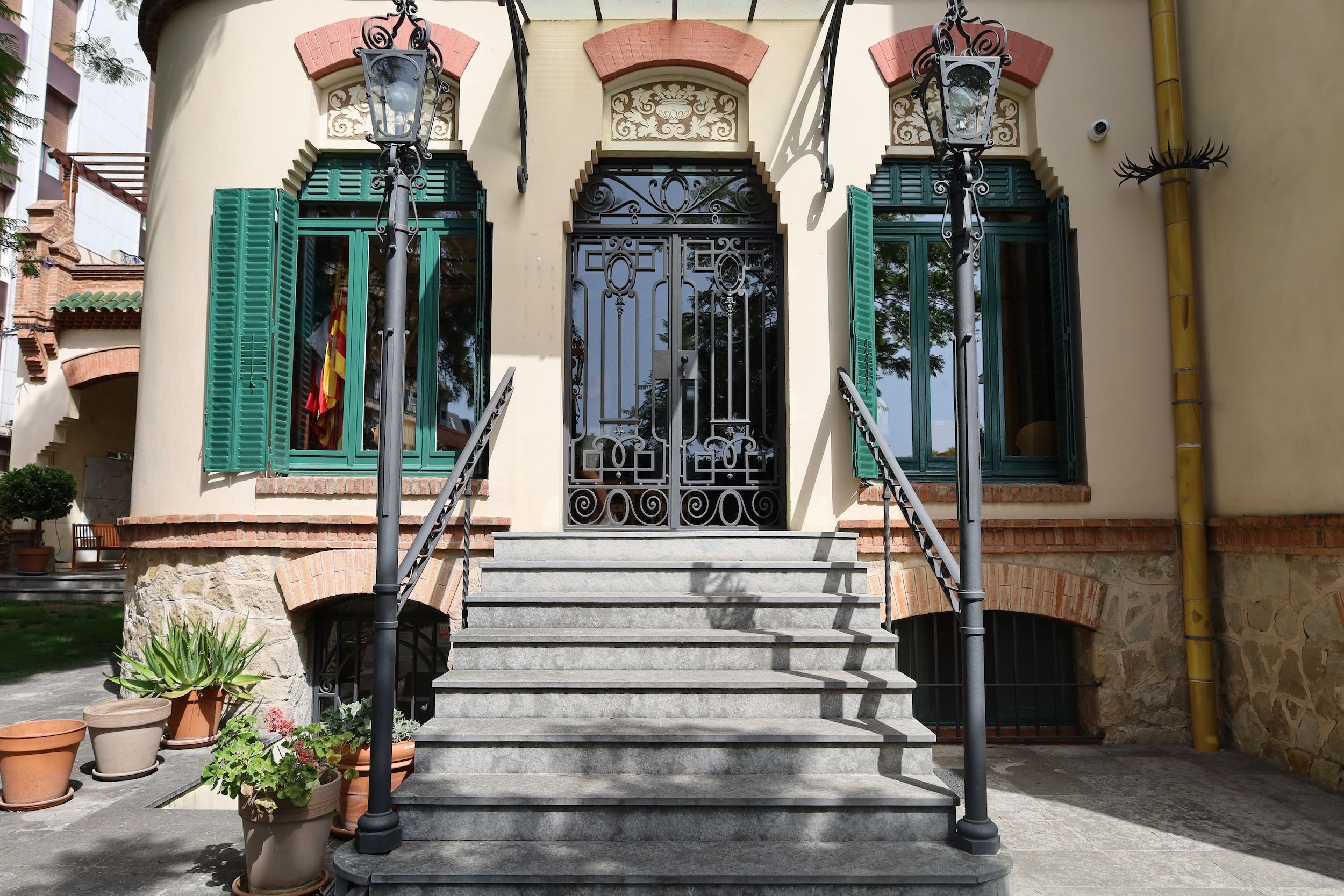
The office of the Consul in Charge is further down, between green wooden louvered windows that let in the morning light as he guides us through what is now the Consulate, and what was the Sultan's house. At the entrance, after crossing the refined garden next to Bonanova, one enters next to what was the coach house, to pass into a public service area. Upstairs, the main floor is now occupied by offices and the library, dotted with terraces that appear unexpectedly. In the basement, space for storage rooms and a kitchen, in what could have been the accommodation for the people in the service of Muley Afid. And the jewel of the Consulate, the Clock Room.
But first, what was a Sultan of Morocco doing in Barcelona? The story includes confrontations between brothers for the Moroccan throne, an exile, and the French protectorate. In 1908, Muley Afid seized the throne from his brother, Sultan Abdelaziz, after leading a revolt supported by sectors that rejected the growing influence of European powers in the country. His arrival to power, however, failed to stop the pressure; barely four years later, the Treaty of Fez turned Morocco into a French protectorate, and Muley Afid abdicated in favor of another of his brothers, Muley Yúsuf. But he did not leave without good compensation: he abdicated in exchange for a pension and the commitment to be able to fix his residence outside the country. After a brief stay in France, he chose Barcelona to start a new life, attracted by its cosmopolitan atmosphere, its location, and the luxury breathed by the wealthy bourgeoisie of the time.
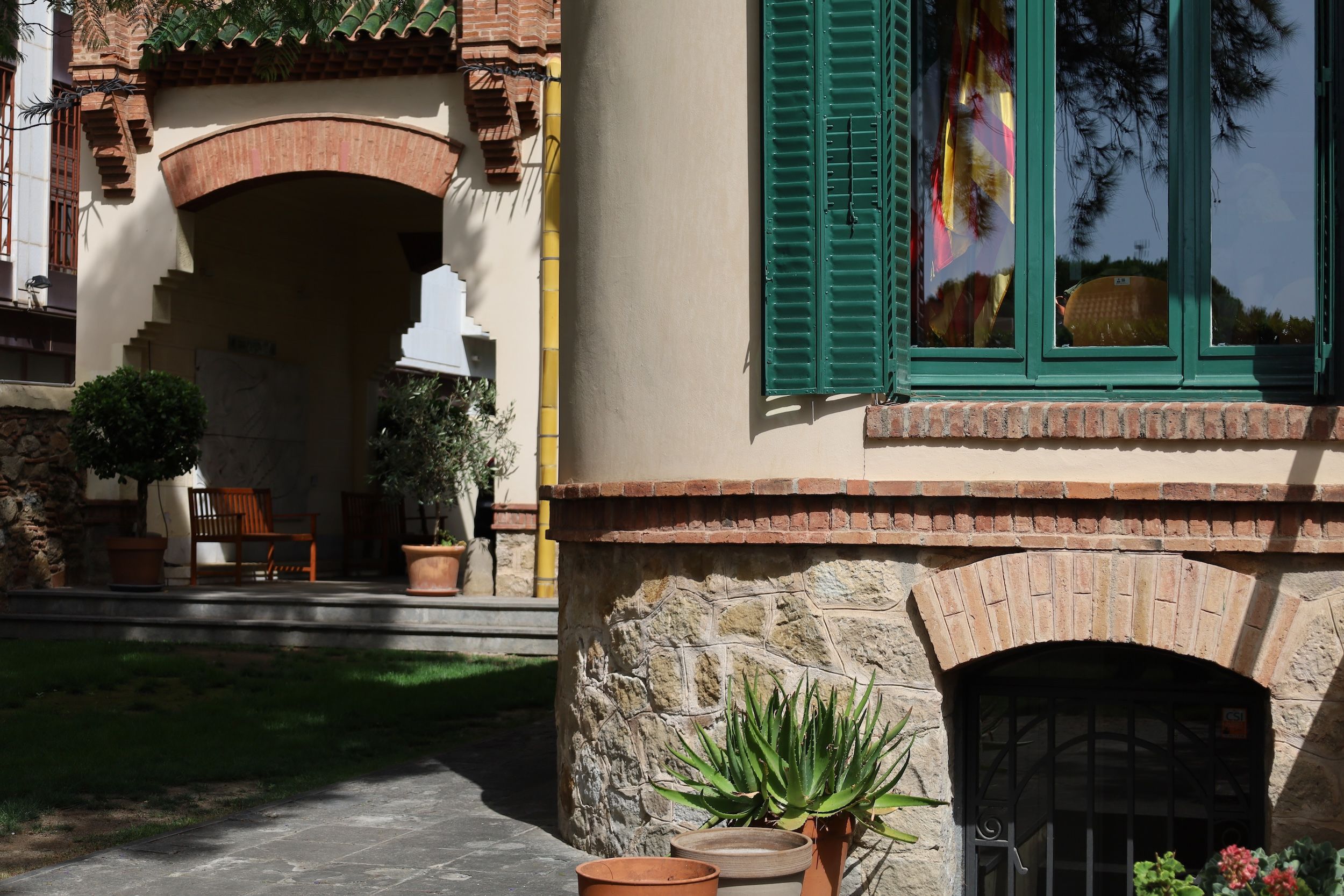
In that bustling Barcelona, Muley Afid settled in the Hotel Oriente on La Rambla, while he commissioned Puig i Cadafalch what would later be his residence. The architect built a three-story stately home, surrounded by an extensive garden, characterized by its tower, its terraces, and its colors —coincidentally matching the flag of Morocco and, also, of Mexico.
The period of Muley Afid in the house that still bears his name was brief, but intense. In the few years that it was his residence, he gained fame (and criticism) for his parties and starred in chronicles about his adventures, his romances, and his escapades with the cuplé of the time. Many had the garden as a backdrop, which still surrounds the house, although with half the land it had a century ago. In that same garden, another of the protagonists of this story lived: “As part of his whims and eccentricities, Muley Afid had an elephant here,” explains the Consul in Charge. That whim of the ex-sultan became an extravagant gift: Muley Afid decided to give the elephant to the city. The elephant Júlia became the great star of the Barcelona Zoo, which received her in 1915, and became an icon and even a song signed by Àngel Guimerà and Amadeu Vives. The sympathy of the story turns tragic with the Civil War, which caused Júlia to die of hunger in 1938.
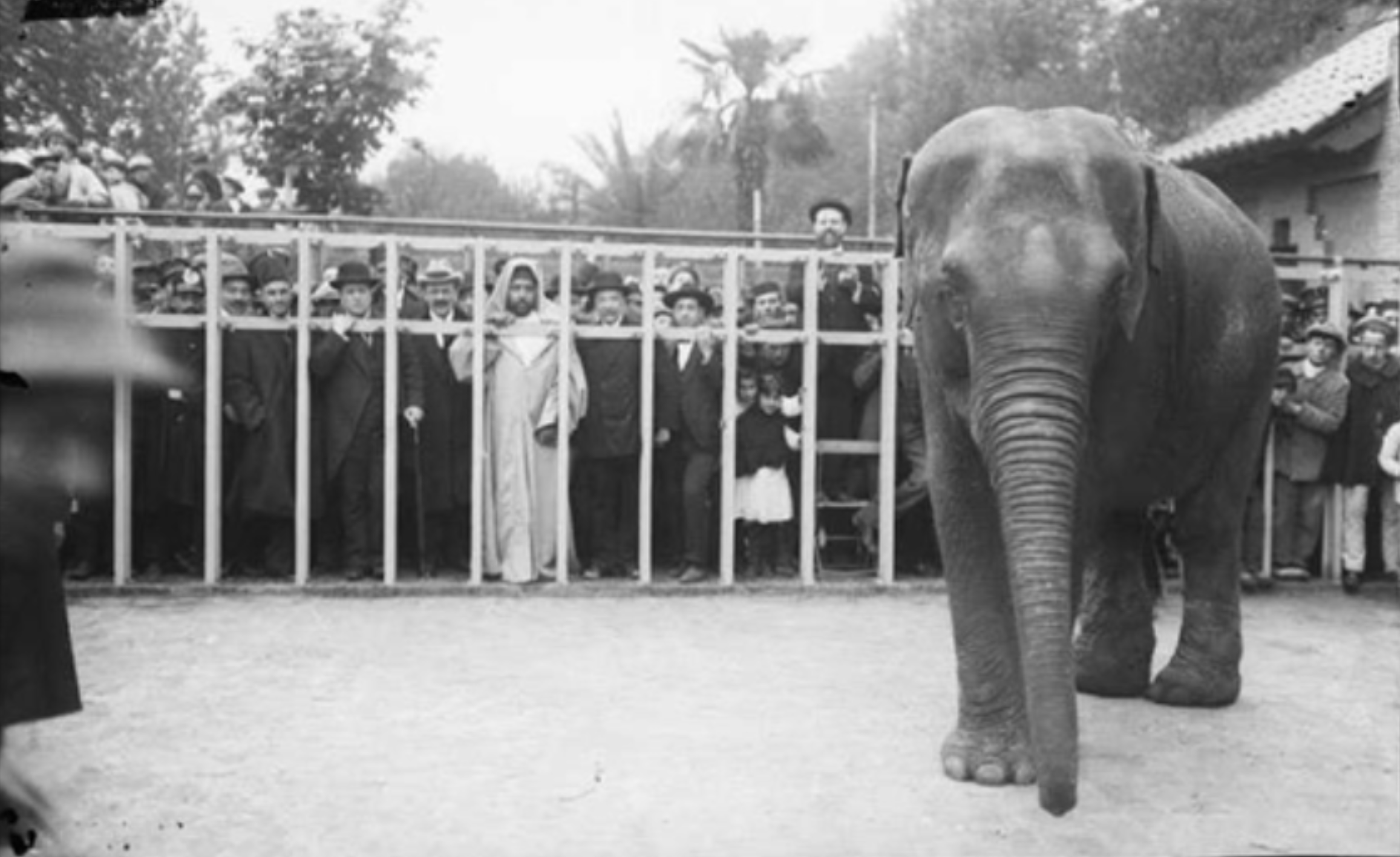
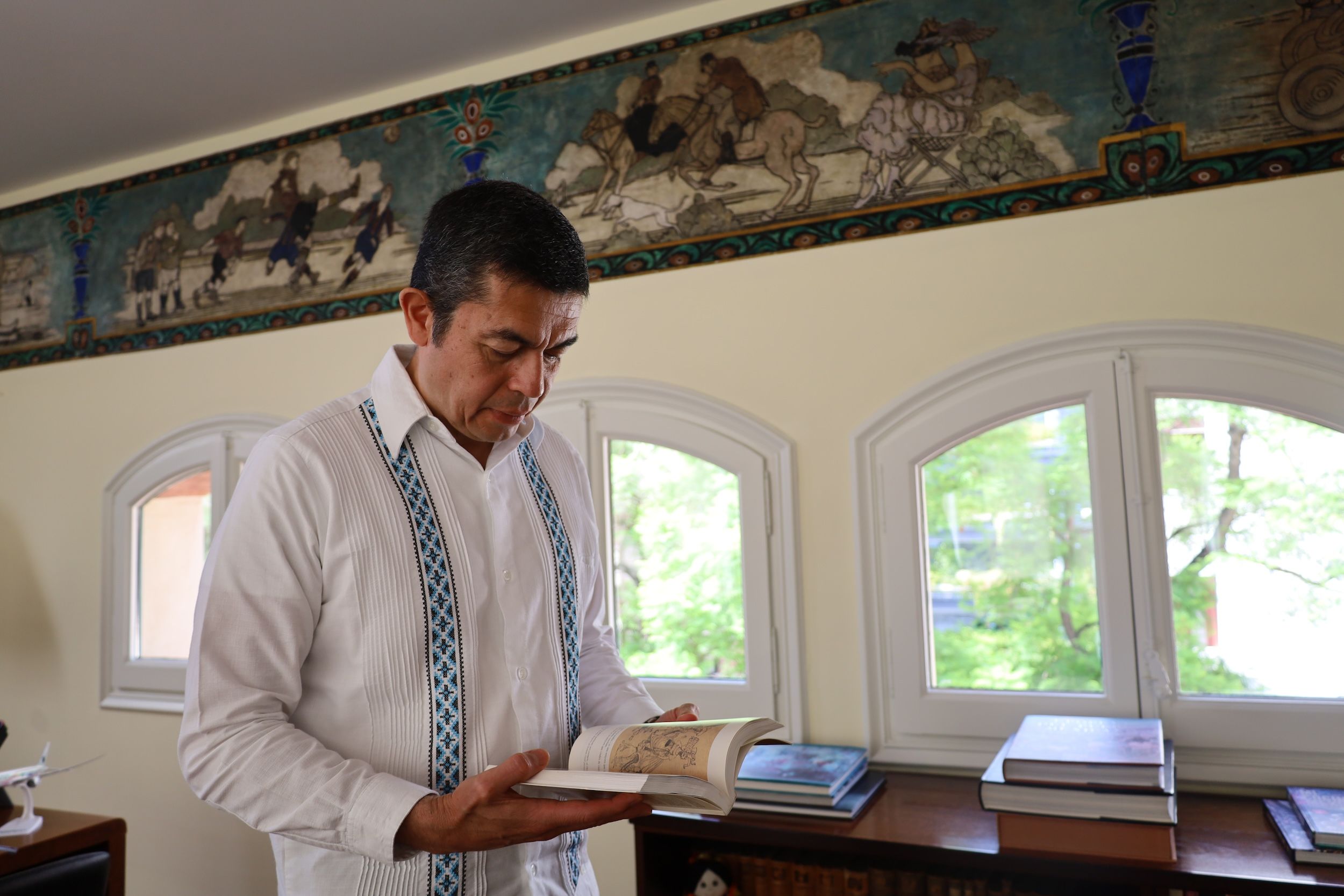
Much earlier than that, Muley Afid was forced to move to France, ending his golden exile in Barcelona. From then on, the house he had ordered to be built “devolved” until it reached a state of deterioration. “It was a shelter for children, a school, and then it was occupied for years," highlights the Consul in Charge. As he reviews the history, friezes that surround what once seems to have been a playroom in the house review the cycle of life around it. They are attributed to Joan Junceda, a cartoonist and illustrator who worked in magazines like Patufet: “They are reproductions of drawings from the time,” with moments of life that include a football match between players already dressed in Barça shirts then.
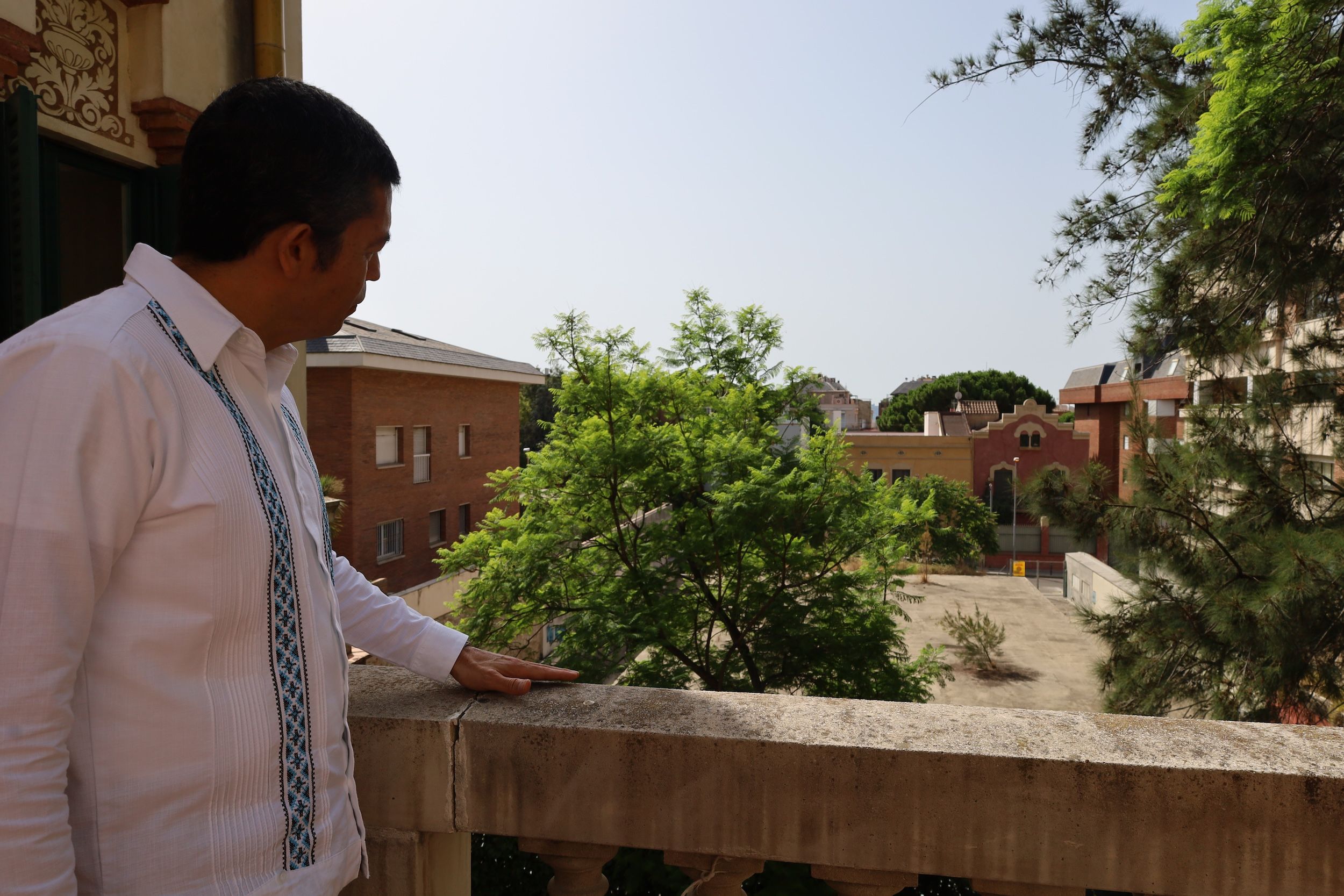
The deterioration of the house increased, and the owner came to want to demolish it, “but the City Council opposed it and did not authorize the demolition, and decided to sell it.” And that’s where the Consulate came in, buying the property in 2002. The operation also has its history: the acquisition by the Consulate included the sale of half of the property, then occupied by more garden. A residential building was erected on the land, but now it is an empty lot. “The building had to be demolished because it exceeded the permitted height,” explains the Consul in Charge from one of the house’s terraces, facing the empty lot that one day housed the garden of the house where Muley Afid organized his famous parties.
After the purchase, the building was renovated by architects Pere Joan Ravetllat and Carme Ribas, and reopened as the Consulate’s headquarters in 2003. But the history of the Mexican Consulate in the city began much earlier: “Mexico has had a presence in Barcelona since the first years of our independence in the 19th century.” First, in Portal de la Reina; then, towards Sant Just square, and then in Petritxol, until reaching Rambla Catalunya until 1939, when Mexico broke relations with the regime after the Civil War, and did not resume them until 1979. Upon its return, it was established in an apartment on Diagonal, but the decision was made to look for “a more appropriate property, given the historical ties and the relationship between Catalonia and Mexico.” It was then that the opportunity arose to move to Casa Muley Afid, which preserves that memory in the form of a clock.
Presiding over the most stately room in the house, this wooden clock symbolizes the passage of time, without marking it. It was the same one that was in the Mexican Consulate in 1939, and it stopped at 2 PM, the day the space closed due to the Francoist presence in the city. But the clock did not stay there: it was rescued by the building's concierge. He kept it in his house during the dictatorship and, before dying, asked his son to return it to the Consulate if it ever reopened. The son fulfilled that wish, and delivered it again when the institution returned to the city in 1977, 38 years after abandoning it due to its opposition to the Francoist regime. Since then, the clock has occupied a prominent place in the headquarters the Consulate has had, including Casa Muley Afid. Always stopped at the same time, to remember what happened in 1939: “We recently renovated the room, and a worker asked if we would finally fix the clock. But no, it will always be stopped.”
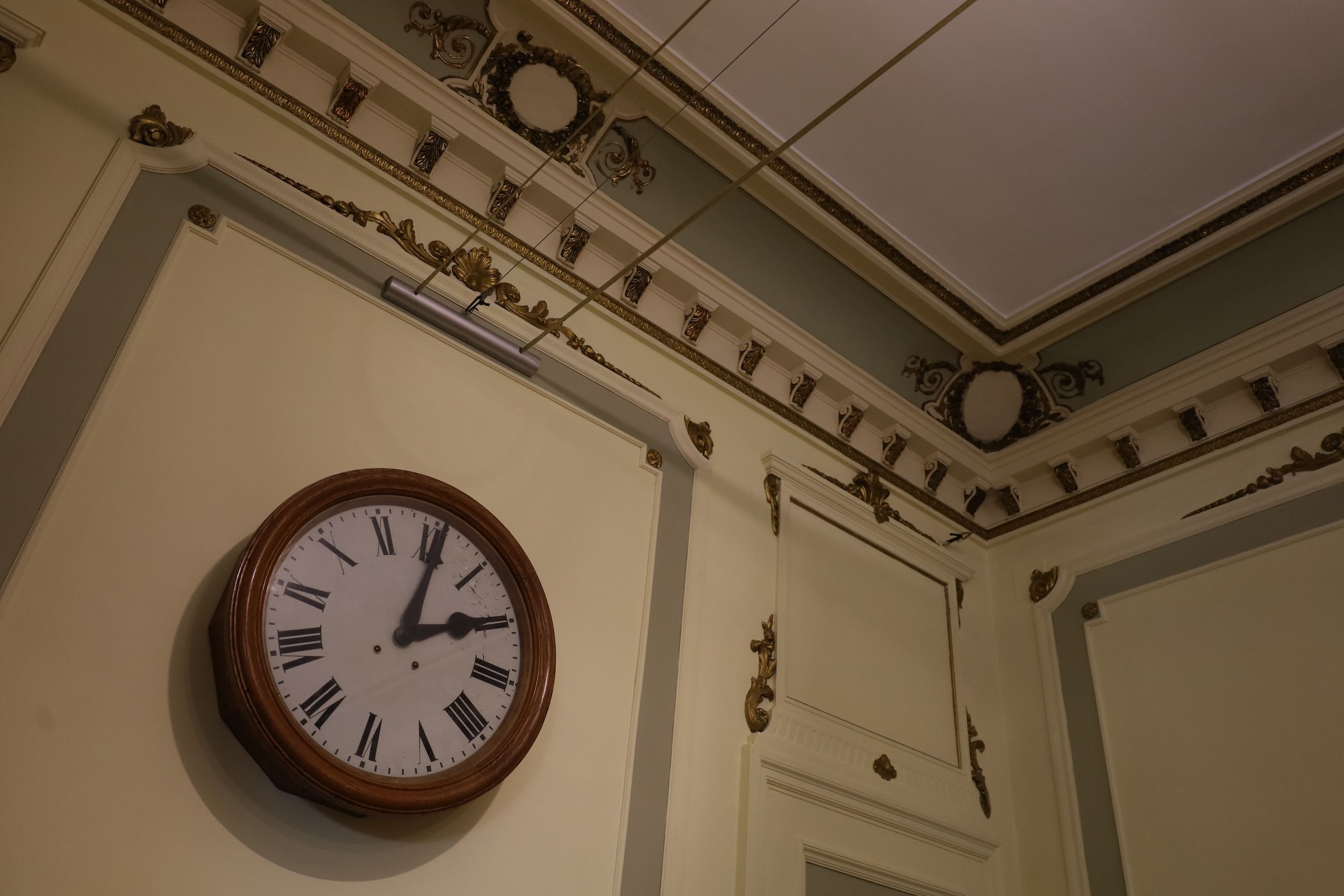
The room presided over by the clock often hosts events and meetings mainly linked to culture, such as exhibitions. And the Consulate organizes multiple activities and events in the house, often open to neighbors: “The property is not only preserved, but it has a life open to its surroundings,” he defends. So much so that they organize activities in areas ranging from education and female entrepreneurship to mental health and culture, with literature and music cycles and events for traditional Mexican holidays. “We try to make the space have a life of its own and for people to enjoy it,” remarks the Acting Consul. In addition, the Consulate's activity extends beyond the limits of the house to institutions such as the Barcelona Supercomputing Center, with which it has collaborated for years, in a relationship that is leading to the development of a supercomputer project in Mexico, Coatlicue, the mother goddess of the Aztec gods, a name that connects with the MareNostrum of the BSC.
Thus, the Consulate leaves Casa Muley Afid and also invites people to enter it, including neighbors who remember having snuck into the estate years ago by jumping its fences, when it was empty. “The building has not only been preserved, but it has an open life.” It is also viewed from the outside, like from a Tourist Bus that stops in front of it despite not being an established stop on the route, or like with a group of painting students who sit in front of the gate to paint the house, the one that was built to fulfill the wishes of an extravagant sultan and that still stands telling stories in Bonanova.
Add The New Barcelona Post as your preferred Google source for free
Stay informed with the latest news.