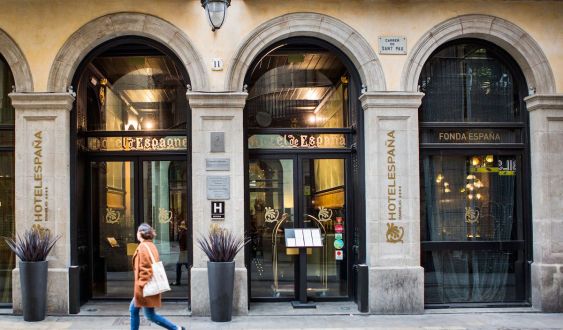
The eighth chapter of Hoteles con Historia e Historia de Hoteles, the series we publish every fortnight in The New Barcelona Post, begins this time in a consulate: that of the Philippines. For a few months now, the diplomatic headquarters of the archipelago, which was a Spanish colony until 1898, has been located in Casa Pia Batlló, at Rambla de Catalunya with Gran Via. From there, a walking tour is organized for the Filipino community in Barcelona (about 14,000 people) through different points of the city related to their country. One of the main stops is the establishment we are talking about today: the Hotel España. The reason, as almost always in this building, must be sought in history.
The origin of this lodging place dates back to the mid-19th century, when Josep Colomer i Giralt, son of Puigcerdà, decided to open an inn in the Raval neighborhood, attracted by the economic growth of an area that then formed part of the heart of the city. The building at number 11 on Sant Pau street had initially been conceived to house public baths and was later converted into housing. Colomer began construction in 1857 and, two years later, inaugurated the Fonda de España, which he leased to the Riu i Calvet brothers.
A good establishment
From the beginning, the inn stood out for something unusual at the time: spaciousness, comfort, and hygiene, qualities that earned it an excellent reputation among travelers and merchants. The success was such that Colomer promoted successive expansions. In 1863, after buying the neighboring building, he added new spaces and raised the construction, configuring what would soon be known as the pati vuitcentista. Four years later, a new floor of rooms consolidated the growth of the business, already renamed Hotel de España.
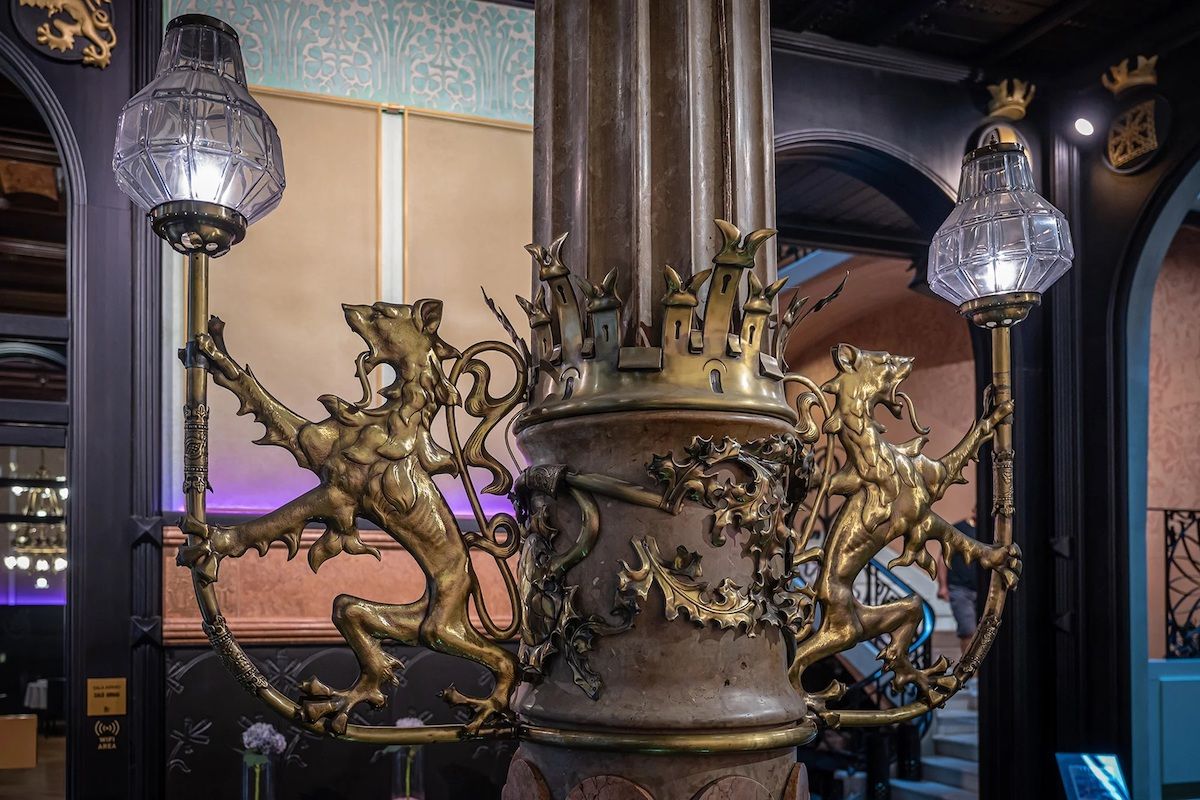
After Colomer's death in 1873, the establishment passed through different hands within the family until, at the end of the 19th century, Miquel Salvadó i Llorens assumed a decisive role in its destiny. Under his impulse, the hotel added the Frenchified Grand Hotel d'Espagne to its name, seeking to sound good among international travelers. Barcelona was preparing to show itself as modern and European with the Universal Exhibition of 1888, and hotels were key pieces of that new urban image.
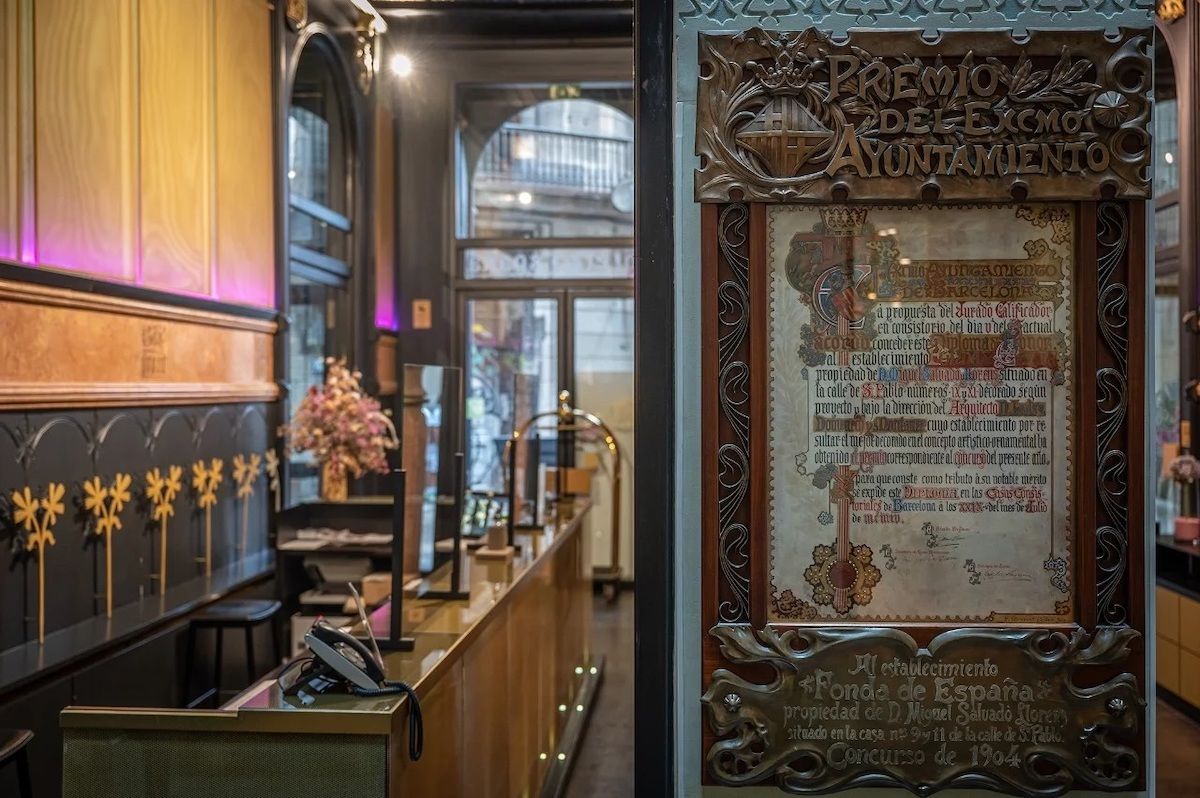
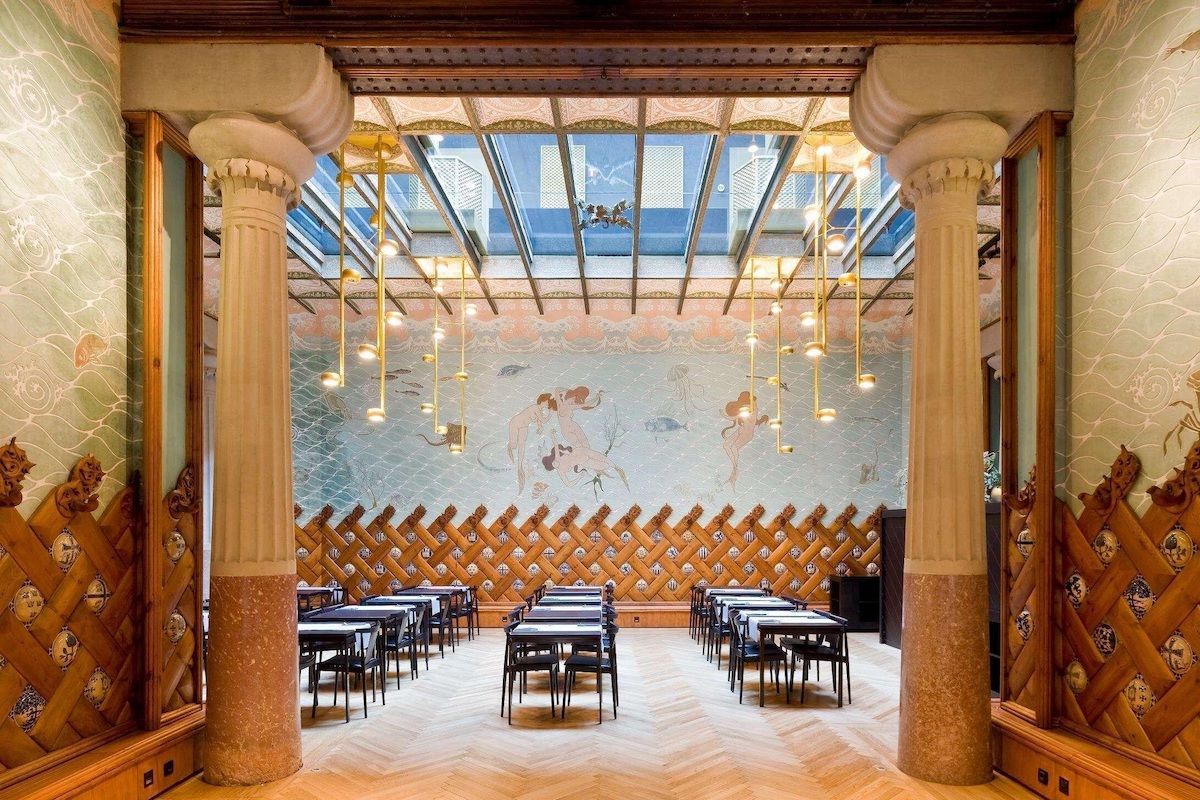
The moment that gave Hotel España its true relevance arrived between 1898 and 1904, when Salvadó commissioned a comprehensive renovation from architect Lluís Domènech i Montaner. The result was one of the most brilliant interventions of modernism applied to hospitality. Domènech conceived here a true total work, surrounding himself with artists such as Ramon Casas, author of the sgraffiti in the dining room, and Eusebi Arnau, responsible for a monumental alabaster fireplace. In 1904, the Barcelona City Council distinguished the complex with the award for the best commercial establishment of the year, a recognition that is still remembered today, framed, in the hotel lobby.
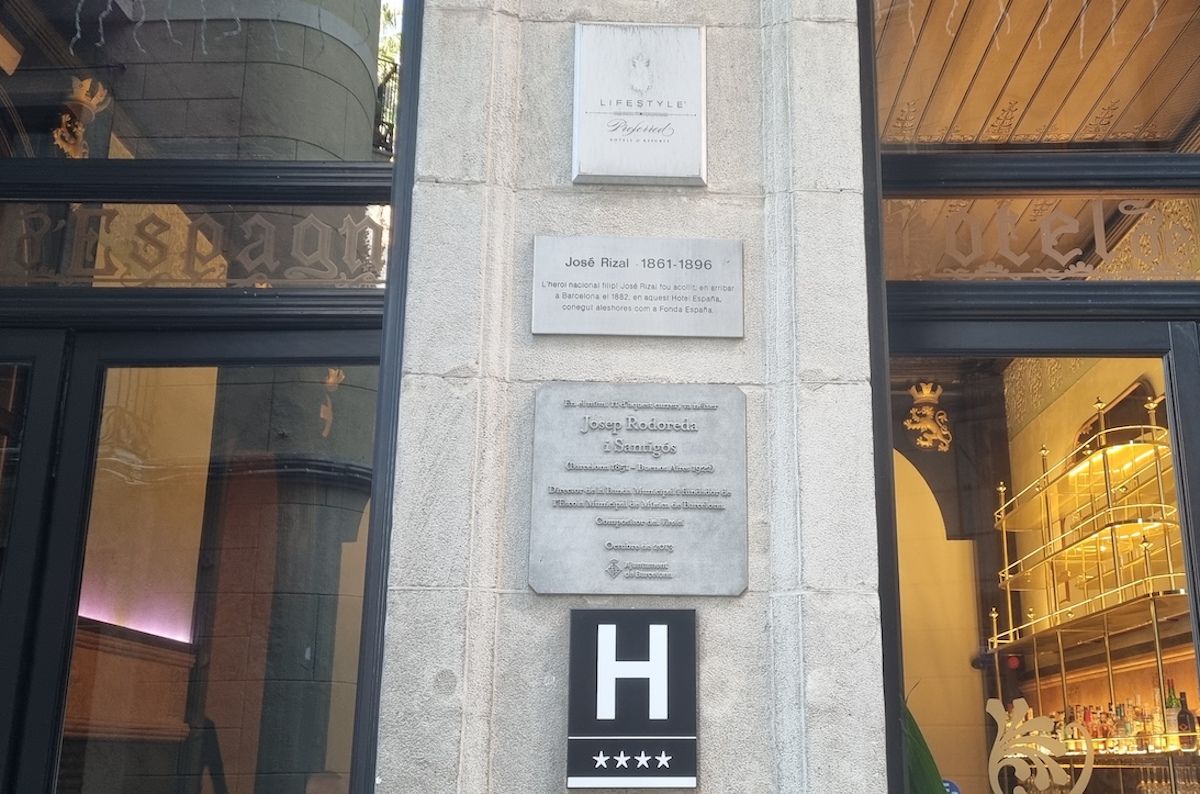
Another municipal plaque, this time on the facade, recalls the period when the building was a residential house: Josep Rodoreda was born there, founder of the Municipal School of Music of Barcelona and composer of the music for the Virolai, a song dedicated to the Virgin of Montserrat and unofficial anthem of Catalonia. Above that metal plaque there is another one that indicates that José Rizal stayed at the Hotel España in 1882. This fact explains the unique relationship of the establishment with the Philippines: José Protasio Rizal-Mercado y Alonso-Realonda, a prominent Masonic writer, ophthalmologist, intellectual, and the first great hero of Philippine independence, lived here during his stay in Barcelona and after studying in Madrid.
Nothing on the facade announces the interior richness. After crossing the entrance, the sgraffiti wish the visitor Bon profit or Bon descans, while the dining rooms are clad in noble woods, glazed ceramics, and coats of arms of all Spanish provinces. Casas' mural, with echoes of Japonism and uninhibited modernity, miraculously survived decades of neglect, when modernism fell out of favor and many of its expressions were mutilated or hidden.
For a good part of the 20th century, the Hotel España knew other lives. For years it was the fixed hotel for bullfighters and their cuadrillas, with their superstitions and rituals, like those of Carlos Arruza, who always reserved the same room, and the scene of domestic anecdotes, simple meals, and memorable discussions. In post-war Barcelona, the hotel also housed a more discreet life: given the prohibition of gambling, it was a secret known to those who needed to know that clandestine games were held there, and that there even existed a passageway, now walled up, that connected it to the nearby Hotel Oriente.
The history of the building is inseparably linked to that of the city. From some of its rooms, on January 31, 1994, one could closely experience the first hours of the fire that devastated the Gran Teatre del Liceu, a next-door neighbor. At that time, the hotel was going through the final stage of a long decline, which led it to enter the 21st century reduced to a two-star category, far from the prestige it had enjoyed in its best years.
The change of direction came in 2004, when a new ownership promoted a comprehensive restoration with the aim of recovering its lost splendor and reconciling the building with its history. Today, once again under the name Hotel España Ramblas, and with new management after twenty years since that renovation, the establishment in Raval has recovered its place on Barcelona's heritage map alongside other hotels of the Ocean Drive group in Madrid, Seville, and Ibiza.
Declared a Cultural Asset of Local Interest and a member of Historic Hotels Worldwide since 2021, the hotel continues to remind us, on Sant Pau street, that some places do not age: they simply accumulate time and improvements, such as the works that have been carried out for weeks in some common areas.
Add The New Barcelona Post as your preferred Google source for free
Stay informed with the latest news.