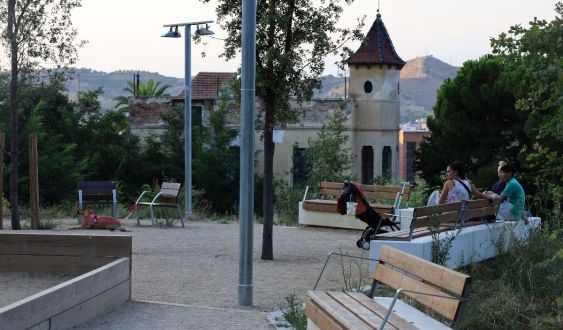
It's hot on Passeig Maragall. From Horta metro, a couple of terraces have tempted me to have something refreshing but, instead, today it's time to climb the steep slopes dotted with old chalets and towers of the Font d'en Fargues neighborhood.
And what better place to start than, as they say, one of the points that was the germ of the neighborhood. Hidden behind a lush layer of tall trees, the Can Fargues farmhouse resists the passage of time next to Passeig Maragall. Of medieval origin, the complex is surrounded by gardens that, after more than a decade of neighborhood struggle, were opened to the neighborhood a few years ago, with the farmhouse rescued from abandonment and converted into a municipal music school.
At this hour and with this heat, only a couple of dogs with their respective companions walk through the gardens. The considerable height of the trees keeps away the noise and the silhouettes of the buildings that surround the park, and it is easy to forget about the traffic and think of that inevitable expression of oasis in the middle of the city. A family that seems to be immune to the heat walks among the trees, and stops in front of a small fountain.
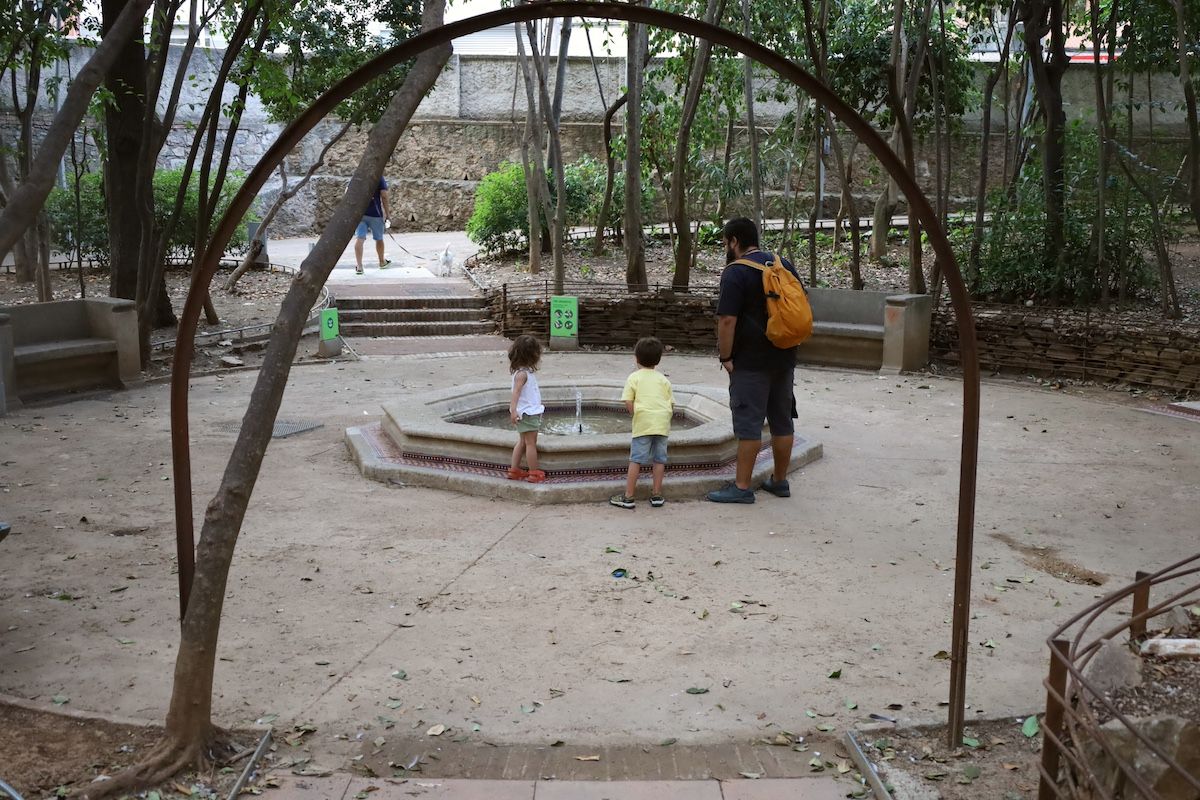
I take the opportunity to ask where to go for a drink in the neighborhood, and they challenge me to go up to the Font d'en Fargues, also rehabilitated a few months ago after years of abandonment. The directions are simple: upon leaving the medieval complex, take the uphill street; then, keep going up until it seems that you can't go up any further and, once there, go up a little more, until you come across the old modernist kiosk, which now offers drinks and some snacks.
Frederic Rahola street climbs the mountain in a winding and somewhat labyrinthine network that, far from drawing straight lines on a map, follows the ascending terrain that ends up becoming the wooded Parc del Guinardó. Imposing towers and chalets built by the Catalan bourgeoisie continue to dominate the streets, now with a decadent air that transports one to mystery novels and better times.
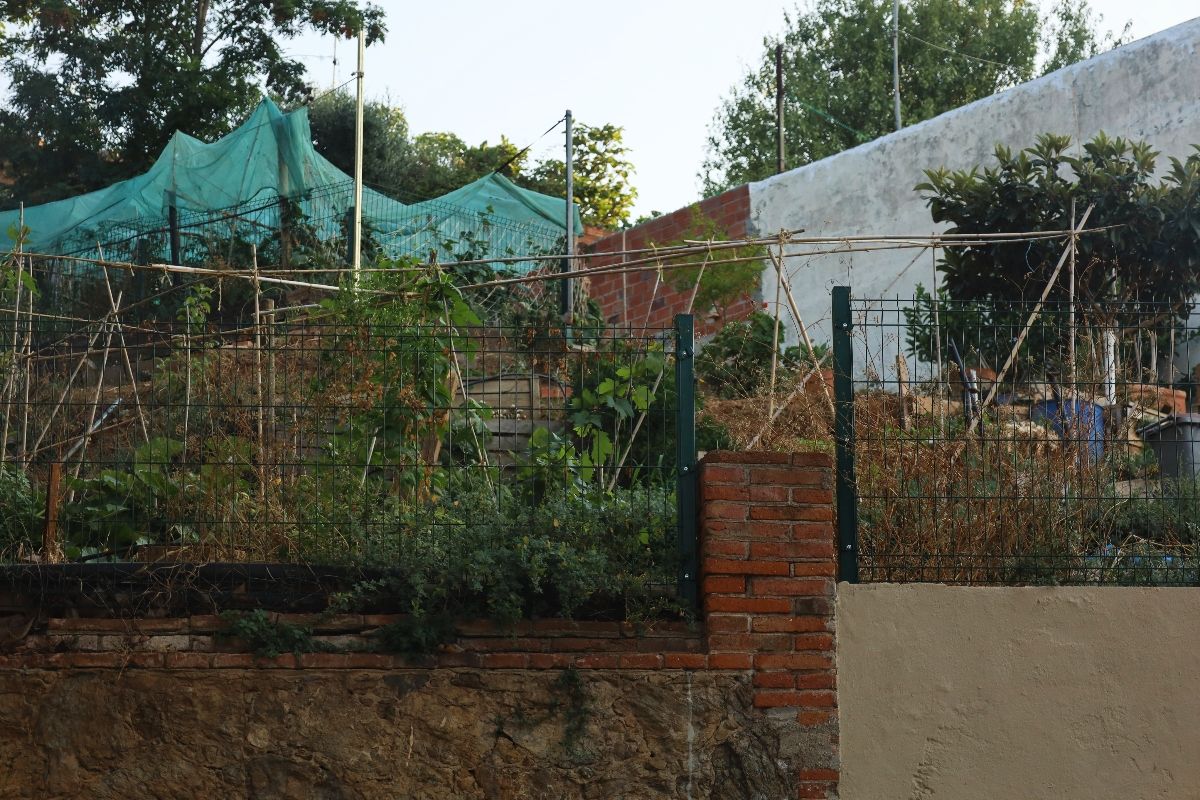
Several orchards peek out among disordered constructions, next to several large houses built by the Journalists' Cooperative, which forced the regulations to take advantage of the Law of Cheap Houses of the early twentieth century and used it to build large stately homes. Most are still standing both in Font d'en Fargues and in Can Baró; we will look for those on another walk.
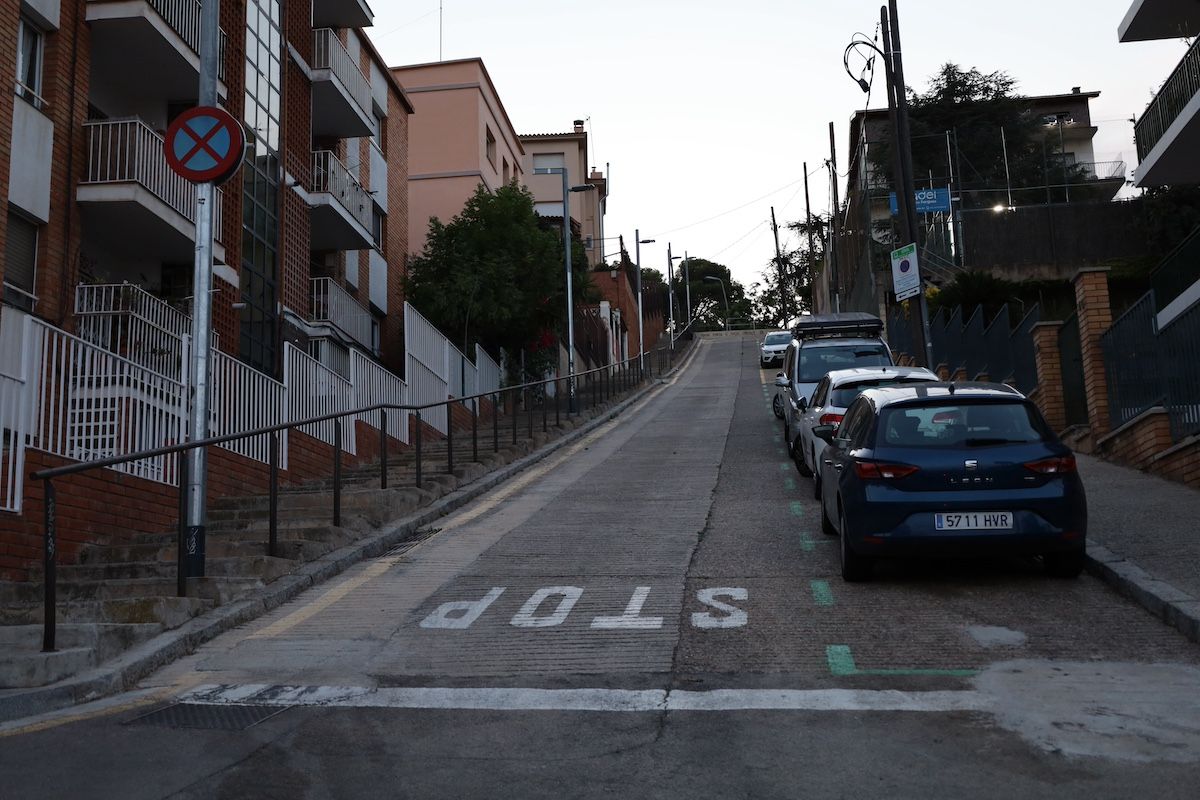
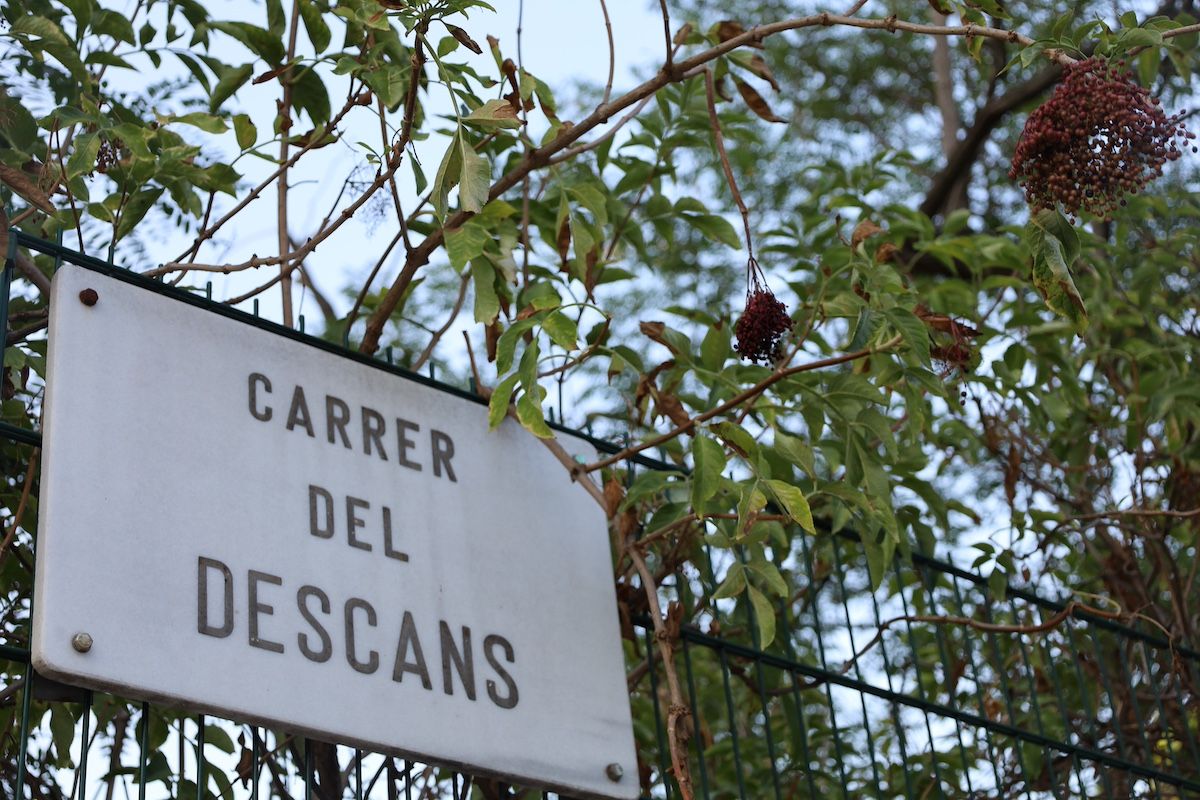
Nobody else walks at this hour through the steep streets that connect Can Fargues to Font d'en Fargues, revealing a panoramic view of the city up to Collserola. It was the fountain that gave the neighborhood its name, and not the other way around: the Can Fargues farmhouse was previously known as Mas Pujol, or even Mas Margarita. Be that as it may, both places with the neighborhood's name and recovered from abandonment are connected from chalet to chalet and from facility to facility: a school, a casal de barri, a bressol. And there everything seems to end: the bressol, poetically on Descans street, meets the mountain. But beyond, a murmur of paused conversations, children, and an occasional dog can be heard. One must keep climbing.
A small ramp that seems to lead to nowhere climbs even further towards the Guinardó park —or forest—. Suddenly, the modernist kiosk emerges, colorful, vibrant, surrounded by tables, the fountain and its cave, and a playground that overlooks Barcelona from above.
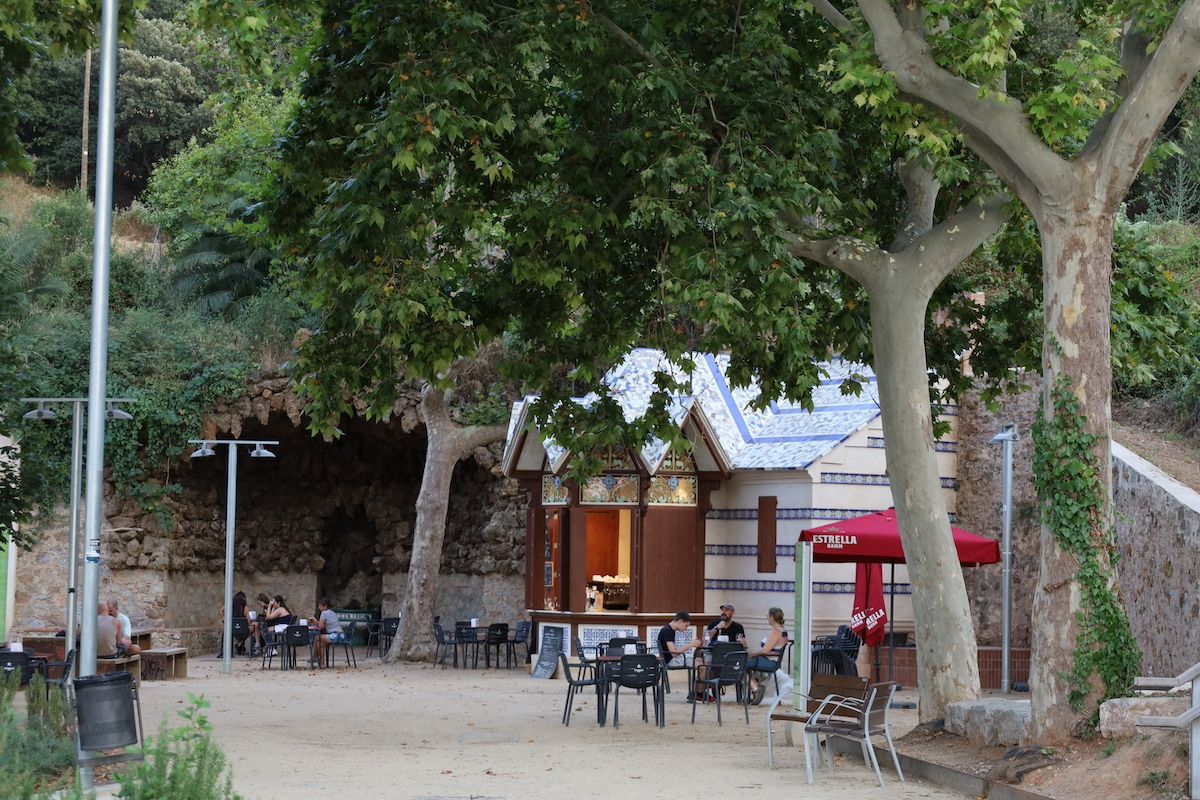
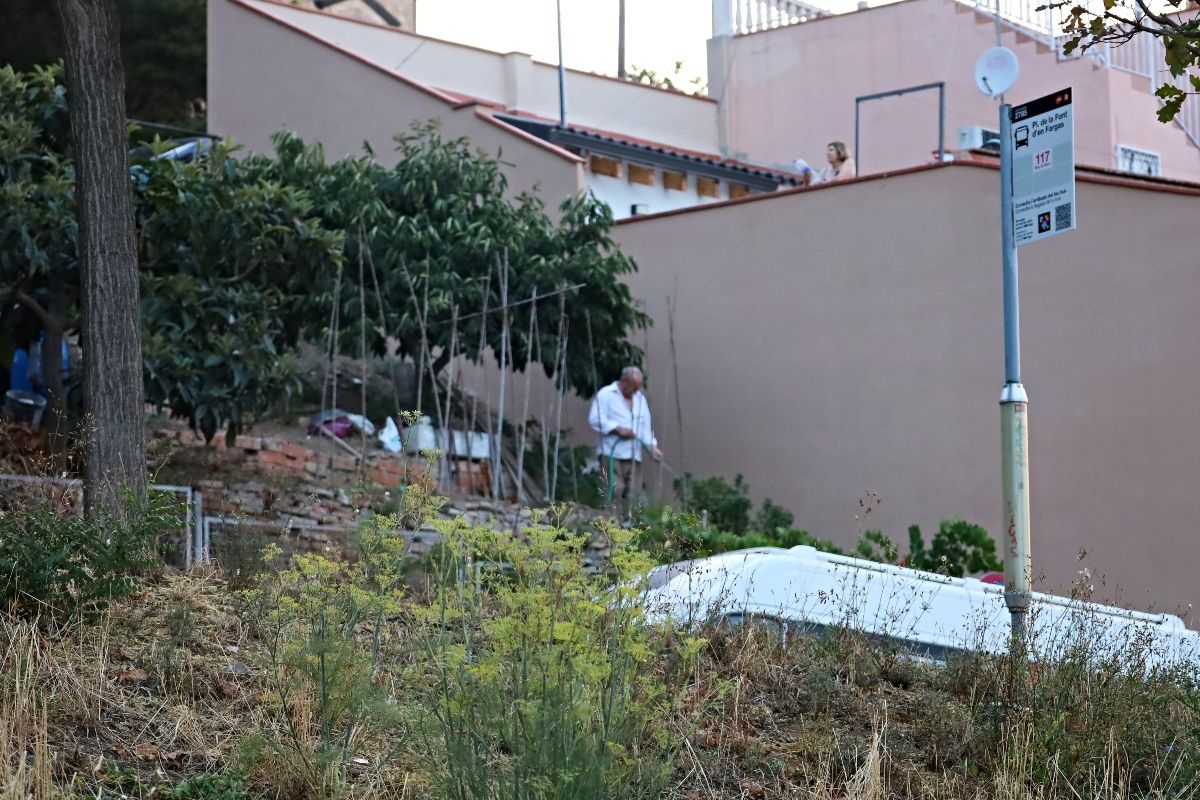
The sun is already beginning to bid farewell to the day, and several families enjoy the last moments of full August light, while a couple of solitary readers devour words absorbed from their respective tables. In the distance, a man tends his garden, while a woman gives him instructions from the top of her terrace, in a neighborhood of irregular terrain where the ground floors of some are elevated apartments for their neighbors.
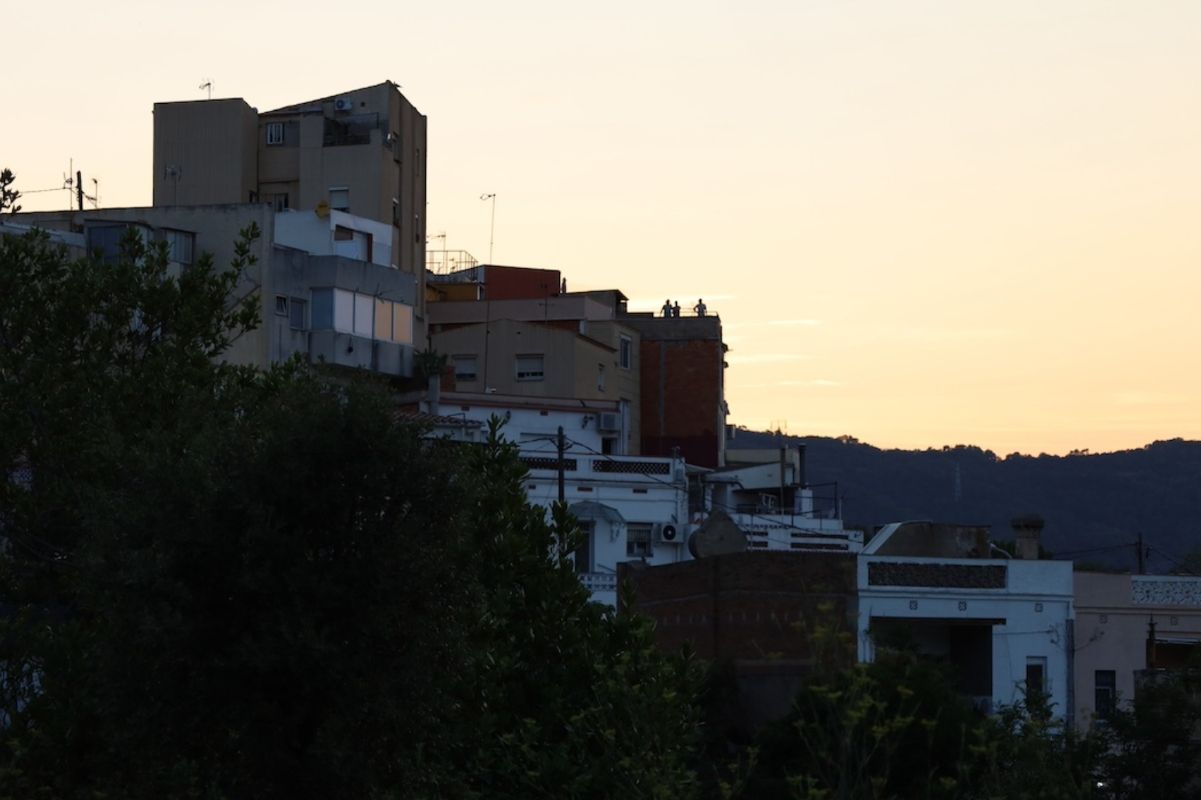
The modernist ensemble of the fountain, the kiosk, and an old water bottling room —which now houses one of the city's most curious and unexpected bathrooms— overlooks Barcelona as the sun decides to hide, at the same time as the families and readers who, lacking light, descend from the mountain to, sadly, return to the asphalt.
Add The New Barcelona Post as your preferred Google source for free
Stay informed with the latest news.
