
The name of Antoni Gaudí is usually immediately associated with the unmistakable towers of the Sagrada Familia Basilica, the colorful mosaics of Park Güell, or the undulating facades of Passeig de Gràcia. Gaudí is, often, synonymous with the Eixample and with buildings that have become universal symbols of Barcelona. But his legacy also extends to the streets of the Raval, far from the grand modernist avenues. This year, coinciding with the celebration of Gaudí Year —which commemorates the centenary of the architect's death—, it is also a good time to rediscover this other side of the modernist genius: that of a still young Gaudí, in full creative exploration, venturing into a more discreet and less known Barcelona, next to La Rambla, where the Palau Güell stands, one of his first great works and a key piece to understand his architectural language.
From the outside, the Palau does not seek to impress with the ornamental exuberance that often characterizes Gaudí. Its stone facade, sober and elegant, almost blends in with the buildings on Carrer Nou de la Rambla —until 1979 known as Carrer Comte del Asalto—. Many of those who pass by can hardly imagine that behind those large parabolic wrought iron gates the architect began to define his architectural language, with elements that already announce his later aesthetic, such as the parabolic arches, the importance of light, and a conception of space that goes beyond pure ornamentation.
Built between 1886 and 1890 by commission of the businessman and patron Eusebi Güell —who over the years would become Antoni Gaudí's great patron—, the Palau Güell was to be the family's urban residence and a display of their social and economic prestige. But Gaudí did not approach the commission as a conventional stately home. At only thirty-four years old, he designed a building conceived down to the last detail, where his architectural genius is already clearly perceived.
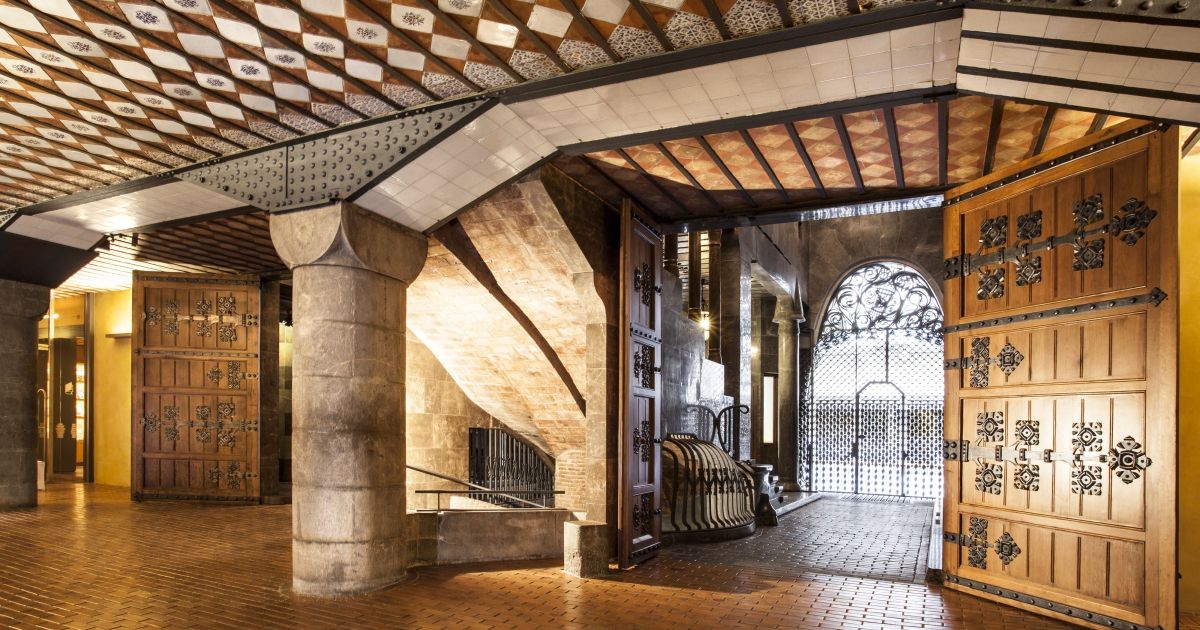
In the midst of Barcelona's transformation, when the city was beginning to expand beyond its walls, Eusebi Güell chose to build his residence in the Raval, very close to the old Güell family home, while many wealthy families began to leave Ciutat Vella to settle in the Eixample. Instead of moving away from the historic center, he chose to maintain his presence.
A family residence conceived as a total work
Gaudí responded to this commission with a creativity that is visible even in the less noble spaces of the Palau. On the lower floors are the stables, located in the basement and designed with advanced engineering for the time, with helical ramps that facilitated the access of carriages. He also incorporated innovative technical solutions, such as a ventilation system based on ducts and openings that ensured air circulation and prevented the accumulation of odors. Elements that, as a whole, reflect an architecture where nothing is left to chance, not even what is not visible.
As one ascends to the upper floors, the Palau Güell acquires a nobler character, with materials such as wood, stone from the Güell family quarries in Garraf, and decorative elements crafted by top-level artisans. All of this creates interiors designed to impress and, at the same time, reflect the family's prestige in their receptions.
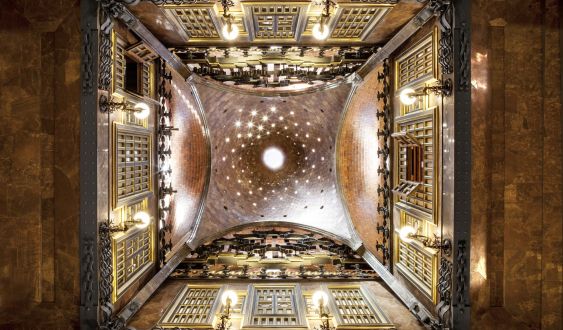
The main staircase structures this ascending visit and leads the visitor to the main floor, where the grand central hall is located, the true core of the building. A vertical space of three floors crowned by a parabolic dome perforated by small openings that filter light as if it were a starry sky. A space that was also the social heart of the Palau: the Güell family organized concerts, receptions, and cultural evenings there. The monumental organ, conceived so that music would descend from the dome, turned each performance into an immersive experience. Even today, with the organ built by organ builder Albert Blancafort (2011), music continues to fill the space and reinforces its acoustic dimension.
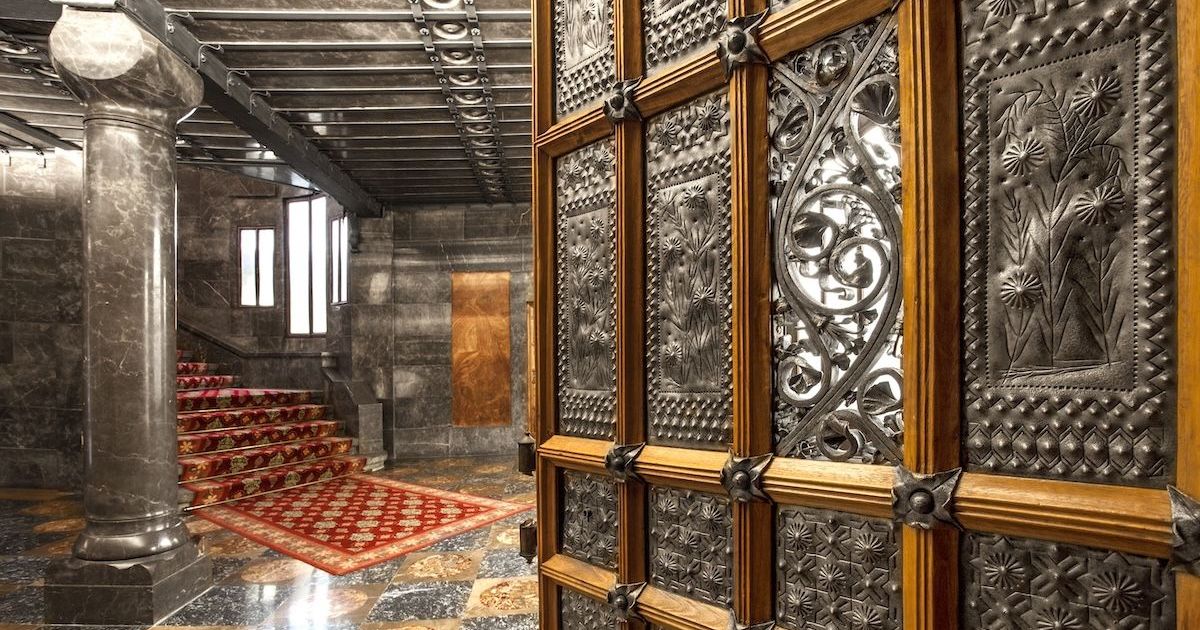
Around the hall, Gaudí arranged the rooms with surprisingly functional logic, where perspectives visually lengthen the spaces and compensate for the limitations of the plot. A good example is the "sala de los pasos perdidos" (hall of lost steps), prior to the access to the central hall, where an interior facade articulated in several planes creates a sensation of much greater depth than the actual one.
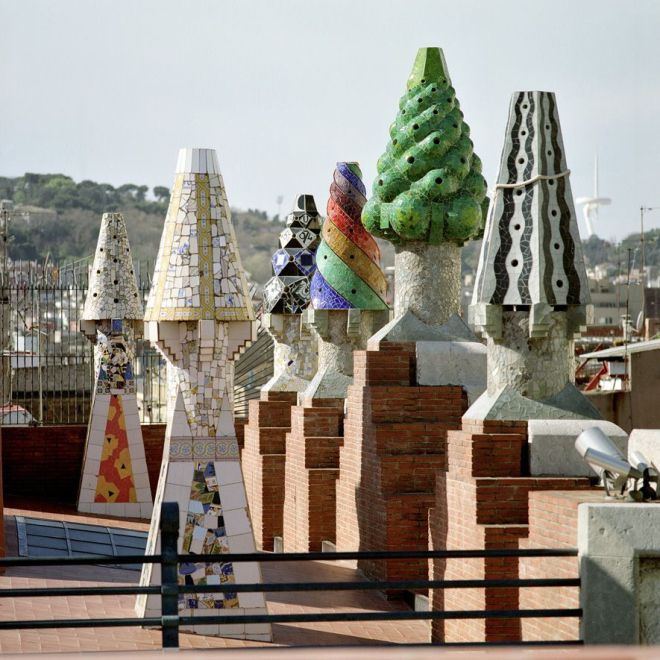
The ascending tour culminates at the point that probably best synthesizes Antoni Gaudí's style: the rooftop. Distributed on three levels, it covers the entire floor of the building and becomes one of the most unique spaces in the Palau. In this space, 20 colorful ceramic chimneys unfold, which complete the shaping of this space and also make it a turning point in Gaudí's work. Although the architect had already experimented with trencadís in previous works, such as the pavilions of the Güell estate in Pedralbes, it is here that he transforms it into a fully architectural and leading element, anticipating features that would later define works such as Park Güell or Casa Batlló: organic forms, the prominence of color, and the innovative use of traditional materials such as stone, wood, iron, or ceramics.
From private palace to heritage open to the city
Beyond these groundbreaking elements that define his architectural language, Palau Güell also stands out for another unique characteristic: it is the only new-build building that Antoni Gaudí managed to complete entirely, and it is one of the few that has been preserved without essential modifications over time.
This continuity is perceived throughout the visit, where several spaces from the daily life of the Güell family are still preserved. Some of the main rooms retain part of the original furniture, which allows one to imagine what life was like in the Palau in the late 19th and early 20th centuries. The family resided there until around 1910, when they moved to Casa Larrard in Park Güell, and the building lost its function as a family residence.
From this moment, the Palau began a new stage marked by changes in ownership and function, which would culminate in its conversion into a public space. In this process, the building experienced various episodes: during the Civil War, it was even used as a police station and, years later, it was even on the verge of being acquired by an American millionaire who wanted to move it stone by stone out of the country. Finally, Mercè Güell, daughter of Eusebi Güell, ceded it to the Diputació de Barcelona, on the condition of guaranteeing its preservation and ensuring its cultural use.
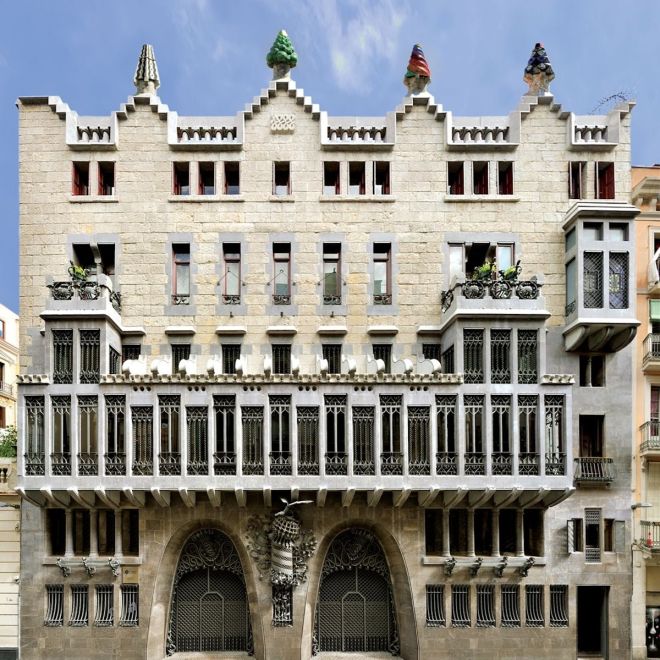
In 1952, the Association of Friends of Gaudí was established, and between the late 1950s and 1996, it housed the Institut del Teatre. Finally, in 1984, the Palau Güell was inscribed on the UNESCO World Heritage list as part of the "Works of Antoni Gaudí" ensemble, in recognition of its exceptional universal value. After several restoration campaigns, especially the comprehensive intervention in 2011, which allowed for its musealization and reopening to the public, the Palau Güell is now open for visits. Additionally, the visit can be complemented with activities ranging from regular guided tours—offered every Saturday and Sunday in different languages—to thematic tours, family activities, and special experiences that allow visitors to discover spaces usually closed to the public.
Some of these activities open the door to corners that are normally outside the usual tour. This is the case with the tour The Secret Palau Güell (every second Saturday of the month, except August), which allows visitors to experience the building in a different way: exploring it at dusk, in semi-darkness, entering Eusebi Güell's private office, or listening to the organ from a hidden balcony, in an almost cinematic experience.
Furthermore, there are also experiences specifically designed for families, such as Gaudí's Secret Documents (every fourth Sunday of the month, except August), a playful tour where children discover architecture through games and riddles with mysterious parchments. And, for those who want to go further, the itinerary The Güells on La Rambla. Four Connected Palaces (every third Sunday of the month, except July, August, and September) explores various spaces linked to the family and allows for a better understanding of the mark they left on this area of the city.
Visit the Palau Güell, you can't miss it!
More information and tickets at palauguell.cat
Add The New Barcelona Post as your preferred Google source for free
Stay informed with the latest news.