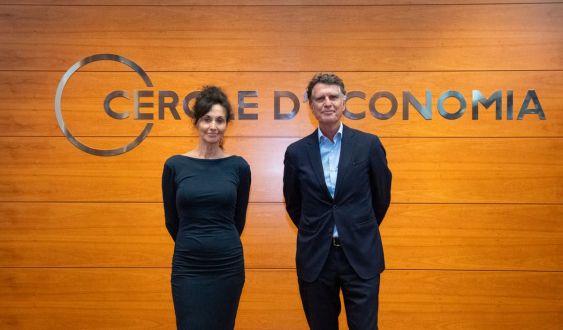
Rosa Cañadas, with "ambition and courage for change," and Jaume Guardiola, with "a long view and approaching society," have asked for the vote of the 1,200 members of the Cercle d'Economia to be elected to the presidency of the entity, one week before the elections; the first to be held in 64 years.
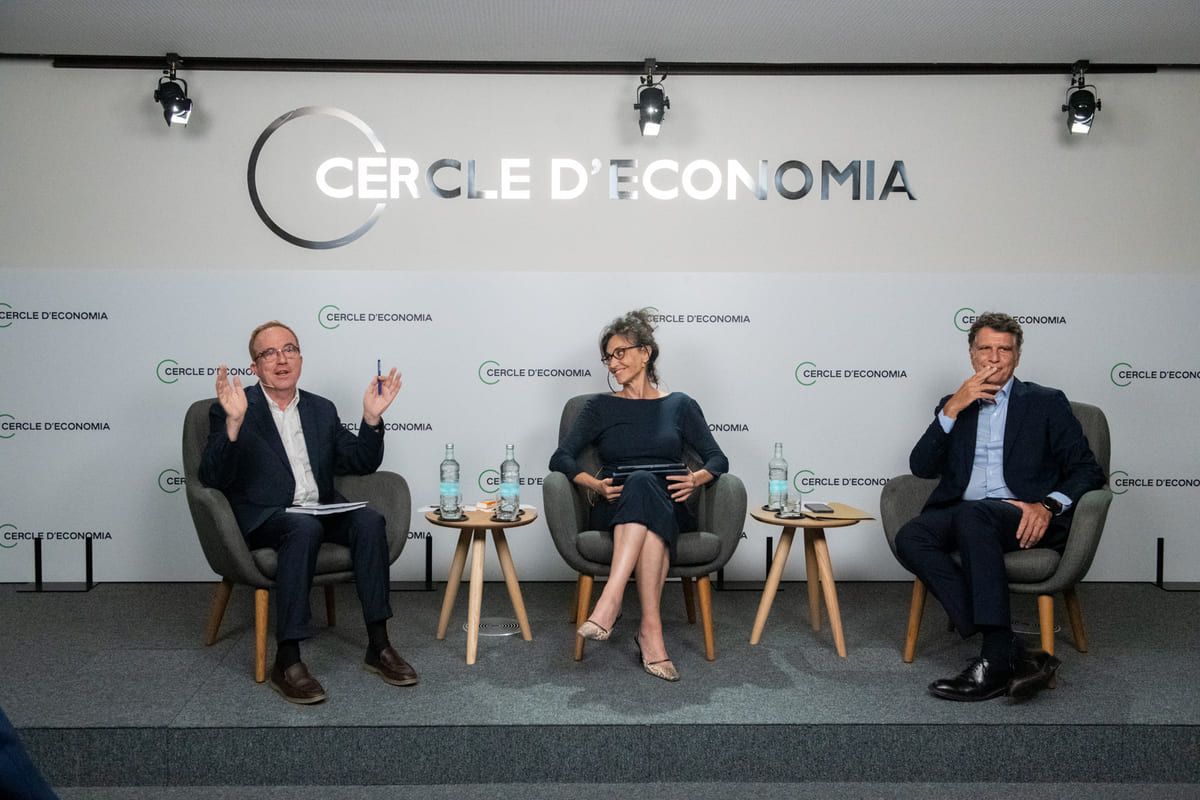
Both candidates held an open debate this Wednesday, at the headquarters of the Cercle d'Economia itself, with Guardiola not hiding "the fatigue of a too long electoral period, of two months" and Cañadas attributing to herself "the democratization and revitalization of the entity for having provoked the elections by presenting her proposal."
Guardiola, who admits to leading the "continuist" candidacy, with a renewed but conservative board and program that preserves the entity's legacy, wants to achieve greater participation of members in the generation of thought and "lead the entity towards where society is." Cañadas, who attributes to herself the renewing spirit and transversality, seeks for the entity to play a preponderant role in Europe, recover its foundational values "that have been diluted," and rejuvenate it.
With disparate points of view on what the Cercle d'Economia is today and on what its short and medium-term purposes should be, Cañadas and Guardiola have coincided on few aspects. The main one, giving back the voice to the member. How to do it? That's another matter. Guardiola advocates creating a kind of wisdom clusters in which members, grouped by themes or territories, contribute from their knowledge to structure the entity's thought, "with rigor," he pointed out.
For Cañadas, the voice of the associate must come from debate, establishing mechanisms for them to express their thoughts and reflections, "some of which we have already incorporated into our program," she said. The president of the Tanja Foundation, who has already been a member of the Cercle's board in three previous terms, determines that one of these mechanisms should be the entity's annual meeting; a conference that she would return to its previous location, Sitges.
Sitges should be recovered and become what it had been, a space for debate and reflection for the member, "who does not feel like a mere spectator," a situation that the celebration in Barcelona does not allow, according to Cañadas. However, her program advocates for a double call: a conjunctural event in Barcelona, and the annual day of debate and reflection, in Sitges.
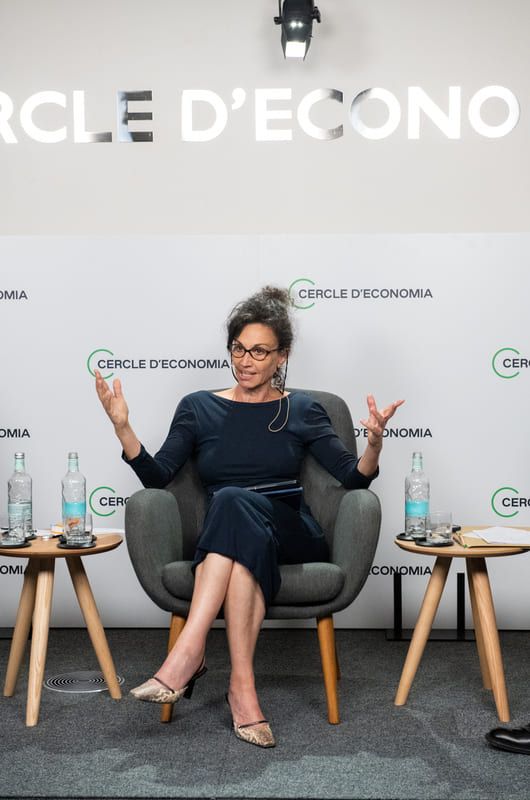
On the contrary, the former CEO of Banco Sabadell and member of the outgoing board believes that moving the annual meeting to Barcelona was "a natural step" and that the city gives more projection to the event. In this sense, he has cited as an example of the Cercle's influence the visit of the President of the European Commission, Ursula von der Leyen, who traveled to Barcelona in May to present its awards, and has assured that this contributed to making possible last Thursday's meeting between the President of the Generalitat, Pere Aragonès, and the Vice-President of the EC, Margaritis Schinas.
However, Guardiola also sees "things to improve, without a doubt, in the event held in the city" and points to the incorporation of new technologies to make the partner more participative.
The vision of Barcelona
The two candidates, who will face each other in the elections on July 12, also have different opinions on the role of the Catalan capital. For Cañadas, Barcelona must stop insisting on co-capitality with Madrid ---"which is useless," he said-- to think beyond, in leadership in the Mediterranean.
An idea that Guardiola does not share at all because "it would be difficult to fit the city into an area like the Mediterranean that gathers very diverse experiences and situations from the range of countries that comprise it," and he mentioned all the territories with a Mediterranean coast. "A geography lesson," Cañadas snapped at him, implying it was unnecessary.
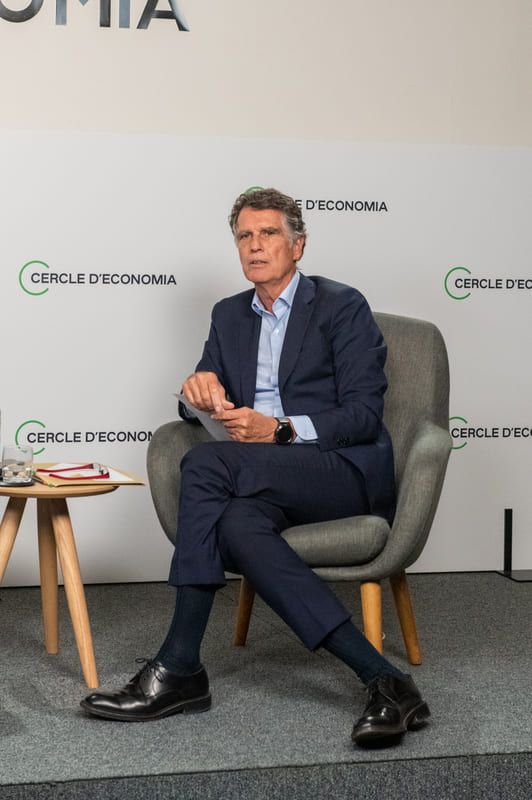
For the former financier, Barcelona must be a metropolitan city that competes on equal terms with cities in Europe and other destinations in the world on current and future issues, such as technology, reindustrialization, digitalization... he insisted. In a relaxed manner throughout the debate, the candidate ---a little obsessed with the timing of the respective interventions--- said that now "is the moment, the opportunity to create a climate and an ecosystem" for the future of the city.
Catalonia's fit
Both candidates have insisted on the need to contribute to resolving the territorial conflict and improving Catalonia's fit within Spain. Both criticized the centralism of the State. But Guardiola has also advocated for "a consultation mechanism" to channel Catalonia's political aspirations, after reflection on the Constitution and the financing model, convinced that "there is a space" for it.
Cañadas, for her part, has opted for "seeking complicity with other autonomous communities" to fight against Spain's "more radial vision" and has defended a new fiscal pact in line with CAREC's recommendations.
Add The New Barcelona Post as your preferred Google source for free
Stay informed with the latest news.
