Innovating without forgetting the origins. Few concepts define Catalan cuisine so well, where spherifications and molecular cuisine coexist with traditional broths and flavors. That same balance between memory and future is the philosophy that has also guided the Hofmann group since its foundation in Barcelona in 1983, driven by Mey Hofmann. Today comprising two pastry shops, a training school in gastronomy and pastry, and a high-cuisine restaurant with a Michelin star, the project reaches a new dimension with the inauguration of a new workshop and R&D center in Badalona. With 1,200 square meters, the space will allow the workshop's production capacity to double, but above all, it represents a firm step towards the national and international expansion of the group, which looks to the future without, however, renouncing its DNA.
The new center in Badalona arises from an operational need, but also from a global strategic ambition. Until now, production and product development were spread across three different spaces in El Born, the neighborhood that has been the epicenter of the project for decades. This dispersion required complex internal logistics: elaborations that began in one location and finished in another, separate teams, and very limited refrigeration and freezing capacity.
This new workshop located in Badalona, which has involved an investment of more than 700,000 euros and has been fully operational since mid-January, thus represents "a qualitative leap for the team and production," assures Óscar Pérez, Hofmann's head of operations. "In this space, we will be able to centralize all production, work together, and optimize each phase," he adds.
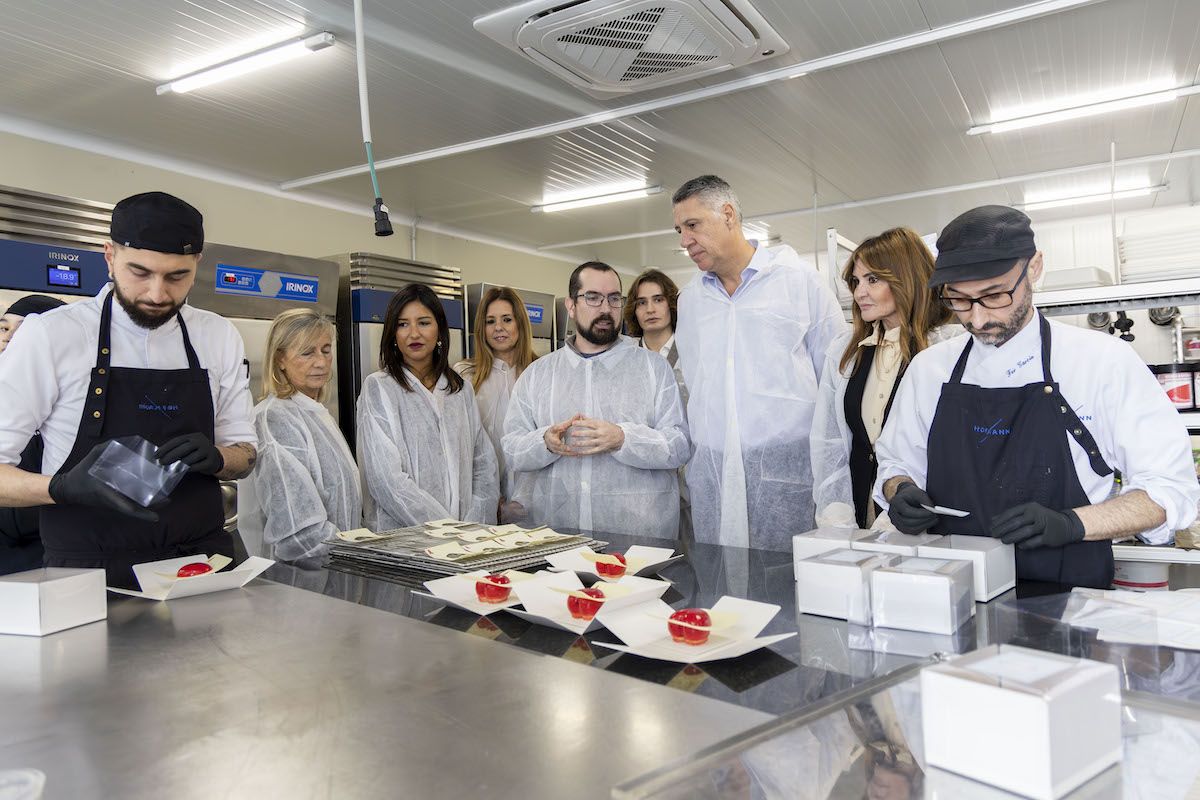
The new infrastructure incorporates a large refrigerated area and differentiated spaces for pastries and cakes. There, about thirty professionals work from Monday to Sunday, in shifts that begin at five in the morning and extend until six in the afternoon. From this point, daily elaborations are sent to the two stores in Barcelona —the one in Born (Flassaders, 44), inaugurated in 2008, and the one in Turó Park (Avenida Pau Casals, 5), opened just over two years ago, which recently added a tea room—, as well as to catering services and special projects. The group estimates, in fact, that this centralization of production will allow doubling the productive capacity —it is expected that by 2026 production can grow up to 40%—.
But beyond the figures, the new center reinforces one of the essential pillars of the house: constant innovation. "R&D means launching new products, like the two turrones or the panettone we are debuting this Christmas, but also continuously improving those that already work," emphasizes Pérez. Sometimes, the change is not visible to the client: it can be a modification in the painting process, in the way of rolling a croissant, or in the formulation of one of the creams that fill their emblematic croissants.
Artisanal process with avant-garde techniques
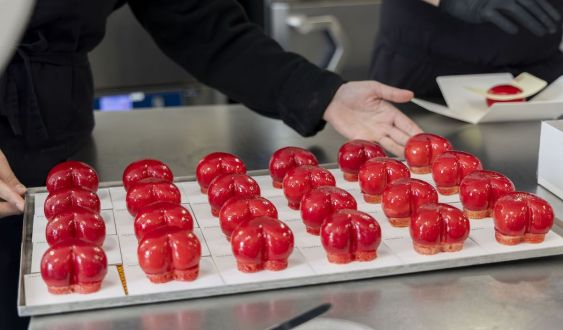
From this workshop come some of the most iconic creations of the house. The mascarpone croissant, filled with a soft mousse and topped with a light coffee glaze, is the star product: each week about 3,000 units are produced, representing close to 30% of the pastry shop's global turnover. In the realm of individual desserts, the pistachio-shaped cake is the undisputed king, with up to 1,800 units monthly. "They are small jewels," describes Pérez, highlighting the work of study, originality, and even packaging behind each launch.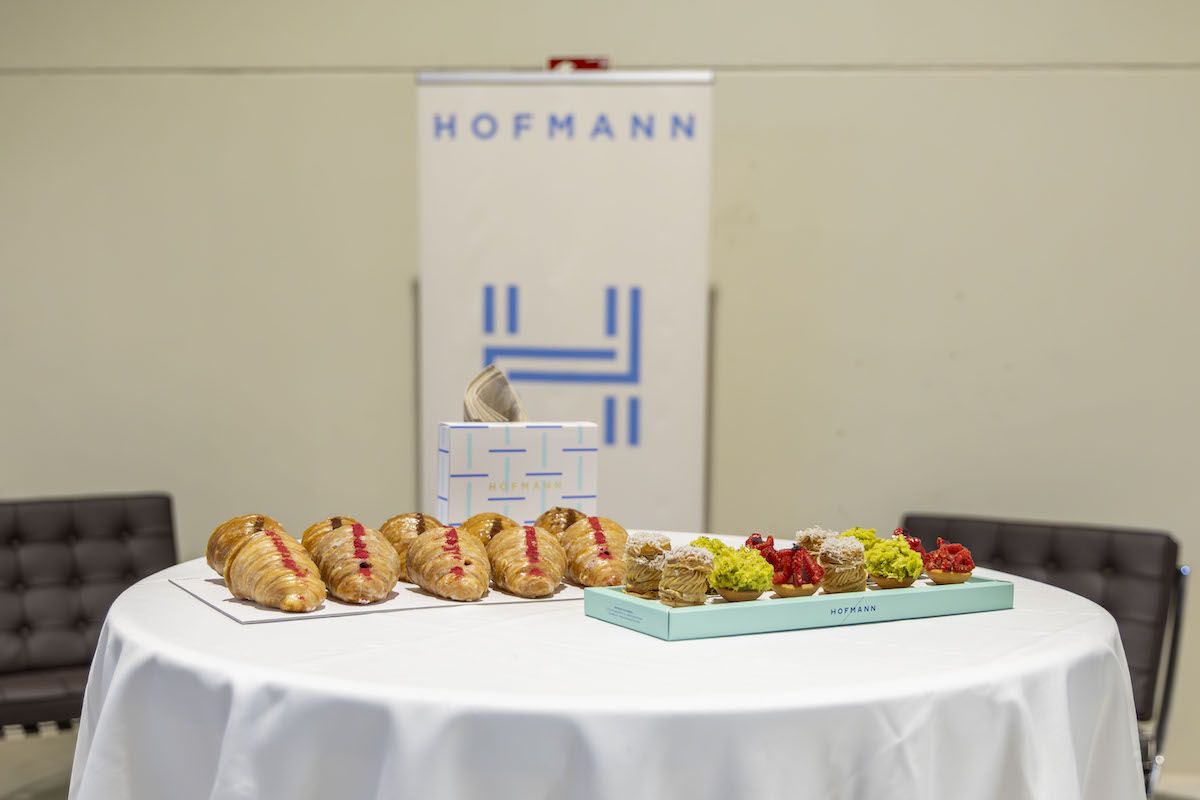
Despite the technology with which the new workshop is equipped, its essence remains artisanal. There is only one ingredient they do not make directly: chocolate gianduja. The rest—creams, fillings, or pralines—are produced entirely in the workshop. A commitment that involves taking care of every detail to the millimeter and processes that can last up to three days for a single creation, but which are an essential part of Hofmann's DNA.
Beyond its patisseries, Hofmann also develops consulting and catering projects for other companies, creating exclusive recipes and tailor-made concepts. This work is also part of the innovation department, led by a committee that now also operates from the new Badalona center.
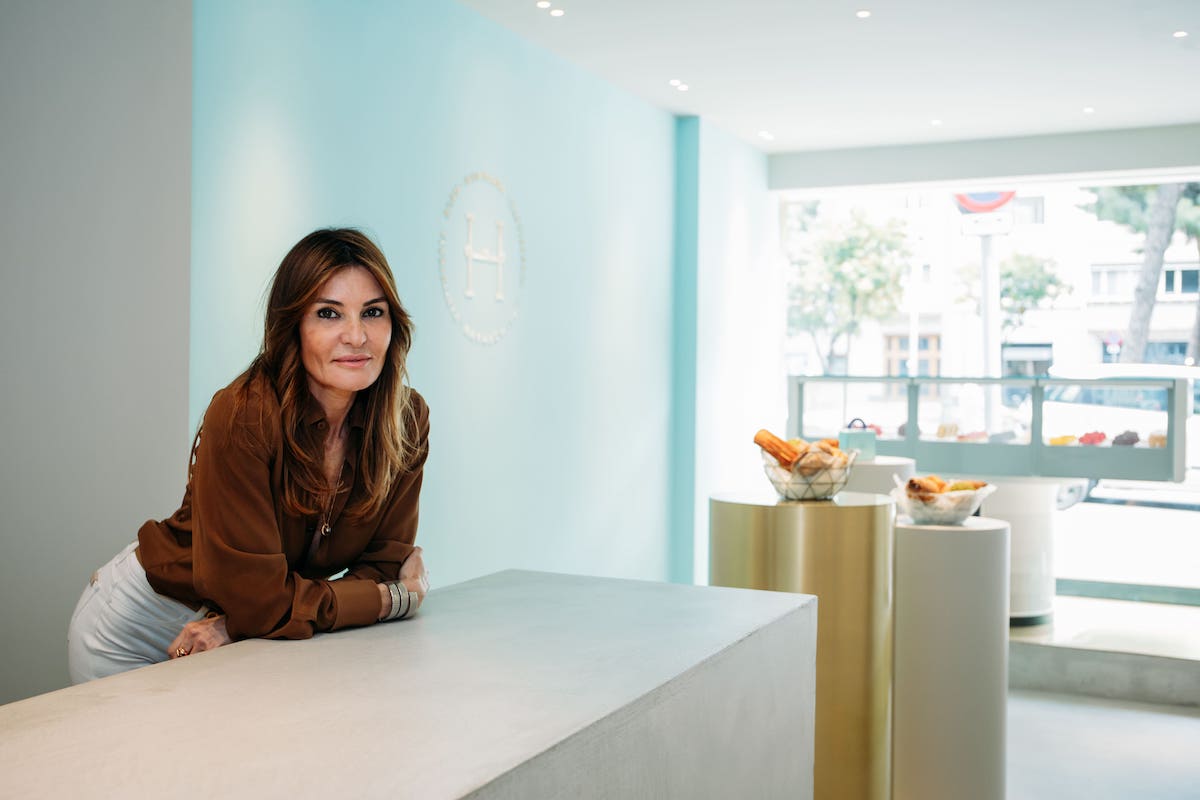
The move also allows for strengthening the foundational pillar of the group. The three spaces in Born that until now concentrated production and innovation will be entirely dedicated to expanding the pastry school, the origin of the project founded by Mey Hofmann more than forty years ago. "At a time when kitchens were predominantly dominated by men, my mother chose to lead a school with a very clear idea: to train professionals with technical rigor and sensitivity," recalls Silvia Hofmann, who has been at the helm of the group since 2016.
The school was born with this desire to balance tradition and avant-garde, combining local culinary heritage with innovative techniques. Since then, more than 200,000 students have passed through its classrooms. Under Mey's leadership, the project grew rapidly: with the restaurant—inaugurated in 1992 as a practice space and which has had a Michelin star since 2004—and the two patisseries in the Catalan capital, which have consolidated themselves as benchmarks in Barcelona, accumulating recognitions such as the best artisan butter croissant in the country (2010) or the best patisserie in Catalonia (2022). Today, Hofmann integrates more than 150 professionals.
Innovating without losing its origin is, in Silvia's case, also a way of understanding the business legacy: not breaking with the past, with the journey her mother undertook, but making it evolve and grow. "I cannot copy my mother's pattern. I must bring my own identity, but maintaining her values and DNA," emphasizes the group's president.
International expansion with a local perspective
For Silvia Hofmann, the new center in Badalona is "the first step of an ambitious plan of growth and international expansion." The first planned opening will be in Dubai in the coming months, in a strategic market that values artisanal premium products. It will be the group's first international store, although Hofmann trusts it will not be the last.
An expansion process, however, that "is thought out and designed from home," as its president has claimed. "Hofmann is pure Barcelona and we want to export that brand all over the world." They will do so from this new creative core, located in the border area between Badalona and Sant Adrià de Besòs, not far from El Born, the neighborhood that saw them grow and that still today concentrates their training and commercial activity.
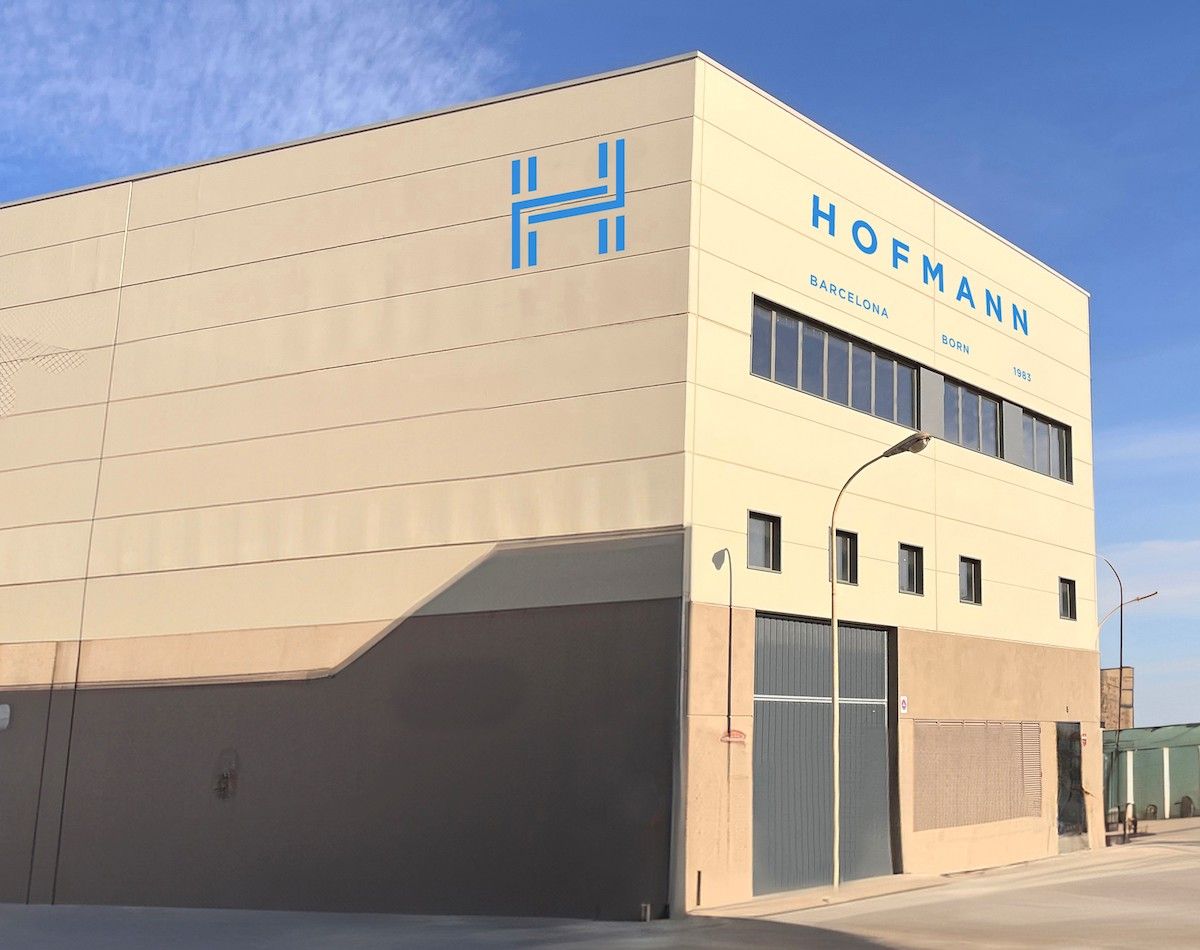
Parallel to the group's growth, the area where the new center has been installed is also experiencing its own transformation. Very close to the future audiovisual hub of the Tres Chimeneas and the new offices of the Inditex group —which will concentrate the central services of Massimo Dutti, Bershka, Oysho and Lefties—, Badalona is preparing to consolidate itself as "a pole of innovation and services", as highlighted by Mayor Xavier García Albiol, encouraging Hofmann to also open a pastry shop in the city.
From this new productive epicenter, Hofmann will continue perfecting croissants, devising new recipes and boosting its growth, but always claiming and respecting the DNA that, since 1983, has marked the group: innovating without losing its origin.
Add The New Barcelona Post as your preferred Google source for free
Stay informed with the latest news.
