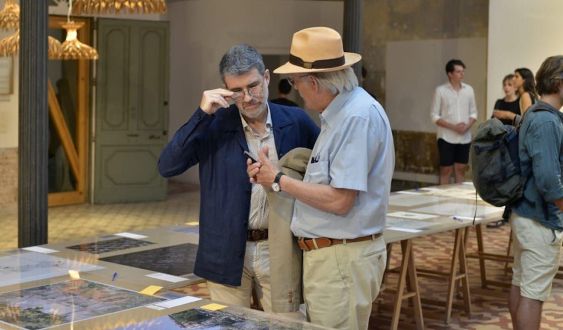
In a city where buildings speak as much as people, La Capell has managed to build its own narrative, made of books, objects, and design with authorship. Founded in 1976 as a consumer cooperative linked to the Col·legi d'Arquitectes de Catalunya (COAC), today it is much more than a specialized bookstore: it is a cultural ecosystem for professionals, students, and the curious. At the helm is Marc Longaron, an architect and director of the cooperative since 2019, who has been with the company for over two decades. We spoke with him about the history of Jordi Capell, the relevance of cooperatives, and the future of architecture and design bookstores in the 21st century.
--- Architect director?
--- This position could be held by any professional, but, being a consumer cooperative, it is linked to the services of bookstore, stationery, IT, and design objects for architects, so it seemed reasonable that the person directing La Capell should be an architect.
--- It seems like a statement of intent: an architect can do more than design and build buildings.
--- Yes, but I think it is, above all, a matter of language: on the one hand, the cooperative's members have generally been architects; on the other hand, because of the institution that historically hosts us: the College of Architects. We have a different language and way of expressing ourselves: we talk about projects, we talk about layers, we talk about deliveries. I think that's why an architect director was chosen.
--- Who is Jordi Capell?
--- Jordi Capell was an architect who, in the 1960s, insistently requested in the assemblies of the College of Architects that a credit cooperative be created, a social economy entity that would understand and guarantee that a project commission sheet was already sufficient to have legal and juridical backing. Capell died before the cooperative was created, but his strength and insistence led a group of young architects to promote this venture. The cooperative law was complex, so it started with a consumer cooperative with a credit line that would allow, over time, the credit cooperative to be established.
--- In what year was it created?
--- Finally, in 1976 the cooperative was established with the name of its founder. So, in 2026, the year of the Capital of Architecture and the centenary of Gaudí's death, La Capell will celebrate 50 years of trajectory. This is an uncommon anniversary in the world of third-sector companies.
--- What is La Capell like in 2025?
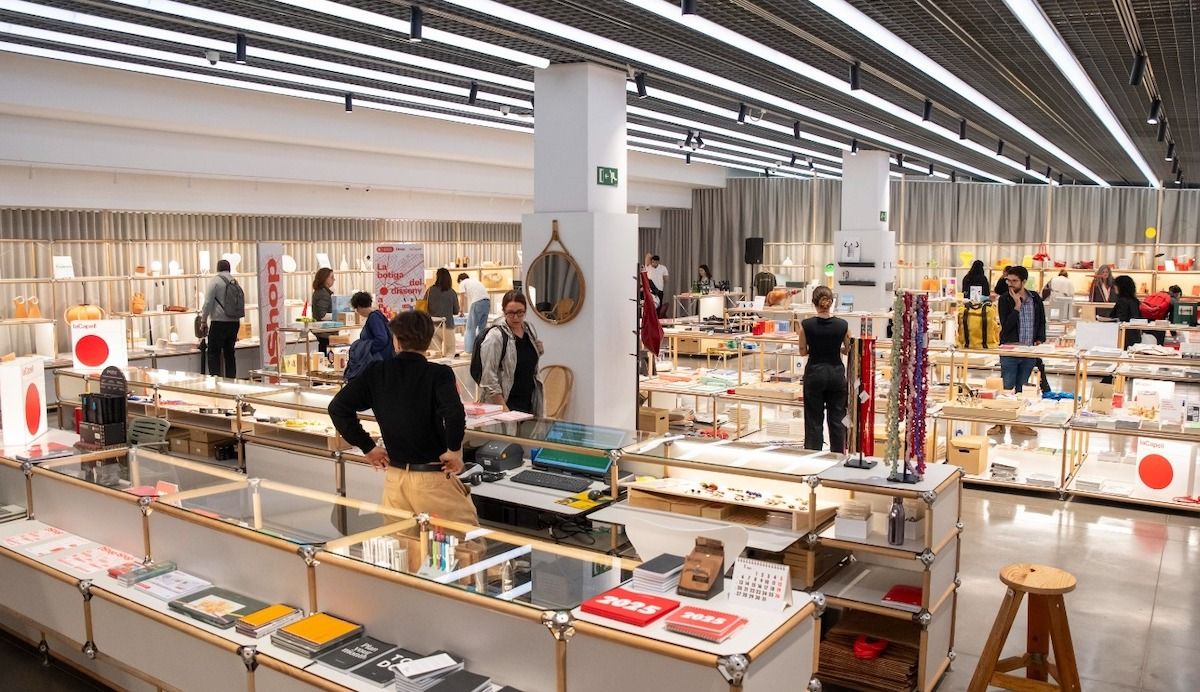
--- We have eight sections: on one hand, the architecture bookstore, which is the best known. Another is technical stationery: those materials for architects, different from what can be found in any neighborhood stationery store or department store. In another line, we have design objects for spaces (like furniture and lamps, for example), and another collects items you can carry (like a bag or a scarf). We also have a line dedicated to toys, objects, and children's books. Another to unique objects: art pieces or limited series. There is a section for gourmet products related to architecture that is activated, especially, at Christmas. Finally, we have a line of professional IT services, which has been the most constant in the last 30 years.
--- A very varied space...
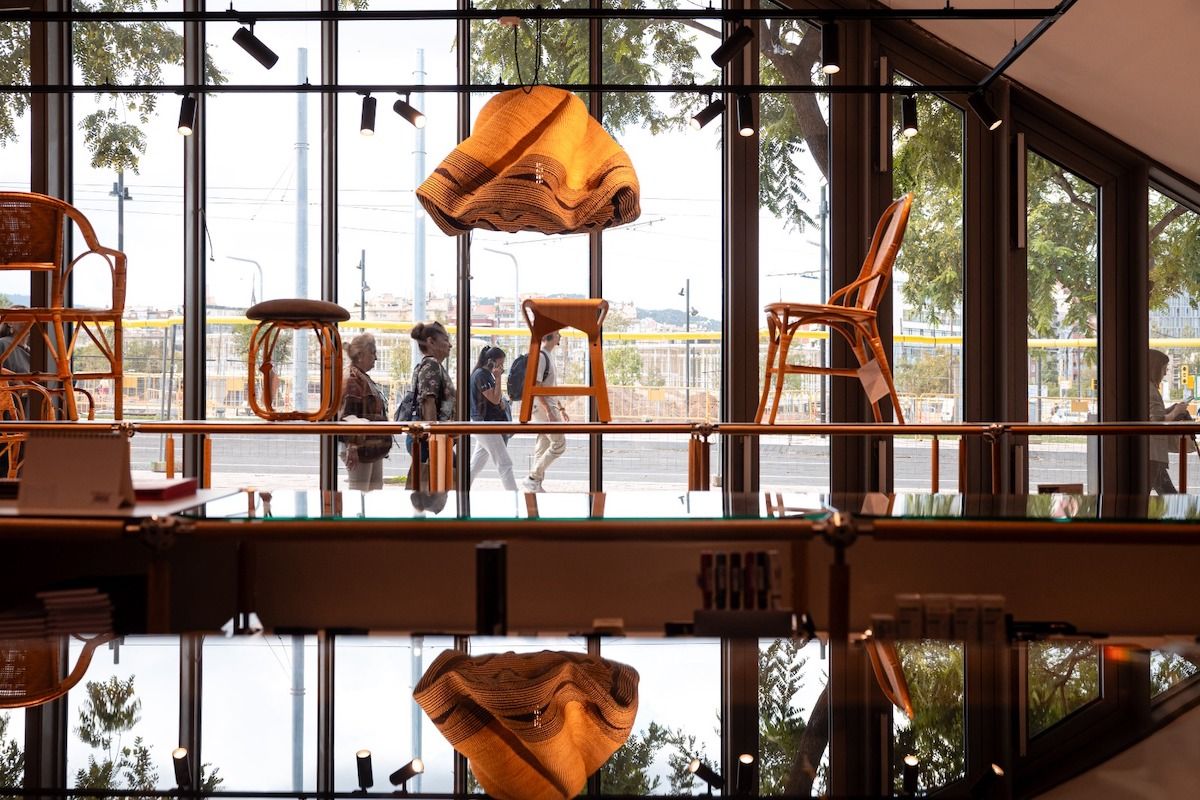
--- And with a very diverse catalog: composed of authentic objects and elements. Authentic means that the design has an author and, if someone reproduces or edits it, royalties or fees are paid on that object. There is a public that looks for this type of piece: these are people who don't know excessively about design (and don't have to know), but they know that here they will find well-designed objects. We also strive to select local products; although it may seem unbelievable, it is a maxim that is difficult, but we continue to bet on it.
"To learn something, we must dedicate time and put in some effort so that new concepts are well fixed in the brain, a patience that books, for example, require"--- And the audience at La Capell is also that varied?
--- Although it is a very varied public, in summary it could be grouped into two: members —architects or not— and non-members. This second group includes any citizen who enters the buildings where we have headquarters. Also people who come to look for a specific piece or designer who, in addition, coexist with architecture students and even tourists.
--- What is, and what would you like, an architecture and design bookstore to be like in the 21st century?
--- This is a rather strange concept. In Spain there are only three: La Capell, Naos in Madrid, and Recolectores Urbanos in Malaga. What I would like is for people to read more often and buy more books, and for bookstores to become places to be, have a coffee, attend a presentation or be part of a reading club.
--- What is the relationship between LaCapell's seven headquarters and the city?
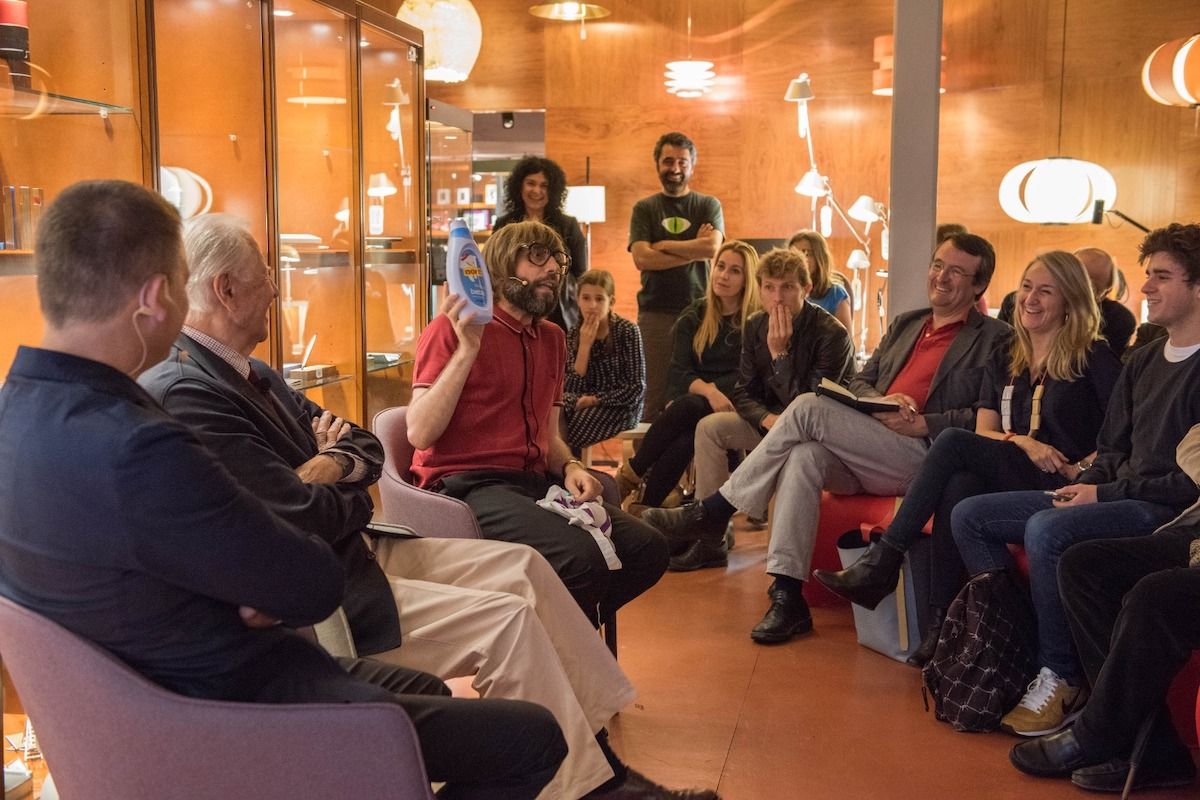
--- La Capell is a large segmented bookstore, as each headquarters emphasizes books and objects related to the building that houses it. The challenge is that each place specializes in a theme because it adapts to its space: for example, in the MUHBA, the emphasis is on history, while in the DHUB on local design. In this way, the bookstore's editorial collection is also constantly enriched.
--- Have you heard the comments of the influencer María Pombo about reading and books? She believes that reading books does not make us better people.
--- I would settle for it not making us worse! Jokes aside, yes, it is true that voices often appear questioning the usefulness of reading books. I think that, to acquire knowledge, it seems that books are still a good resource, although they require a lot of patience to read them. This patience to learn "the old-fashioned way" is "modernly" called cognitive patience: to learn something, we must dedicate time and put in some effort so that new concepts are well fixed in the brain. I am totally convinced of the capacity for knowledge transmission through the screen of any electronic device, but there is knowledge for which books seem to be more efficient. In my case, I am lucky enough to work surrounded by interesting books, so it is a pleasure to be able to continue learning from them every day, objects that only wait for us to have a little patience or, perhaps it is the other way around, it is the books that have a lot of patience with us.
Add The New Barcelona Post as your preferred Google source for free
Stay informed with the latest news.