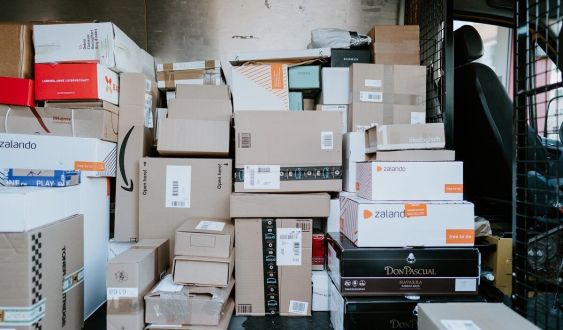
The unprecedented expansion of e-commerce has also led to an increase in traffic, with vans loaded with packages traveling from one end of the city to the other. Often poorly parked, they frequently fail to find their recipients at home. The pandemic has accelerated a trend that was already growing strongly, going from 23 million online purchases in Barcelona in 2018 to 33 million in 2020, a 43% increase. Greater vehicle movement also ultimately implies more pollution and more traffic accidents.
Given this situation, which does not seem to be stopping, the Barcelona City Council has just defined a strategy for urban goods distribution, hand in hand with the private sector, with the support of UGT, CC.OO., Pimec, Foment del Treball, Comertia, Barcelona Oberta, Racc, and AECOC. The new roadmap for goods delivery in the city, which will be updated according to changes in this activity, must ensure that it is an efficient, ecological, and orderly model, says the first deputy mayor, Jaume Collboni.
The first package of initiatives of this new strategy will consist of the deployment of urban goods distribution centers, after the success achieved in the pilot test carried out at Estación de França, managed by Vanapedal. Packages arrive at these micro-platforms early in the morning, avoiding peak congestion times, and are distributed throughout the area during the day with more sustainable and less invasive vehicles than vans, such as bicycles or tricycles. Their more limited radius of action also helps reduce failed package deliveries.
This model will be replicated in eight more spaces, through cooperatives and small companies, which will receive funding via subsidy. They will serve Sant Martí (Cargobici), Ciutat Vella (Las Mercedes and Mensakas), Sant Andreu (Trévol and TEB Bellvitge), Nou Barris (Fundación Pare Manel), and Gràcia (A Pinyó). There will also be an eighth micro-platform, managed by A Granel, which will distribute throughout the city.
These types of proximity delivery centers are also located in city parking lots, with 17 pilot tests underway in B:SM, Saba, and Bamsa parking facilities. The City Council will also increase this number, an expansion strategy that Saba is already following, through the delivery company Geever.
A third space where these micro-platforms will be promoted will be the ground-floor premises that the council is buying to revitalize areas that have been paralyzed by the pandemic, especially in the city center. Within this acquisition program, companies dedicated to last-mile distribution will be taken into account in the allocation of the premises.
Beyond package delivery through these small hubs distributed throughout the city, the City Council will continue to install lockers in municipal markets where users can go to pick up orders from their stalls, which are kept fresh. Currently, ten such lockers are in operation ---they have also been installed in B:SM parking lots--- and eight more are expected to be added this 2022. The strategy presented this Tuesday also contemplates facilitating permits to be able to deliver goods at night, and promoting fleet renewal and the acquisition of electric vehicles for distribution, accompanied by more public electric charging points.
Add The New Barcelona Post as your preferred Google source for free
Stay informed with the latest news.
