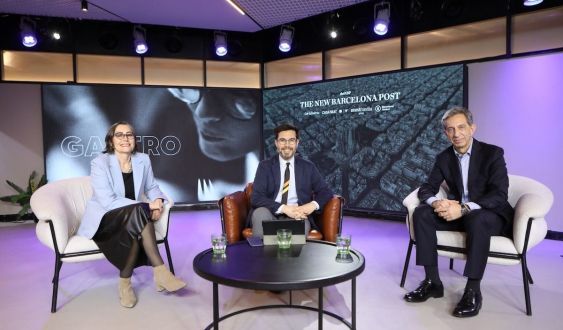
Barcelona has become the world center of technological news with the celebration last week of the Mobile World Congress (MWC), an exhibition that shows the latest disruptions, not only mobile, but from multiple sectors, such as health and mobility. One of the issues that is increasingly present at the fair is the need for a digital ethic that protects citizens from the increasingly omnipresent digitalization.
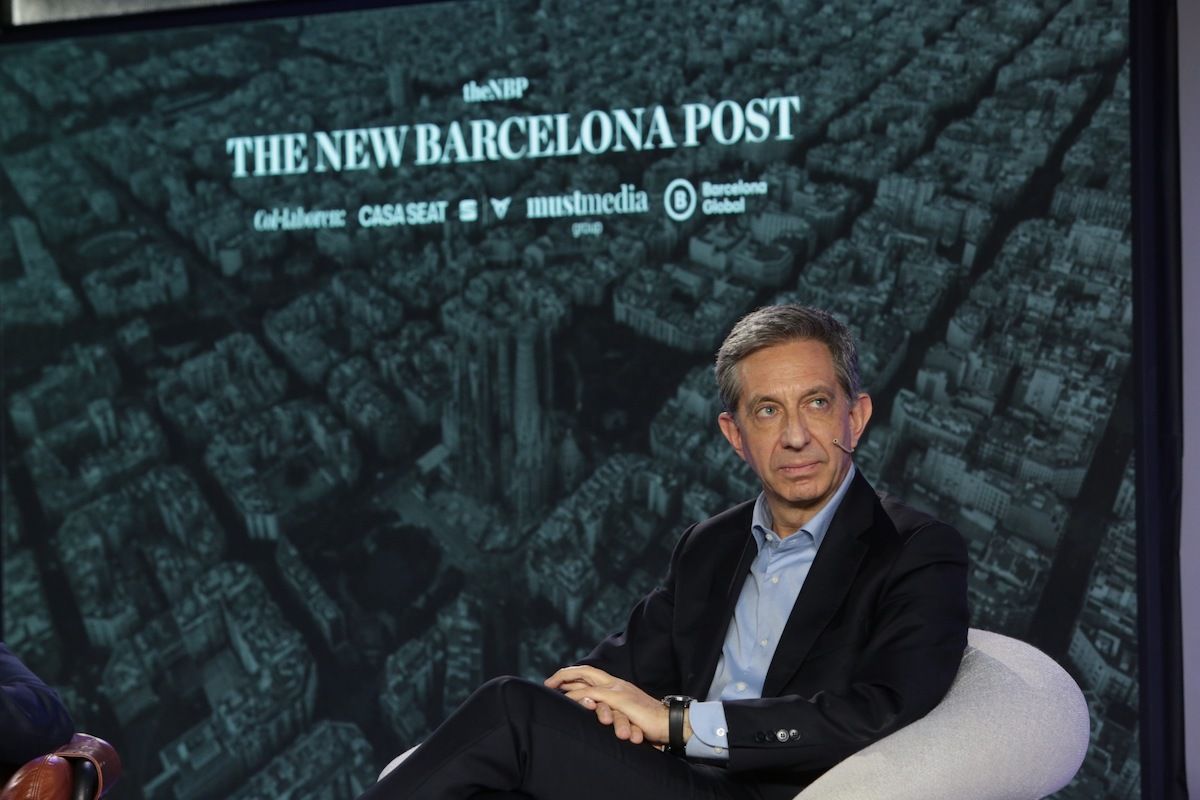
"Barcelona has the opportunity to position itself as the epicenter of digital humanism," said the CEO of Mobile World Capital Barcelona (MWCapital), Francesc Fajula, in a new session of The New Barcelona – Moments Estel·lars cycle, organized in collaboration with CASA SEAT, Must Media Group and Barcelona Global. Accompanied by the founder and CEO of Anteverti, Pilar Conesa, Fajula defended that the debate on the limits that technology must have will not take place in the United States or Asia, but it will in Europe, where the Catalan capital can play a key role: "From Barcelona, we are starting to lead it."
Fajula pointed out that digital protection covers issues such as generating an ethics for the use of algorithms, but also solving the digital divides that are being generated. "Digital inclusion is fundamental. Whoever does not have connectivity will not have opportunities and we cannot leave anyone out of these opportunities," he stressed. MWCapital, the public-private foundation born to ensure that the city consolidates a legacy beyond the days the congress lasts, has been working to promote the leadership of the Catalan capital on this issue for years through the Digital Future Society initiative. Initially, it was going to involve the creation of an international forum based in the Catalan capital, a kind of Davos-like summit that would discuss digital humanism and lead the debate. The project was completely halted by the pandemic and has not yet recovered.
One must not only think about the limits that technology must have, but also about the dangers it poses, as has been made evident, Conesa indicated, with the cyberattack suffered by Hospital Clínic this weekend, which is hindering its operation. "Digital transformation is a key axis for all activities, but risks must be reduced," she stressed. Contingency plans are vital in this new connected era, especially when considering the rapid expansion of new technologies, as is happening with artificial intelligence (AI). In this regard, Conesa explained that when ChatGPT began to popularize, it gained a million users in five days and, 40 days later, ten million users. "We are in a constant, growing, and exponential evolution," she remarked.
A dizzying trend, although not so much when put into context. The first mobile phone arrived only 50 years ago and the first iPhone, 16 years ago, a short period in which phones and the technology developed around them have completely changed daily life. "Now we don't know how to live without a mobile phone," Conesa insisted, "it has changed how we plan a trip, how we shop, or how we telework."
Barcelona and Mobile
Barcelona would not be understood without the exhibition it has hosted for 18 years. As highlighted by the speakers in the debate moderated by journalist and UPF-BSM professor Toni Aira, the MWC has allowed the capital to lead the main entrepreneurship rankings, a now common phenomenon that was once unimaginable. "The Mobile positions us on the map," Fajula advocated. But, in addition, it allows local companies to have direct access to large multinationals and reach commercial agreements. In last week's edition alone, more than 300 Catalan companies participated.
However, the city has also added value to the fair, as its organizers tirelessly repeat. Conesa recalled that one of its successes, the Four Years From Now (4YFN), was originally an MWCapital initiative, but GSMA ended up absorbing it and, as could be seen a few days ago, it has ended up becoming one of the most dynamic spaces of the congress. "This has a lot to do with the city's DNA," she remarked.
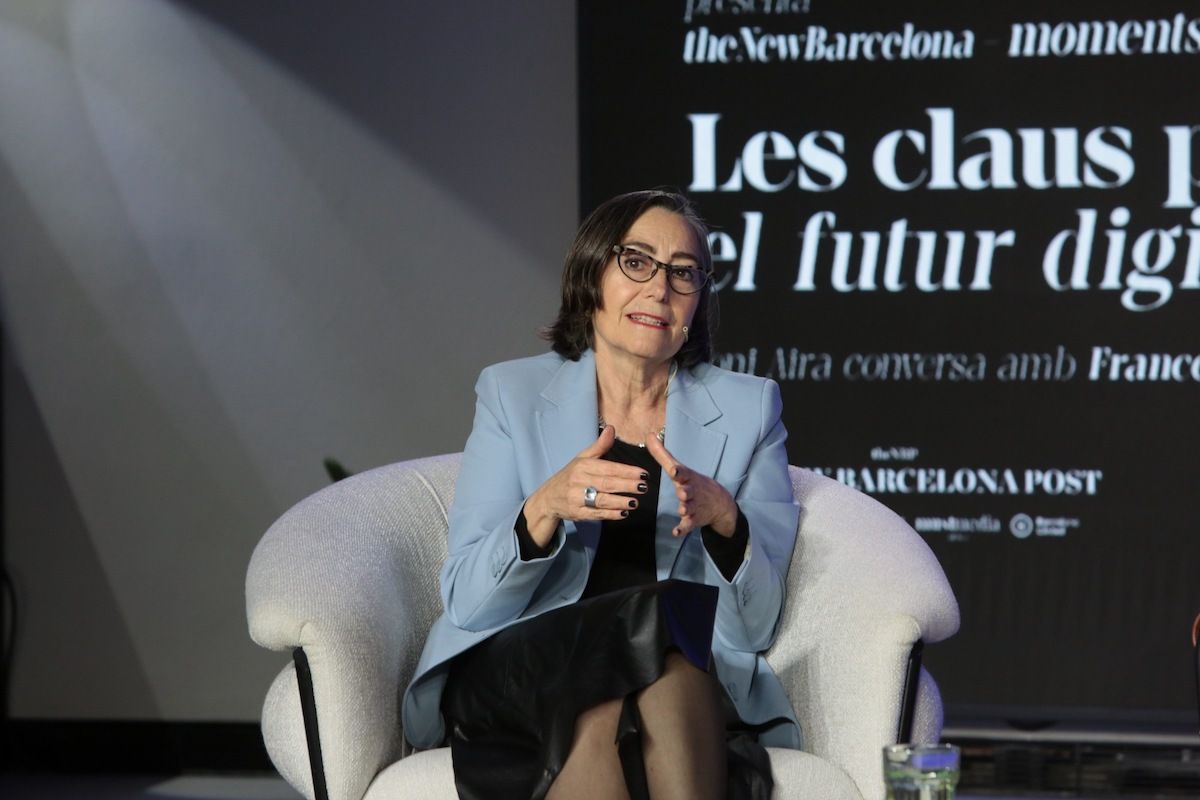
Both Conesa and Fajula have agreed that the Barcelona brand in the world is "very powerful" and that elements such as having three business schools located in privileged positions in international rankings should be highlighted. "Having IESE, Esade, and EADA represents a great power, it is a source of pride for the city because only London and Paris have that," Conesa emphasizes. "There can't be more positive news in Barcelona at this moment," Fajula boasted, also praising the work carried out by Fira de Barcelona, which he defines as "a transformative engine for the city." In this vein, Conesa pointed out that events like the MWC demonstrate that fairs have a future, are "essential and in-person," because "people, to do business, want to look each other in the eyes, face to face."
Finally, in the section on homework, Fajula referred to the scarcity of technological and digital talent and urged the implementation of mechanisms to train this talent and to awaken "technological vocations." Another pending issue is the gap that exists in Barcelona regarding technology transfer. "I ask that all the knowledge we have in research centers has a simpler channel to the market." For his part, Conesa emphasized the problem of the gender gap, as women occupy less than 30% of jobs in the technological field.
Here are the links to recover the conversation via Spotify or Youtube.
https://open.spotify.com/episode/7xPKdcLtoiseZf23p2qbsY?si=OzUan0I4R9m_K-RUcSqK0g
Add The New Barcelona Post as your preferred Google source for free
Stay informed with the latest news.
