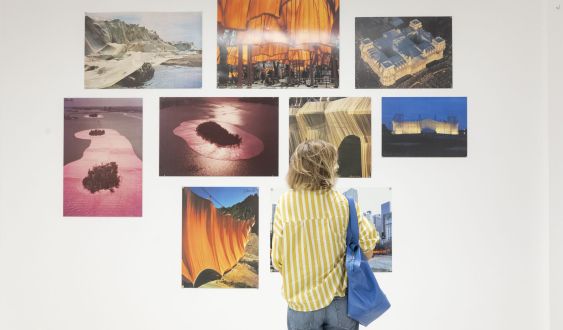
White walls, high ceilings, open spaces. Nowadays, many of the new galleries opening in Barcelona share the same aesthetic: they are small white cubes. But behind this seemingly simple appearance lies a clear statement of intent: to make the gallery a transparent and permeable space, both for artists and the public. For artists, white walls are a blank canvas on which to experiment, create and let their imagination run free. For visitors, the gallery aims to be an open gateway to contemporary art: a place to walk in, look around, ask questions and discover. Free and accessible spaces that should not be reserved for experts, but open to anyone curious about contemporary art.
And yet, this door is not always so easy to walk through. How many neighbours know what happens behind the gallery door next to their home? How many know they can walk in, without an appointment or a ticket, simply to look around? And, above all, how many truly perceive a gallery as a space that also belongs to them?
It is precisely for this reason that, once a year, Barcelona's galleries decide to open all their doors at once. From September 17 to 20, Barcelona Gallery Weekend returns for its twelfth edition, with 25 galleries in Barcelona and L'Hospitalet de Llobregat opening 38 exhibitions simultaneously, featuring more than fifty artists.
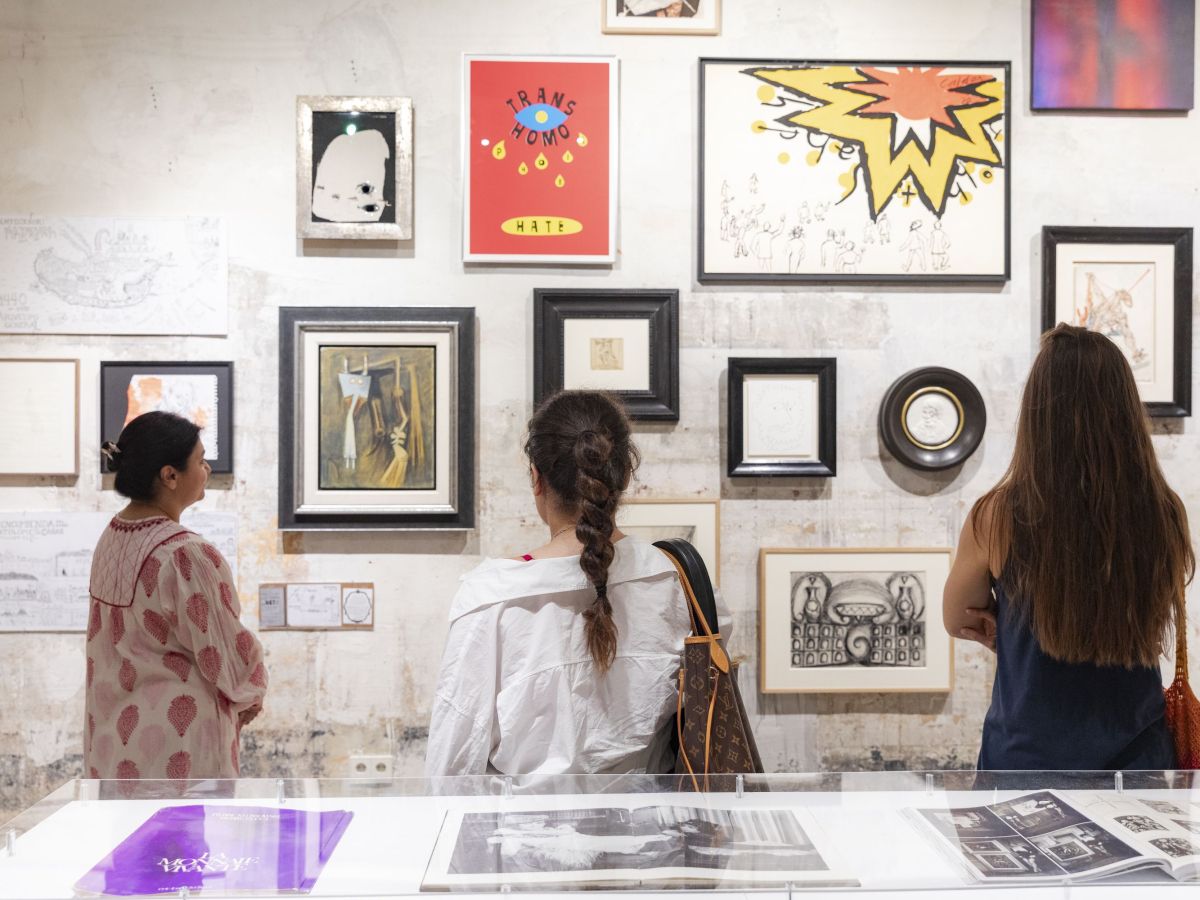
“The need to connect art galleries and citizens was born more than a decade ago with the Barcelona Gallery Weekend,” recalls Mariña Á. Pino, director and coordinator of the cultural event. An objective that, according to Pino, remains valid: “despite the high public attendance at the Barcelona Gallery Weekend —last year we counted up to 17,000 visitors—, there are still many citizens who do not know how galleries work, that they are open for free throughout the year, with exhibitions that are renewed every few months.”
Barcelona Gallery Weekend also acts as an opening ceremony for the city's artistic season. After the summer, Barcelona regains its cultural pulse and the different disciplines begin to present their programs. In theater, this moment even has its own name: Catalunya Aixeca el Teló, the gala organized by ADETCA that kicks off the new season. In the world of galleries, Barcelona Gallery Weekend fulfills a similar function: “a festive and collective event in which all galleries open at the same time, we join forces and build a unique artistic voice from multiple voices,” remarks Pino.
An artistic scene in transformation
But when 25 galleries open their season at the same time, not only is a wide sum of exhibitions obtained, but also a first photograph of the city's artistic scene. “If there is one characteristic that marks this season, it is change and transformation,” states Pino: with new spaces joining the circuit, galleries changing locations, projects seeking new international connections, and artists transforming their language.
These changes can already be glimpsed in the Barcelona Gallery Weekend program. The first clue to this transformation appears on the map. Although the most consolidated circuit of Barcelona's gallery scene continues to pass through Ciutat Vella, Eixample, and Gràcia, there is an area that is concentrating a good part of the new movements and is emerging as a new pole of the artistic scene: the Trafalgar axis.
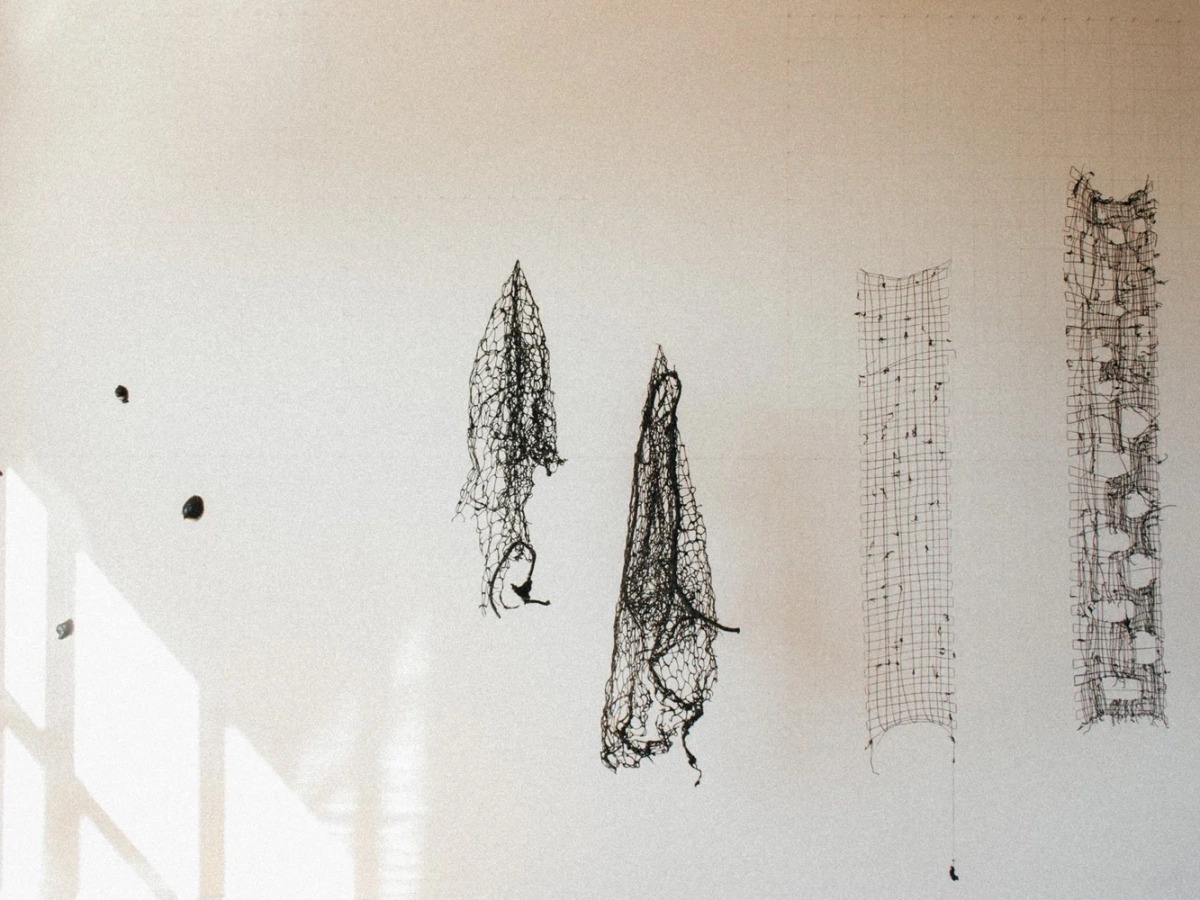
It is no coincidence that this area is where the three galleries that are joining the Barcelona Gallery Weekend program for the first time this year are concentrated: Sorondo Projects, Escat Gallery —which has just expanded its project with a new experimentation space in l'Hospitalet de Llobregat— and, a few streets away, Al-Tiba9 Gallery, a gallery originally from Dubai with a headquarters in the Catalan capital that, in this case, is betting on Dance Calligraphy, by Pavel Korbička, a monumental light installation built from the movement of dance.
For these galleries, joining Gallery Weekend is also a way to make the project visible and strengthen its connection with the local art scene. This is the case of Sorondo Projects, opened just over two years ago. "From the gallery, we have worked hard to position ourselves within an international circuit, putting Barcelona in dialogue with the Latin American artists we work with. But it is also very important that this work has a reception in the city where we want to build our community, Barcelona," emphasizes Juliana Sorondo, founder and director of the gallery.
Her participation in the Barcelona Gallery Weekend represents, in this sense, "a recognition of the work and the path traveled." For this first participation, Sorondo has opted for an exhibition that reflects the values of the space, as Juliana points out, with Ejercicios de permanencia (in the general program), which brings together María Elena Pombo and Miguel Braceli, two artists who live in New York but maintain a direct relationship with Venezuela, with an artistic work focused on the experience of displacement and the need to preserve the bond. The gallery also participates in the FLASH program, which brings together specific short-term proposals that can only be visited during the four days of Barcelona Gallery Weekend, with Nikolay Morgunov.
But Barcelona Gallery Weekend also allows reading the movement in the other direction: not only when a new gallery arrives in Barcelona —like Kali Gallery, which landed in the city this September from Lucerne, but does not yet participate in the program—, but when a gallery that has grown in the city makes the international leap. This is the case of Chiquita Room, founded in 2018 by Laura González in the Sant Antoni neighborhood, which this September opened a second headquarters in Brussels.
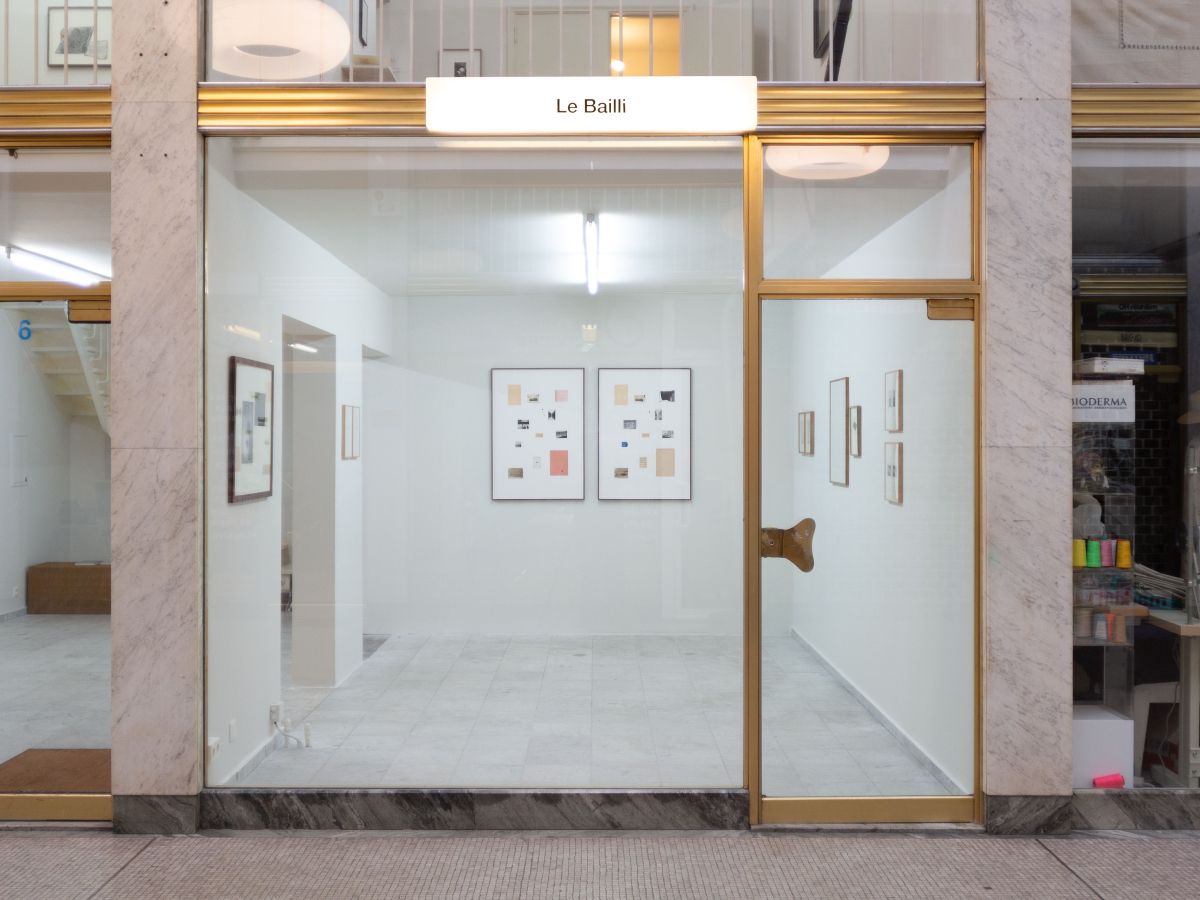
The expansion does not imply leaving Barcelona behind, but rather expanding the project. "It is a single project with two different spaces, which allows us to experiment more, program more and have more reach," emphasizes González. The new headquarters also opens the door to new connections with the market and with other artists and agents of the European scene: "The goal is to connect the artists we work with in Barcelona with those in Brussels, and for this connection to work in both directions," emphasizes González.
The connection between the two cities also takes shape in the programming: the new Brussels headquarters has premiered with Once We Existed, a dialogue between Laía Argüelles Folch and Pieter Laurens Mol. Precisely the same artists with whom Chiquita Room participates in Barcelona Gallery Weekend: Argüelles Folch presents Lo que té vol and Mol stars in the Flash program with hook, Line and Sinker.
The future is also inside the galleries
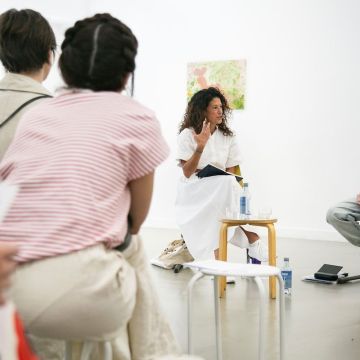
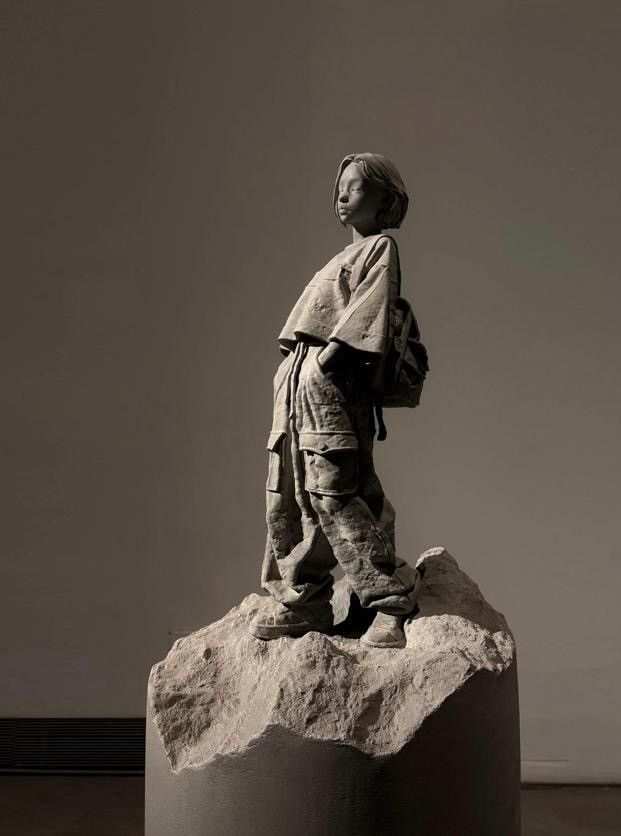
But there is still a third layer of this transformation that can be read at Barcelona Gallery Weekend: the change is not only physical —new headquarters, new spaces, expanding galleries—, but also artistic. It is found in the exhibitions, in the artists who arrive, and in the questions that galleries decide to put at the center. Among the 38 exhibitions in the program, identity, displacement, or memory appear as recurring concerns, but there is no single thematic line connecting them, nor a single language to address them: the proposals span painting, drawing, installation, textile, photography, or light. These 38 shows are complemented by guided tours, talks, and other activities that allow for a deeper understanding of the exhibitions and bring artists closer to the public.
All these are the reasons that turn Barcelona Gallery Weekend into much more than a simple season opening: it is, above all, a first sketch of what is to come. For four days, new spaces, artists, projects, and new international collaborations are concentrated on the same map and allow us to glimpse where the city's art scene is moving.
Add The New Barcelona Post as your preferred Google source for free
Stay informed with the latest news.