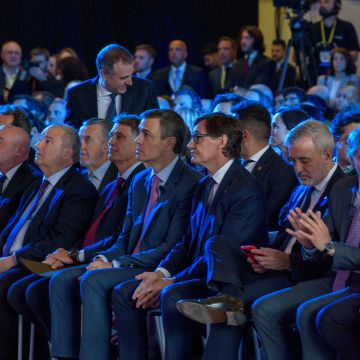
There are times when Barcelona concentrates, in a few weeks, realities that seem to belong to parallel universes but that, looked at closely, touch each other with an unsettling intensity.
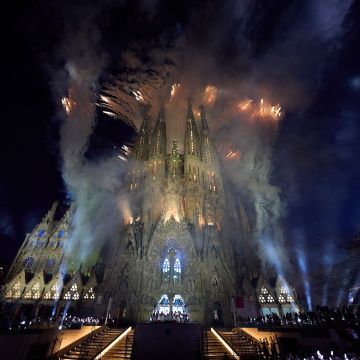
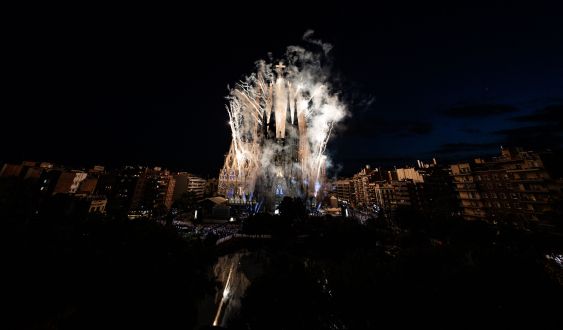
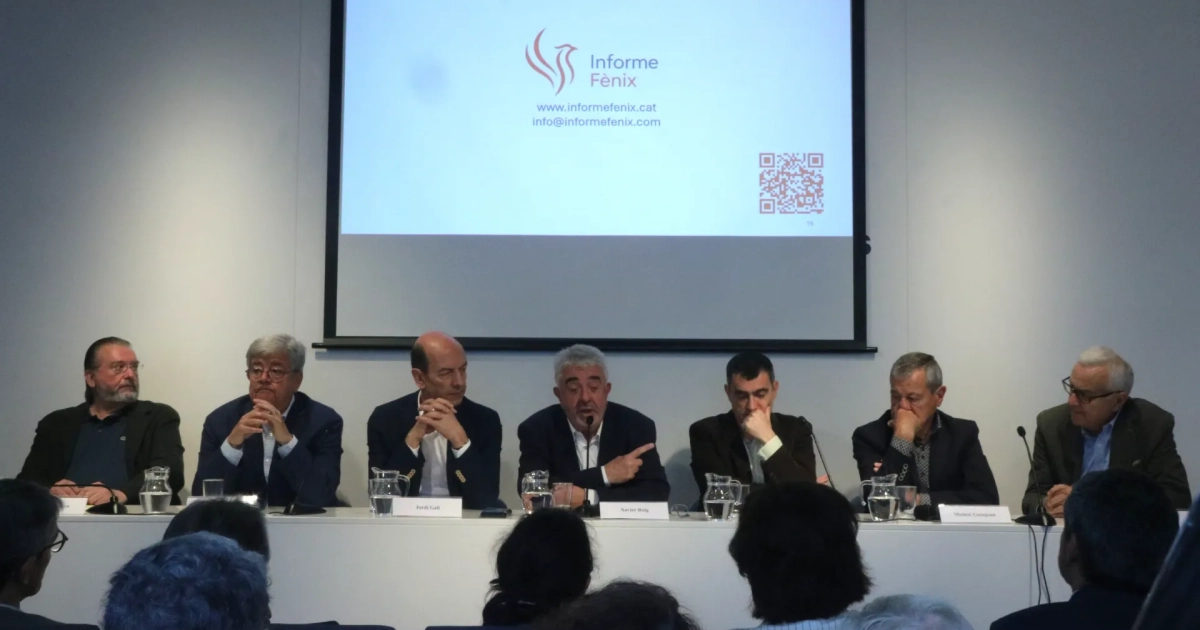
On this occasion, there has been, on the one hand, the publication of the Phoenix Report, a harsh and uncompromising diagnosis of Catalonia's economic deterioration over the last twenty-five years. On the other, the musical and light show of the Sagrada Familia on the occasion of the Pope's visit, an event that has generated a wave of collective emotion, civic pride and the inevitable cascade of videos shared around the world (and, why not say it, of comparisons with the kitsch Madrid staging a couple of days before).
Two images of the same society: one looking forward with concern, the other contemplating itself in the mirror with admiration. The question to ask is whether these two views are compatible, even if they need each other, or if, on the contrary, they cancel each other out.
The sustained fall of the bird
The name chosen by the authors of said report is not gratuitous. The phoenix is the bird that must die to be reborn, that cannot transform without passing through fire. The metaphor is precise because the diagnosis is implacable, and it says that Catalonia has experienced a continuous deterioration and faces, if it does not act, an unquestionable decline towards 2050. This is not rhetorical alarmism. The indicators sing: stagnant productivity, depressed wages in sectors that should be value generators and, ultimately, a model that has grown by incorporating low-skilled labor into low-productivity sectors instead of betting on innovation and human capital.
The Barcelona metropolis concentrates some of these contradictions with special intensity. Barcelona is, in theory, a high-end tourist destination: almost a third of hotel beds are in the superior category, well above the rest of the territory. But more popular tourism, that of beach and pre-cooked paella, has also proliferated. The result, in any case, is that salaries in the tourism sector in the city do not reach the threshold that the authors of the report consider sufficient to sustain a dignified life without depending on subsidized public services, which they place at an average of 26,500 euros per year. In other words, luxury tourism does not have the upward pull effect on salaries that one might assume.
The picture is even more striking when the focus is placed on the platform economy. Each home delivery made by a rider incorporates, according to the report, an implicit subsidy of about 3.5 euros defrayed by the community. The low wages in this sector do not cover the cost of public services consumed by the people who work in it. In practical terms, society subsidizes a business model that enriches itself at the expense of socializing its real costs. It is not the only sector where the market disguises itself as free, nor the only one of those that do so that is omnipresent in our cities, but it is one of the most visible.
And there is still the issue, of course, of housing, which in metropolitan Barcelona takes on emergency dimensions. The report projects that Catalonia will reach 10.5 million inhabitants by 2050 and that nearly half of this growth will be concentrated in the Barcelona metropolis, as we already pointed out in a previous article. The resulting housing need would be, according to the report, about 300,000 new homes, while the urban planning still in preparation (the Metropolitan Urban Master Plan) foresees about 200,000 and, moreover, only covers 60% of the population of the real metropolis, the city of five million. The gap between potential demand and planning can be a matter of technical discussion, but in any case it evidences the complexity of solving the residential access crisis that already today expels young professionals, middle-class families and anyone who is not lucky enough to inherit or to have entered the real estate market years ago from the city.
The Sagrada Familia burns, does the bird reborn?
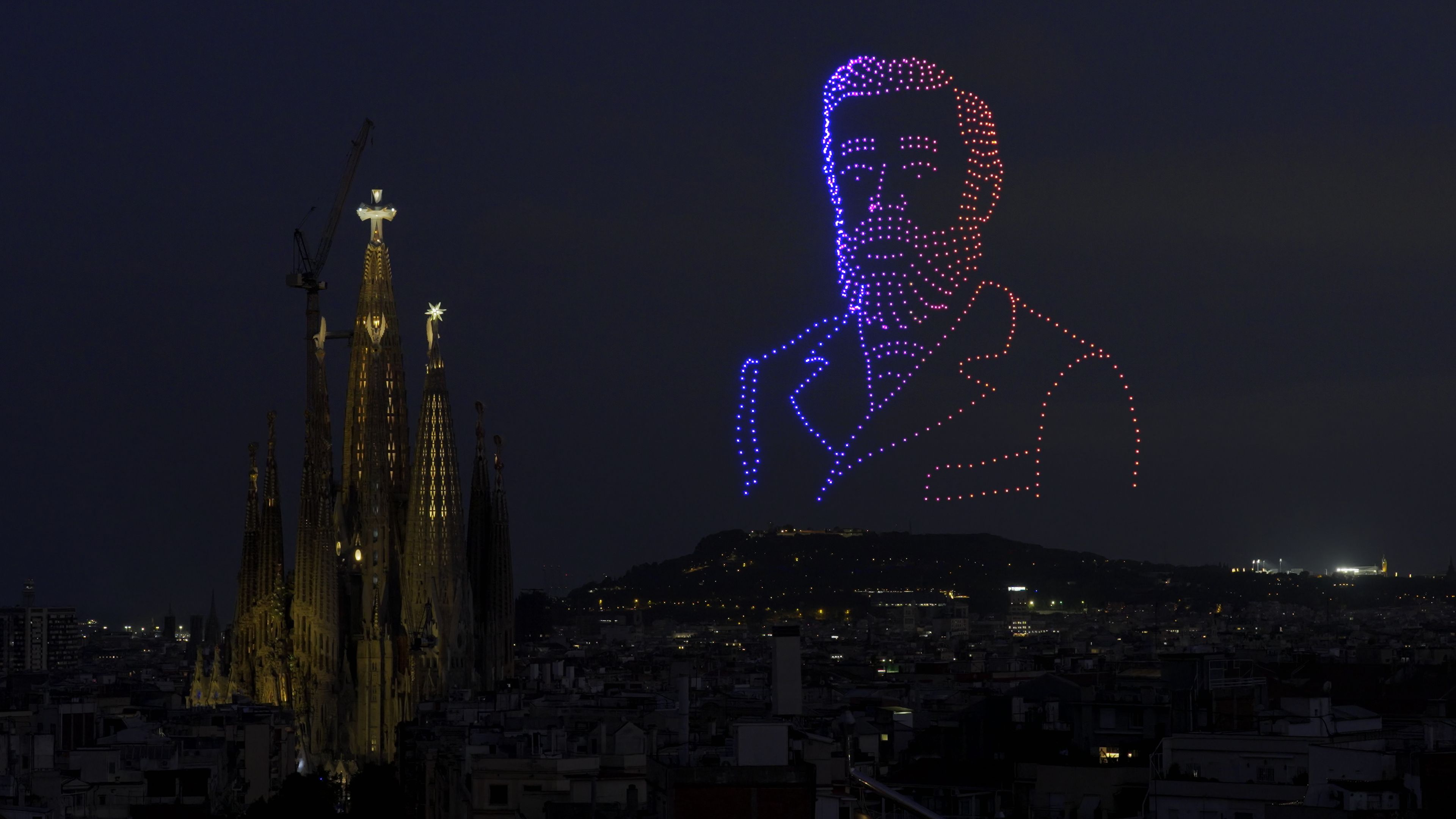
And it is in this context that the Sagrada Familia show arrives. The images of Gaudí's temple bathed in light, with the Pope as a pretext rather than a central figure (who in fact ended up being the architect revived with drones) constituted a ritual that surely connected with faith, but above all it was a display of art and a first-rate urban marketing exercise. The images traveled the world in a matter of hours in all formats allowed by social networks. Barcelona once again occupied the front page in international newspapers and news broadcasts.
The city once again demonstrated that it knows how to place itself at the center of global attention with an elegance that very few cities in the world can reproduce. It so happens that a friend sent me a photo this weekend of the imposing Cologne Cathedral (where Barça is playing for the handball Champions League) and the first thought was: would the Germans be able to make it shine the same way? But immediately also another question: do they need to?
It would be easy and a bit trivial to dismiss all this as a new dose of "bread and circuses." Because the underlying question is not whether a celebration of this caliber was opportune or inopportune, but whether the collective self-esteem it generates has any functional value to face structural changes like those the Phoenix Report demands.
And here the answer is yes, but with important nuances.
The economic transformations requested by the Phoenix Report involve undoing, reconverting, and in some cases eliminating entire sectors that have sustained, and still do today, thousands of people. These types of reforms cannot be done without a high degree of collective trust, as we have already experienced at other times. A collectivity, it doesn't matter if we speak in terms of a country or a metropolis, that perceives itself in progressive decline does not mobilize the necessary energies to undertake the pertinent changes.
"Moments like the Sagrada Familia show do something that reports cannot do: they remind citizens that they live in a unique place, that they belong to a creative and cultural tradition that is not repeated anywhere else on the planet, that there is something worth preserving and projecting into the future"
In this sense, moments like the Sagrada Familia show do something that reports cannot do: they remind citizens that they live in a unique place, that they belong to a creative and cultural tradition that is not replicated anywhere else on the planet, that there is something worth preserving and projecting into the future. This type of emotional injection is not a superfluous luxury; it is, in almost psychological terms, a reminder of why the effort of transformation makes sense.
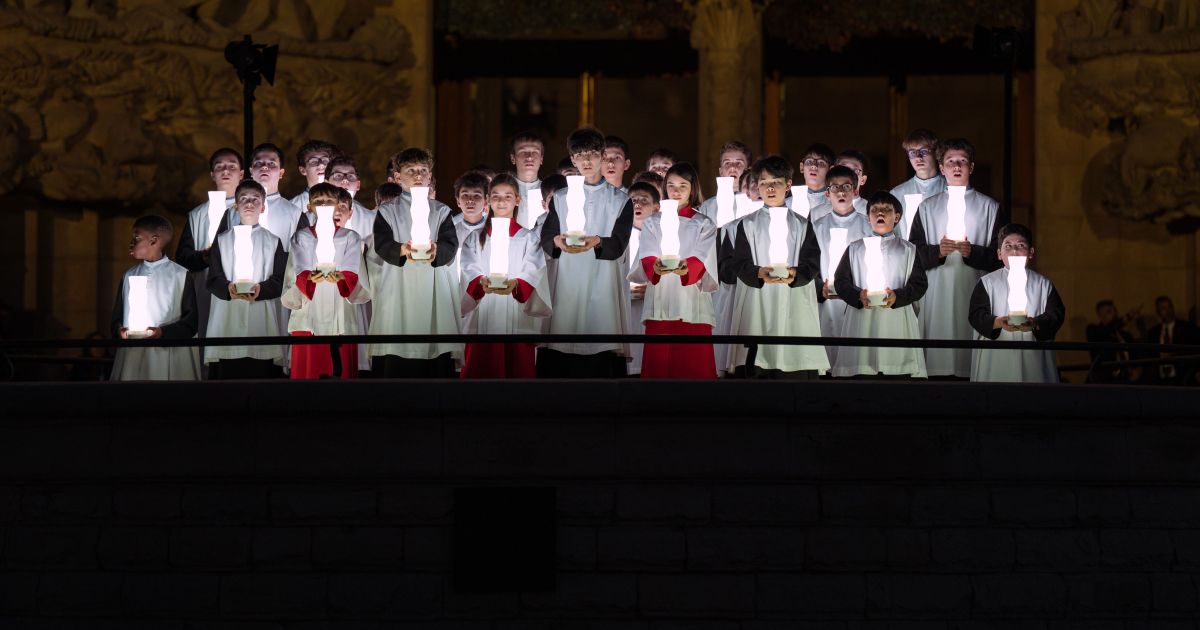
But self-esteem, by itself, does not pay mortgages or create quality jobs. And therein lies the risk. Barcelona is a city that, sheltered by the Olympic catharsis, has flirted for quite some time with the power of symbols as its main driving force, forgetting that in the control room, brave decisions must be made. We know, 1992 was a real turning point because the Olympics were not just a spectacle, but a lever for physical and economic transformation based on a previously planned model. But since then, as the report reminds us, despite the great attractions that lead us to receive millions of visitors every year, productivity does not grow, wages stagnate, and the industrial fabric moves to other territories.
To truly be reborn
The metaphor of the phoenix thus contains a warning that is often forgotten: the bird is not reborn despite the fire, but thanks to the fire. The transformation proposed by the report is not painless. And it doesn't matter if we are 100%, 50%, or 20% in agreement with the diagnosis and the specific recipes that these economists propose to us. What is evident is that our economy is not working the same way for everyone.
"A city that knows how to project beauty but does not know how to pay its workers with dignity, that invites the world to admire its architecture but cannot guarantee affordable housing for its own children, ends up becoming a theme park of itself"
Turning the tables requires making decisions that will harm established interests, that will create tensions in sectors accustomed to growing the easy way with cheap labor and guaranteed demand. It will be inevitable that someone loses in the process of redistributing the burden towards a more productive and just model. And, if it is more just, those who win and those who lose cannot be the usual ones. This also includes the territorial dimension, so that the flash that has been launched from the heart of the Eixample serves to show that a good part of the potential for change is found in the metropolis that surrounds it.
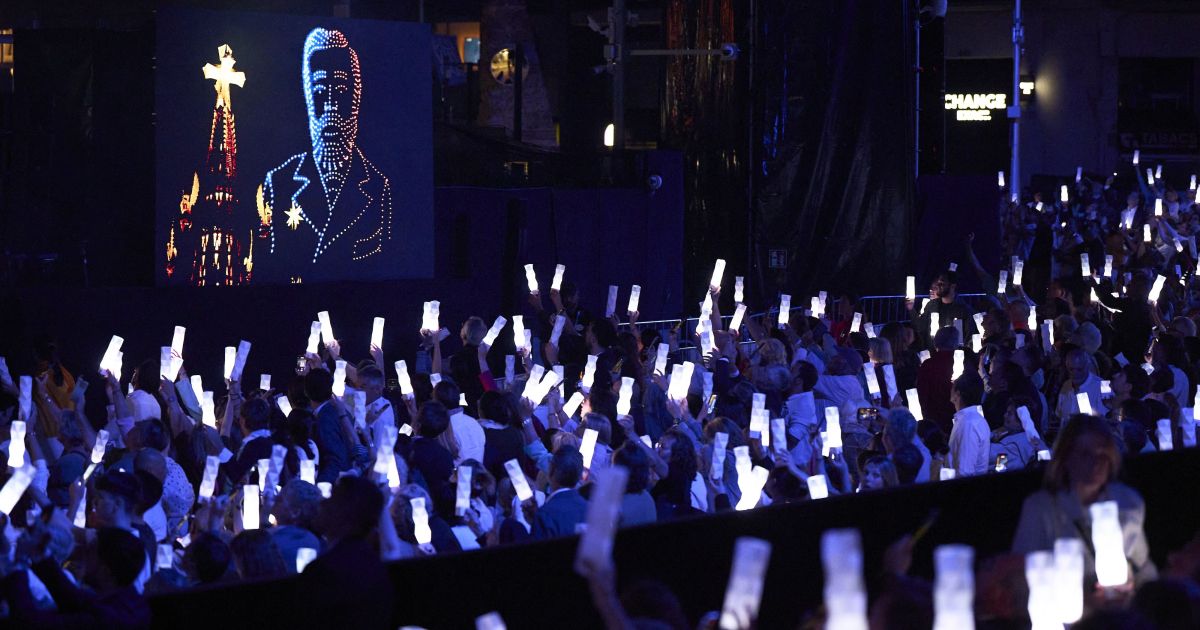
The Sagrada Familia show should ideally be, not a substitute for this debate, but its emotional prologue. Barcelona's ability to move the world is a real asset and should not be underestimated. But it is an asset that depreciates if the substance is not worked on. A city that knows how to project beauty but does not know how to pay its workers decently, that invites the world to admire its architecture but cannot guarantee affordable housing for its own children, ends up becoming a theme park of itself.
"If the collective emotion generated by an illuminated temple evaporates without leaving a trace in public policies, in budgetary decisions, in the willingness to face uncomfortable reforms, then it will not be a reborn phoenix that will have flown over Barcelona that night"
Injections of self-esteem, in short, are indeed necessary. But their legitimate function is to prepare society to accept the effort of transformation, not to avoid it. If the collective emotion generated by an illuminated temple evaporates without leaving a trace in public policies, in budgetary decisions, in the willingness to face uncomfortable reforms, then it will not be a reborn phoenix that will have flown over Barcelona that night. It will be, simply, a firework that will vanish after the grand finale.
We know how to do it, let's seize the moment.
Add The New Barcelona Post as your preferred Google source for free
Stay informed with the latest news.