
We have bitten the hook again. It was enough for someone, in this case the architect Fernando Caballero, to throw out the figure of 10 million inhabitants as the horizon for his Madrid DF in 2050 for us, in our territory, in the blink of an eye, to find ourselves discussing the Catalonia of 10 million left and right and not always with the necessary serenity. It is true that not everything is the result of the astute Madrid chronicler. Some official demographic scenarios also project these figures for us. But scenarios are just that, scenarios, and there are usually several (high, medium, low, optimistic, pessimistic, trend-based...) that depend on the evolution of a set of variables. What is needed is to know what these determining variables are.
However, it must be taken into account that when the main source of population variation is migration, as has been the case for many years now, the predictability of scenarios is considerably reduced, because the number and diversity of variables that come into play is very high and very volatile. That said, for now we only have one certainty: whether we are 7, 8, 10 or 14 million in 2050 will depend, without a doubt, on migratory flows.
But since we're at it, once the hare of 10 million has been raised, it is pertinent to ask questions that lead us to think about how we should prepare if it happens. One of these questions is: if Catalonia reaches 10 million inhabitants, how will they be distributed throughout the territory? The answer is simple: it depends on how we plan today. That is, on the decisions we make as a society and, in particular, those that public authorities translate into regulations, investments and policies. And, in this sense, one of the keys is whether there would continue to be a concentration of population in the metropolitan area of Barcelona or if, on the contrary, other territorial polarities would be favored.
Some simple calculations will help us get an idea of what we are talking about. If we project according to the current distribution of the population, the metropolitan area of Barcelona (according to the Generalitat, the territory that groups Barcelonès, Baix Llobregat, Maresme, Vallès Occidental, and Vallès Oriental), which currently has about 5 million inhabitants, would correspond to about 6.2 million. This means that, broadly speaking, of the 2 million people who go from eight to ten, 1,200,000 would go to the Barcelona metropolis and 800,000 to the rest of the country.
Although it is perhaps more interesting —and decisive for the country— to speculate on how this part of the 800,000 new inhabitants would be distributed, I must focus on the metropolitan quota. The issue is that the foreseen demographic evolution, evidently, determines the needs for new housing and demands to indicate where and with what characteristics they will be generated, and, for that reason, we have to resort to the plans that are underway.
As I said before, there are several scenarios, also in planning, and to cite a relevant one, such as the projections currently used by the Barcelona Metropolitan Area (AMB) to elaborate its planning, the population of the territory that we can consider the metropolitan region of Barcelona would be, with a view to 2050, close to 5.9 million inhabitants. Thus, the AMB's Metropolitan Urban Master Plan tells us that about 450,000 main homes must be provided for the metropolitan region of Barcelona. If we take into account that this forecast is made on 5.9 million inhabitants and not on 6.2, the number of new main homes needed in the metropolis in the hypothetical context of 10 million would exceed half a million.
How to reorganize Catalonia according to the needs of the people who live and will live in the future is a decision that should have been made a long time agoIt may be that a part of these homes come from the return to residential use of at least a part of the offer that today is occupied by economic uses, not only tourist but also all kinds of services: from notarial offices to dermatological consultations. For now, in Barcelona city it has been announced the elimination of licenses for tourist-use housing in 2028, which is expected to free up some 10,000 units.It remains to be seen if the surrounding municipalities will absorb them or if they will follow the same restrictive line, but, in the best-case scenario, we are talking about a couple of tens of thousands of homes.
Likewise, there is still some room in some regions for the transformation of second homes into primary residences, a trend that has been going on for a long time, but which the pandemic accelerated and the price dynamics in the municipality of Barcelona and its surroundings have sustained. There are also the different alternatives of redensification that we reviewed in a previous article. And there is still another factor that we don't like to remember much, but which will have a great impact: to whom and for what uses will the homes currently occupied by the high percentage of the population over 80 years old go by 2050.
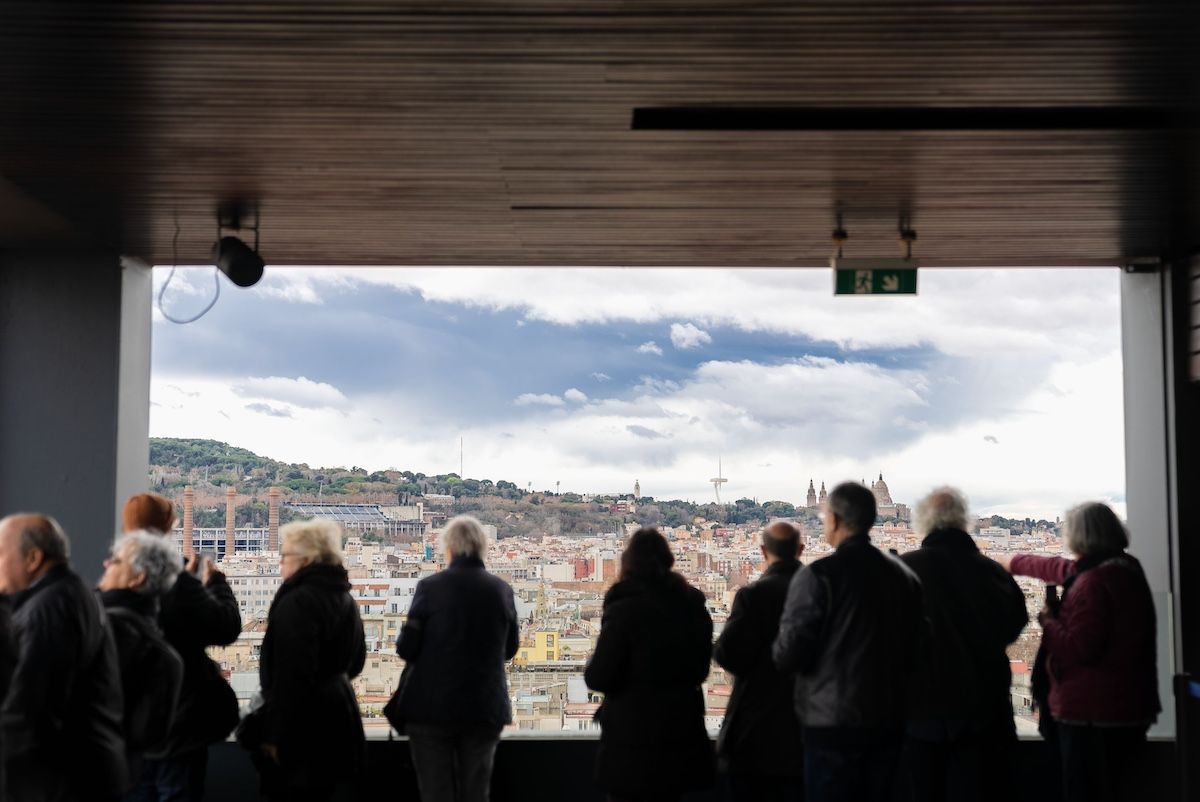
What is clear is that the bulk of new homes will involve new construction, and that this construction is only possible massively in the municipalities furthest from the current heart of the metropolis, which will, therefore, be the destination of most of the 700,000 souls that the plan itself predicts the population will grow by (or the long million in the 10 million scenario).
Souls, we must not forget, increasingly solitary: almost a third of the residential stock already corresponds to single-person households, and demand is growing. Therefore, the number of homes would have to grow in an even greater proportion with respect to population growth compared to what has happened until now.
On the supply side, we are well aware of the main urban planning operations foreseen in the medium term within the municipality of Barcelona or near the ring roads. The most notable would be, in order of planned completion of their fundamental parts: the Sagrera station and the Mercedes eco-neighborhood (2028); the Urban Master Plan (PDU) of the Tres Xemeneies and Catalunya Media City (2029); new facilities of the Hospital Clínic on Diagonal (2035) and the Marina del Prat Vermell neighborhood (2036). All of them contemplate, in one way or another, the construction of housing, to add up to a total of about 30,000 units. Let's say that with other measures another 30,000 are built. There would still be more than 400,000 left to distribute throughout the rest of the metropolis.
If we open the territorial zoom to include the 36 municipalities that make up the Barcelona Metropolitan Area (AMB), we will see that the proposal for the Metropolitan Urban Master Plan, still in the processing phase, points to some places as potential new centralities, but not always with firm projects to support them yet. The most prepared for planning to act would be Cruïlla Sant Boi, La Torrassa, Quatre Camins, Riera de Palau, and Montgat, in addition to Besòs Central (which would integrate La Sagrera) and Porta Diagonal (around the new Clínic). There are still few concrete figures.
To lament that most of Catalonia is emptying (and ends up, for example, consumed by flames) is not compatible with continuing to concentrate economic activity and jobs in the center of the metropolis.Beyond the limits of the AMB, the uncertainty is greater. In fact, the Generalitat government still has to find where to locate the 50,000 affordable homes promised before 2030, most of which would correspond to municipalities in the metropolitan region. And this will be the case whatever the evolution and whatever the Catalan population in 2050, unless the review of the General Territorial Plan of Catalonia that is now beginning radically changes the map of human settlements in the country. But, once again,what happens in the metropolitan area of Barcelona will be decisive.
It is no news that the evolution of events tells us that we have to pay more attention to what happens in this part of the territory that acts as a hinge between the core of the great metropolis and the country as a whole. Nor is it that the facts do not satisfy this need. And that Barcelona, like most large Spanish cities, has for a long time been growing demographically far below what its metropolitan surroundings do, and that these are expanding more and more (hence Caballero's challenging "Madrid of 10 million"). In contrast, other European cities such as Vienna, Amsterdam or Munich, with much more consolidated public housing policies and more room for densification, gain population to a greater extent than their metropolitan areas.
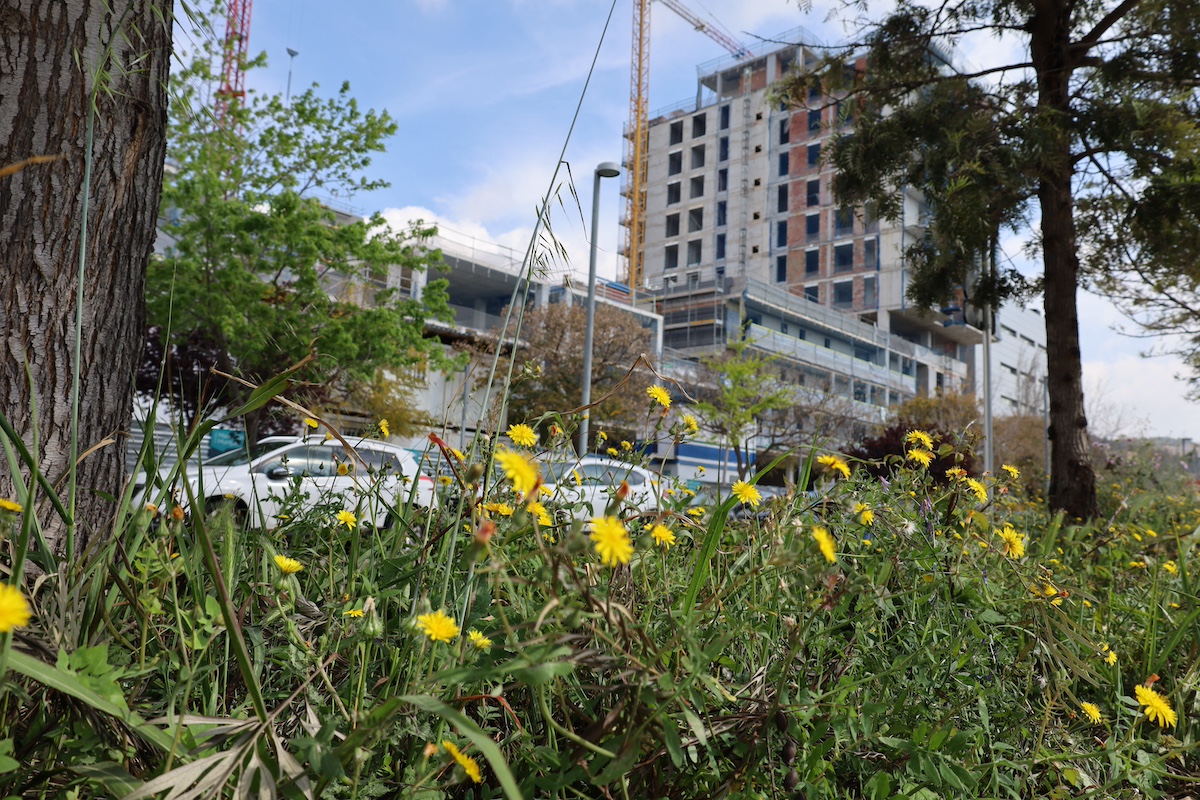
But in Spain, the metropolitan fact does not have explicit recognition in national, regional or local policies, and this means that the necessary tools are not developed to ensure that these expansive growths occur under good conditions. Barcelona, with the AMB, is the exception, but as we have pointed out again and again in this column, unfortunately it falls short of daily dynamics.
So much so that the territorial planning of the region has been on stand-by since 2010, that Rodalies goes as it goes, or that cities like those that make up the so-called "metropolitan arc" (Mataró, Granollers, Mollet, Sabadell, Terrassa, Rubí, Martorell, Vilafranca and Vilanova) suffer strong tensions in their municipal coffers to maintain a decent level of service provision to the growing population.
Whether it is the Catalonia of 10 million or still that of 8, the metropolis beyond the AMB is the key territory for the future of the countryTerritorial planning is not, unfortunately, a matter that makes headlines. But the consequences of bad planning or its absence do, in the long run, causing urgencies that further divert attention from planning. The housing crisis, the chaos of Rodalies, or the eternal school barracks are clear examples.How to reorganize Catalonia according to the needs of the people who live and will live in the future is a decision that should have been made a long time ago, but sometimes it seems that it cannot even be debated with a minimum of rigor and seriousness.
To lament that most of Catalonia is emptying (and ends up, for example, consumed by flames) is not compatible with continuing to concentrate economic activity and jobs in the center of the metropolis. Denying that there is a metropolitan reality of which five million people are part within a country that has eight in total (some in other smaller, but not officialized, metropolitan realities) only makes this reality grow uncontrollably, disarticulated from the rest.
Whether it is the Catalonia of 10 million or still that of 8 million, for which it must be remembered that even the current conseller of the Presidency of the Generalitat de Catalunya, Albert Dalmau, recently admitted that we have not arrived properly prepared, the metropolis beyond the AMB is the key territory for the future of the country and this issue must be addressed once and for all with responsibility and decision before events end up overwhelming us.
Add The New Barcelona Post as your preferred Google source for free
Stay informed with the latest news.