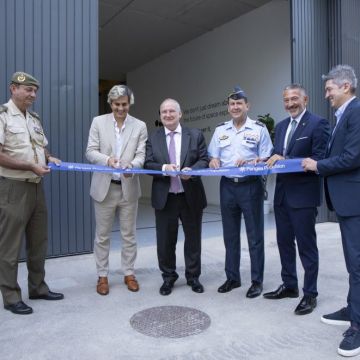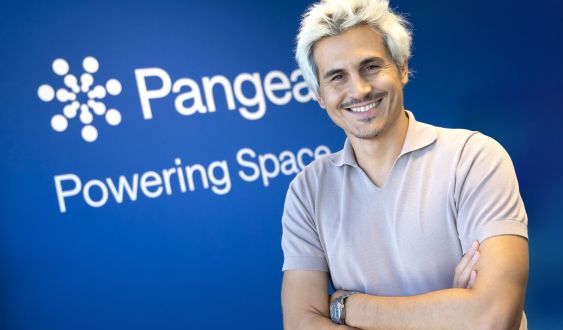
Adrià Argemí is a Catalan engineer, co-founder, and CEO of Pangea Propulsion, the aerospace company manufacturing reusable propulsion systems for rockets and satellites. He is also this year’s winner of the Young Entrepreneur Award presented by AIJEC (Associació de Joves Empresaris de Catalunya). His calling has always been space, and under his leadership, the firm has earned industry recognition as a pioneer of the engines propelling the sector’s future. He welcomes The New Barcelona Post to the company headquarters in Barcelona’s Zona Franca. Inside one of the offices, beneath the motto We turn bold ideas into tangible realities, Argemí discusses everything left to accomplish across the space arena alongside the roadblocks facing companies like his. He advocates for a single European market, demands transparency for citizens regarding defence, and reminds us that smaller players also have plenty to contribute. Following the recent launch of a new production facility in L'Hospitalet de Llobregat and a fresh agreement with Indra, Argemí is now steering the company’s leap into serial production, driven by the clear ambition to turn Pangea into “the Rolls-Royce of space”.
— What are the primary objectives driving today’s aerospace sector?
— The first thing I would tell you is that humanity no longer wants to visit the Moon; it wants to stay. Ever since space began to be privatised and entrepreneurs like Jeff Bezos and Elon Musk emerged – who have done a great deal for technological development, without getting into their personalities, to put it mildly – the model has fundamentally shifted. They decided that a single company could handle everything: designing the rocket and providing the end service. Not just buying parts here and there, but serving as the integrator. By doing so, they proved they could keep costs far tighter and deliver cheaper access to space. In SpaceX’s case this makes total sense because, above all, they are their own client.
— Is this shift what has fuelled the surge of interest in reaching space?
— It has upended the status quo. Today we are seeing numerous players – whether public institutions, nations, or private firms – eager to secure this access to space to deliver one service or another. Put simply, plenty of people want to build rockets. The sheer volume and appetite for putting things into orbit is mounting, and because there are friendly actors alongside less friendly ones, everyone wants to get there. That said, the larger the rockets, the heavier the costs. In Europe’s case, that is precisely where Pangea Propulsion steps in.
— Do you offer a unique propulsion model?
— We supply engines to launch our clients’ rockets. We sell reusable propulsion systems to third parties – and I underline reusable because that is the crucial point. Today there are plenty of rockets, but they are single-use. In the European context, for instance, we have an institutional rocket that works remarkably well, but it isn’t reusable; every time we want to launch, we have to build it from scratch. As you can imagine, that means tens of millions of euros that last half an hour at best before falling into the sea.
— Is reusability therefore one of the great current challenges for the European sector?
— Not only for Europe. We want to help with this new technology to ensure that European rockets can also be reusable. But our ambition is to sell to other countries and companies as well. We want to demonstrate that it is far faster to turn to Pangea Propulsion than to internalise all the expertise needed to manufacture rocket engines, which is immensely intricate and carries extraordinarily high barriers to entry.
“We are experts in propulsion, across every kind of rocket engine”
— You now sell to third parties, but Pangea started with the aim of developing a complete rocket, much like the SpaceX model you mentioned. Why did you ultimately pivot to propulsion?
— Exactly. When we started, we wanted to deliver the entire service. We wanted to build the complete rocket. In our case, a small rocket – what is known as a micro-launcher – meaning we could place under a tonne into low Earth orbit, below roughly two thousand kilometres. However, we quickly realised that was extraordinarily complex. It really was rocket science (laughs).
Building a rocket isn’t just about manufacturing it; you also have to operate it, and it must function flawlessly – you can’t head into orbit on a flat tyre. Besides, it isn’t exactly a venture with high profit margins, and we lacked the operational track record. What we did possess was a formidable background and expertise in propulsion. So we said: “If this engine is as good as we believe it is – since we were going to build it ourselves – why can’t we supply it to third parties?” That was the turning point, and today we are experts in propulsion across every kind of rocket engine: for accessing space, for heavy-lift rockets, and for orbital mobility.
— What clients are you targeting, and where do you draw the line when selling this technology? What is your red line?
— Working in critical technologies, we cannot simply sell to whoever we please with a single phone call, as you can imagine. If Iran calls us – to take an extreme hypothetical – we might pick up the phone, but we cannot share any information whatsoever. Consequently, our policy is to work primarily with European companies, NATO member states, and allied nations. Using the word “allies” feels almost surreal to me, but it is the term that best describes it.
— The European Commission awarded Pangea a prize last January for disruptive innovation. Today you have established yourselves as a European leader. How do you assess Europe’s technological standing in aerospace?
— Europe has the talent and it has the technology. What it occasionally lacks is leadership. I believe we have everything in place, but we miss that collective drive to rally behind one clear solution to a problem, rather than 27 different ones.
— Does fragmentation across the 27 member states also hamper this momentum?
— Yes, we shoot ourselves in the foot daily. But I also believe regulation plays a significant part. The United States and China often move far faster. At the end of the day, this has essentially become a sprint to see who can execute first. It is true that Europe struggles from a regulatory standpoint, particularly in a sector as heavily governed as aerospace, where everything must be done meticulously. I am not suggesting things should be done recklessly, but regulations often turn into roadblocks. Securing licences and building infrastructure can take years.
— In recent years, defence has taken on greater weight within aerospace. Should this shift worry us?
— Rather than fostering anxiety or fear, what this sector needs is transparency. We all know that space is dual-use by definition. When Sputnik was launched, it wasn’t done just to look good or pose for a photo. Defence has always been present in orbit. That said, it is true that within Spanish society – perhaps less so in Catalonia, which remains deeply cautious about defence – more people are taking an interest in the concept given today’s volatile climate.
— Space defence is a reality, whether we like it or not. The United States recently confirmed openly that it had weapons deployed in space. Therefore, I believe those of us working in the industry have a duty to acknowledge that this is happening. We must explain why a portion of European taxpayers’ money will be channelled into defence, and unpack what safeguarding and defending the welfare state actually entails.
— And what does defence mean in practical terms for your industry?
— The defence component is determined by the client; for us, the engine remains the same. It is the end application that tips the scale toward defence. The real distinction lies in the red tape. Imagine a satellite mission for which we build an engine: if that satellite serves defence and takes surveillance images of a border, the paperwork I must complete is vastly heavier than if that exact same engine powers an Earth-observation satellite taking images of the Ebro Delta for climate research.
— A concept frequently raised in emerging deeptech fields is sovereignty. What does sovereignty mean in aerospace?
— Strategic sovereignty in aerospace means Europe can launch and reach space as often as it wants, whenever it wants, and however it wants. Today there are still rocket components that do not originate in Europe – not speaking for our specific case. Guaranteeing autonomy or sovereignty means securing your entire supply chain within Europe or allied countries, possessing the domestic technology so you never depend on outside powers. Whether that means deploying payloads or, in the near future, launching our own astronauts should we need to travel to the Moon or remain there.
— You speak of a renewed race to the Moon. What is unfolding right now?
— Over the past year, NASA’s updated roadmaps have largely set Mars aside to focus on returning to the Moon – to stay. Naturally, there is considerable scientific interest, particularly around the lunar poles, because we know water ice is present. If there is ice, you can generate power, produce propellant, sustain life, and so on.
— Why now?
— The United States has seen that their Chinese peers have a 50-year plan for the Moon, and sooner or later, they will establish themselves there. Washington’s response has been: “We are going too” or “We will get there first.” That dynamic forces everyone onto the playing field, turning it into a genuine race.
— Is Europe lagging behind in this race?
— At present, yes. Now, with this wake-up call in defence, we need to act immediately, because we are already behind on numerous technologies. Take reusability: we are still relying on expendable rockets. Now is the time to invest. Whenever I speak with policymakers, I deliver the same message: we need leadership. I am not asking them to devise technical solutions; rather, if there is a shared European political will to head in that direction, signal it clearly to industry and we will organise ourselves to deliver the answers.
— What is missing for Europe to move from open debate to a concerted strategy?
— We engage in countless talks, but everyone wants their say: the Germans here, the French, the Spanish... We need a guiding North Star – decisive leadership that guarantees funding and establishes equal rules for small and large firms alike.
— Does the operating landscape differ significantly between small and large enterprises?
— This is an industry where legacy industrial giants seem to enjoy an assured quota across major projects for reasons nobody can entirely pinpoint. Meanwhile, as a smaller venture, getting a foot in the door requires clearing endless hurdles, including regulatory barriers.
— Is there sufficient capital to back this growth?
— On the public side, it is starting to take shape now. At the end of 2026 or into 2027, the Commission will settle the next MFF – the Multiannual Financial Framework – covering a seven-year span with capital earmarked across all strategic verticals. It has already been signalled that the taps will be open for aerospace, defence, and energy. Many voices are also asking: “Why don’t we tap the sovereign pension funds across European nations?” That represents an estimated €10 trillion. So, the capital could be there. Once again, what is lacking is political leadership and alignment.
“What is lacking is leadership and consensus among everyone”
On the private side, numerous venture capital funds are beginning to target space and dual-use technologies. However, they consistently seek a 50-50 mix of public and private funding. It requires the pairing of both.
— So, is the hurdle once again leadership and alignment rather than a lack of capital?
— Exactly. And we see this clearly in defence as well. Today, a dedicated defence firm – which is not our profile – sells a system to one country’s ministry, and then sells it separately to another ministry in another state. Why shouldn’t there be aggregated procurement, for example, for orbital defence satellites? One of the major hurdles we face relative to other sectors is the lack of aggregated demand; there is no single market.
— You reached an agreement with Indra to become their preferred propulsion supplier: what does partnering with such an established group mean for Pangea’s growth in defence?
— If we execute well, it means advancing from conceptual designs to initial deliveries, first flights, and operational missions on a recurring basis – in this case with Indra, the national champion, as many describe it. Becoming one of their propulsion suppliers provides predictability. That is a concept the industry continually demands from policymakers. I am fully committed to investing and backing these technologies, but as an enterprise, I need long-term clarity. We are not an academic research lab; I need a clear direction, otherwise investors tell me the ROI simply doesn’t add up.
— What role can Catalonia play in this sector?
— Catalonia is a mini-Europe. We possess all the technical capabilities. What is missing is the understanding that, if we genuinely want to back this, we need sustained support and governance predictability signalling that this is a high-growth sector worth backing.
It is an expanding industry at a time when other sectors historically central to Catalonia, like automotive manufacturing, are contracting. Every week, two or three suppliers working for manufacturing giants like Seat reach out to ask if they can machine parts for us. We have had wonderful surprises with companies that had no idea they could produce space-grade hardware. It also means breaking down stigmas: we aren’t exotic outliers. From the outside, there is this perception that everything is high-tech lab work with everyone wandering around in white coats.

— Can Catalonia become a major aerospace hub?
— Once again, Catalonia has the capabilities. My hope is that it also receives the political backing and ambition, because this is an expanding, high-value-added industry that generates highly skilled employment. It also curbs the brain drain. I studied here, trained here, and spent years working abroad before returning. I feel that in our own way we are doing our part, showing that companies here can offer real opportunities rather than letting local talent leave. Catalonia has a significant role to play within the Spanish aerospace landscape, but I would say it still needs to clarify and guarantee an explicit space strategy from the administration. What does that strategy entail? What concrete projects will be backed?
— And what role does Pangea aim to play within this European ecosystem?
— At Pangea – I say it in every interview – we want to become the Rolls-Royce of space. We want to be the benchmark engine provider across Europe and internationally, both for launch vehicles and orbital mobility. When anyone thinks of cutting-edge developments in critical propulsion systems, we want them to think of Pangea Propulsion.
Add The New Barcelona Post as your preferred Google source for free
Stay informed with the latest news.