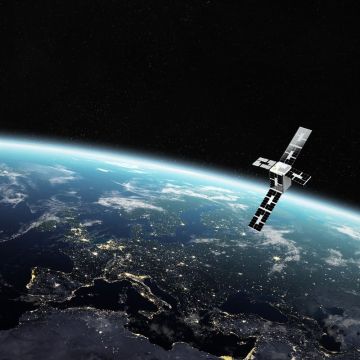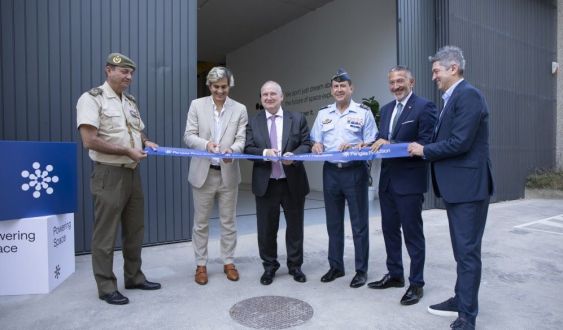
No rocket reaches space without an engine. Before the countdown, before liftoff, and before a satellite enters orbit, there is an essential technology that makes the mission possible: its propulsion system. Pangea Propulsion has built its business on this technology. Eight years after being founded in Barcelona Activa, the Catalan startup has inaugurated a new 1,000 square meter plant in L'Hospitalet de Llobregat from which it will manufacture, assemble, and test engines and propulsion systems for satellites and rockets.
With this new plant, the company wants to leave behind the prototype development phase to make the leap to industrial production and become one of the great European specialists in space propulsion. An ambition that is reflected as soon as one crosses the entrance of the facility, where a large message greets visitors: "We don't just dream about the future of space exploration. We engineer it." More than a simple motto, the phrase summarizes the moment of change and growth in which Pangea finds itself. Because, as Adrià Argemí, CEO of the company, summarized during the plant's inauguration, the new facilities "mark the transition from technological demonstration to product manufacturing."
The new plant occupies an old industrial building located in the area where Barcelona is promoting one of its major future projects with the expansion of Fira Barcelona. There, Pangea has invested one million euros —the first of a seven-million-euro plan foreseen for the next three years— to launch facilities that will mark the beginning of its industrial stage. The goal is to concentrate the entire manufacturing process under one roof, from component production to the assembly, integration, and validation of its propulsion systems.
This industrial leap comes amid growth for the Catalan company, which also has a base in Toulouse, one of the continent's main aerospace hubs. Pangea Propulsion closed 2025 with a turnover of four million euros and, a few months earlier, had raised 23 million euros in a financing round led by Hyperion Fund, the first operation of the fund promoted by Pablo Casado. A boost that has also translated into the team: the workforce has grown to nearly a hundred employees, around 60 of them engineers, and the forecast is to incorporate thirty more professionals over the next three years.
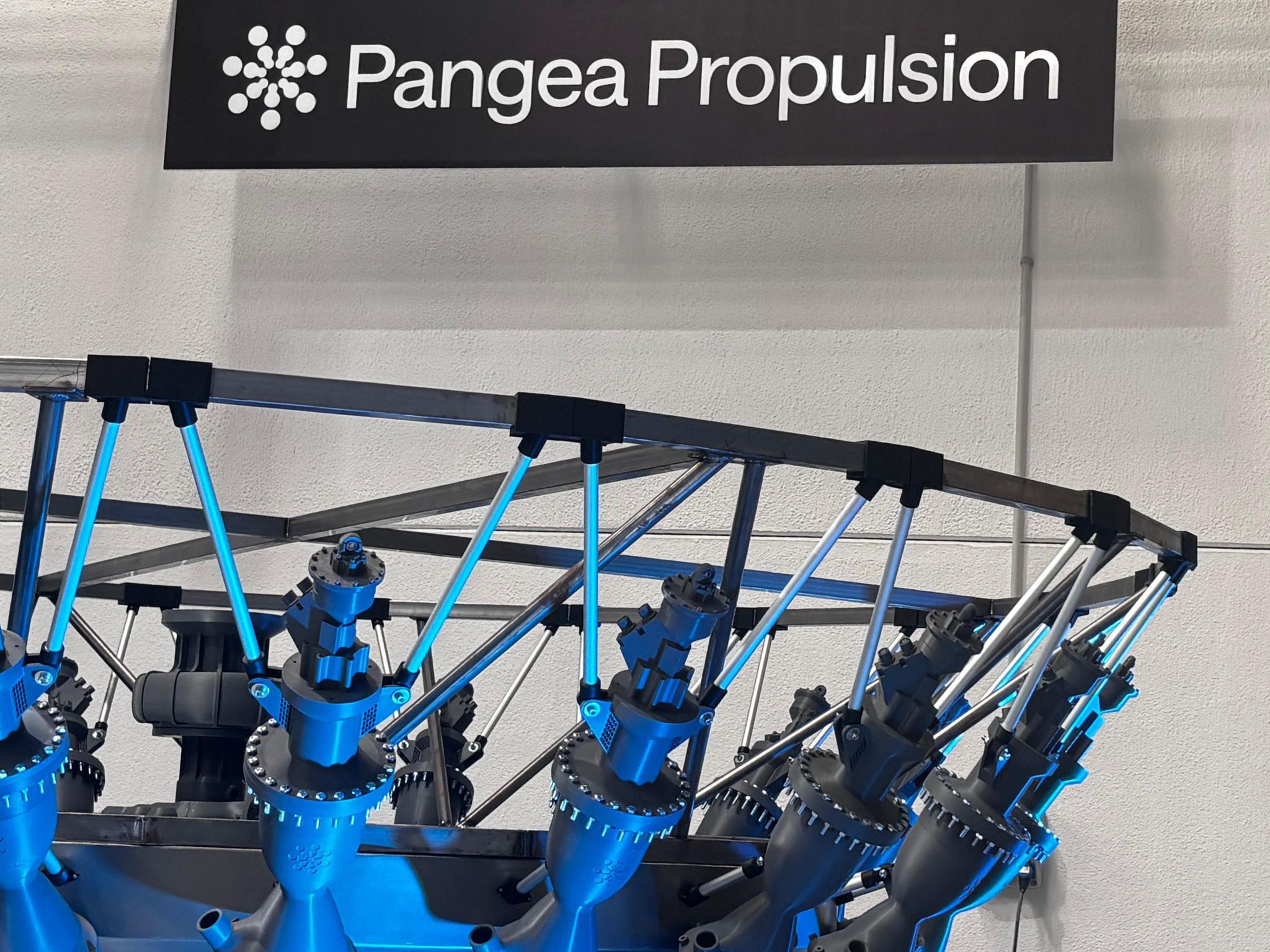
Between 3D printers, precision machinery, and a clean room for assembling critical components, Pangea wants to write the next stage of its growth. The new facilities will allow Pangea to produce its catalog of propulsion systems: Nereus, for satellites; Arkos and Kronos, engines for reusable rockets; in addition to developing customized solutions for other companies in the sector.
An engine for European space autonomy
But the company also aspires to go further and play a key role in a European space industry that seeks to reduce its technological dependence on powers like the United States or China. Because although Pangea does not manufacture complete rockets, it does manufacture the engines and propulsion systems that make them possible to take off.
Thus, in the same way that aeronautical manufacturers like Airbus or Boeing turn to specialized companies to equip their planes with engines, the Catalan startup wants to become that provider for the European space industry. Its goal is to supply engines and propulsion systems to launcher manufacturers, satellite operators, and other companies in the sector.
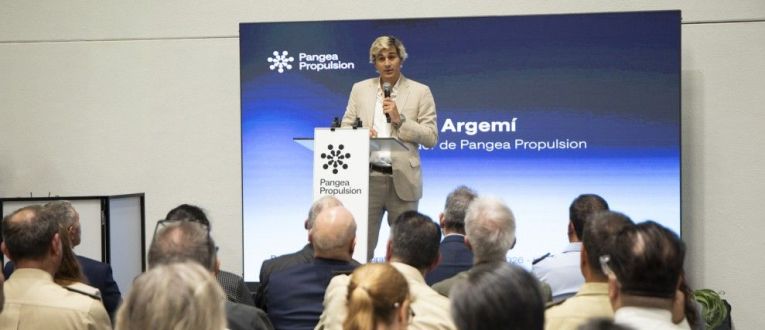
"Today we are not only inaugurating a new plant, but we are taking on a role in European technological sovereignty. We want to be the European specialist in propulsion; to manufacture engines for the entire ecosystem," Argemí stated during an event that brought together a broad institutional representation linked to industry, defense, and the aerospace sector.
"Now we depend too much on others; we need to build our own European path," defended Jordi Hereu, Minister of Industry and Tourism during the inauguration, which was also attended by Miquel Sàmper, the Minister of Business and Labor; David Quirós, mayor of L'Hospitalet de Llobregat; representatives from the Ministry of Defense, investors, industrial partners, and members of the diplomatic corps. "Hopefully soon we can get excited about the launch of a large European rocket and know that its heart, its engine, is made in Barcelona," added the minister.

An ambition also claimed by Argemí, convinced that space will be one of the great industrial engines of the coming decades: "Galleons transformed global trade, trains changed commerce, airplanes connected continents. Today we are already entering the space revolution. Let's not be spectators in this revolution, but leaders". A space revolution for which Catalonia not only has Pangea Propulsion, but an entire space sector that already has 83 companies, generating 237 million euros in turnover and employment for more than 1,800 professionals.
Add The New Barcelona Post as your preferred Google source for free
Stay informed with the latest news.