The space age arrived between the 60s and 70s of the last century, and with the arrival of man on the Moon, a social phenomenon culminated. Humanity was capable of dominating space. This led to a new conception of space and the popularization of all kinds of fictional phenomena related to space and extraterrestrials. One of the most famous sagas was Star Trek, with Captain James T. Kirk and Spock as big stars. The first of the two also left a phrase for history when he said: "Space, the final frontier. These are the voyages of the starship Enterprise. Its five-year mission: to explore strange new worlds, to seek out new life and new civilizations, to boldly go where no man has gone before."
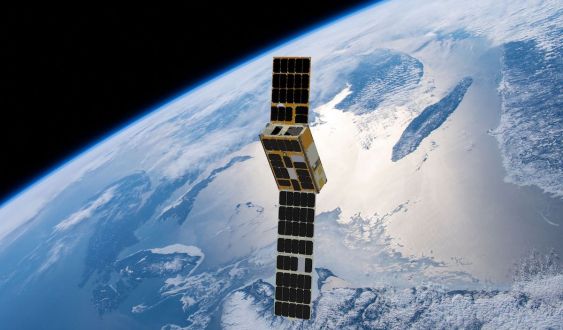
In our reality, however, there is no Enterprise ship or fantastic missions, but the first part has been fulfilled. Space is the last frontier for many countries and regions around the world. In Catalonia, and especially in the Barcelona Metropolitan Area (AMB), for example, work has been underway for years to build a solid space sector with the aim of becoming an important player in Europe. After a first strategy focused on NewSpace, which led to the launch of three nanosatellites —the Enxaneta, the Menut, and the Minairó—, the Department of Business and Labor presented this October the Catalonia Space Strategy 2030, a continuation of the commitment to the space sector that expands the scope of public policies in the field to impact the entire Catalan special sector.
This new strategy foresees up to eight new satellite missions and the creation of an initial public investment fund of 40 million euros, which will be added to the 7.5 million budget planned for 2026. The overall idea is to mobilize some 150 million euros to allow the space sector to continue growing in the country. "We had a first democratization strategy, but now we seek to reach the entire sector. We do not want to limit," assures the Secretary of Digital Policies of the Government, Maria Galindo, in statements to The New Barcelona Post. In addition, Galindo adds that Catalonia currently has "a very good business base" in the sector, especially in NewSpace, which is why the Administration has decided to expand the scope of the strategy to capture more industrial and business opportunities.
From the private sector, this second space strategy of the Generalitat has been very well received and they appreciate the continuity of the Administration's commitment, especially in budgetary efforts and in attracting and retaining talent. In this sense, the CEO and founder of IsardSAT, Mònica Roca, celebrates that the strategy has been "specifically designed for the Catalan sector" and the CEO of Celestia Aerospace, Glòria Garcia-Cuadrado, highlights the increase in public-private collaboration, while encouraging to join efforts without the Administration bearing the main weight of the sector from now on. "Now is the time for the private sector to dominate low orbit," the businesswoman concludes. Another differentiating fact regarding the previous Catalan strategy is the alignment with those of the Spanish Space Agency and the European Space Agency, a fact that had not occurred until now. "Currently, the strategies complement each other. We feel great institutional support," highlights Xavier Llairó, CCO of Pangea Propulsion.
Budget increase
However, all this industry around the space sector would not be possible without significant public economic support. That is why, given the budget extension, the Department has decided to opt for another formula to increase investment through the creation of an investment fund of 40 million and with a forecast of investing, at least, 150 million, according to Galindo. This public investment, assures the Secretary of Digital Policies, will be destined not only to satellite missions, but also to to improve existing infrastructure in the country.The clearest example is the will to build a large space factory in Catalonia. "It will be a large clean room so that Catalan companies can continue to grow," assures Galindo, who recalls that this equation also includes the possibility of reconverting several companies, such as those in the automotive sector. Precisely, Llairó points out that until now for Pangea the impact of Catalan public budgets has been rather limited and demands that a greater effort be made to improve infrastructures, such as, for example, in terms of cryogenic liquid propulsion, which could take the rocket engines they build to the next level.

Why are satellites important?
One of the most striking facts of these two space strategies is the launch of nanosatellites by the Government. According to the new strategy, between now and 2030 we will experience up to eight new launches with Earth observation and telecommunications missions, a key fact to improve the positioning of Catalonia and Barcelona in Europe, and which can help in tasks of the Administration and the private sector, such as the drought monitoring, firefighting, or connectivity.Until now, the three Catalan missions in space have allowed finding concrete use cases in the Catalan territory, such as the monitoring of a vineyard in Pallars or the monitoring of forests and fires, highlights Galindo. From the private sector, Mònica Roca recalls that having these satellites allows to alleviate the specific problems of Catalonia, since international constellations do not focus on the territory. From the industrial side, these strategies have allowed several companies in the country to have the capacity to create the devices and validate their technology, a very important fact to reach the market, points out Garcia-Cuadrado.
The conflict of technological duality
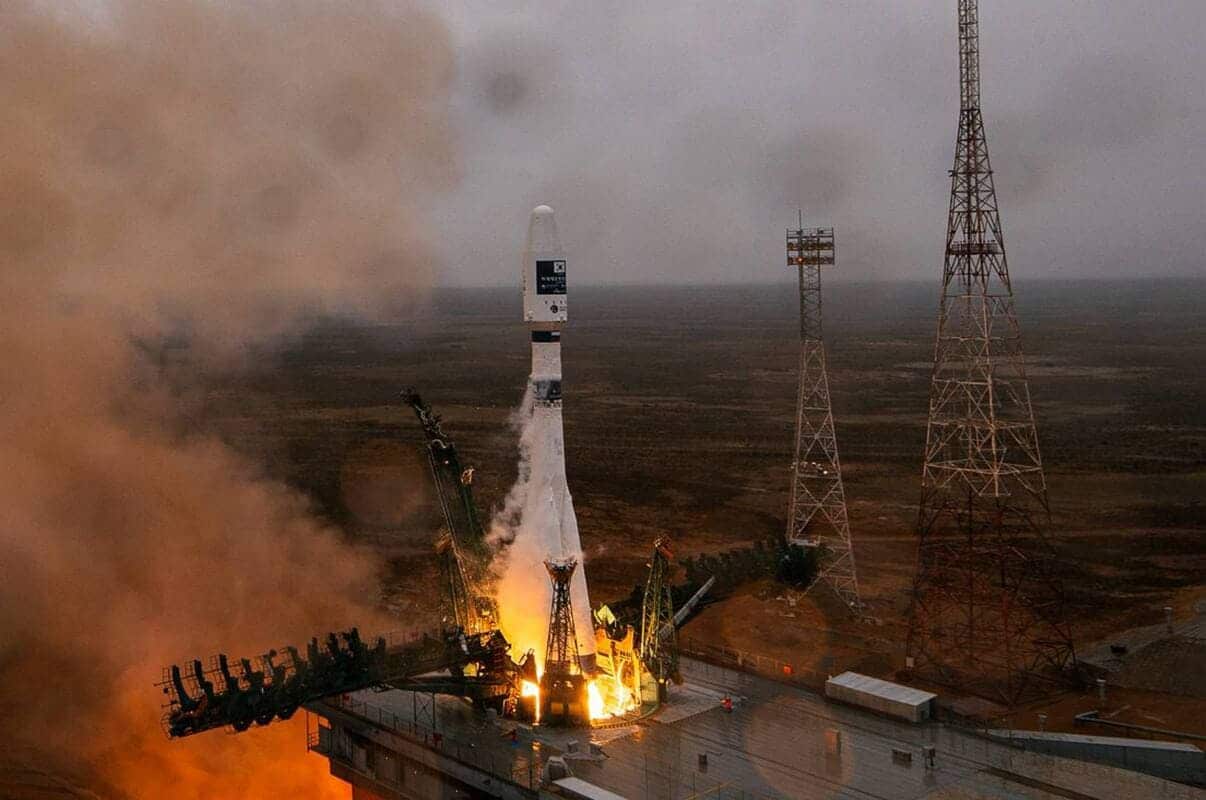
No one, however, is unaware that the space sector has traditionally been dominated by a significant military and defense component.Without going any further, GPS started as a military and defense tool, even though it later had civil applications, thus generating a technological duality. For Catalonia, this duality also exists, but Galindo assures that the Government approaches it in a context more of security than of defense, and always prioritizing the civil uses of technology. "Unfortunately, nowadays all digital technologies have a dual use," comments Galindo, who recalls that the current global geopolitical uncertainty pushes world powers to boost their more defensive aspect.For his part, Garcia-Cuadrado finds this duality natural, but demands that the Administrations "care for and protect" the infrastructure and know what uses should be given to each technology, as well as monitor what uses are given independently. Roca, for his part, regrets that this global uncertainty has brought the space sector closer to defense again, after many years trying to move away. For this reason, despite recognizing that technologies are clearly dual, their applications are not and he considers that a significant part of the increase in the space budget worldwide will be for military applications, according to Roca.
Is Catalonia a benchmark?
Finally, one of the main objectives of the new space strategy is for Catalonia to become increasingly important within Europe and, ultimately, to be one of the sector's benchmarks. It is evident that currently there are countries and regions that are much more relevant than Catalonia, such as Rosselló or Madrid, but over the years the country is gaining more weight. Even so, the government's main idea is to "play in the first space division" with the idea of being able to generate a large company in the coming decades, assures Galindo. In addition, he highlights that relevant companies in the sector such as Sateliot or Open Cosmos are already beginning to emerge in Catalonia, which "must be valued." Without going any further, this very year,Sateliot closed an investment round of 70 million euroswith the aim of being able to deploy a constellation of more than 100 satellites to improve 5G and IoT connectivity globally.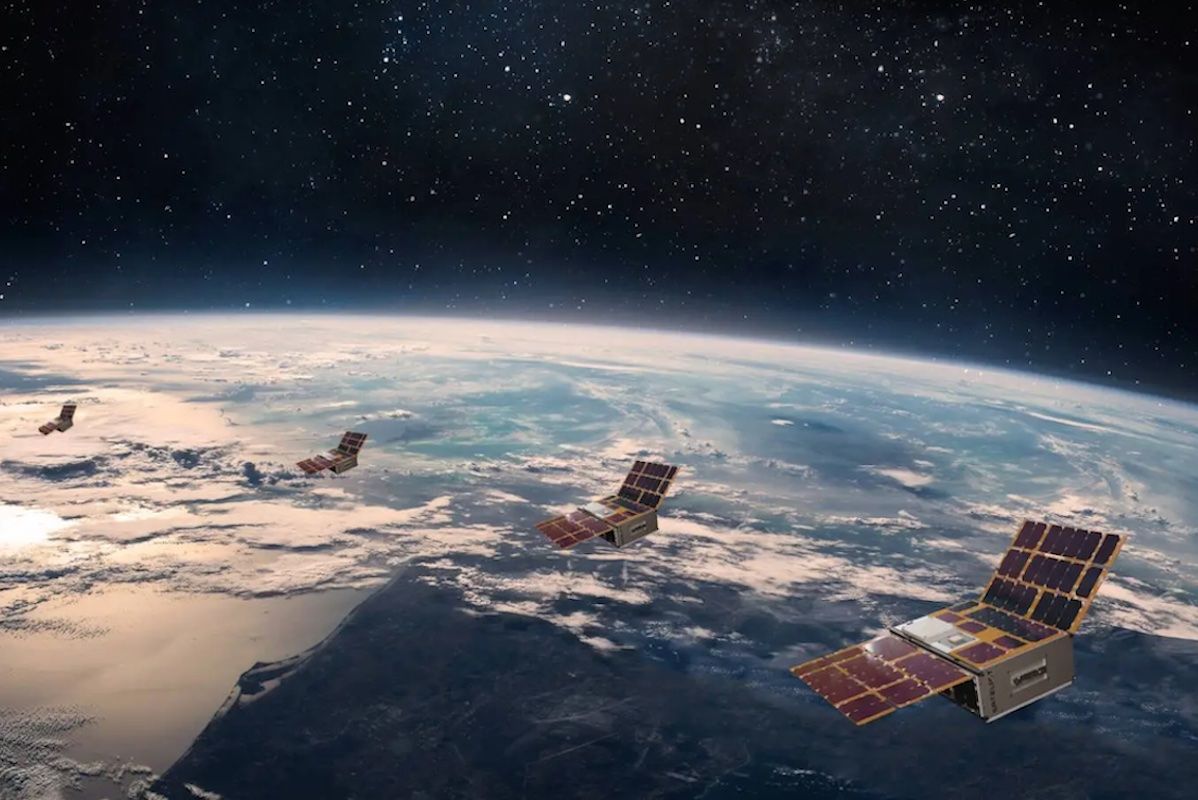
From the private sector, the general idea is the same, a sector in constant growth for five years that is not yet relevant in Europe, but with great potential. "Toulouse, Bremen or Tres Cantos are important hubs in Europe, not Catalonia or Barcelona. However, we must continue to bet on it, as it has great potential," says Llairó, who calls for more state support. Roca, for his part, recalls that there are leading Catalan companies within the sector, but that for now these cannot fight against large corporations like Airbus.
Even so, he advocates taking advantage of the proximity to Toulouse to establish regular collaborations and help the sector grow. In a similar vein, Garcia-Cuadrado points out that there are Catalan professionals who are great world references such as Adriano Camps, a UPC professor, or the company GTD, who have never quite had the recognition they deserve, a fact that the new strategy wants to change and that should be celebrated, says the businesswoman.

All in all, Catalonia continues to bet on the space sector decisively and with a firm step towards the next decade, which could lead to the consecration of an important economic sector for the Catalan economy that has not stopped growing in the last five years. In fact, from the area of Digital Policies of the Generalitat they assure that they are preparing a new sectoral study for 2026, since the sector has grown exponentially in recent years and there are currently more companies and workers in Catalonia than ever before.
Add The New Barcelona Post as your preferred Google source for free
Stay informed with the latest news.