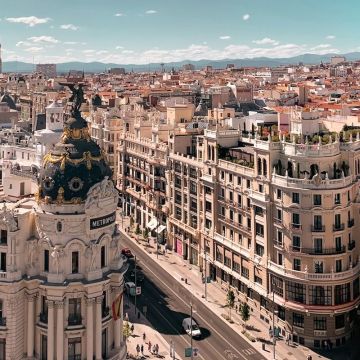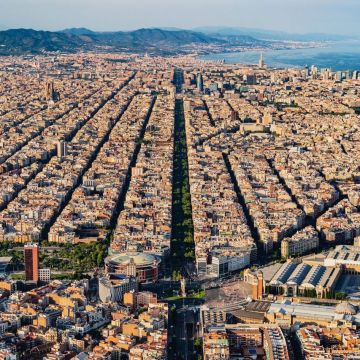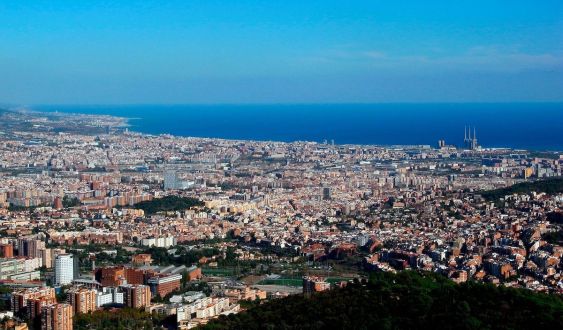
The water that comes out of the tap, waste that is collected, parks and beaches, the bus and metro that connect streets, cities, metropolises. These are elements that are encompassed within Barcelona's metropolitan vision, with a joint strategy that aims to respond to the challenges it faces, from housing to climate change. This long-term metropolitan vision was concretized in the AMB 15 years ago, and now it focuses on the next 15 to shape the metropolis of the future.
This future involves two pillars: social cohesion and sustainability, as defended by the vice president of Urban Planning Policies and Natural Spaces of the AMB, Damià Calvet. And this also involves "strengthening our sovereignties: food, energy, water, to achieve this maximum social cohesion and sustainability," proclaimed the also councilor of the Barcelona City Council on the second day of the AMB 15+15 dialogues, which was approached from the Port Olímpic with a question: How do we want to live in the metropolis 15 years from now? Diversity in a transforming territory.
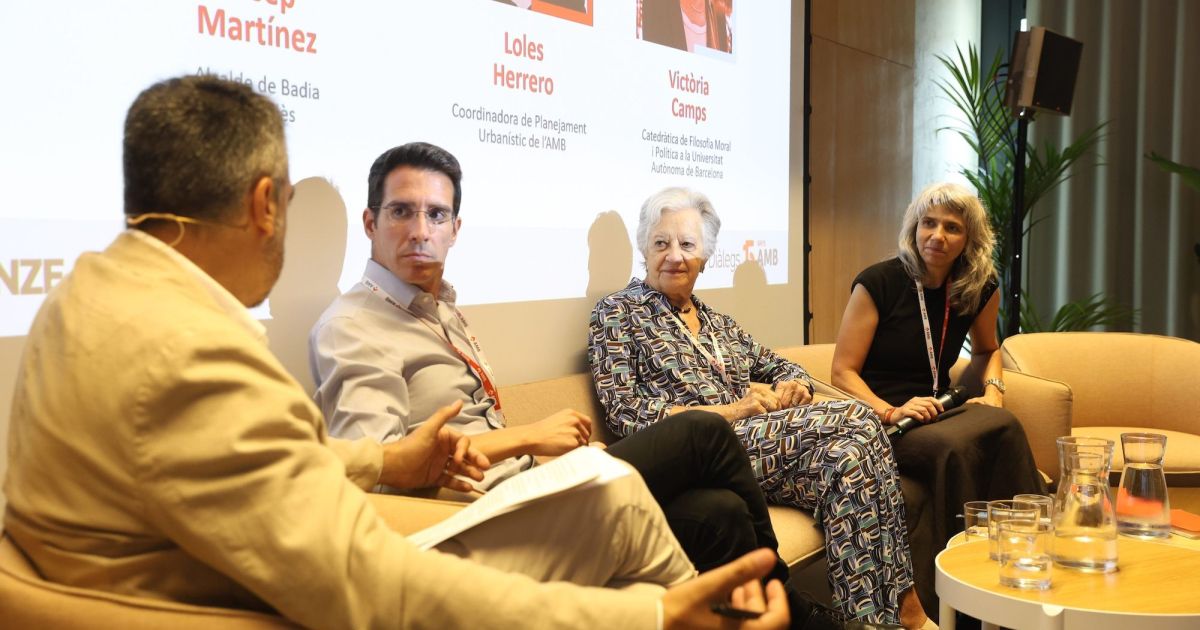
And this diversity is key to understanding the AMB and the path it wants to trace in the coming years. "The AMB is not a sum of municipalities, but something much more complex. They are interconnected dynamics, an ecosystem. And we must be able to look at it from different scales," proclaimed the coordinator of Urban Planning of the AMB, Loles Herrero. These territories that not only add up, but also interact, do so from a diversity that, according to her, brings complexity and richness to the management and progress of the Barcelona metropolitan area, in a vision that should not overlook the perspective of each municipality, as defended by the writer and professor of Moral and Political Philosophy at the UAB, Victòria Camps.
Housing as a priority
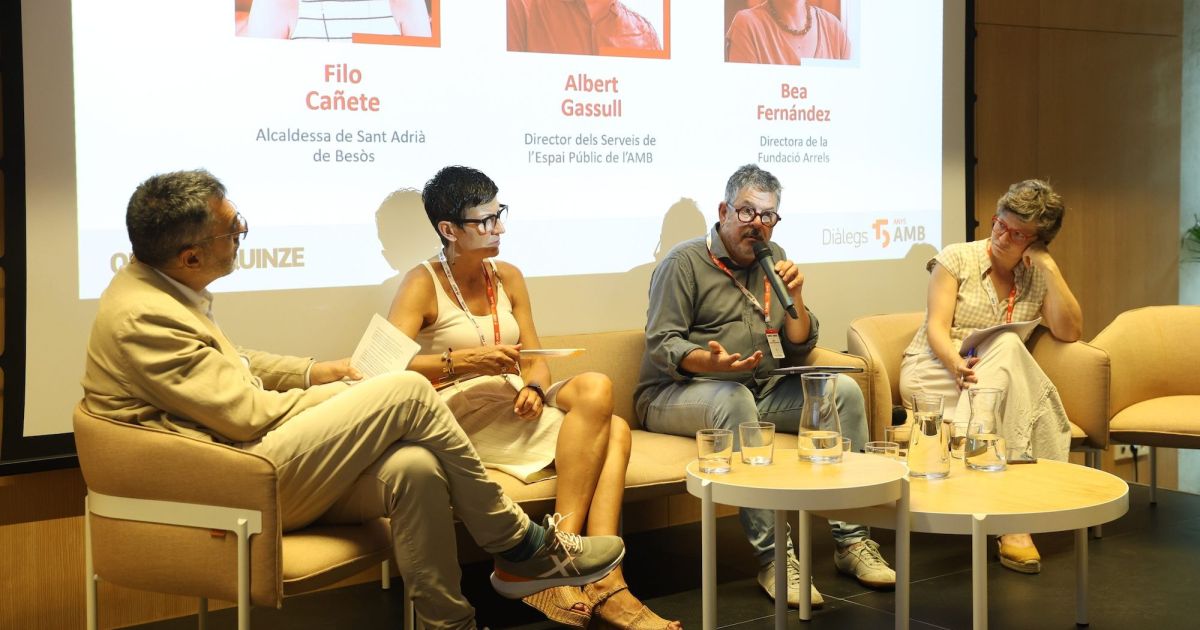
In this context of interrelation where municipal borders are blurred, the way of facing challenges also acquires a dimension that goes beyond the municipality. Among all these challenges, one stands out, which has emerged throughout the day: housing. This has been defended by speakers such as the mayor of Sant Adrià de Besòs, Filo Cañete, who has placed the priority for the next 15 years on "the housing emergency, accompanied by services and facilities that respond to this emergency, and also to the climate emergency." The mayor also emphasizes economic development and seeking territorial balance, in a context where new centralities are generated, such as the one Sant Adrià will gain in Les Tres Xemeneies.
Furthermore, the difficulty of accessing affordable housing leads citizens to move from one municipality to another in a metropolis that responds to these movements with more displacements. And it is that, when one piece (like housing) can be moved, it generates effects on another (like mobility), in a chain of interrelations within the ecosystem. "The issue of mobility is essential, both to solve pollution and housing and displacements, and also because the space occupied by mobility cannot be occupied by other uses," highlighted the director of Public Space Services of the AMB, Albert Gassull, in a round table alongside Cañete.
This chain effect requires that "multi-scale perspective" that Herrero has called for, taking into account the diversity of situations and realities that coexist in the metropolitan area. Badia del Vallès is one of those diverse cases that require a different perspective: all its housing stock was built under official protection, and that has meant that its residents are the same ones who arrived decades ago, when the flats were built: "The children cannot stay because there is no capacity to grow more," and of the original residents, mostly women over 65, and now widows, continue to live in the blocks. This was explained by the mayor, Josep Martínez, illustrating that diversity of situations that must be addressed in a metropolitan key.
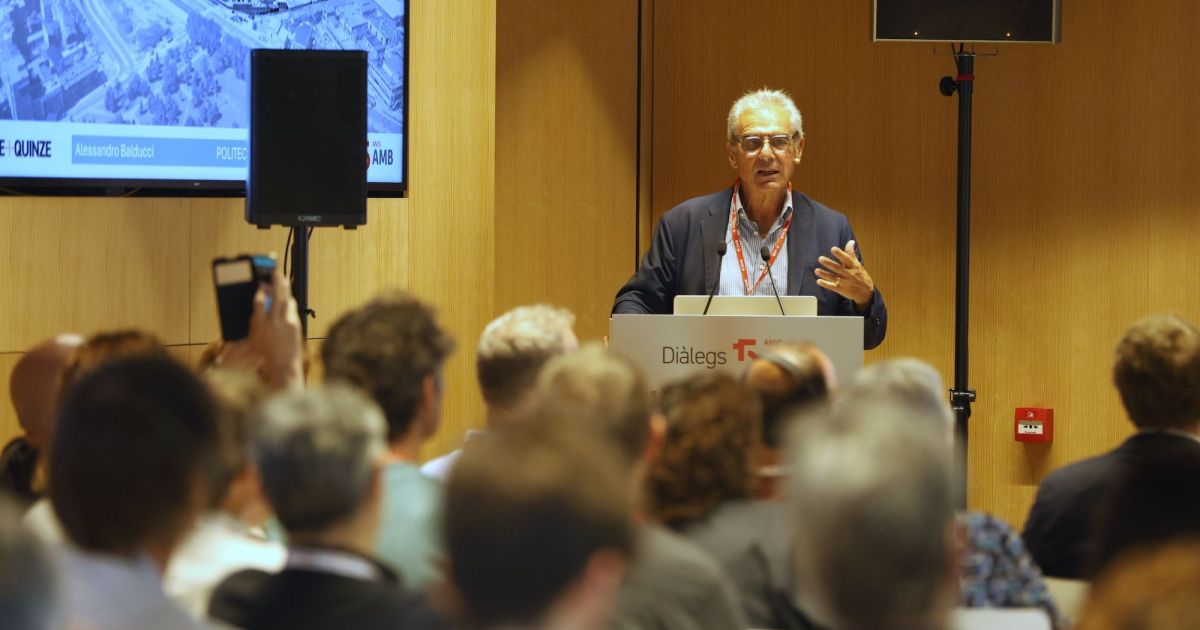
Other of these realities occurs in a large part of its municipalities, and it is the maximum expression of the housing emergency: homeless people. The director of the Fundació Arrels, Bea Fernández, has also focused on substandard housing and invisible situations that show that "the solutions that have been proposed so far are not enough." Arriving from Milan, expert Alessandro Balducci outlines this invisible city and, in the inaugural address, has advocated for strengthening the metropolis through collaboration with other institutions and with civil society. "Territorial planning and, in particular, metropolitan planning, plays an essential role as a strategy to overcome crises," emphasized Balducci, full professor of Urban Planning and Policies at the Politecnico di Milano.
Nature as infrastructure
Although it may seem unexpected, in this metropolitan territorial planning, not only cities count, but also nature. And this conviction comes from afar: "The idea that the Barcelona project should include natural spaces has been there from the beginning," said the general director of the Consorci del Parc Natural de la Serra de Collserola, Raimon Roda. However, over the years the nuances have changed: "At first, the value given to these spaces was more for human use than for their intrinsic value."
"From the preservation of these spaces, we moved to the idea of a network; then, of a matrix, and that nature is as important as other services. Now we are already talking about green infrastructure," Roda detailed. But being infrastructure is not just terminology, but "being infrastructure implies being something to which functions are attributed," as pointed out by ETSAB-UPC Urbanism professor Pepa Morán. And these functions depend, in turn, on the uses that are intended for natural spaces, as highlighted by the mayor of El Prat de Llobregat, Alba Bou: "We have to ask ourselves what we want natural spaces for and, depending on the answer, manage them in one way or another. And then provide it with structure and resources."
The future in 15 years, and in 50
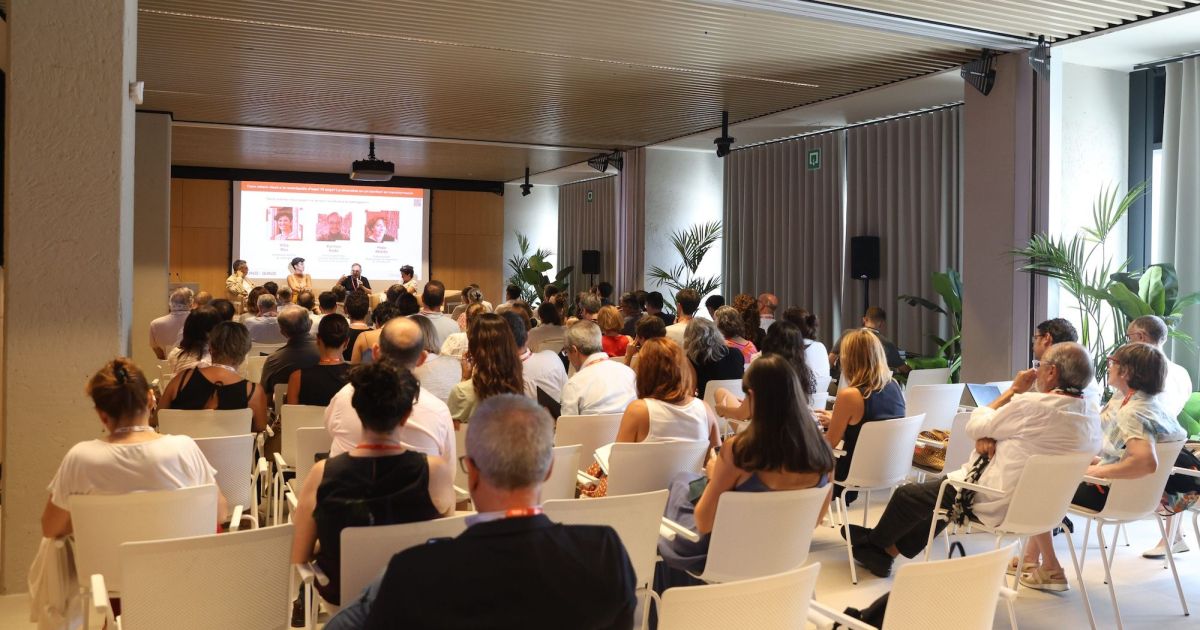
The AMB's 15th anniversary is celebrated coinciding with another anniversary: the 50th anniversary of the Metropolitan General Plan (PGM), as highlighted by journalist Jofre Llombart, host of the event. But the half-century of planning that has shaped today's metropolitan Barcelona goes beyond being a symbolic commemoration, as the AMB is working to update the Metropolitan Urban Master Plan (PDUM), the roadmap that will define the design and territorial model for the future of the metropolitan area.
The PDUM is being conceived as a flexible framework that allows adaptation to social and economic reality, which always advances more quickly than administrative planning. This double speed was also experienced with the constitution of the AMB itself: "Mayors dedicated many efforts not to building the AMB, but to reversing situations that had arisen from not having a metropolitan area before, such as cities without planning and endogenous perspectives," highlighted the mayor of Sant Joan Despí and vice-president of the Water Cycle and Metropolitan Policy Analysis of the AMB, Belén García.
Now, under the metropolitan umbrella, that endogenous perspective looks towards its surroundings with a common strategy and, according to García, it must do so by pointing in three directions: balanced and sustainable development, social cohesion, and economic development: "We must be capable of developing these three axes in balance." Now, 15 more years open up to advance in this direction, with a new PDUM in which the challenge is no longer to build the institution, but to project a metropolis capable of adapting to an increasingly changing future.
Add The New Barcelona Post as your preferred Google source for free
Stay informed with the latest news.