General Coordinator of the Barcelona Metropolitan Strategic Plan (PEMB)
april 27, 2026
Barcelona and Madrid. Madrid and Barcelona. Two great cities that we usually relate in terms of rivalry and about which, above all, we tend to highlight their differences, whether tangible or symbolic.But beyond this competitive view, there is a very rich ground for mutual learning, a space to reflect on how cities face similar challenges and how they can learn from each other.
Thus, at a time when the prominence of cities in the face of future challenges is maximum, it is worth highlighting that, beyond the clichés, both metropolises share fundamental questions: how to manage urban expansion without losing social cohesion, how to lead economically without concentrating power at a single scale, or how to combine international projection and quality of life for those who live in them. These are issues that cross Barcelona and Madrid, each with its own context and strategy.
The Barcelona Metropolitan Strategic Plan, with The New Barcelona Post as a collaborating media, wants to dedicate this 2026, in which the Catalan capital stands as World Capital of Architecture, to promote this constructive dialogue between both cities, with the help of various institutions and from diverse perspectives. A series of dialogues that began last March 20 around the book Barcellona/Madrid: un dialogo critico tra due città (by Oriol Nel·lo and Agustín Hernández Aja), which allowed reviewing a wide range of topics that are the basis for the upcoming sessions. These will be the topics that will structure the debates and, in turn, highlight the shared challenges and points of convergence between both cities.
Urban planning
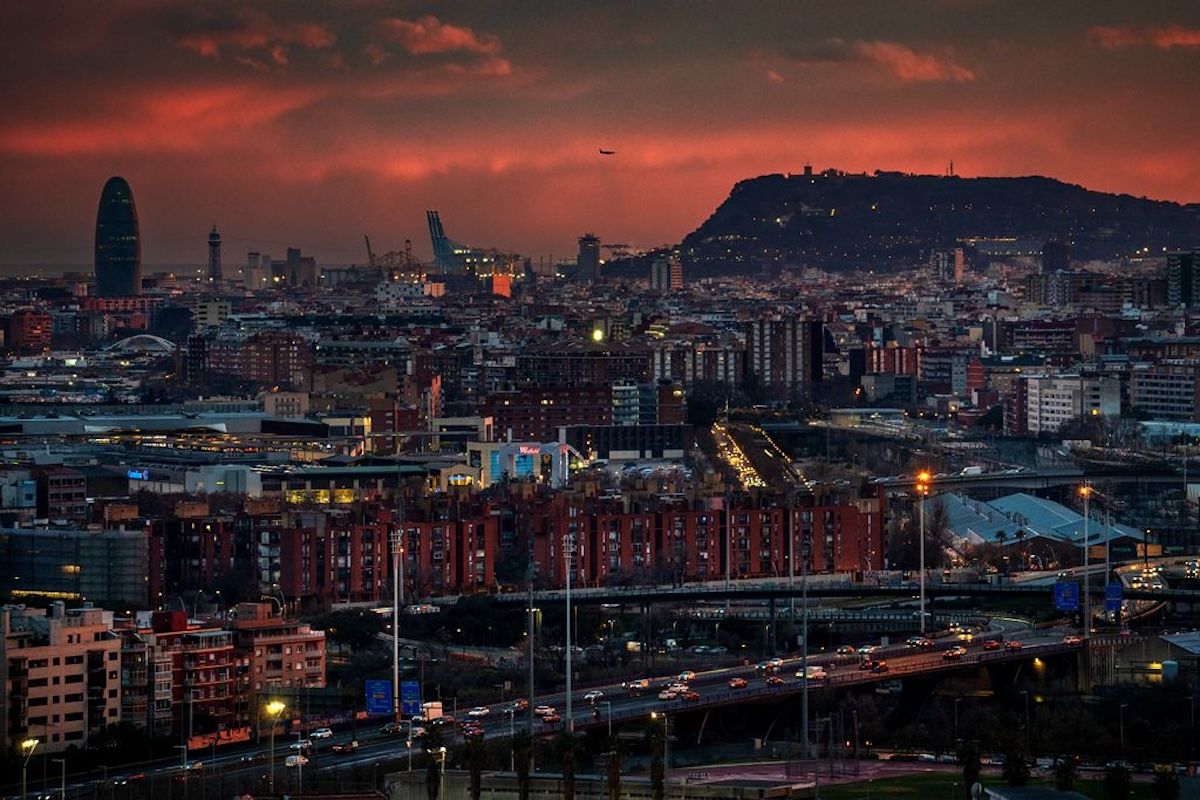
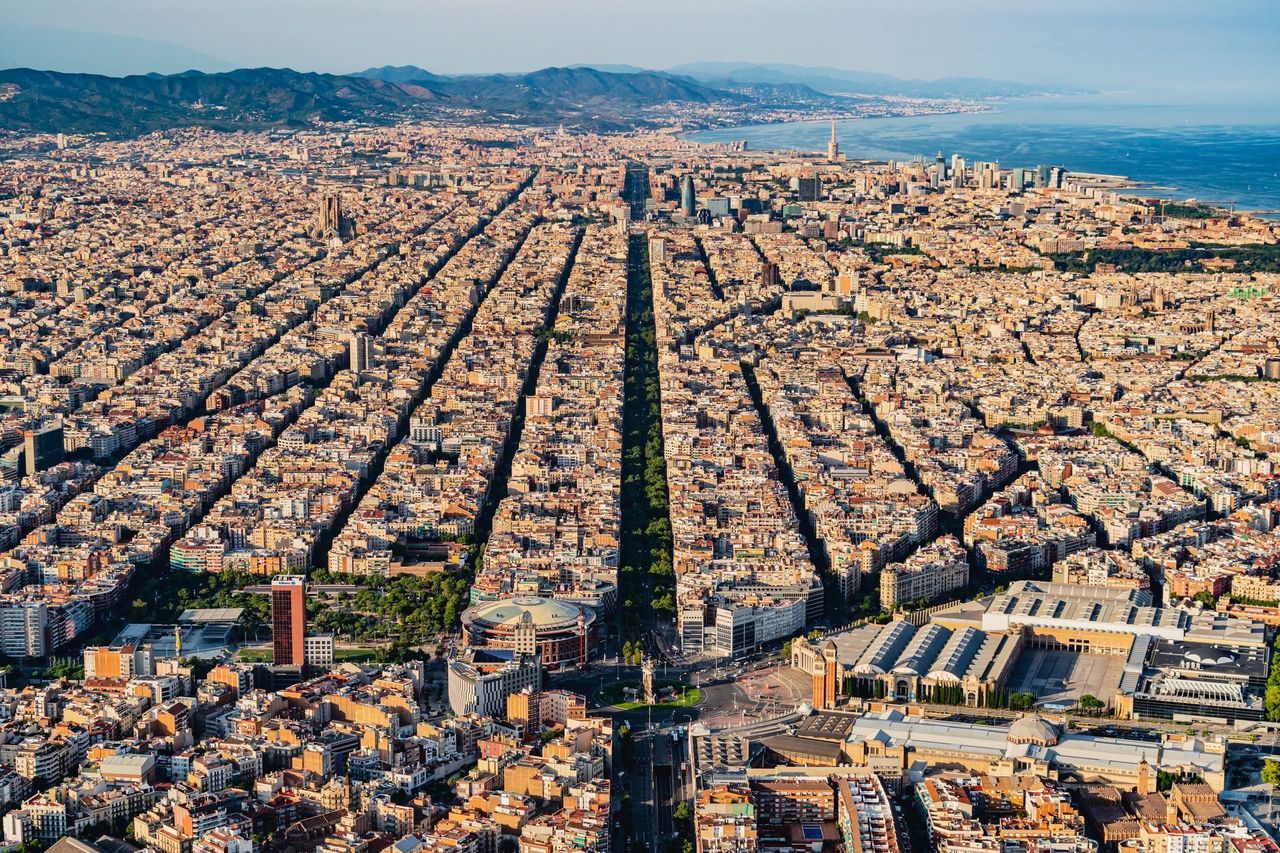
A key aspect in any comparison between Barcelona and Madrid has to do with urban scale. The municipality of Madrid gathers about 3.3 million inhabitants in 600 km². These figures are equivalent to those of the entire Barcelona Metropolitan Area (AMB), formed by 36 municipalities. In terms of urban planning, these are precisely the two main reference scales: in the Barcelona area, with the Metropolitan General Plan of 1976 (which covers, however, 27 of the 36 municipalities), and in Madrid, with the General Urban Planning Plan of 1997.
Both instruments have been modified on numerous occasions —thousands in the case of the Barcelona instrument throughout its 50 years of validity— and both are currently in the process of renovation: in Barcelona, with the long journey of the Metropolitan Urban Master Plan (now for all 36 municipalities), and in Madrid, with the recent project Sueña Madrid. It should be noted that there have already been several approaches between the technical teams of both processes to share knowledge and tools.
To continue with the similarities, the respective autonomous governments are also making moves in urban planning. The Generalitat has just begun the revision of the General Territorial Plan of Catalonia and must do so in parallel with the Metropolitan Territorial Plan, while the Community of Madrid wants to take advantage of the project launched in the capital to develop a new planning framework through the Law for the Promotion and Balanced Development of the Region (LIDER).
An area, therefore, that of adapting urban planning tools to the 21st century, in which there is much to learn together.
Urban growth and regeneration
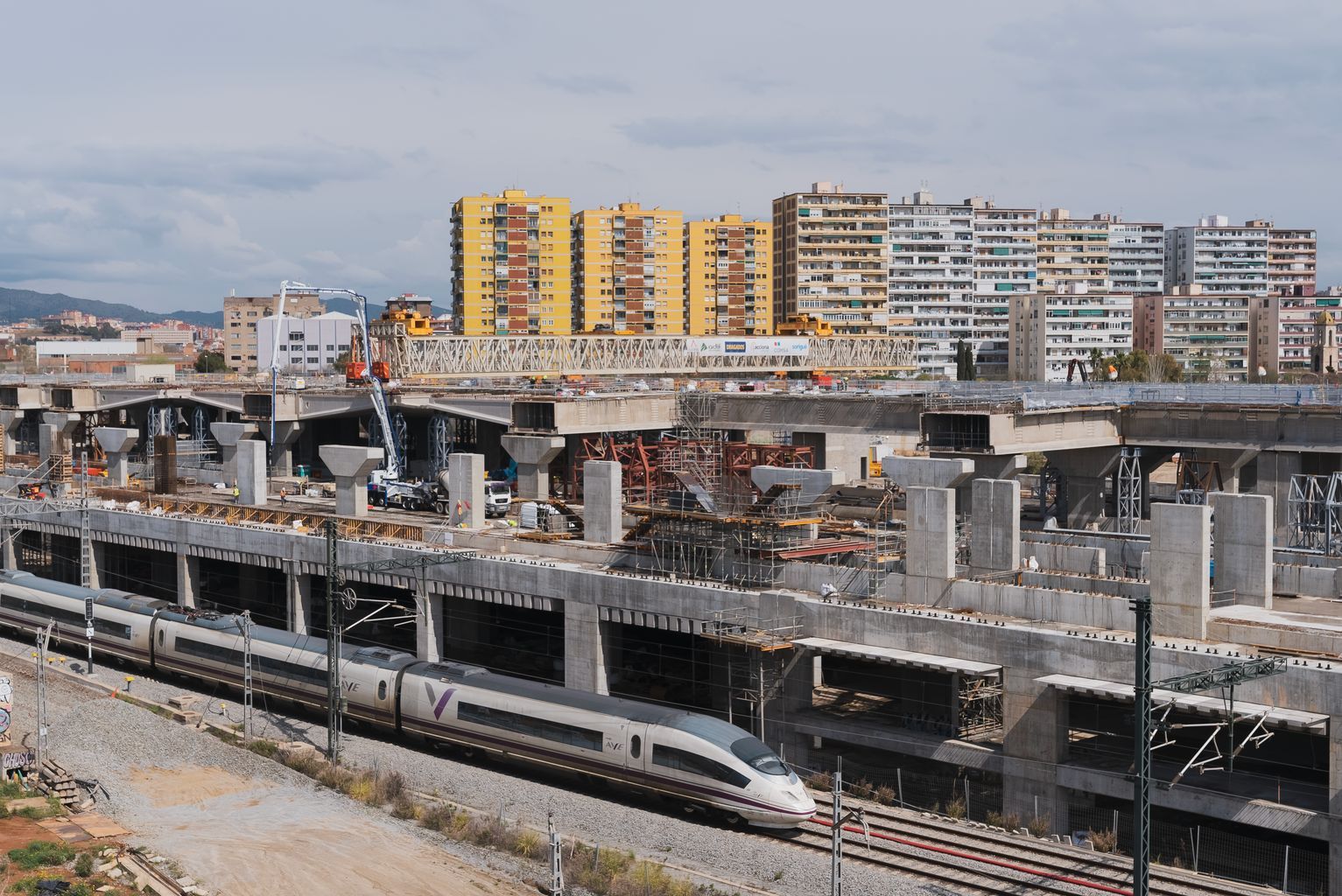
This mutual learning can extend to the development of major future urban operations. To name only the most emblematic, in Barcelona we find the area around the La Sagrera station, Porta Diagonal-Campus Clínic or the urban redevelopment around the Tres Chimeneas del Besòs. Madrid, with much more available land, has two large operations of very different nature: Madrid Nuevo Norte (Operación Chamartín) or Casa 47 (Operación Campamento), each with more than 10,000 homes and millions of square meters destined for economic activity.
In this area, all cities in the world still have much to learn. But in the case at hand, it is evident that the clearest difference between Barcelona and Madrid is the existence of a formal metropolitan institution in the former. And, although it may seem so from here, it is not true that the Community of Madrid acts as the equivalent of our AMB. And, if not, ask the municipalities south of the capital.
In this sense, to look for analogies in terms of governance, we must refer again to different scales. For Barcelona, fifteen years after the launch of the AMB, the challenges now lie in the relationship between it and the rest of the metropolitan municipalities (what we call in the PEMB "the city of five million"). In Madrid, meanwhile, they must find how to compensate for the macrocephaly of the central city by establishing better coordination formulas with the surrounding municipalities. In both cases, however, it is difficult to imagine new metropolitan administrations that cover 70% or 80% of the respective regions.
In the field of mobility, key for the articulation of metropolises, the differences in governance are more nuanced. Barcelona has metropolitan instruments such as the AMB and the Metropolitan Transport Authority, which coordinate public transport fares, planning, and financing. In Madrid, the Regional Transport Consortium of Madrid, perhaps its only truly metropolitan body in its functions, plays a similar role in fare and network integration, although still under the umbrella of the autonomous community.
The absence of a state policy on metropolitan matters is a handicap that, even for different reasons, limits the possibilities of adequate urban development for new times not only in our protagonists, but in all major Spanish cities. Making a common front in this regard would be an exercise in highly convenient responsible leadership.
Economic leadership and influence over the territory
Barcelona and Madrid have consolidated in recent years dynamic urban economies, based on advanced services, business activity, innovation, and talent attraction. Both cities seek to attract startups, technology centers, and international investment, particularly corporate headquarters. This has reinforced a strong global projection. Barcelona has projected an image linked to urban innovation and quality of life. Madrid, for its part, reinforces its centrality as a business hub and connection between Europe and Latin America. Two models that can be complementary and that drive the development of the entire State.
"The most interesting aspect of the dialogue between Barcelona and Madrid is not so much the comparison between models, but rather the ability to identify shared challenges and imagine useful responses for the entire urban system"
But the debate is no longer so much about whether they grow, but what kind of growth they are building. In this sense, the same question arises in both cities: how to ensure that economic dynamism translates into quality employment, balanced territorial opportunities, and a resilient productive structure? And, at the same time, how can dynamics be generated that benefit the entire territory, balancing concentration and distribution of opportunities throughout the metropolis?
Tourism is perhaps the area where this tension becomes most visible. Both Barcelona and Madrid benefit from the international projection and economic impact of the sector, but they also face its externalities: pressure on housing, saturation of public space, and tensions with the daily life of neighborhoods. In Barcelona, this debate is especially intense, with growing citizen concern about the impact of tourist apartments and touristification.
Here, the underlying question is not whether tourism is positive or negative, but how to manage it so that it forms part of a sustainable economic model compatible with urban life.
A shared look at the future
However, perhaps the most important challenge of all is how to prepare for the future, given that Barcelona and Madrid share structural trends that will mark the coming decades.
The first is the aging of the population. The increase in life expectancy and the transformation of family structures force us to rethink housing, mobility, care, and public services. This is an especially metropolitan challenge, because it affects the central city and the rest of the territory differently.
The second is the impact of migrations. Both cities are major poles of attraction for international population, reaching historical highs. This presents enormous opportunities in terms of social and economic dynamism, but also requires strengthening integration policies, access to housing, and territorial cohesion.
The third is, without a doubt, climate change. Cities concentrate a good part of emissions, but they are also the spaces where the main solutions are played out: energy rehabilitation, resilient public space, sustainable mobility, and adaptation to extreme heat episodes. Barcelona has placed this challenge at the center of its international and urban agenda. Madrid faces similar challenges, especially in relation to heat waves and urban green infrastructure.
Ultimately, this is what makes the dialogue between Barcelona and Madrid especially interesting: not so much the comparison between models, but the ability to identify shared challenges and imagine useful responses for the entire urban system. It is from this perspective that the series of debates that will take place throughout 2026 makes sense: not as a succession of seminars, but as a space to think, in a metropolitan key, about the big issues that will define the future of our cities.
Add The New Barcelona Post as your preferred Google source for free