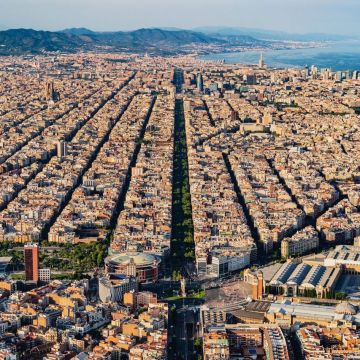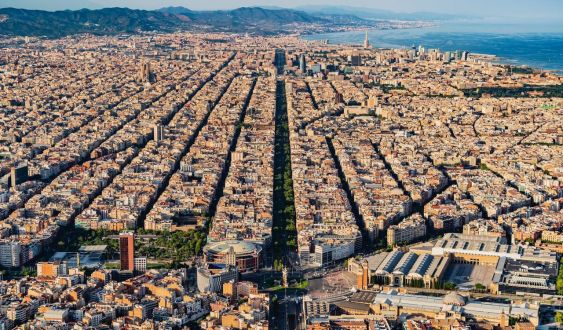
Barcelona has just left behind a relentless month, and with a lot of celebration. In a few weeks, it has hosted the Primavera Sound, the Sónar, the Pope Leo XIV's visit, more than 10,000 architects at the World Congress of Architects and, now, the Grand Départ of the Tour de France. For days, the city has experienced a constant flow of visitors, professionals, fans, and tourists, attracted by the major events that have erupted in the city. But beyond the revelry and merrymaking, how many people are actually in Barcelona on any given day?
Officially, Barcelona has 1,729,963 inhabitants. This is the registered population as of January 1, 2026, the second highest figure in the last forty years. But this snapshot only tells part of the city's story. Barcelona is a city that is lived in every day by many more people than those who sleep in it.
For work and study reasons alone, the city registers more than 500,000 daily inbound commutes. And to this daily mobility must be added visitors: Barcelona receives nearly 16 million tourists a year, equivalent to an average of about 150,000 daily visitors. Of these, cruise passengers represent only 2.5% of the total. Oh, and each of these tourists spends an average of 127 euros daily, distributed in gastronomy (43.6%), shopping (24.5%), and cultural activities (18%).
It's as if, every morning, an entire city the size of Badalona were added to the official population of the city
These flows mean that, on any given weekday, Barcelona functions as a city that exceeds 1.9 million people, including residents, workers, students, and visitors. It's as if, every morning, an entire city the size of Badalona were added to the official population of the city.
However, these 1.9 million people do not necessarily have to be all at once. In fact, many also live in the city but work in another municipality in the metropolitan area. In fact, according to the Institut Metròpoli, almost half of the inhabitants of the metropolitan area (49.2%) work in a municipality different from their residence, while four out of ten students also travel outside their municipality to study. Even one in three people consumes cultural offerings outside their place of residence.

The origins of today's Barcelonans
Of the almost 1.73 million inhabitants, 771,496 were born in the city of Barcelona itself. The rest have arrived throughout their lives: 116,800 come from the rest of Catalonia, 214,212 from the rest of Spain, 84,439 from other European countries, and 542,845 were born in the rest of the world.
Put another way: almost a third of Barcelona residents were born outside of Spain, a proportion that explains a good part of the city's international character, where 181 different nationalities coexist. In fact, for years now, the main driver of Barcelona's demographic growth has not been births, but the arrival of new residents.
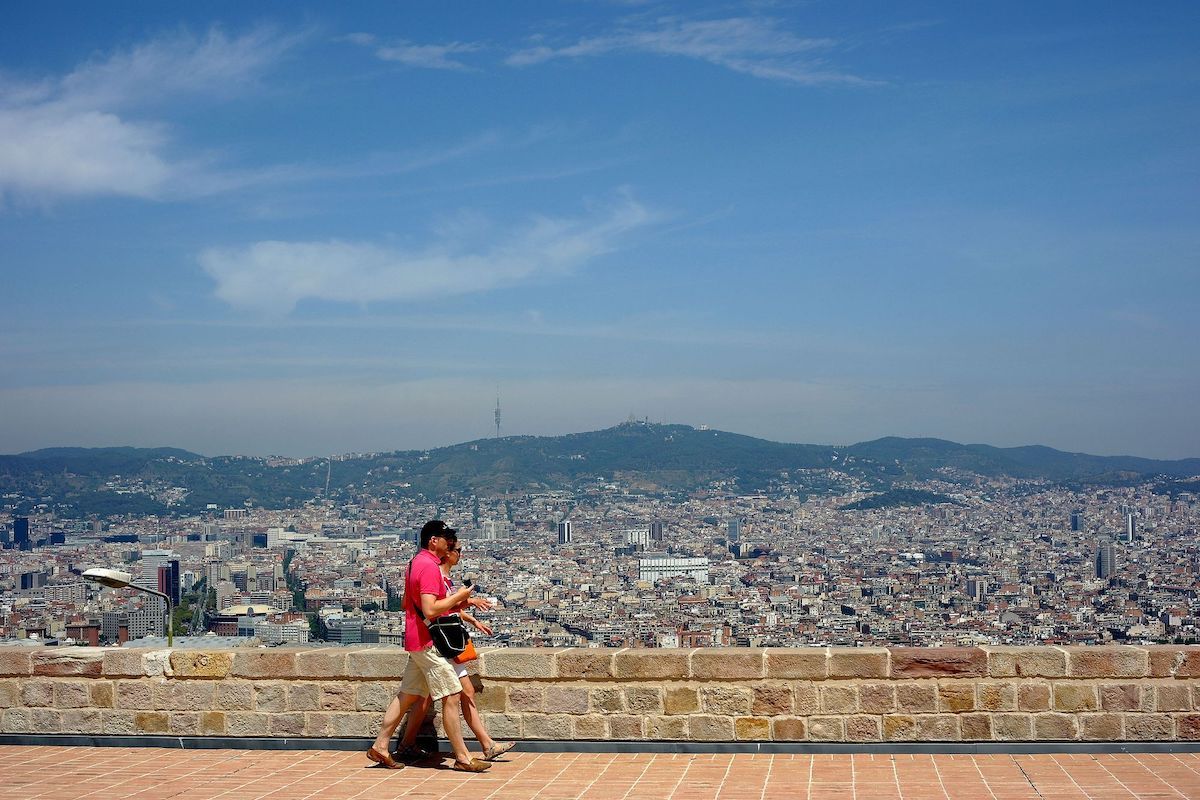
The demographic data for 2025 confirm this. Barcelona registered a negative natural balance of 3,549 people, as deaths once again exceeded births. In fact, leaving aside 1939, marked by the end of the Civil War, the city had not recorded so few births since 1900.
Despite this natural decline, the population practically remains stable thanks to migratory movement. During 2025, Barcelona gained 11,383 inhabitants due to the arrival of new residents, thus compensating for the loss derived from the balance between births and deaths. This is a trend that has been defining the city's demographic evolution for years.

Ins and outs of a great metropolis
Barcelona is a city of 1.7 million inhabitants. But every day it functions as a much larger metropolis.
One only has to look at one last figure: on a working day, more than 1.3 million vehicles enter and leave Barcelona through its main access points. To this must be added the hundreds of thousands of daily commutes by metro, Rodalies, Ferrocarriles, tram, bus, or bicycle.
But it's one thing to know how many people live in Barcelona every day. And another, very different, is to understand how these people move. And that, without a doubt, is material for another Barcelona in figures. Another Monday.
Add The New Barcelona Post as your preferred Google source for free
Stay informed with the latest news.