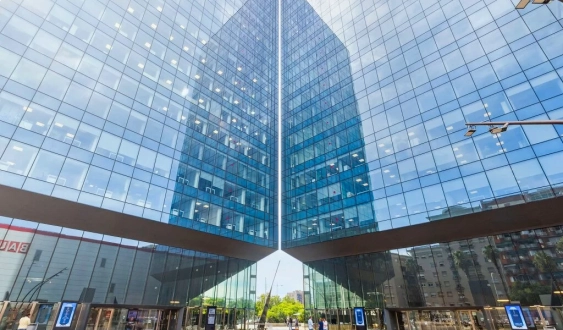
"Covid-19 and the rise of teleworking will end Barcelona's office market." "The office crisis empties 22@." Barcelona's offices have survived all kinds of prophecies in recent years. First came those who warned that remote work would make large corporate spaces unnecessary. Then, those who were scandalized when, finally, the city began to have large volumes of available square meters after years of lack of supply.
But neither the pandemic, nor teleworking, nor hybrid models have completely stopped the construction of new workspaces in Barcelona and its metropolitan area. Nor have they stopped the absorption of the new available supply.
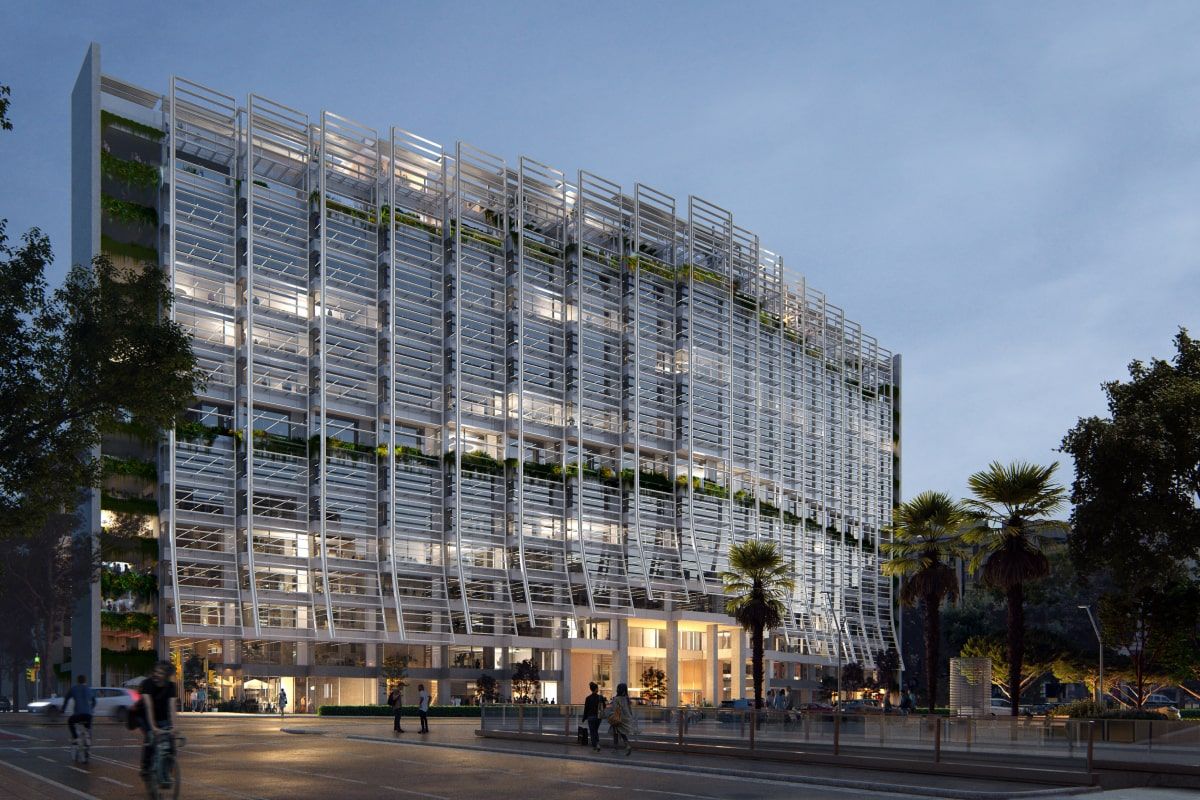
And the latest operation by Stoneweg and Nova Providence is a demonstration of this. Both firms announced last week an investment of more than 50 million euros to promote a new 18,500 square meter office complex in 22@. This is Stoneweg's first investment in Barcelona's office market since 2016, when it developed the Luxa project, current headquarters of Amazon and the WeWork coworking space. The operation, which is interpreted as a sign of a change of cycle for the technology district, adds 18,500 square meters to an office park that already exceeds six million square meters.
Specifically, and according to the Barcelona Offices report for the second half of 2025, prepared by the Barcelona Investment Office with the collaboration of Barcelona Regional, the city has an office park of 6,065,033 square meters. Barcelona has so many offices that, if they were spread over the territory on a single floor, they would occupy an area equivalent to almost 80% of the Eixample.
And if we add the metropolitan area and the main business hubs on the periphery —such as Sant Cugat, l'Hospitalet or Cornellà—, the figure rises to 8,427,115 square meters, according to the latest report by JLL.
"The availability rate of the Barcelona office market is between 9% and 12%"
And of all this surface, how much is available and where is it located? Although estimates vary slightly among consultancies, most place the availability rate of the Barcelona office market between 9% and 12%. An indicator that, before the pandemic, had compressed to 6% and began an upward trend from 2020. This trend seems to have peaked between 2024 and 2025, a fact that fuels the hypothesis of a new cycle change.
To put the data in context, availability stands at around 9% in Madrid, 13.6% in Paris, and 8.5% in London.
However, this availability has a marked territorial distribution. According to the latest report by Forcadell, 22@ and the Fira and Plaça Europa business area concentrate 52% of all available space, with a clear prominence of the technological district, which represents close to 40% of the total. Meanwhile, the periphery accounts for approximately 25% of availability, while the city center maintains close to 20%. The central business district —Barcelona's most exclusive market— represents only 4% of the total available.
Regarding the concentration of offices in 22@, CBRE often publishes an interesting photograph that reflects one of the major imbalances of the technological district between workspaces and housing: while the district concentrates 28% of Barcelona's office stock, only 6% of the city's population resides there.
Hiring soars in 22@
Hiring data also point to a solid recovery. During 2025, operations were formalized for an area of 321,000 square meters, 6.44% more than in 2024 and the second best figure recorded since 2020. By areas, 22@ concentrated 44% of all hiring, followed by the financial district and the city center, which together accounted for 38%.
The role of 22@ is especially relevant both in the generation of new spaces and in their absorption. According to the report Transparency: Distrito 22@ Barcelona 2025, prepared by Cushman & Wakefield and presented by 22@Network Barcelona, hiring in the district during 2025 doubled that of 2024 and tripled that of 2023.
The study attributes this evolution to a demand increasingly oriented towards quality, flexible, and ready-to-occupy spaces. 98% of the contracted square meters correspond to Class A and B+ buildings, while plug & play spaces already represent 45% of operations. Added to this is the growing weight of flexible and coworking spaces, which now represent 8% of the stock.
During the presentation of the Cushman report, Javier Bernades, president of the Urban Planning and Territory Commission of 22@Network Barcelona and Head of Offices EMEA at Cushman & Wakefield, stated that "22@ once again demonstrates its central role in the Barcelona office market, consolidating itself as the main focus of demand attraction, especially for companies that prioritize high-quality spaces."
An attractive market with upward forecasts
Forecasts for 2026 are optimistic. BNP Paribas Real Estate predicts an increase in contracting close to 5% and places 22@ as the area with the highest absorption capacity in the Barcelona market.
And while it is true that it is still too early to confirm this trend because complete data for the second quarter are not yet known, the first quarter of the year began with a great exceptionality: with 74,000 square meters contracted, 37% more than a year earlier, according to Forcadell.
In addition, these good contracting figures have been joined by two major purchase and sale operations that have increased optimism and attractiveness: the first was the acquisition, by InmoCaixa, of the Estel building, in the center of Barcelona. The operation, valued at 385 million euros, became the most relevant transaction in the history of the city's office market for a single asset. In total, 52,000 square meters changed hands, from Bain Capital and FREO Group to CriteriaCaixa's real estate subsidiary. The second arrived last week, when Grupo Icyesa announced the purchase of the RBA office tower, in 22@, for 100 million euros. Designed by Oriol Bohigas, the building totals nearly 20,000 square meters distributed over 17 floors.

Both operations reinforce the idea of a resilient, attractive office market with solid demand and an upward horizon that accompanies the idea that offices are not just buildings, but the physical translation of the city's economic activity. In fact, there is a particularly interesting correlation between the evolution of GDP and the contracting of square meters of offices, but this is material for another article in Barcelona in figures, a new series that we are launching this Monday and that will accompany us, from now on, every week.
Add The New Barcelona Post as your preferred Google source for free
Stay informed with the latest news.