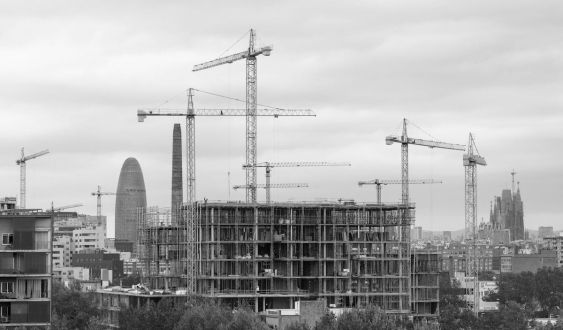
For those of us who live in Barcelona and love architecture, 2026 is our year. Barcelona is the World Capital of Architecture, so these days, our city will be buzzing with debates and conferences on urban landscape, housing, public space, heritage, ecology, sociology, philosophy, and many other aspects related to the world of architecture. The reflections that experts will carry out these days will undoubtedly be valuable, inasmuch as they will enable the collective of professionals around architecture to strengthen and elevate itself. But the success of the Capital City will only happen if we manage to bring architecture closer to society, so that more and more people enjoy architecture and understand the importance it has in our lives.
When we think of Barcelona's architecture, the beauty of modernism immediately comes to mind, as well as some iconic buildings, such as Mies van der Rohe's German Pavilion. However, few would include the buildings of the 22@ district in an architectural route, despite their ample merits to be part of the architectural imaginary of our city.
The 22@ district involves the transformation of two hundred hectares of obsolete industrial land into a new area that preserves the productive character of what was once the epicenter of the industrial revolution in the Iberian Peninsula. Since then, 22@ has become one of the first European innovation districts, with more than 12,150 companies, 2,000 startups, 3 technology centers, and 20 academic centers. More than an urban renewal project, 22@ defines a new city model, based on the generation and attraction of talent, as well as the creation of knowledge-intensive jobs.
The academic offer of 22@ includes public, private, and mixed centers. Three of the four public universities in Barcelona have a double campus in 22@: Pompeu Fabra University, with faculties in Ca l'Aranyó and its business school Barcelona School of Economics; the Polytechnic University of Catalonia, with the Tech Talent Center and Euncet Business School; and finally the University of Barcelona, with the Institute for Continuous Training (IL3) and, very soon, also ENTI (School of New Interactive Technologies). UVic has the BAU art and design school, and the Open University of Catalonia occupies the large Can Jaumandreu factory. Additionally, the 22@ district has the first campus in Europe of the University of Hong Kong (HKU) and has some European capital initiatives underway.ç
Regarding business representation, 22@ hosts the innovation and development centers of Amazon, Microsoft, Telefónica, Meta, Caixabank, Autodesk, as well as the headquarters of Mediapro, Booking, Cisco Systems, Indra or Linkedin, among many others. The predominant economic hubs are those of the technology, audiovisual and media, design, energy, biomedicine, and video game industries, among others.

It is rarely realized that this concentration of companies and university campuses is possible thanks to adequate real estate infrastructure ---of eminently private, but also public capital--- which has been demanding in its architectural quality, turning the 22@ real estate park into one of the greatest assets of 21st century Barcelona, thanks to the rehabilitation of its historical heritage, as well as the new development of innovative, sustainable and, at times, avant-garde buildings.
Regarding historical buildings, the rehabilitation of old textile factories stands out, such as Ca l'Aranyó, converted into the Communication Campus of Pompeu Fabra University (UPF); Can Framis, currently home to the Museum of Contemporary Painting of the Vila Casas Foundation; Can Saladrigas, converted into a cultural space and library or La Escocesa, converted into an artistic creation space.
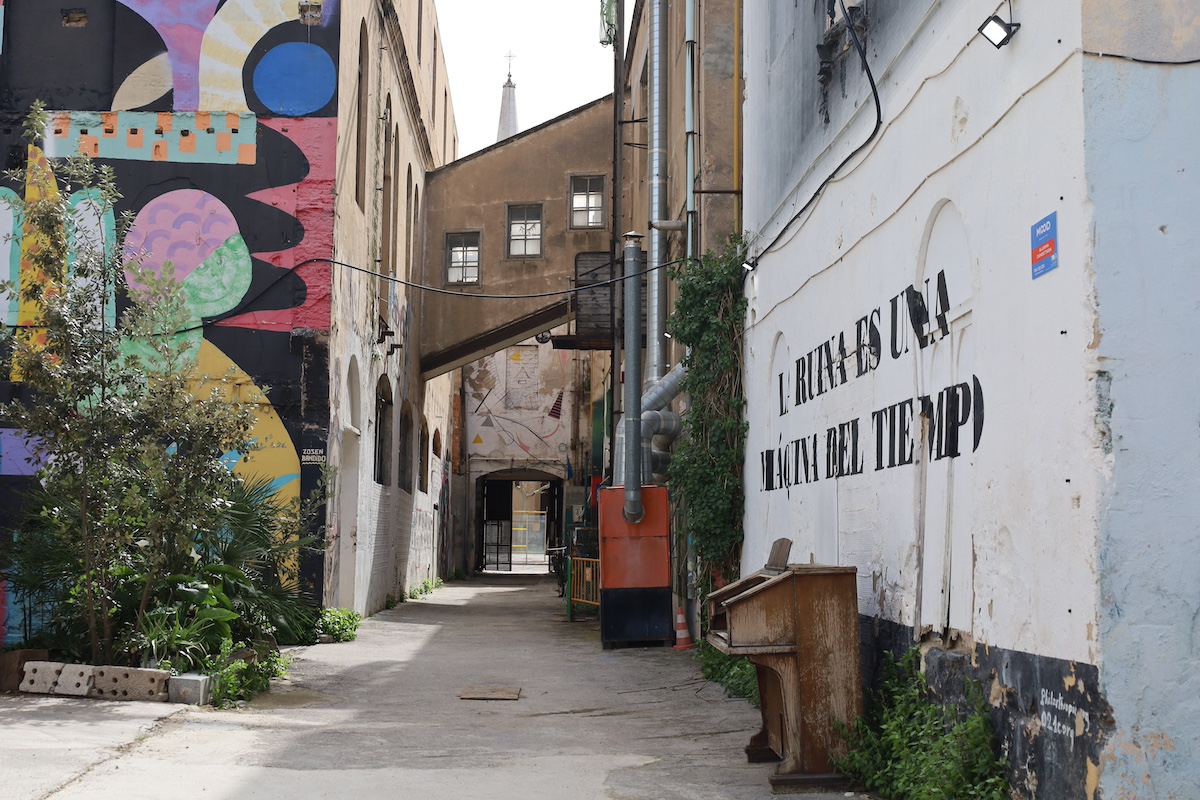
As for the newly constructed buildings in 22@, the vast majority have the most demanding environmental certifications, being built with processes and materials that favor energy saving and reduce environmental impact, in addition to defending the value of the beauty of their spaces, as a means to provide quality of life to their users. It is fair to recognize that the developers and investors who have acted in the 22@ district have not only attended to profitability criteria, but have had a will to generate a positive impact on the environment, adequately reading the historical context and offering a real estate infrastructure that dialogues successfully with the surroundings.
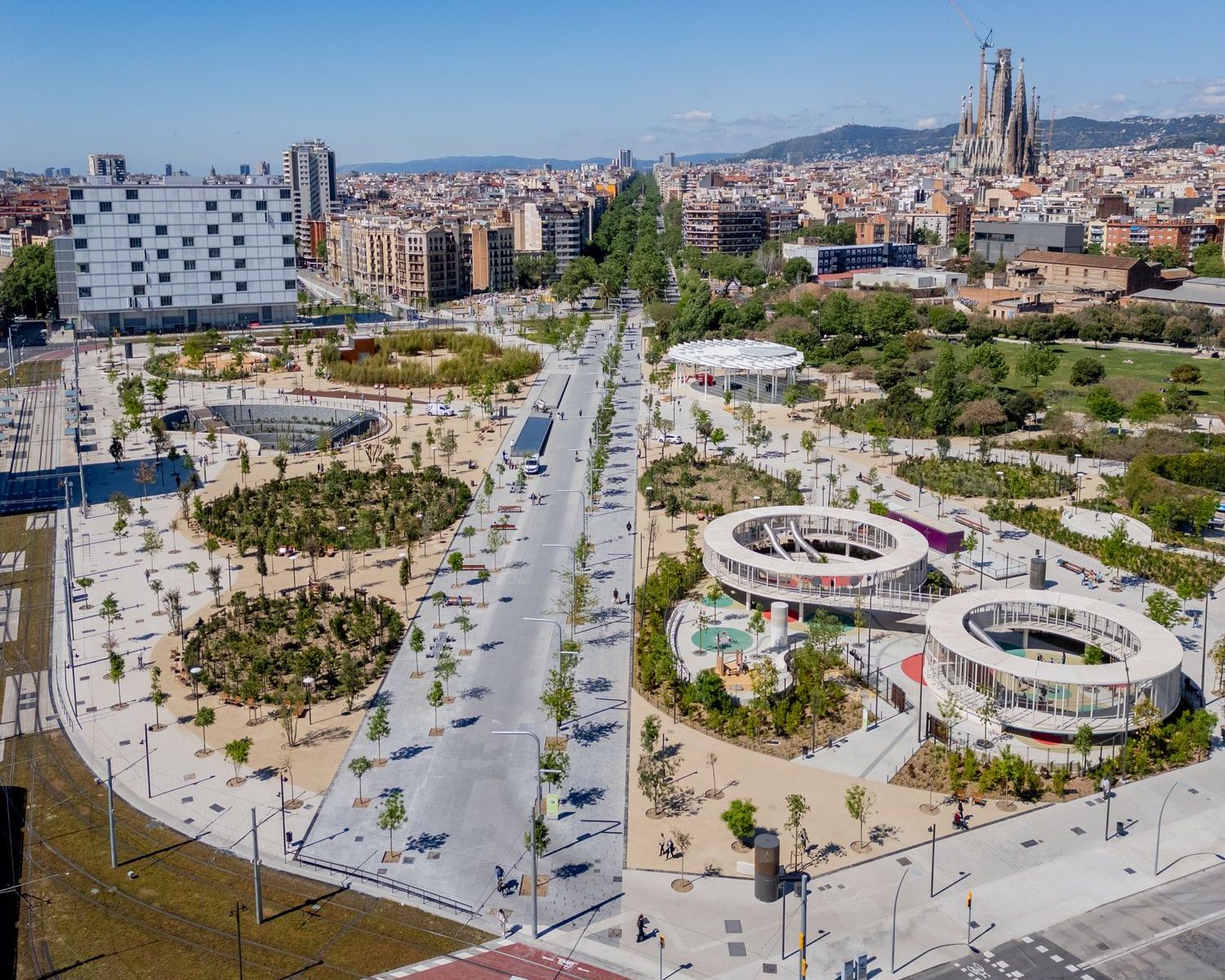
Additionally, the recent remodeling of Plaça de les Glòries, located at the intersection of Barcelona's three main avenues, involves the elimination of a road junction that dramatically separated Poblenou from the rest of the city. The removal of this urban scar has allowed the renaturalization of a space that is already one of the most important green areas of the city, generating a space for meeting and social interaction. This is a clear case in which the improvement of public space has impacted the quality of life of citizens, contributing to social cohesion and greater safety of spaces.
Barcelona knows how to take advantage of the opportunities that arise like few cities in the world. Hopefully, our World Capital of Architecture will contribute to improving the lives of citizens through this discipline, in addition to granting 22@ the deserved seal of very high-quality architecture.
Add The New Barcelona Post as your preferred Google source for free
Stay informed with the latest news.