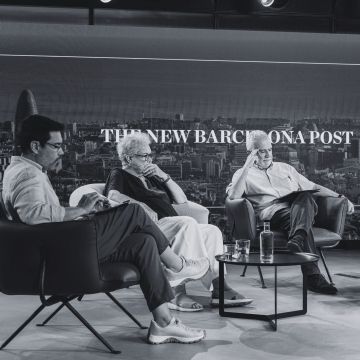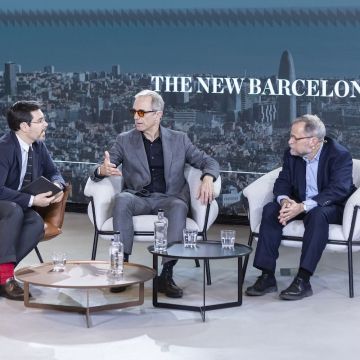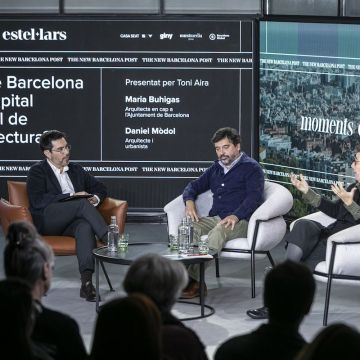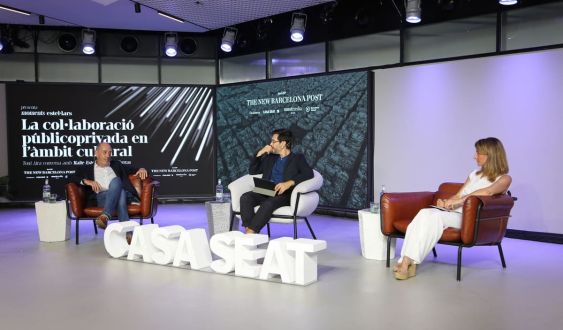
We are so human! George Stephanopoulos, one of Bill Clinton's great advisors in the White House, exclaimed it in the title of his biography. And yes, although sometimes we seem like Martians, we are Earthlings. Why then buy into the idea that the world of culture and the world of business belong to different planets and can never understand each other? This week, at Casa Seat in Barcelona, and convened by The New Barcelona Post, we held a meeting with two prominent members of the resistance against this defeatist scenario. A luxury of an energizing conversation, with Maite Esteve, director of the Fundació Catalunya Cultura, and Joan Oliveras, president of the Museu Nacional d'Art de Catalunya (MNAC).
Everything that is not nature is culture, said a conseller of the sector in Catalonia. Therefore, we are surrounded by culture, here on Earth, and this reality cannot live oblivious to the economic resources that, as in so many other things in life, make the machine work. Oh, to work, by the way! The great concept of the conversation.
Maite Esteve said (with great modesty) that she doesn't particularly know about culture, but she does have the ability to make things work. Joan Oliveras concluded, in the direction she also pointed: if institutions and the economy work, we will be able to get culture to join in as well. That is the key. A social and institutional context that makes possible, for example, a patronage law comparable to that of countries that most care for culture, and also companies that have the conditions to face the challenge and a chip that knows how to make the transition (or compatibilize) from the culture of patronage to that of sponsorship, now in trend.
Is it true that, in our home, culture and business have traditionally looked askance at each other? It is true. Is it necessary for it to be like this forever, or can we even afford it much longer? No, and we are already late in acting fully in consequence. Modernism, most of the country's museum collections, and the many music and theater festivals that project us to the world are an example of how much public-private collaboration has driven great cultural, business, and national projects. What if we try to put method and cruising speed to it? Perhaps this way we would avoid continuing to lose opportunities and positions, which we would recover, because this country has amply demonstrated that it has the conditions to play in prominent leagues.
Maite and her foundation operate like a Google Translator between these two supposed parallel universes that are culture and business. Just as with the cliché that says men are from Mars and women are from Venus (and it's not true), we shouldn't buy into the idea that we are talking about different planets. Perhaps different continents, but we already have someone who wants and knows how to build a bridge between them.
Joan presides over a Museum that is the best example of how much money, in Catalonia, has also had a vocation to contribute to the common cultural heritage. In the absence of its own State, there has been a consciousness of substitution, he says. And I add: and those who have provided resources, beyond government institutions, to carry out this substitute task for the collective benefit. We do not have royal collections or spoils from conquests in our museums. But we do have funds that were born, in many cases, from the private initiative of a country that, for example, during the Civil War, knew that it had to save lives, but without forgetting that it also had to save everyone's heritage. You can find the proof in the MNAC and other museums. Do not look on Mars or Venus.
https://open.spotify.com/episode/2w4Sg6WExDqHPDlSDvvNDx
Add The New Barcelona Post as your preferred Google source for free
Stay informed with the latest news.