
Everything starts with a seed. A small idea with the capacity to transform society. But not even the most powerful idea can flourish without dedication, water, and optimal external conditions. In the business world, these necessary nutrients for the growth of any idea or seed translate into capital and financing, whether provided by traditional private banking, public banking, or venture capital funds. Only with this wide variety of resources and optimal external conditions can seeds germinate and companies grow, contributing to a Catalan business garden full of success stories.
Currently, Catalonia offers favorable external conditions and a business ecosystem that facilitates companies to germinate and consolidate. "The current economic moment is very positive, with a GDP growth forecast of 2.7%, increasingly lower unemployment rates, and almost 45% of small and medium-sized companies expecting to increase their sales by the end of the year —according to the Pimec Observatory prepared by Pimec—", assessed Emma Montserrat, territorial director of Bankinter in Catalonia during the second session of the Eixample Talks cycle. Organized by The New Barcelona Post and Pimec, the session featured the collaboration of the Generalitat, Bankinter, the Port of Barcelona, the Barcelona Metropolitan Area (AMB), Mustmedia Group, and LLYC.
So much so that in recent years Barcelona has consolidated itself as the fifth hub for startups in the European Union. Even so, Montserrat acknowledged that although economic trends are positive, it is true that the Catalan business fabric still faces a long list of challenges that "prevent companies from taking advantage of this growth to boost themselves." Montserrat lamented this in a debate led by the director of The New Barcelona Post, Elena Busquets, and in which Clara Campàs, director and co-founder of Asabys Partners; and Antoni Vallès, business director of the I'Institut Català de Finances (ICF), also participated.
Challenges such as the low productivity of the Catalan economy —which places Catalonia as one of the regions with the worst productivity indices in all of Europe—, the difficulty in finding and incorporating qualified talent, or even in digitizing, especially in smaller companies. The director of the I'Institut Català de Finances (ICF), Antoni Vallès, has pointed out another alarming challenge: the difficulty for companies to guarantee their generational succession, especially in small and medium-sized enterprises. "It is necessary for companies to grow and take root so that they do not have to sell themselves or leave Catalonia," Vallès warned.
These challenges prevent Catalan companies from acquiring the appropriate dimension to strengthen and prosper. "Larger companies have a greater capacity to consolidate and internationalize, but also to survive and overcome crisis situations," Montserrat noted. "Especially in times of geopolitical uncertainty like the present," added the director and co-founder of Asabys, Clara Campàs.
"The business fabric has had to face crises and instability for so many years, from the 2008 real estate bubble to the pandemic, that it seems that, in a way, it has become resilient to these unfavorable situations," Campàs admitted, despite pointing out that "private investment is not a friend of uncertainty, and instability entails a certain paralysis and slowness when it comes to investing."

Lack of financial culture
In addition to all these challenges, Campàs has also pointed out another challenge for the Catalan business fabric: the lack of financial culture. "In Europe in general, and in Catalonia in particular, there is a lack of financial culture, probably due to a lack of pedagogy, but also of tax incentives.A situation that causes that, currently, the private investor prefers to invest their capital in a property rather than in a company," lamented the co-founder of Asabys Partners. Campàs also stressed that in the European territory the measure of stock market capital is much lower than that of other global regions, such as the United States, but so is the investment of private capital in companies which, although it has increased greatly in recent years, "in terms of absolute value is still much lower than that of other countries."A lack of financial culture and pedagogy that also causes that, mostly, Catalan private investors —or business angels— who end up investing do so in only one or two companies, while the ideal is to invest in several companies, since, in all these operations, there is a high risk. But this lack of financial culture also causes that, on the other hand, Catalan companies are unaware of what options and alternatives exist in the market to finance themselves (such as private equity or venture capital), and end up resorting, in most cases, to traditional private banking.
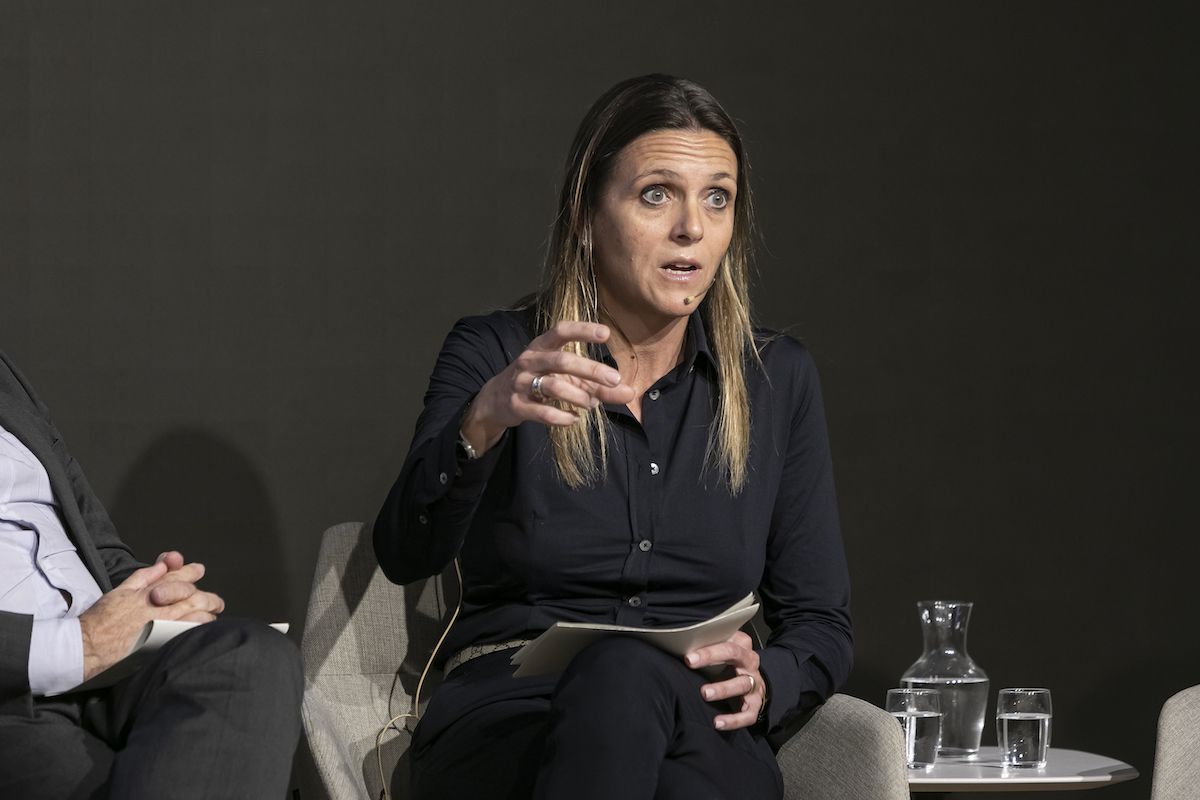
"Companies, and especially the smaller ones, still have a very high dependence on traditional banking, and on very few occasions do they resort to alternative private capital, mainly due to lack of knowledge," said the territorial director of Bankinter in Catalonia and deputy general sub-director of the entity, who has more than two decades of experience in banking.
Beyond resorting to loans or credit lines offered by different banks, companies can also approach venture capital funds, some of which are specialized in specific sectors, such as Asabys Partners, focused on health and life sciences. Or, even, opt for public banking like the ICF, the Catalan public bank that, despite its 40 years of experience, still "is unknown to a large part of companies," as Vallès lamented.
Lack of knowledge also means that companies do not know how to access these financing channels, or even how or what they have to present when applying for capital or investment. To the point that banks encounter companies that, despite having a powerful idea or even a visually attractive proposal, do not present any type of numerical information for the entity's analysts to make a decision. "When a company seeks capital or investment, whether public or private, it is essential that it has a transformative project that adds value to society, in addition to a professionalized team and an ordered financial strategy," summarized the ICF business director.
Collaborate and flourish
Even so, for companies it is not only necessary to know the different financing options that exist —private banking, public banking and venture capital—, but also at what stage or situation it is best to resort to each of them. Thus, it must be taken into account that the money obtained from banks, whether public or private, is granted in the form of a loan and that, therefore, it will have to be repaid, in addition to paying the corresponding interest. For this reason, private banking —or even public banking, which normally has lower interest rates, but also more requirements— is presented as a good option for those"companies that are already quite mature to have a stable cash flow and generate profits,but who need financing for specific operations or certain controlled growth," as Montserrat has defended.
On the other hand, "those companies that are in very initial phases or that have to undertake an ambitious growth process, it will make more sense for them to resort to venture capital," added the territorial director of Bankinter. "Private investment is designed for significant qualitative leaps and disruptive business models," emphasized the co-founder of one of the large Barcelona funds, Asabys Partners. Even so, the entry of investment funds also implies the entry of these experts into the shareholding and boards of directors. A decision, however, that Campàs considers necessary to ensure "the company and its well-being."
Thus, these "two avenues —banking and private capital— represent two different, but complementary, financing alternatives, which are used in different phases of the company according to needs, and, in some cases, even simultaneously, coexisting at the same time," Montserrat summarized. In fact, the idea of collaboration has been present throughout the entire session, which can also be recovered in podcast format on Spotify or in video on Youtube.
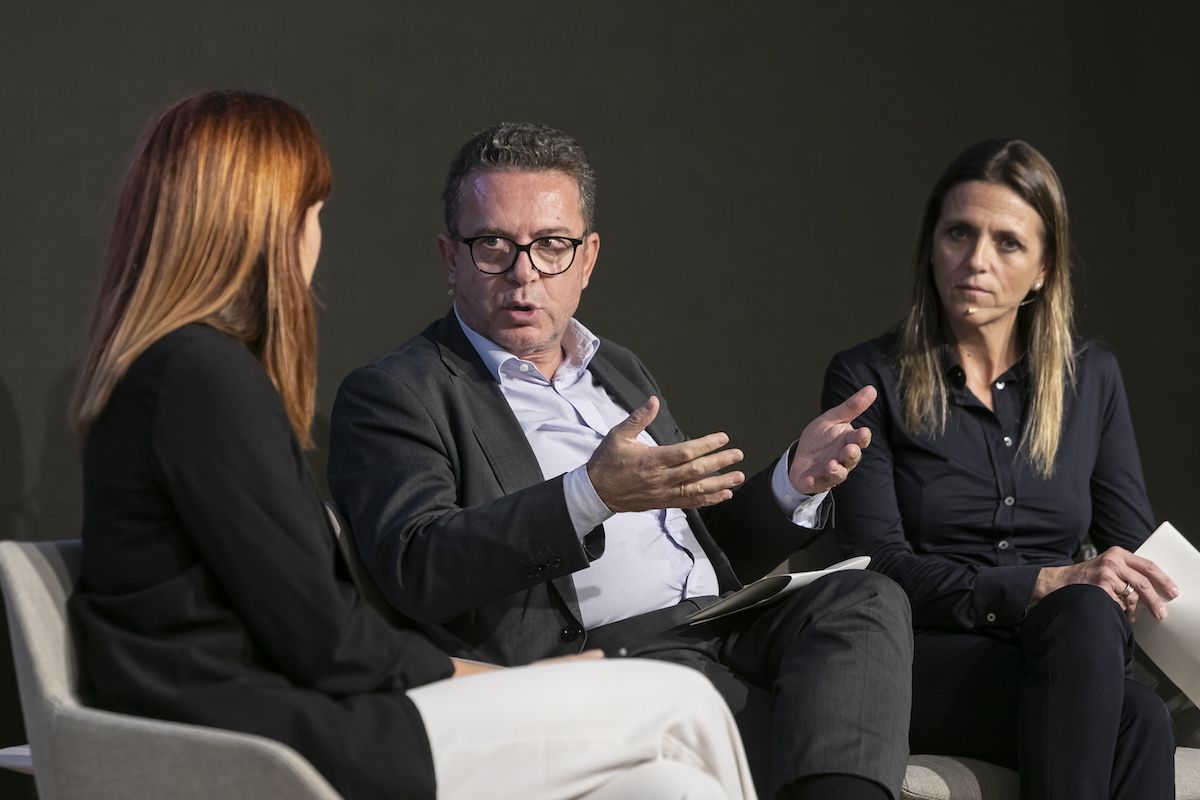
Public-private collaboration thus seems to be the recipe for more companies to be born and consolidate in the Catalan fabric. And, in many cases, it is not only necessary to collaborate but also to complement each other to know how to take advantage of the impulse of private capital, public support, and banking prudence. A collaboration and joint understanding that could be perceived during the debate with the complicit glances between the speakers. Complicity that extends beyond the session and is found in the practical field, since the three agents represented in Eixample Talks usually work together. Thus, for example, Bankinter and the ICF have acted as co-investors in several projects, and the ICF also acts as an investor in Asabys Partners.
Only with this collaboration of all agents—traditional banking, public banking, and venture capital—will business seeds and projects be able to germinate and grow. Thus, if Catalonia wants to move towards a strong business fabric with potential, it is necessary for all sectors to continue watering in a coordinated and, in some cases, even simultaneous manner. With the patience of a gardener and the necessary financial vision for the Catalan business garden to flourish generation after generation. Until it becomes an increasingly populated garden—with small and family businesses but also large unicorns—and diverse.

Add The New Barcelona Post as your preferred Google source for free
Stay informed with the latest news.
