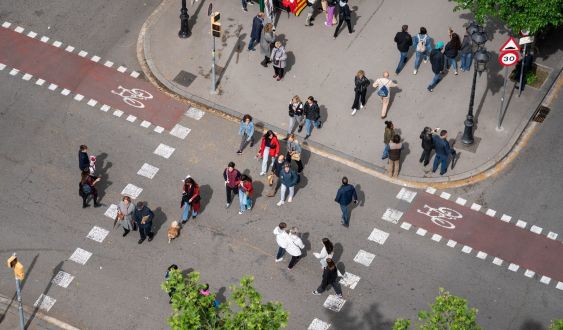
At certain times, the flow of people is so intense that it ceases to be solely a matter of comfort to become a safety problem. The moment a tourist or a group stops complying with the single-file rule in the streets, traffic paralyzes and threatens conflict. I have witnessed some.
Venice has a physical constraint that no tourism policy can modify: extremely narrow streets, bridges, alleys, and an urban structure designed centuries ago for a population very different from the current one. Seventy or eighty thousand people daily —one hundred thousand, in high season—, concentrate practically in the 5.17 square kilometers that make up the historic center of Venice.
When these thousands of people converge simultaneously in this space, walking ceases to be a pleasant experience to become an exercise in patience and, at certain points, of risk.
Seventy or eighty thousand people daily —one hundred thousand, in high season—, concentrate practically in the 5.17 square kilometers.
Paradoxically, the problem is not found within hotels, restaurants, or shops. There, the organization works reasonably well. It is a hybrid city in which two types of public coexist, apparently without conflict. The majority, attracted by the generalized low-cost offer that allows you to eat a good pizza for nine euros, pasta for twelve, or ride a vaporetto; avoid buying water or any drink as it quintuples the normal price: it is better to fill a bottle at public fountains.
And the minority, by no means negligible, drawn by an extraordinary luxury offer of both clothing and accommodation, culture, or gastronomy. The real bottleneck is in the public space. It is the streets that have long since not admitted more capacity.
The consequence is evident: the quality of the tourist experience decreases for contemplating monumentality or entering shops, the two main activities. The visitor spends more time pushing through the crowd than enjoying the city. And the resident ends up feeling that they have lost control over their own living space. And when a Venetian gets angry, with good reason, they burn Troy.
The resident ends up feeling that they have lost control over their own living space.
Something similar is already happening at certain times in Palma. The pressure on urban space is beginning to exceed the city's absorption capacity, as was evidenced in the recent massive demonstration.
Barcelona has not yet reached this point of tourists per square meter. If in Venice it is estimated that the average density in the center reaches 32,000 tourists per square kilometer, in Ciutat Vella it reaches 14,000 tourists per square meter. Las Ramblas or the Gothic Quarter have nothing to do with the surroundings of the Rialto Bridge or St. Mark's Square.
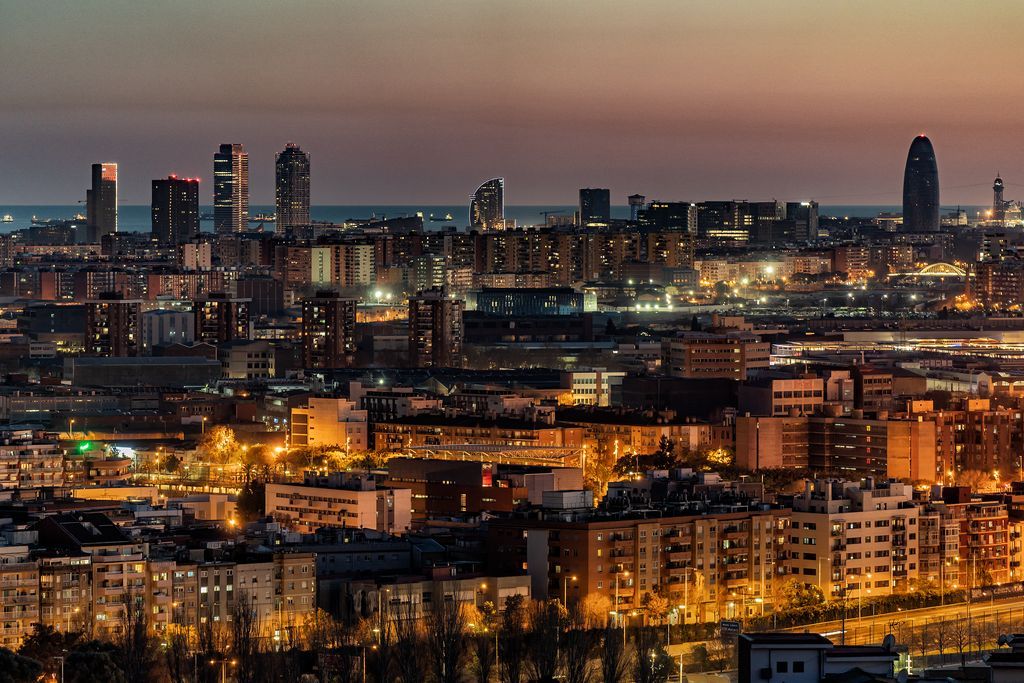
But precisely for this reason, interventions must be accelerated. Tourist dynamics do not change overnight, and in four or five years Barcelona could start experiencing similar problems. That's why, as much as I look forward to them, I fear the moment when the works on Las Ramblas are completed.
The real question is how many people the streets of a city can absorb.
The discussion has long ceased to be whether we want more or fewer tourists. That is a discussion from the last century. The real question is how many people the streets of a city can absorb without deteriorating safety, mobility, coexistence, and the visitor's experience.
The success of a destination is not about breaking a new record of arrivals every year, but about maintaining a balance between economic activity, urban quality, and citizen well-being.
La Sereníssima teaches us that this balance can be broken.
Add The New Barcelona Post as your preferred Google source for free
Stay informed with the latest news.