
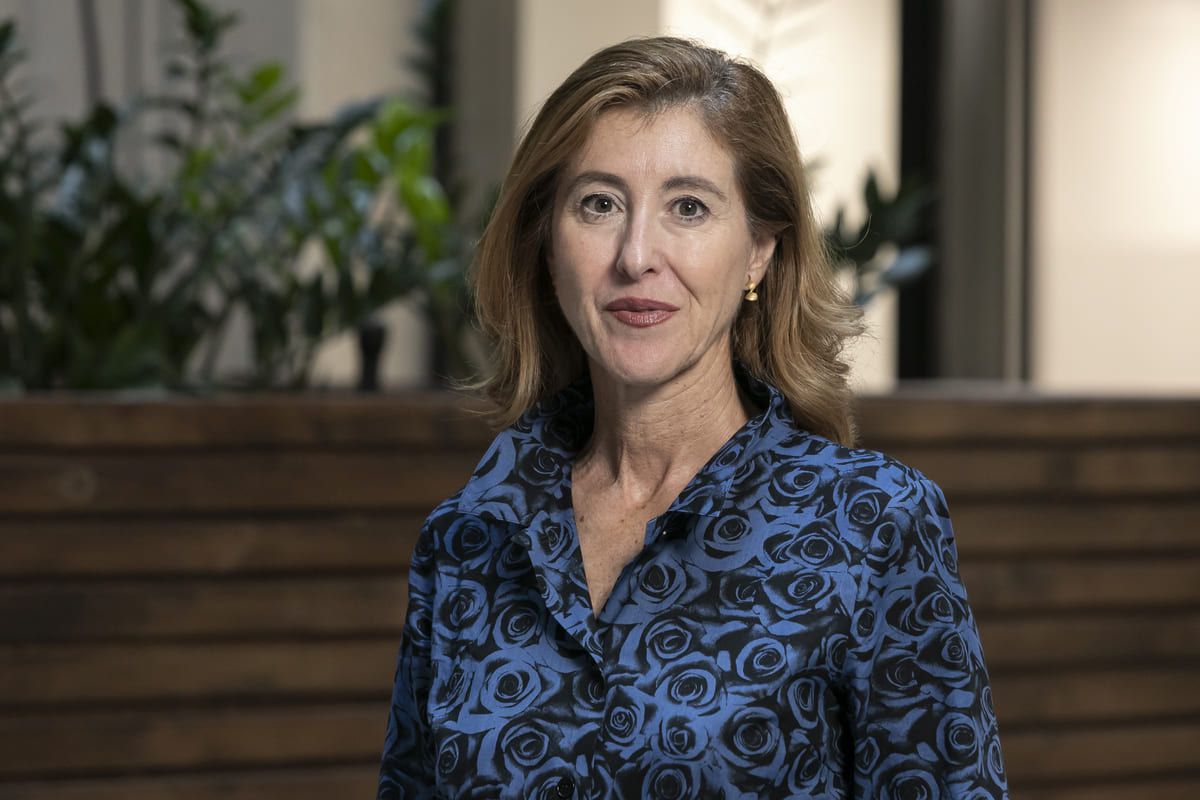
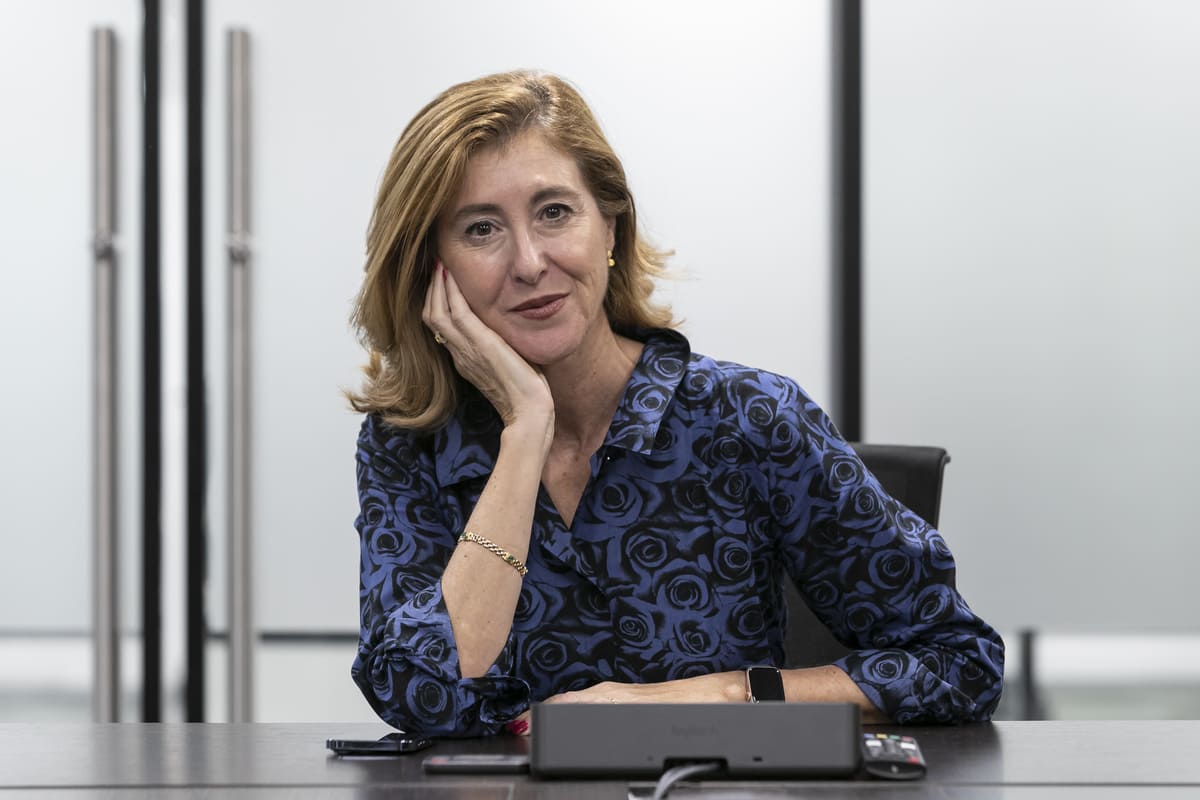
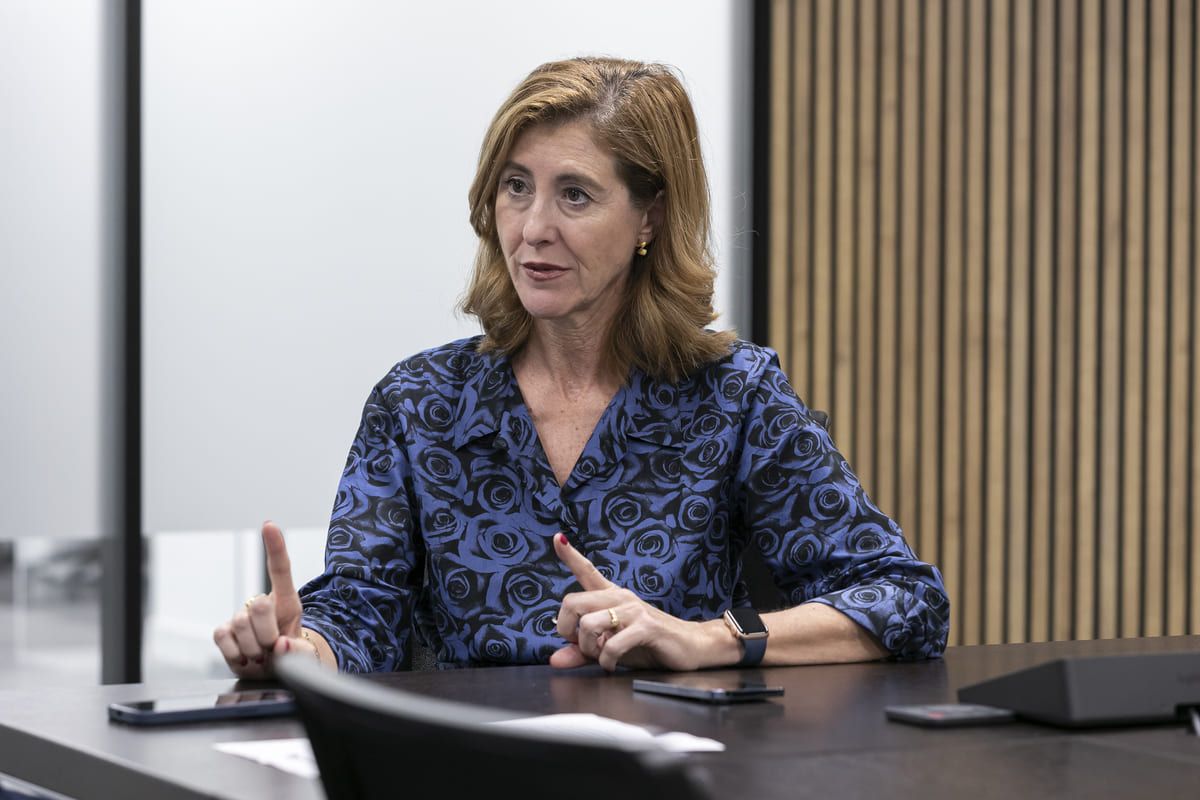
Laura Urquizu is a partner and CEO of Red Points. She is also a member of the board of the Cercle d'Economia and is the founder and president of Global Legal Tech Hub. From Pamplona and in Barcelona. She has always loved reading, writing, and traveling. As a child, she wanted to be a journalist, but her father insisted that she follow the path of economics and business. Her first big career decision was made between her head and her heart. Auditing was a mistake, but digital transformation and technology have been a great success in her life. She has received various awards from AED, UE-Startups, Forbes or Business Insider as best startup CEO in Spain or one of the 50 most influential businesswomen and investors in Europe's technology industry. Optimism with controlled risk is hers.
--- First of all, it was Economics.
--- I didn't have a very clear vocation, but I really liked reading and writing. I wanted to be a journalist, but my father, who was very pragmatic, asked me if I wanted to place obituaries in the Diario de Navarra. I enrolled in Economics with a Business specialization because it had many opportunities, and the truth is that I liked the degree.
--- You started your career as an auditor.
--- It was a decision of heart or head.
--- Heart or head?
-- I really liked traveling the world. I studied in Bilbao and had to choose between being an auditor at Arthur Andersen or taking an ICEX scholarship to go to Mexico.
--- Heads or tails?
--- Trauma, again. I chose Arthur Andersen and after three years of auditing, I realized it was a mistake. I didn't like accounting or auditing.
"Auditing was a mistake and technology changed my life"
---- Did you like Arthur Andersen?
--- Yes, Arthur Andersen gave me a way of being, a company culture, and a fantastic way of understanding professional life. It was incredible, but I didn't like what I was doing. I told them I was leaving.
--- And you stayed.
--- They offered me a process automation project in Chicago. I spent eight months there working on what we would now call digital transformation. I loved it. I analyzed processes to then build technology. It changed my life.
--- Technology changed your life.
--- I was there a few more years and then at Caja Municipal de Pamplona, which merged with Caja Navarra. It was the change from peseta to euro. I got to direct the entire technology department of the financial institution. The driver of my career is digital transformation. After a few years, I was offered to direct one of the first venture capital funds in Spain.
--- She said yes to the Eurecan fund.
--- The director proposed that I manage a seed investment fund for startups. I asked him what seed meant and what a startup was because back then I didn't have the slightest idea. Since then, I have never left the Spanish tech startup ecosystem. First, as an investor and then, as an entrepreneur.
--- The startup bug.
--- When you spend so many years surrounded by entrepreneurs, you get infected and you also want to start a business. It has happened to you. [Laughs].
--- What did you learn in banking, savings banks, and finance?
--- I didn't touch financial business because I don't like it, but I feel very proud because Spanish banking has been for many years the most innovative and advanced in both Europe and the world. I learned a lot. A financial institution is very corporate, not very flexible, and where relationships matter a lot. It is very different from a startup.
--- Aversion or attraction to risk?
--- Throughout life, you are constantly discovering yourself. I thought I was a calm person and I discovered that I loved risk. A colleague told me that I was always starting things. This has been another driver of my career. In the case of Red Points, I started at a very early stage. I would never do something that would risk my life, but I am a lover of controlled risk.
--- It's been almost a decade since you joined Red Points as a partner and CEO.
--- I would never have imagined it!
--- Why?
--- It has been nine very intense years. Not everyone can be an entrepreneur. The entrepreneur's journey is the hero's journey. There are happy, tough, and proud moments. You can have incredible news in the morning and the worst news in the afternoon. The level of resilience is very high.
--- What kind of resilience?
--- Resilience is going to bed, waking up, and seeing everything in a different light. Strategy and execution are also very important. The difference between a successful startup and one that isn't is execution. Luck also plays a role, and I have learned from it. Without all of that, we wouldn't have gotten to where we are.
--- What have you been lucky with?
--- Luck has to catch you working.
--- Paraphrasing Pablo Picasso.
--- There have been decisive moments when someone introduced me to someone who turned out to be crucial for the organization.
--- From the digital world to the physical. From fighting online piracy to pursuing counterfeits.
--- All in a digital environment, whether it's digital content or a physical product being traded on an ecommerce or social media. Always exclusively digital.
"Resilience is going to bed, waking up, and seeing everything in a different light. Strategy and execution are also very important. Luck has to catch you working"
--- More successes than mistakes?
--- If there weren't many successes, we wouldn't be where we are right now. When a large round is raised, many mistakes are made because there is a huge volume of investment with many millions, and what you want is to invest as quickly as possible to provide a return as soon as possible.
--- A speed problem.
--- When you go as fast as possible, that's when mistakes are made because you spend much more than you should on team hiring or marketing where money is thrown away. It is precisely in the fastest and most dizzying stage where you have to drive with more accuracy... Like Formula 1, you can go off at any curve. This is valid for any startup and any journey, especially those like Red Points that are funded by investors where the speed is not the same.
--- In which sectors is it worth investing to avoid curves?
--- I am particularly familiar with the technology, SAAS, and Marketplace sectors. My knowledge is limited, but I am clear that anything related to the digitalization of health is a winning vertical.
--- A before and after the pandemic.
--- Yes, the pandemic influenced it, but above all, it has been the evolution of society regarding the importance of health. For example, mental health. Before, mental health was not talked about, but after the pandemic, it has been put on the table. There are great investment opportunities in mental health because it is something we have not resolved.
"There are great investment opportunities in mental health and in the silver economy"
--- What else do we need to resolve?
--- By 2050, there will be 2.1 billion people over 60. Imagine what that means for the economy. Population aging has consequences for the economy, geopolitics, education, and well-being. The silver economy presents an opportunity, but also a very big challenge to solve.
--- Should startups be asked for growth or profitability and viability?
--- Some days I think one thing and other days I think the exact opposite. [Laughs]. The tech startup ecosystem is pendulum-like. There are some moments when we are all on the left and others when we are all on the right.
--- Left or right?
--- When all this passes, the years of PowerPoint, big ideas, and big investments will return. This stage will probably be longer than many of us would like due to inflation and high interest rates that demand a lot of profitability from companies and startups.
--- How do investors see the world?
--- Let's not forget that an investment in a startup is a financial investment. Investors make their calculations in an environment that is much more demanding than it was just a couple of years ago. Now, better metrics, more control, and for the company to demonstrate as soon as possible that it is not an experiment are required.
--- An experiment?
--- A startup is still an experiment: someone has an idea and it needs to be tested to see if it works. For this, someone is needed to finance the experiment. Years ago, we all agreed that this experiment could last a long time without needing to prove that it worked.
"The tech startup ecosystem is pendulum-like. When this passes, the years of PowerPoint, big ideas, and big investments will return. A startup is still an experiment"
--- Times have changed.
--- At this moment, it is necessary to demonstrate as soon as possible that it is a startup with a future and a market. There are people who pay for the product, and the production process must be profitable and make sense. We all know companies that have never achieved or will never achieve profitability because they are offering something with too costly production, and the public is not prepared to pay the price for the product to be profitable.
--- Production cost vs. selling cost.
--- Such a company has never passed the experiment phase nor demonstrated that it is profitable. A few years ago, these types of companies were not allowed to fail, but now they are.

--- We return to the origins of profitability.
--- For a long time, we believed that anything goes with the excuse of innovation. The most innovative companies in the world and companies that, in the name of innovation, had an unviable business model were lumped together. Now, investment will be made in truly innovative companies that offer a product that interests society. Until now, anyone could raise an investment.
"For a long time, we believed that anything goes with the excuse of innovation. Anyone could raise an investment. However, innovation is a vital attitude in a continuous process of searching to improve something specific"
--- What kind of innovation?
--- Innovation is a vital attitude in a continuous process of searching to improve something specific. It is not the same as invention. Invention is a brilliant idea, while innovation is the application of a novelty, an improvement, or a disruption. An innovation must involve an application or implementation, because otherwise, it is an invention.
--- How do you see the city of Barcelona?
--- Barcelona is my chosen city. I chose Barcelona to live, while others "settle" for having been born here. Barcelona is an ideal city, which has everything, and if it doesn't have more, it's because we don't do enough.
--- What does the city have?
--- The people, the architecture, the innovation... There are few cities in the world that are more innovative than Barcelona. The climate is incredible, even with climate change. Barcelona has color and light. The light of Barcelona is priceless and attracts people from all over the world. And what this city has most is talent, and talent attracts talent. Barcelona is a talent hub, and people who were not born here come to live here. And also to other cities. Do you like mom or dad more? Better not to name names. I don't like competition between cities because there is room for everyone. Things always happen in Barcelona.
"There are few cities in the world that are more innovative than Barcelona. And what it has most is talent, and talent attracts talent. I don't like competition between cities because there is room for everyone"
--- Good things?
--- We are better than we have been in a long time. I see it with optimism. There have been difficult years, but I don't want to get into politics. Another thing that I love about Barcelona is the power of civil society, which is something exclusive and unique to this city compared to other parts of the world. Barcelona's ability to organize itself is incredible, like, for example, the Cercle d'Economia, which is an institution born from civil society initiative. There are many examples...
--- What role should civil society play?
--- Influence. Civil society is capable of making things change. It must not lose its influence and must not be discouraged. It must persevere, whatever the moment. I insist that I see it with great optimism.
"Civil society is capable of making things change. It must not lose its influence"
--- Optimism also with public-private collaboration?
--- For many years there has been a lack of collaboration with the Barcelona City Council. However, the City Council now has the nice challenge of trying to improve public-private collaboration. Tech Barcelona or Barcelona Health Hub must be the model. There is a lot of work to be done; from the public side, the private must be respected and vice versa.
--- Respect and also trust.
--- They are symbiotic. One does not exist without the other. They are condemned to understand each other.
--- How do you understand administration?
--- It is necessary. The business world cannot be the wild west, and control with respect is needed. If artificial intelligence is not legislated and given a limit and order, it can pose an enormous risk. A businesswoman like me will always tell you that the administration is too bureaucratic, and if I didn't, it would mean that we are not going fast enough. It errs on the side of bureaucracy and sometimes even hinders. On the other hand, it is also necessary. Administration as such is not the excuse for a more prosperous business fabric.
"The business world cannot be the wild west and administration is needed, but it errs on the side of bureaucracy. Public and private are symbiotic, one does not exist without the other and they are condemned to understand each other"
--- And the top manta?
--- Terrible. It should be exterminated immediately. We fight against online top manta. There, everything is much more difficult and with much more volume. Top manta is a theft in itself. We visualize a poor human being with a blanket and some objects, but behind it there is a traffic of mafias that also engage in trafficking other types of illegal objects and people. Everything that is done to fight against top manta is good.
"The top manta is a theft in itself. We visualize a poor human being with a blanket and some objects, but behind it there is a traffic of mafias. Barcelona has a notable possibility for improvement"
--- Do administrations fight against top manta?
--- No, clearly not. There are cities that do it better and worse. Barcelona has a notable possibility for improvement.
--- The previous interviewee of Persona a Persona, Marc Ciria, asks you the following questions:
--- As a benchmark in successful creation and growth, what are the three characteristics a company should consider before committing to growth?
--- A company cannot grow on shaky ground. Before committing to growth, you have to be very sure of the product market fit and whether that product really has a market. You have to do the necessary tests to verify it. Have a minimum viable product, do price and market tests. Once you are sure of the market fit, then you can launch into growth because otherwise you will grow on shaky ground. The second is the team, which must be the right one. As I said before, a rapid growth story is like driving a Formula 1. Always have the best on your team. And the third is to have very clear ideas about how you want to finance that growth and be aware of what this entails. For example, you can choose venture capital or grow based on your own income. There are business models where this second option is not allowed because they are very intensive in product generation. Our platform is complex and powerful and required a lot of investment, without which we would still be in the second year of Red Points. At that time, we could not afford the engineering team we needed. It is important to recognize what type of company you are and what type of financing will allow you to reach the objectives you want to reach.
"A company cannot grow on shaky ground. It needs product market fit, the right team, and conscious financing"
--- How do you compete and stay up-to-date in a world as competitive and changing as technology? What are the keys to not losing momentum?
--- Very interesting question. It is important to know who you surround yourself with and what your sources of information are. This is not built overnight. You have to be very selective with the people who will be your source of inspiration and information. With reading, it's the same. You have to read a lot to know which sources of information interest you and from there nourish yourself to be continuously in the market. Congresses, fairs, and technology events are very useful for our sector. We wanted to create a global company, it's better not to limit yourself to what's in the immediate environment. You have to go out.
- Reference: Helena Guardans and my second boss for their natural leadership and life philosophy
- Book: Atlas Shrugged by Ayn Rand
- Movie: The Lord of the Rings Trilogy
- Song: Any U2 song
- Favorite spot: The town of Urdax and the Caves of Zugarramurdi
- Life motto: Live every minute intensely
- Dream: Visit every country in the world
Add The New Barcelona Post as your preferred Google source for free
Stay informed with the latest news.
