Some of the many tourists who roam the Rambla, regardless of the heat, stop to see why there is so much fencing at the end of the promenade, probably, displeased at losing a good snapshot for social media. Although there is always someone who even photographs the works, most continue their pilgrimage unfazed that some of the stones that have emerged from the ground are archaeological remains of the history of the city they visit, from when there were crops and not souvenirs. Barcelonans won't be able to see it either because, especially in August, few are those who consider strolling through that area of the city that has become alien to them.
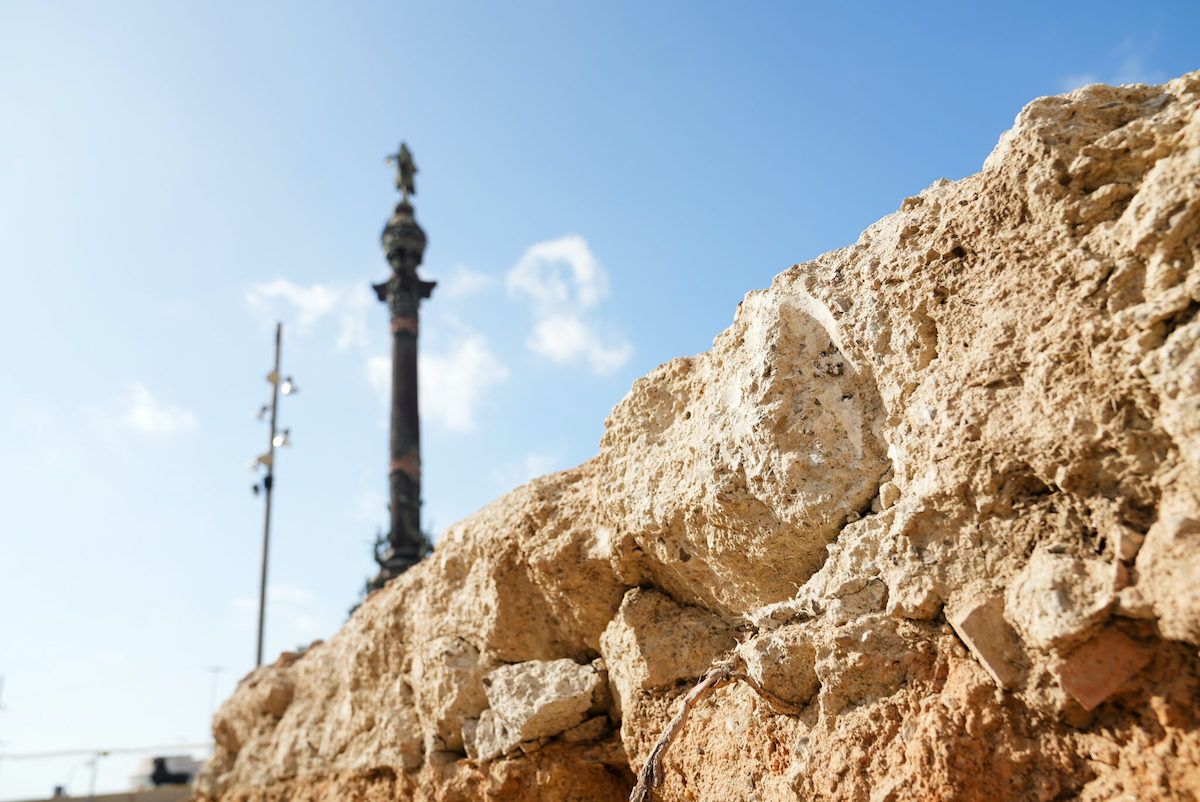
There may be locals who are now encouraged to go and scrutinize some archaeological remains that make visible what was only known through maps, before they are covered in a few weeks to continue with the reform of a promenade affected by multiple damages and a necessary update. The first phase of the works, which affects the last section of La Rambla and the Plaça del Portal de la Pau, is proving very fruitful. A few months ago, remains of an old barracks attached to the Drassanes Reials, built at the end of the 18th century, were discovered, where parts such as the entrance, the courtyard, and different rooms have been documented, as well as medieval dwellings. And the ever-present wall that protected the city until the mid-19th century also appeared, surviving in its foundations despite its demolition, covered by new works or as the base of the constructions that succeeded it.
This time, archaeologists have come across vestiges of what was the Convent of Sant Francesc, in operation from the 13th to the 19th century. It extended from the current Plaça del Duc de Medinaceli to La Rambla, so the works have uncovered its rear part, culminating in a back wall. There you can also see a stone waterwheel that was used to draw water from the well, with animal help, and irrigate the gardens and crops that the convent had.
The rear part of the Convent of Sant Francesc ended up being integrated into the Drassanes semi-bastion, a defensive construction that served to reinforce the modern city wall, built at the end of the 18th century and demolished in 1854. In this way, they adapted to the new firearms, reaching more than ten bastions along its route. With the fortification, the waterwheel was maintained, to make use of it, and it became a well, as can now be seen on the Rambla, with a rather rectangular shape. In addition to the waterwheel, the works have helped to bring to light numerous remains of this large structure that surrounded and protected the Drassanes building along the Rambla.
"It has been a half surprise because, being a military zone and coinciding with the first reform of the Rambla, everything was very well documented", says the director of the intervention, the archaeologist Carles Carbonell. The question was to know in what state the remains would be found, taking into account that later works had been carried out that could have damaged them. Despite the passage of years and human action, structures of considerable dimensions have been revealed that allow them to be located in the archives that were available, filling with volume what had previously only been seen in maps and illustrations.
Carbonell points out that this is one of the most relevant finds that has been made so far on the Rambla, being used to finding isolated and small remains at different points, such as at the Columbus monument. "It is a very large site, it is three and a half hectares," indicates the archaeologist. "Now we know the area much better. The discoveries are very valuable because they are telling us about a very specific moment of the Rambla," he emphasizes.
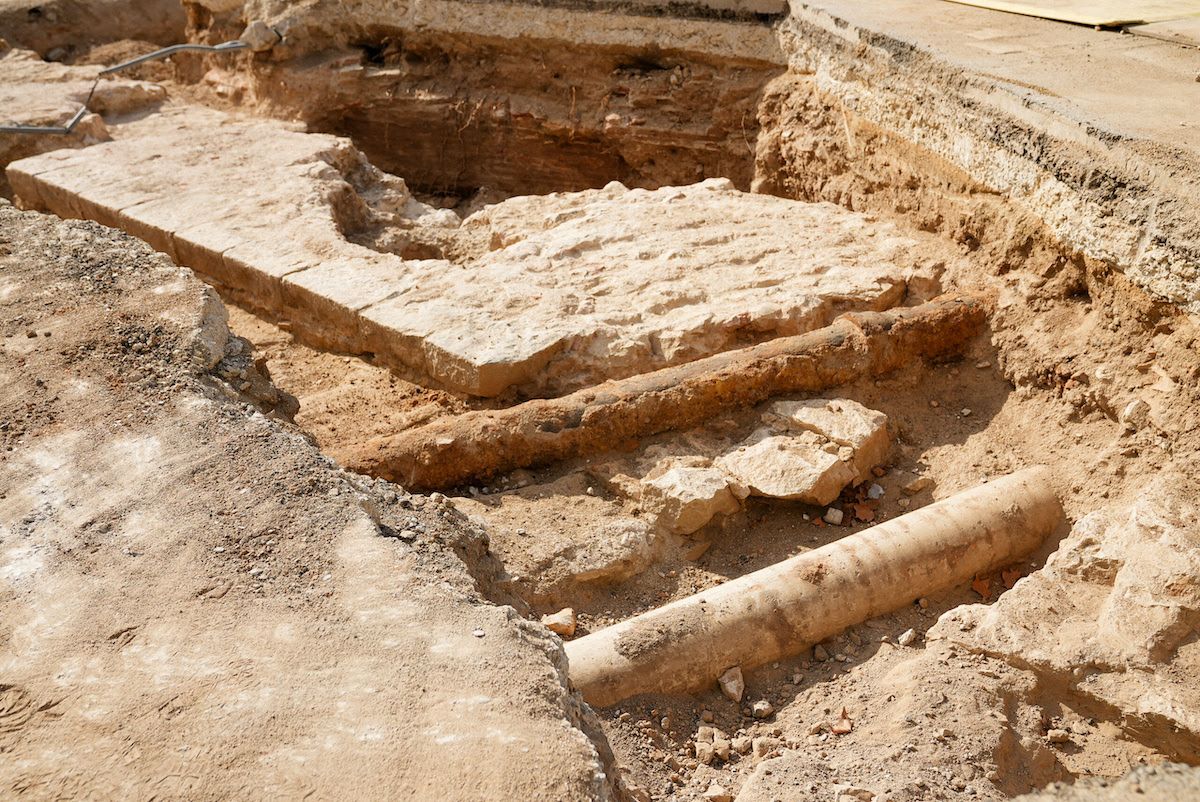
The historical photograph found by the archaeologists coincides with the first urbanization of the Rambla, long before it needed reforms, when it was intended to create a public space where people could stroll, even though it was closed at the end by a fortification that prevented seeing the sea. In fact, the works have also been able to document the original drain of the promenade, from the late 18th century, necessary to channel all the water that ran down the promenade before it was urbanized.
This is one of the most relevant finds that has been made so far on the RamblaAll these findings do not delay the deadlines for the works, shortened from six to three years by the new municipal government, since they are part of the planned schedule.Once documented and dated, the archaeological remains that are decided to be preserved are covered with sand and earth for their conservation.It is not done with all of them, having to remove or partially dismantle those that prevent the execution of any phase of the works. In the case of La Rambla, the installation of some security bollards will force a very small part to be dismantled. Likewise, when the discovery is very exceptional, as happened a few months ago with the medieval houses found in the same area, some element can be kept. At that time, an ornamental fountain and a pavement decorated with tiles were found, which has become part of the heritage of the Museu d'Història de Barcelona. Both elements, from the 15th century, were attributed to a house located within the wall and belonged to a wealthy person who could afford such complements.
With the different works being carried out in the city, workers and archaeologists work together, knowing that in areas like Ciutat Vella the foundations of the Catalan capital are found, with constant discoveries. In the other future phases of the promenade's renovation, those furthest from the sea, no major discoveries are expected, although there can always be surprises, considering that the construction of the metro could have taken most of the underground past with it. Where archaeologists trust that something may remain is on the sides. But it is not only happening on La Rambla. With the renovation of Via Laietana, seven Roman-era tombs have been discovered. And, with the new green axis of Consell de Cent, remains of a Capuchin convent have been found.
Add The New Barcelona Post as your preferred Google source for free
Stay informed with the latest news.