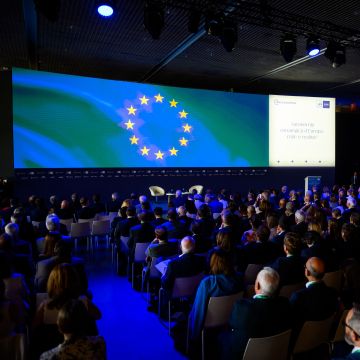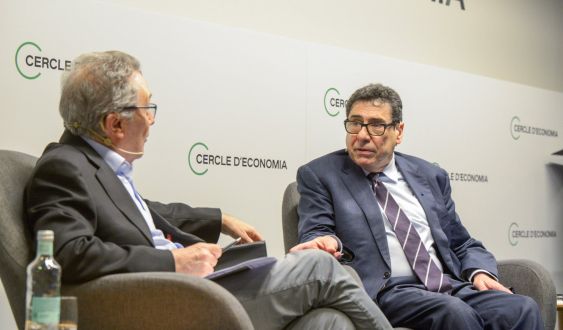
The 2025 Nobel Prize in Economics laureate Philippe Aghion arrived in Barcelona this week to receive the VI Hipàtia European Science Award, a recognition promoted by the Barcelona City Council and the Barcelona Knowledge Hub of the Academia Europaea that distinguishes scientific careers of international reference. The French economist was honored for his pioneering contributions to the study of innovation, economic growth, and creative destruction, concepts that have influenced both academic research and public policy design worldwide.
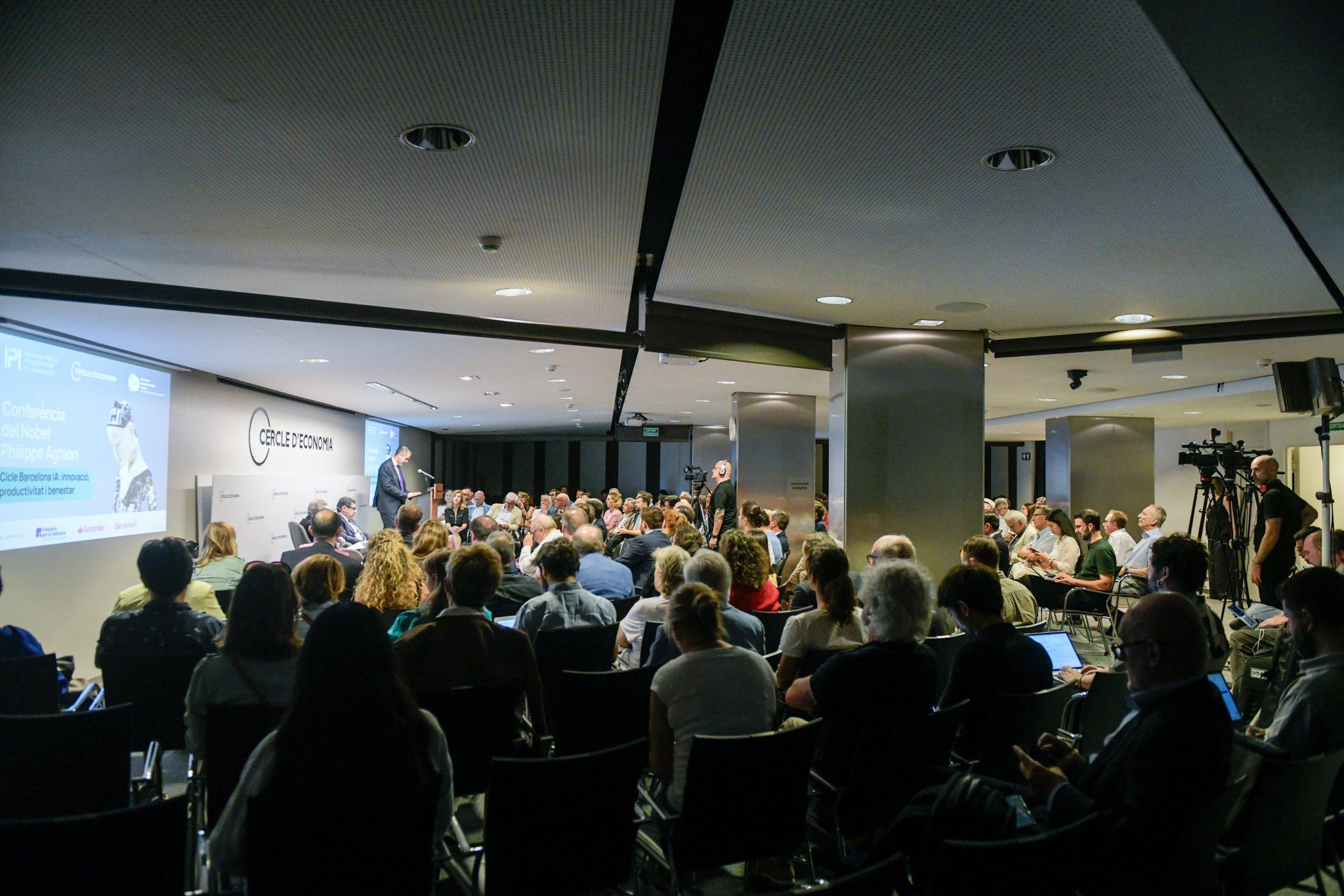
Just one day after collecting the award at the Saló de Cent of the Barcelona City Council, Aghion inaugurated the cycle Barcelona AI: innovation, productivity, and well-being, promoted by the Institut de Política Econòmica (IPI), the think tank promoted by the Cercle d'Economia, and the Barcelona Supercomputing Center (BSC).
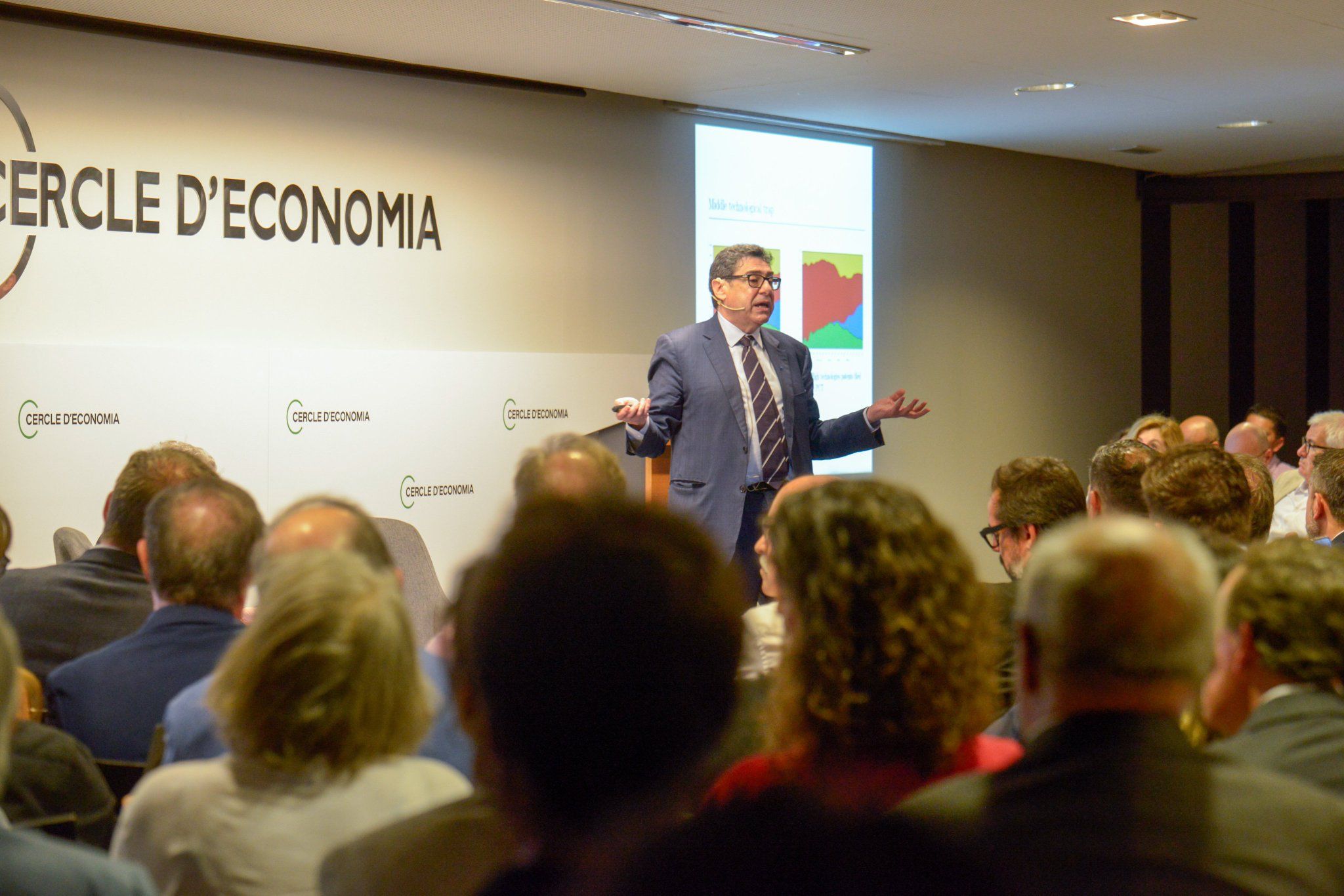
Considered one of the world's leading figures in the study of innovation and technological transformation, Aghion delivered a keynote speech on artificial intelligence marked by "cautious optimism," to a packed auditorium. His main message? That AI can become a new industrial revolution capable of driving economic growth and well-being, but its impact will depend on the capacity of governments, businesses, and educational systems to manage its transition.
It is no coincidence that the economist was the invited speaker to inaugurate this debate cycle on artificial intelligence. A large part of the work that earned him the Nobel — and that has now earned him the Hipàtia Award, and many others — revolves around a question that frequently resonates with the disruption of AI: how to harness this great wave of technological innovation without jeopardizing social cohesion.
Innovation, competition, the destruction and creation of jobs, and the horse that must be learned to tame. We share the ten main ideas that summarize his intervention at the Cercle d'Economia.
1. AI is a horse we must learn to guide
"AI is like a horse. It can lead you to the precipice and cause your downfall, or it can take you wherever you want if you know how to guide it. Guiding the industrial revolution means implementing the right institutions and public policies."
Aghion rejects fatalistic views on artificial intelligence, but insists that technology is not neutral. The issue, he argued at the conference, is not to curb innovation, but to build the conditions for its benefits to reach society as a whole.
2. Europe cannot repeat the mistake of the digital revolution
"Europe's GDP per capita decreased in relation to that of the United States because they took advantage of the ICT revolution and we did not fully know how to do it."
For the economist, the loss of European competitiveness and the difference in the evolution of its GDP per capita compared to the US has an explanation: the United States led the information technology revolution and built global giants like Google, Microsoft or Amazon, while Europe lagged behind. Artificial intelligence now represents a second opportunity that the continent cannot afford to miss.
3. AI not only produces goods: it also produces ideas
"AI automates tasks both in the production of goods and services and in the production of ideas. It makes ideas easier to find and recombine, much faster."
Unlike previous technological revolutions, AI also acts on the innovation process itself. According to Aghion, its ability to accelerate the generation and combination of ideas can translate into more research and more growth.
4. AI will destroy jobs, but it will also create new ones
"AI will destroy jobs, but it will also create jobs thanks to increased productivity and because it will boost the generation of new ideas and innovations. Therefore, adequate education and labor flexicurity systems are necessary."
Aghion argued that automation will eliminate certain tasks, but will also boost new economic activities and professions. The issue is not to avoid change, but to facilitate the transition of workers to the new jobs that will be generated as a result of AI.
5. Two key recipes for leveraging AI
"To harness the growth potential of AI we need competition and smart industrial policy. To harness the job creation potential we need education and flexicurity."
In a single sentence, the economist summarized his recipe for Europe: more competition and investment to boost growth; more education and flexicurity so that this growth generates employment.
6. There are learnings that must continue to be done without AI
"Part of schooling must be done without AI. We need children who know how to read books, write without mistakes, and calculate by themselves without resorting to technology."
For Aghion, artificial intelligence should complement learning, not replace the basic capacities upon which critical thinking is built.
7. The rules of the technological race
To fully harness the potential of AI "we must promote open source, facilitate access to data, expand instruments such as the Digital Markets Act, avoid excessive regulation, invest in computing capacity, and accelerate the diffusion of AI."
Far from advocating a technological race without rules, Aghion opted for a specific European strategy that combines, on the one hand, regulation that fosters competition, but also helps accelerate the diffusion of AI. The need to act is especially relevant, he warned, in a context where much of the global digital infrastructure is concentrated in very few players. "The cloud is today controlled by three companies: Microsoft, Google, and Amazon," he recalled.
8. AI will boost productivity over the next decade
"AI will contribute 0.68 percentage points annually to business productivity for ten years."
According to Aghion's models, AI will drive an acceleration of productivity for approximately a decade. After that, growth will return to rates closer to current ones. It would not be a permanent change in the growth rate, but a temporary, and significant, boost.
9. The great conflict of innovative capitalism
"At the heart of this paradigm there is a contradiction: we need monopoly rents to reward innovators, but those same innovators are tempted to use them to prevent subsequent innovations."
Innovation needs incentives, but also competition. For the Nobel Prize in Economics, the challenge is to prevent companies that succeed today from blocking those that can innovate tomorrow.
10. Inclusion is not just a social issue: it is also an economic one
"In France, we face the risk of having a populist president within a year. I can tell you that possibility terrifies us. Not being inclusive has an enormous cost."
Aghion warned about the political risks derived from a poorly managed technological transition. If the benefits of growth and innovation are not widely distributed, social unrest will increase, and populist movements will be strengthened. For this reason, he again advocated for flexicurity systems like the Danish model, capable of combining dynamic labor markets with robust social protection.
His conclusion was consistent with the general tone of the entire conference: artificial intelligence can become a powerful tool for shared prosperity, but only if it is accompanied by strong institutions, effective competition, investment in education, and policies capable of ensuring that the benefits of innovation reach society as a whole.
Add The New Barcelona Post as your preferred Google source for free
Stay informed with the latest news.