
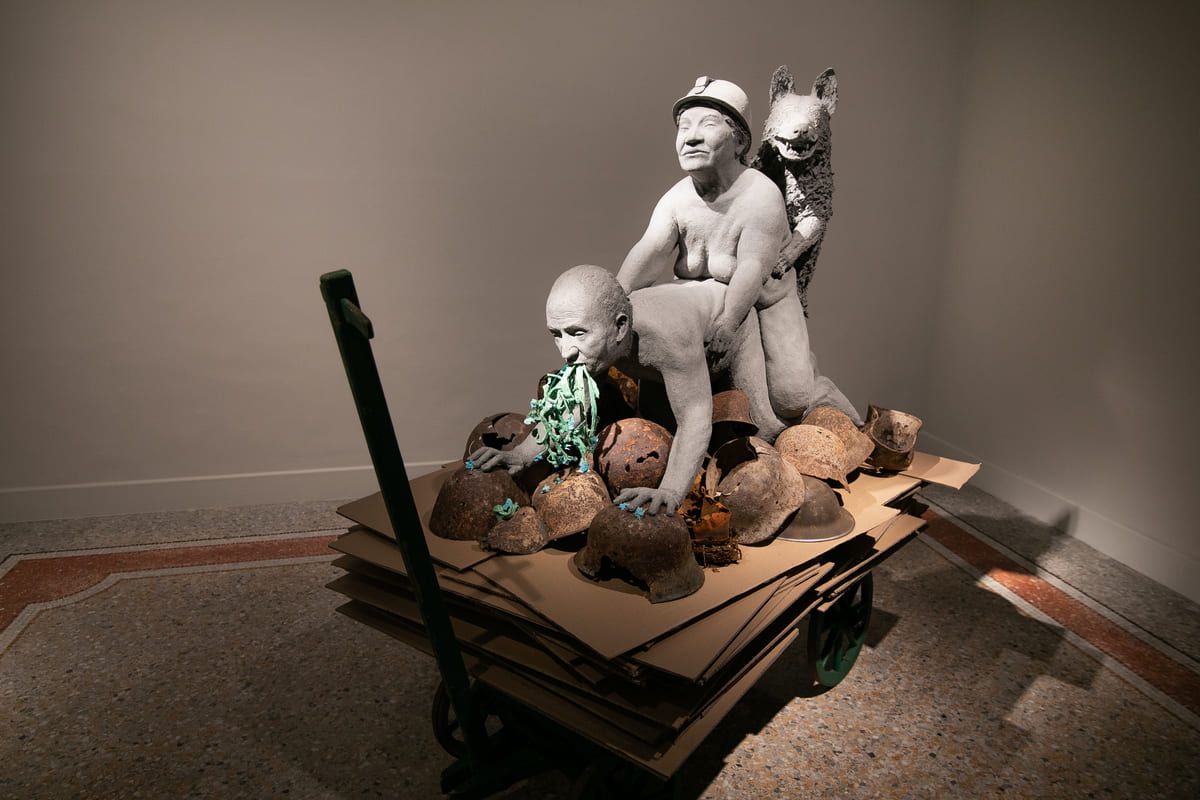
The human fondness for censorship is a mania as old as art itself. Prohibiting the free will of creators (or taming them with subsidies and institutional positions) has been one of the preferred occupations of Western politics. This castrating tradition – namely, what my admired John Maxwell Coetzee calls "the urge to silence" – is the subject of the new Museu de l'Art Prohibit in Barcelona. Promoted by Tatxo Benet (continuing the philanthropic spirit of Antoni Vila Casas) and very well discursively ordered by Carles Guerra, this new facility displays about forty works of an aesthetic quality superior to the scandal they provoked. The receptacle of the collection should also be noted: the old Garriga Nogués house, by our great architect Enric Sagnier i Villavecchia, which was home to institutions such as Enciclopèdia Catalana or the Godia and Mapfre foundations.
Let's say it from the outset: being an object of censorship does not ensure the quality of an artistic work. This is the case, for example, with some rather anecdotal pieces in the exhibition, such as Make America Great Again by Illma Gore or the famous Always Franco by Eugenio Merino and No dressed for conquering by Ines Doujak (protagonist of one of the most juicy museum parties in Barcelona's history). In my opinion, the value of the collection increases when the raw simplicity or nakedness of some works turns their prohibition into an even more delirious phenomenon: this occurs in pieces from contexts as different as Goya's Caprichos, the self-portrait of artist Chuck Close, the Roland Garros poster by our genius Miquel Barceló or the beautiful Piss Christ by Andrés Serrano. The authorship of censorship is also an important factor, as it ranges from ideological dogmatism to political correctness.
The success of an artistic proposal should be evaluated by the questions it raises. This museum generates many. First, due to its very root impossibility (art that is implacably censored turns into ashes, never-written verses or, if you allow me the sappiness, tons of silence); but also, paradoxically, because it demonstrates that traditional censorship, from an all-powerful entity against a rather helpless artist, will always end up failing: after all, all the works we admire have suffered the pressure of power, but they have also been able to savor the victory of being exhibited. This leads us to a reflection on the future: currently, aesthetic-ideological censorship is much more subtle to discern, it is found in frothy forms of prohibition such as what young people call "canceling," which is a very cute way of silencing individuals.
In this sense, I find it magnificent that Tatxo Benet wants to turn this facility into a place where, apart from exhibiting works of art, there is reflection on the new forms of censorship that the West faces. It is evident that prohibition will continue to exist in a traditional way as long as Andy Warhol's Mao portrait cannot be exhibited in China or Robert Mapplethorpe's beautiful orgiastic-anal photographs continue to make the Jewish godmothers who run New York museums uncomfortable. But the future of the urge to silence is solidifying through virtual structures; apart from spreading streams of information, social networks have also inflamed the capacity for offense of the world population, increasing the temptation to silence opinions that deviate from one's own canon. It is a less striking and painful type of censorship, but with a devastating effect.
Apart from spreading streams of information, social networks have also inflamed the capacity for offense of the world population, increasing the temptation to silence opinions that deviate from one's own canonIf the world continues to lean towards governmental systems with a strong autocratic impulse and, I insist, the universe of virtuality further ignites political polarization while punishing singularity, to my friend Tatxo Benet he is given work; because andThis censorship thing looks like it will increase exponentially in the future (and let's not even talk about one of its favorite daughters; self-censorship!). For now, in the Eixample we have gained a wonderful space to start thinking properly about the issue. It is necessary to celebrate and applaud it.
Add The New Barcelona Post as your preferred Google source for free
Stay informed with the latest news.