
With all the density that characterizes Russian novels, in which any social issue, however trivial it may seem, is discussed ad nauseam, the story of an infidelity slips between the pages of Anna Karenina. It is not an easy read, with hundreds of pages, many characters and an infinity of disquisitions, nor should it be easy to translate it to bring it to a stage. The theatrical adaptation of Leo Tolstoy's title, condensed for almost three hours, closes this 2024 and is one of the highlights of this season at the TNC, dedicated to those who live on the margins, unfaithful and infertile women, but also reds and exiles.
It is not the first classic that theater director Carme Portaceli has made her own, as she has already done with Isabel Allende's The House of the Spirits and Charlotte Brontë's Jane Eyre, not forgetting her Madame Bovary, the other great unfaithful woman in literature along with Karenina, or a more recent title such as Almudena Grandes's The Mother of Frankenstein, which could be seen a year ago at the TNC. For the future, Portaceli, also artistic director of the Barcelona theater, has in her sights rewriting the story of Mary Magdalene.
Ariadna Gil, on whom the weight of Anna Karenina falls, coincides again with Portaceli after starring in Jane Eyre, as does Jordi Collet, who was in The House of the Spirits and The Mother of Frankenstein. This time in the role of Alexei Karenin, Collet once again manages to precisely shape, even enlarge, a secondary character, as he did with Grandes's novel. The cast is completed by Borja Espinosa (Vronsky), Eduard Farelo (Stiva), Bea Segura (Dolly), Bernat Quintana (Levin), Miriam Moukhles (Kitty), who extends her good run after starring in Tots els ocells.
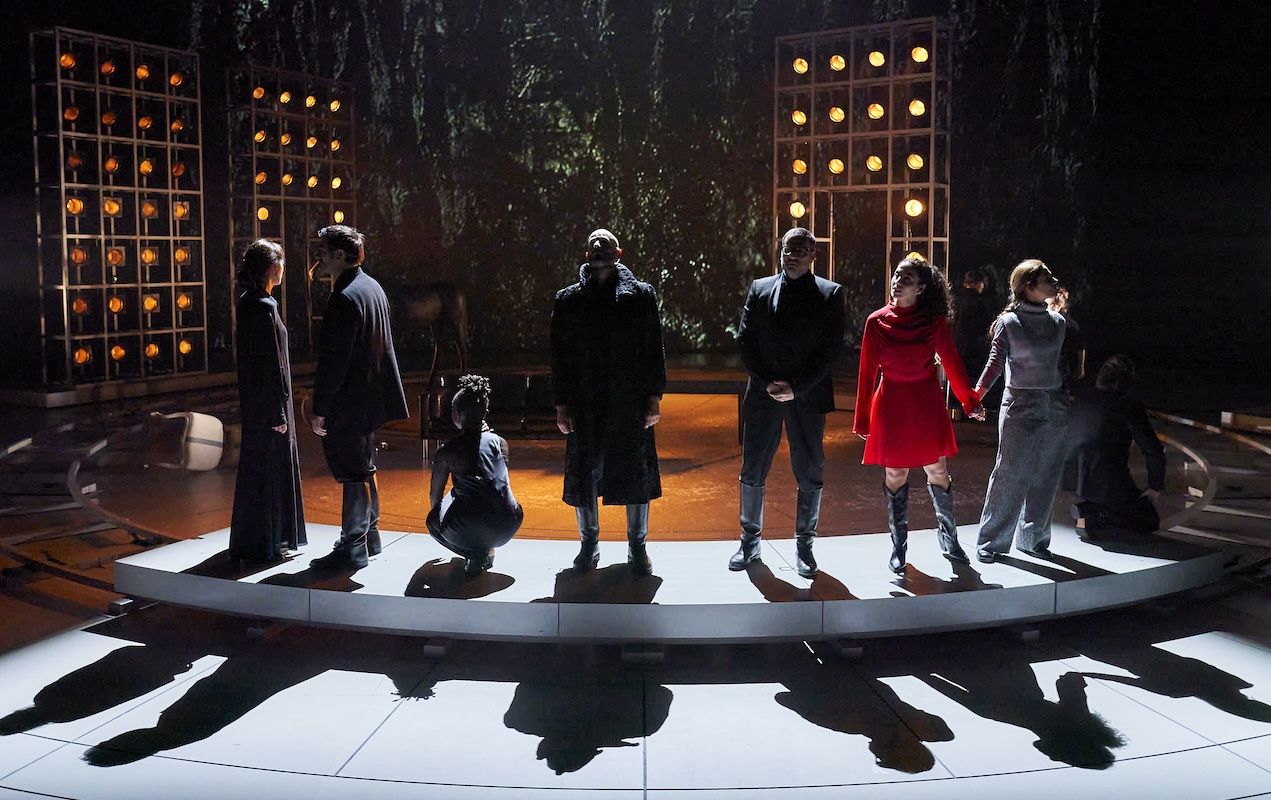
Portaceli, who knows how to powerfully portray the sparks of love and helplessness, first read Anna Karenina when she was 18 and has returned to it many times. "Tolstoy has a very interesting vision of women," the theater director maintains. As a young woman, she was captivated by Vronsky, the lover, but, over the years, she reads in Tolstoy's plot that love is the only thing left to survive on that inevitable path towards death. Hence the train tracks that are present at all times on the TNC stage, not only because it is at a station where the most important things for the novel happen. They are the symbol of that finitude marked from the beginning, with its characters walking along them loaded with their own suitcases, each in their own way.
On display until the end of the month, and with almost all tickets sold, Gil's Karenina shines and despairs as the play progresses, condemned by a society that judges women more than men for the same actions. If she is canceled for her extramarital affair, separated from her son and shunned by everyone, without possible forgiveness, her brother, Stiva, moves freely among colleagues who applaud his romantic escapades. Even Vronsky is tolerated. Although the adaptation forces this double standard a little too much, it is, without a doubt, the basis of everything, unalterable no matter how many years pass. "Today it is not a drama to divorce, nor do we lose custody, but they continue to kill us," Portaceli remarks. Her proposal, daring in its forms and with an ambitious staging, puts the spotlight on the obvious because the cold that condemns Karenina still chills, with a first act better resolved than the second.
At all times, the consciousness of the characters is represented by the actress Andie Dushime, just as Tolstoy himself does in the novel. She addresses them in English, a foothold to connect with the audience that sees the play on its European tour, although here it is still difficult to assimilate. For Portaceli, mixing different languages on stage is a trend that happens all over the world and that will eventually arrive, just as, some time ago, it happened to her when she included live music or actors of different origins and they didn't understand it, but now it is much more widespread and accepted. Between April and June 2025, the TNC adaptation will travel to Zagreb, Porto, Amsterdam, Miskolc (Hungary), Paris, Brussels and Romania.
Add The New Barcelona Post as your preferred Google source for free
Stay informed with the latest news.
