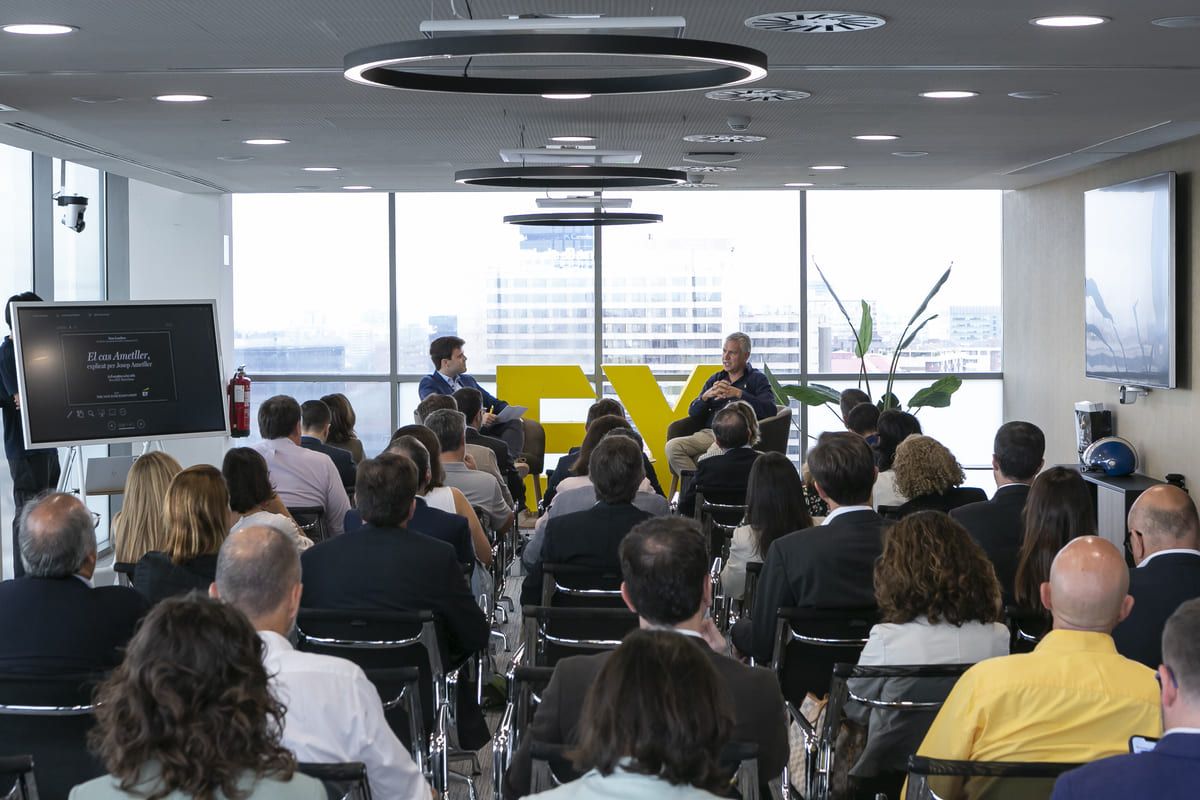
"Nobody understood why I left everything to go sell cabbages and start from scratch. That made me emotional and made my blood boil." This is how the co-founder of Ametller Origen, Josep Ametller, remembers one of the most important decisions of his life. This is how the Ametller Case, explained by Josep Ametller, begins in a new session of the True Leaders cycle organized by The New Barcelona Post and EY to learn firsthand about different business leaders and their success stories in an exclusive setting with about fifty presidents, CEOs, and senior executives.
Josep Ametller was the youngest of five siblings and had a childhood dream: to see trucks with his surname circulating on the street. Time has proven him right and also given him the possibility to make what was once just a distant dream a reality. We start our engines and begin breakfast talking about roots and family legacy. Both Josep and his brother Jordi are part of the eighth generation of a family of farmers from Penedès. Lifelong residents of Sant Martí, where grandparents, parents, and grandchildren —eleven people in total— lived together on a small farm, while cultivating their vineyards.
His father had a farm with chickens and a garden with beans and tomatoes that they sold in Vilafranca, where he fell in love with the experience of going to the market. "We always lived in austerity and I was educated in honesty," recalls Josep Ametller. The youngest son of the family already showed an entrepreneurial spirit at an early age, to the point of roasting sunflower seeds and selling them at school. "I was the worst student and I've only had one job interview," he clarifies with a half-smile. At 18, he wanted to promote the telephone business El payés en su casa (The farmer at home), which turned out to be an idea ahead of its time, and later, he also got a good job in a factory, but he was very clear that it was not a job for life. "I earned a lot, but it wasn't my vocation. My passion was smelling tomatoes —something alive— and seeing Ametller trucks."
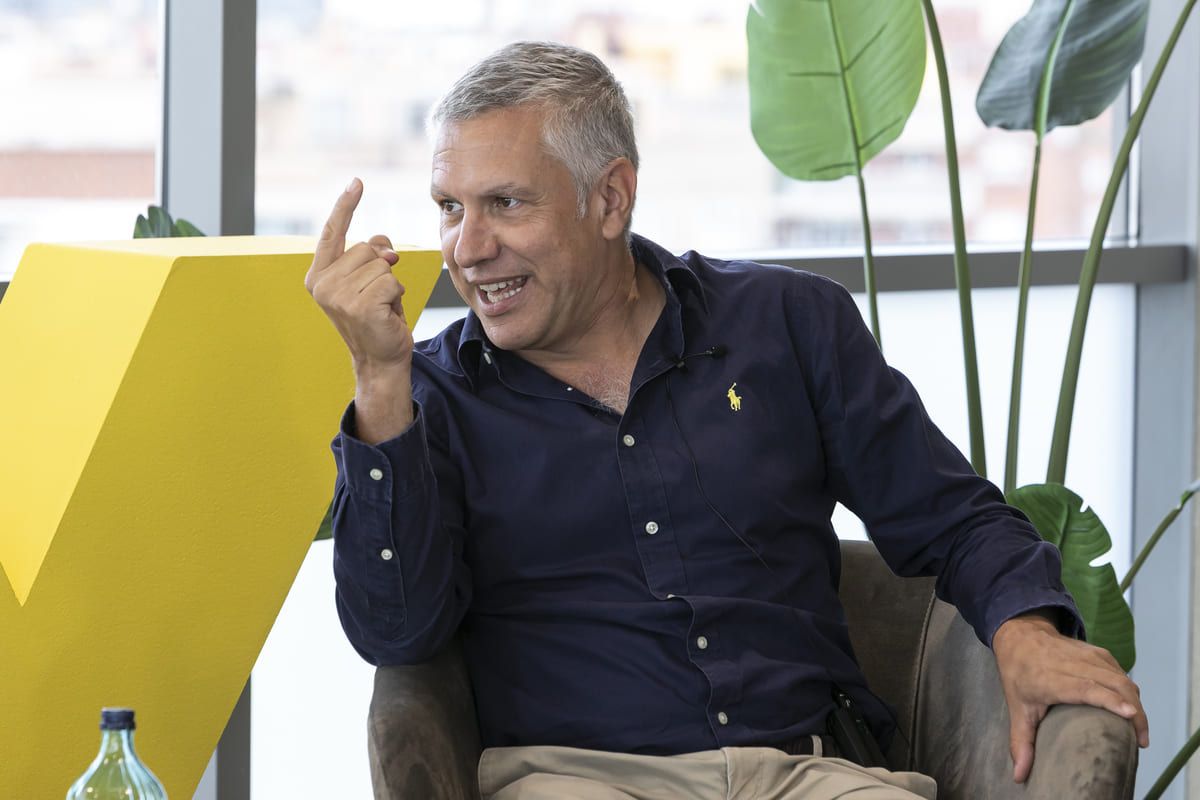
Ametller: "Nobody understood why I left everything to go sell cabbages and start from scratch. It's what made me emotional and made my blood boil."Jordi and Josep Ametller started their project with 30,000 euros and the small greatpurpose of dignifying the trade of both farmer and greengrocer and connect it with the community, both customers and collaborators. "Jordi has always let me lead. There has never been tension between us, although the line between love and hate between brothers is very thin. A large part of the success has been thanks to him, because he doesn't want to be the protagonist and has been completely loyal," explains the younger brother, who has been in charge of management and commercialization.
More than 20 years after that first powerpoint, Ametller Origen today has a network of 145 stores that serve one million customers, has 3,500 employees and a market share of 3.1% in Catalonia. It is the leading vegetable producer in Catalonia and a prominent player in Spain. In 2022 it closed with a turnover of 453 million euros and the company has also been awarded the EY Award for the best sustainable company in the entire State.
The austere path and the vertical model
On the path and in the cultivation of an austere life, it seems there are moments of all kinds, but Josep Ametller explains that it is precisely this learning ---without excesses or luxuries--- that has helped him walk with a firm step to this day. "Having a lot of success doesn't give you the right to burn money," he snaps. First warning for sailors. "It has been a journey through the desert. Now I wouldn't have the strength to do it again," he adds.
Ametller: "It has been a journey through the desert. Now I wouldn't have the strength to do it again"One of Ametller's best-kept secrets is hisvertical integration modelwhich is precisely what business schools do not recommend. So much so that not even the owner of Mercadona himself, Juan Roig, quite understands it. Or at least, this is what Josep Ametller says. A model based on three major business areas (agricultural production, food processing and packaging for sale in its own stores), on the control of the entire value chain and with a single philosophy: from the field to the plate.
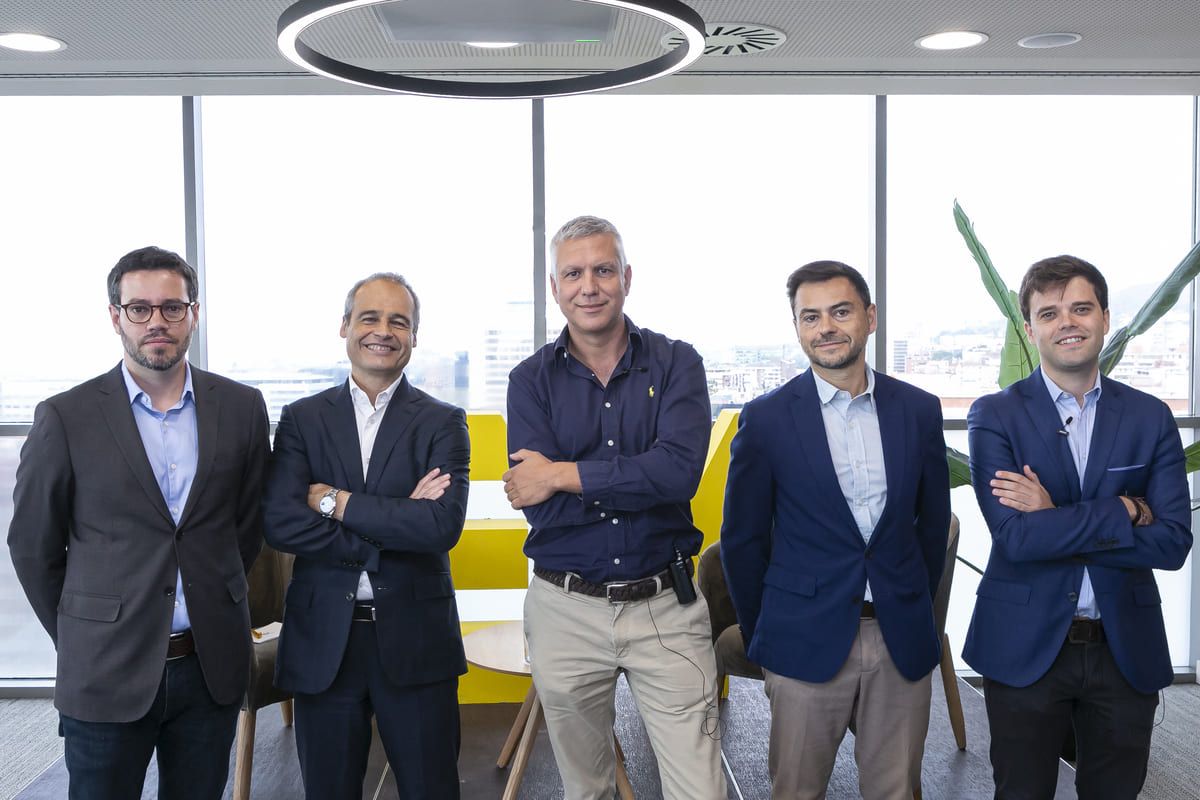
In fact, the company is also a manufacturer and has 60% of its own production to ensure the supply to its stores, which started with 150 square meters and now reach a thousand square meters in some industrial estates. "All this is not the result of a strategic plan, but of experience. We became manufacturers to differentiate ourselves and we must give up many things so as not to give up our essence. We wanted to be respectful of our origin," reflects the co-founder of Ametller.
Strategy and operations
Its origin is that of the land and of local commerce. Ametller also warns that "giving up at home is something permanent," in a process of constant growth where they do not consider allowing any investment fund to enter so as not to lose "singularity," but they also do not rule out any industrial operation to cover new markets. The great debate is also served and yes, it is a classic question of size: "Catalan companies are too small and we need more muscle to be able to compete." This is also their handicap.
In 2014, Josep Ametller dedicated up to an hour and a half a day to strategy and now dedicates a good part of his time to maintaining the foundational values, as well as giving maximum autonomy and space to the entire team. "I prefer to call myself a sherpa than a CEO. I'm not good at managing the day-to-day and we've had a general manager for a year and a half," he details, praising professionalization as well as prudence, with a low debt-to-EBITDA ratio to be able to continue walking alone. Some say that learning from difficulties is also an art.
Ametller: "I prefer to call myself a sherpa than a CEO. I'm not good at managing the day-to-day and we've had a general manager for a year and a half"
The Agroparc dessert
We are at the dessert of breakfast but there is a big dish left to discuss: the Agroparc del Penedès. A sustainable agro-industrial complex that is already urbanistically approved in the municipality of Gelida that wants to produce more energy than it consumes, wants to contribute to the reduction of CO2 and generate green hydrogen to power the vehicle fleet. To understand it, it wants to be "a spearhead to contribute to transforming the agricultural sector thanks to an intensive use of technology and digitalization that will make food production more efficient." In summary: "The first positive energy and negative CO2 agro-industrial district." All, not without controversy or some protests. "Now we must do the innovation pilots, apply geothermal energy in greenhouses or control production with drones. The agricultural sector is very old, we are moving towards a new era and we need economic muscle," Ametller details.
Questions and more headlines
It's time for questions from attendees and, as always, the level is up to the speaker. Below, and not to prolong myself too much, I share a schematic summary of the great hits:
- The technicality: "Alternative Protein? The bioconversion of organic matter waste into protein makes a lot of sense. Veolia must decide whether or not to accompany us in this project," he replies.
- The reflection: "Size does not help maintain the foundational culture, but I put all my effort and every day I try to lead by example. We are a family business and we must be very present. You can't waste time and if necessary, grab a sack and peel almonds"
- The quote: "There's nothing better than a motivated donkey, as Victor Küppers says."
- The advice: "Maintain financial prudence."
- The strategy: "If you stop, you fall. If there is no growth, you fall. To grow, it must be done safely and done well. We want to maintain 20% growth, but no one forces us."
- The plan: Open between 10 and 12 stores each year, with 0.8 times EBITDA.
- The expansion: "We have a presence in Catalonia and Andorra. We want to expand, logically, to the rest of Spain when the time comes... But, for now, we still have a long way to go in Catalonia and we want to apply common sense. Here we can continue to grow and it is more efficient from a logistical point of view. When we have some limitation then we will consider leaving Catalonia."
- The critical praise: "The Administration? Thank you for everything that has been done with the Agroparc as a country project, but opening a store in Sant Cugat is a mess."
They say that small details are what make the difference.
Soon more and better True Leaders.
Person by person and case by case.
Add The New Barcelona Post as your preferred Google source for free
Stay informed with the latest news.