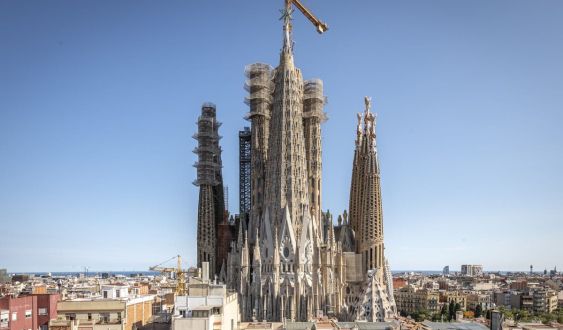
Thursday in late September. It's ten in the morning and the central nave of the Sagrada Familia Basilica is packed to the rafters. Tourists have returned en masse to the Gaudí temple eager to admire not only its spectacular towers, but also the impressive interior architecture and the wonderful play of lights derived from its stained glass windows. It is impossible to remain indifferent after the visit, which is why the Sagrada Familia reaffirms itself day after day as a powerful tourist magnet that generates tens of millions of euros and, consequently, brings the completion date of the works closer and closer: everything indicates that only ten years remain until the culmination of the project.
In January, coinciding with the last and most acute throes of the pandemic, the Sagrada Familia received around 2,000 tourists a day. This figure has been increasing throughout the year, exceeding 15,000 people daily in July and August, so the forecast is to close 2022 with 3.4 million visitors, which means recovering 72% of pre-pandemic levels. In terms of revenue, the recovery will be greater, as the temple expects to bill 87 million euros this year, 85% of the amount earned in 2019. It should be noted that 2019 was a record year for the Sagrada Familia, reaching the highest figures in history both in number of visitors and revenue collected: 4.7 million people and 102 million euros.
According to the general director of the Sagrada Familia Construction Board, Xavier Martínez, the temple's goal is to recover 100% of pre-covid figures in 2023 in terms of revenue, as a collection of 102 million is estimated to be repeated. However, the visitor forecast is more conservative. They have proposed reaching 4 million people, which would mean staying at 85% of the 2019 record. In this sense, if public attendance were finally higher, next year the basilica could break its billing record and accelerate the pace of investment in the works.
It must be taken into account that all the income of the Sagrada Familia depends on tourists, specifically 97% is generated by ticket sales and the other 3% from other sources such as the souvenir shop. Consequently, the setback caused by the health crisis ---which reduced revenue to zero and eroded the reserves of the Construction Board--- forced the works to stop and, although they resumed at the beginning of 2021, they are still far from reaching pre-pandemic execution volumes. Thus, in 2022, 24 million will be invested in the works, 39% of the amount allocated in 2019. For 2023, the budget, Martínez advances, will grow to 45 million, 74% of the pre-covid execution.
With this investment pace, when are the works of the Sagrada Familia expected to be completed? "We cannot determine a specific completion date for the works until 2024," says Martínez, who estimates that in that year they will have more visibility to dare to mark that historic day in red on the calendar. If no new unforeseen events arise, the culmination of the construction project is set for approximately the year 30, in a range between 2028 and 2032.
In December 2021, the Sagrada Familia inaugurated the tower of the Virgin Mary, a milestone in the construction schedule. The next major goal is the crowning with a large glass cross of the central tower, that of Jesus Christ, a work that is expected to be finished in 2025 or, more certainly, in 2026, coinciding with the centenary of Antoni Gaudí's death. Before, the four towers of the Evangelists will be completed, which will surround this central tower and which, like lighthouses, will illuminate the cross that will shine at the top of the temple.
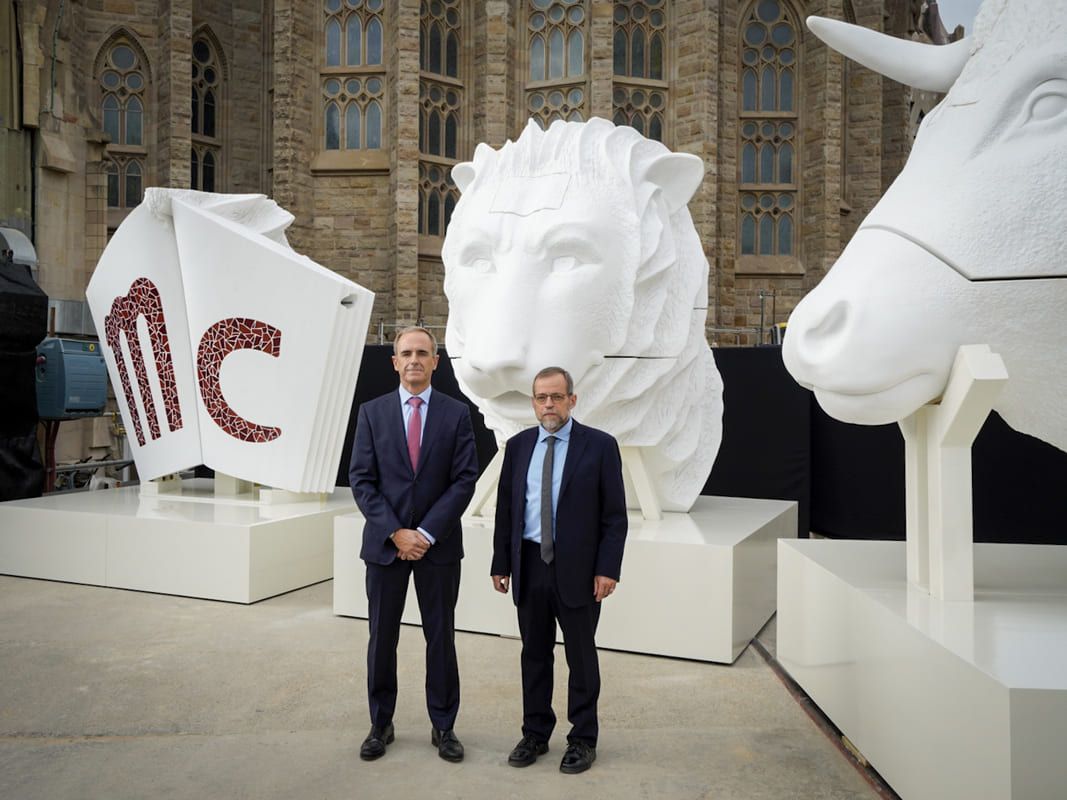
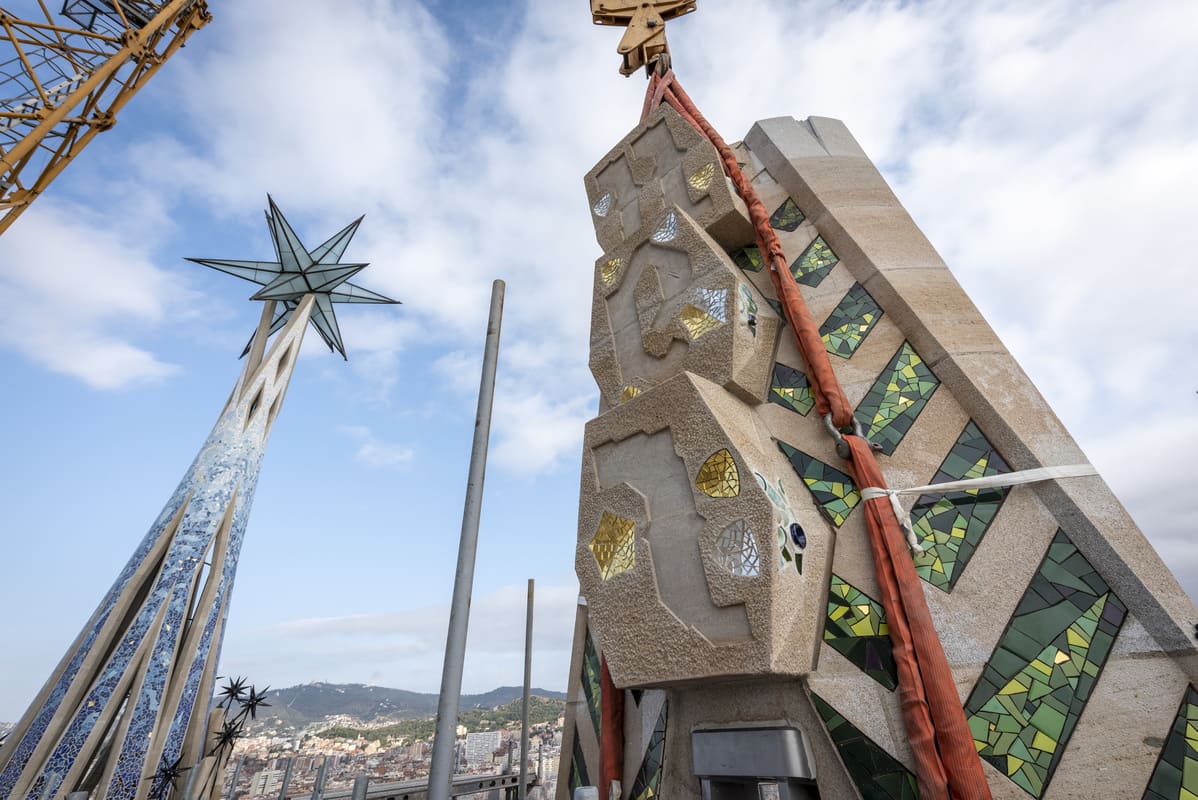
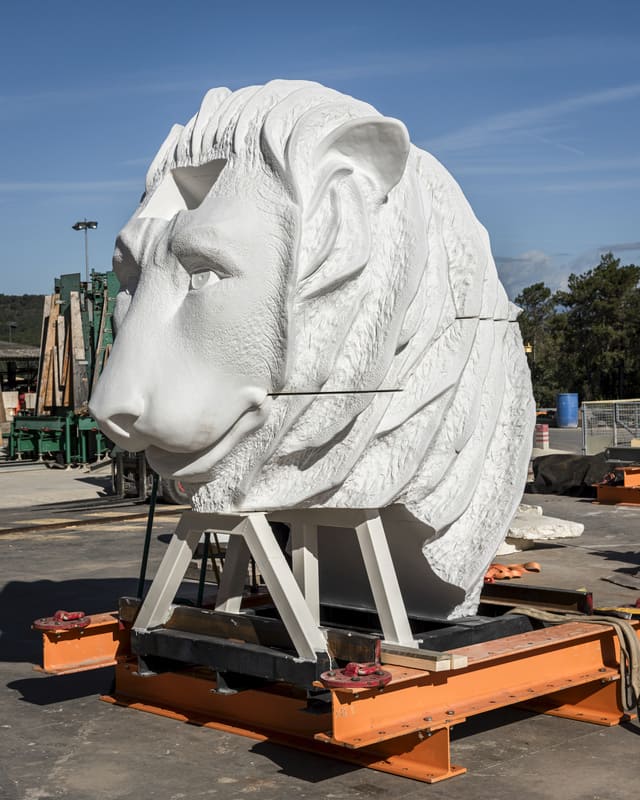
Two of the four towers of the Evangelists, that of Saint Luke and that of Saint Mark, will be finished by December of this year, while the other two, Matthew and John, will be completed in 2023. This Thursday, the chief architect of the Sagrada Familia, Jordi Faulí, explained what these towers, the third tallest in the complex, will be like, at 135 meters high. The most striking feature is that they will be crowned by four spectacular winged tetramorphs, the work of sculptor Xavier Medina Campeny. Following Christian iconography, Mark will be represented by a lion, Luke by an ox, and John by an eagle, while Matthew's symbol is that of an angel or a winged man.
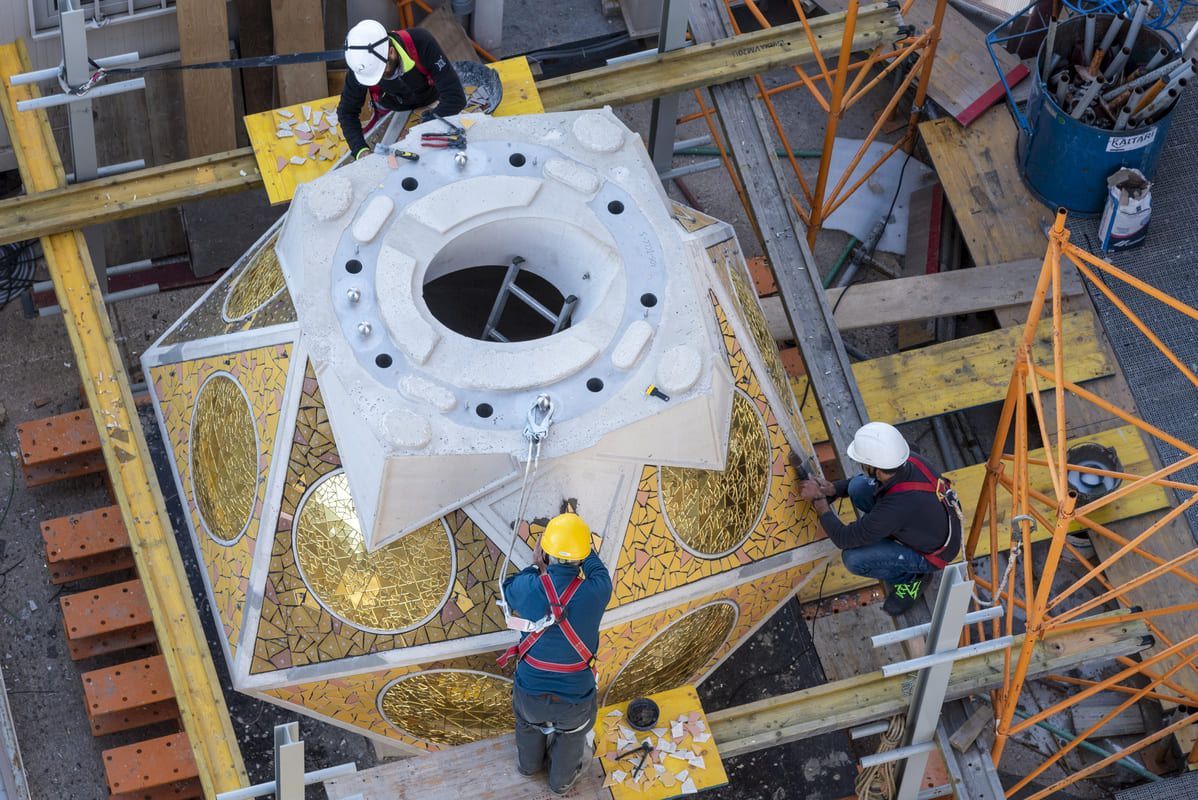
According to Faulí, each tetramorph figure has been sculpted in white marble from the same quarries used to build the classical works of Greece and Rome. Mark's lion and Luke's ox grasp a large open Gospel book with their initials and unfurl spectacular nine-meter wings made of high-strength white concrete. This sculptural ensemble, located at 135 meters on each of the four towers, rests on an icosahedron, a polyhedral piece with 20 faces that will house the spotlight to illuminate the central tower. "The winged tetramorphs and the icosahedron will create a mystical halo around the tower of Jesus Christ," says the architect. All this upper structure of the Evangelists' towers is completed with a shaft made of large stone blocks and decorated with a green trencadís made from cava bottles, where the words Amen and Hallelujah can also be read.
Restoration of the Nativity facade begins
In parallel to the construction of the five central towers that will be added to that of the Virgin Mary --of the one of Jesus Christ, eight of the twelve planned levels have already been erected--- , the Sagrada Familia has also started this year the works on the chapel of the Assumption and the annexed cloisters, next to Provença street. It is a chapel located behind the apse, which will be a tribute to the Virgin and is expected to be ready in 2025. Jordi Faulí has also announced that in October work will begin to restore the Nativity façade, the oldest part of the temple and the only one on which Gaudí himself worked directly. This is the first major restoration undertaken by the construction board, until now totally focused on executing new works. The idea is that this action will also be completed in 2025.
The 45 million euros that will be invested in 2023 will be used to finish the towers of Saint John and Saint Matthew, to advance on the tower of Jesus Christ ---up to 144 meters---, to the chapel of the Assumption and to start the roofs of the side nave. Another outstanding project for next year will be the construction of the foundations of the Baptistery, a building that is planned to be built at the confluence of Mallorca and Sardenya streets.
While waiting for the first two towers of the Evangelists to be completed in December, the Sagrada Familia, coinciding with the La Mercè festivities, has once again organized an open house for September 23, 24 and 25. More than 53,000 people have participated in the draw to get one of the 15,000 available tickets to visit the temple for free.
Add The New Barcelona Post as your preferred Google source for free
Stay informed with the latest news.
