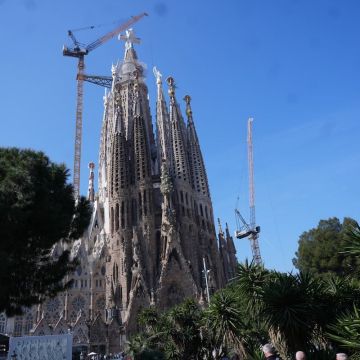
Regardless of whether one is a believer or an atheist, what is clear is that the visit of Leo XIV is an important event in our society. Without entering into assessments related to faith and with the firm desire that no one feels offended, it may be interesting to analyze this event from the point of view of communication and as a social movement with a strong impact. Because one might ask, at first, how in a society that, according to data, is increasingly less Catholic —with the loss of more than eight million faithful in the last decade in Spain—, this visit has become a mass event that goes far beyond the purely religious.
The answer to this paradox lies in the figure of the "cultural atheist," and in what we call the Physicality Premium. Today, people attend this type of event not only out of doctrinal adherence, but for the aesthetic value and the historical experience of being part of a collective milestone. In an environment saturated by artificial intelligence and infinite and free digital content, real and exclusive physical presence is more valued than ever. Today, any in-person experience becomes a highly sought-after luxury item. And our thirst to consume and experience everything has no limits.
To understand the magnitude of this phenomenon, it is necessary to go a little beyond the purely religious aspects and analyze the Pontiff's visit under the logic of today's mass culture. Possibly, and always from the perspective of communication, Leo XIV has the strength of a global macro-influencer or a stadium artist at the level of Bad Bunny. In this way, he mobilizes crowds not only out of ideological conviction, but also out of pure cultural traction and a phenomenon of scarcity and desire (FOMO). In our current society, dominated by the need to continuously enjoy novel experiences, getting an accreditation or a front-row spot becomes a social trophy and, above all, a highly shareable experience on social media. Like the headliner of a music macro-festival, the Pope attracts a transgenerational fandom capable of paralyzing urban centers, turning public space into a gigantic brand activation where the consumer product is his own physical presence.
This anticipation is amplified by the Culture First ecosystem. It is clear that in a hyper-digitalized, fragmented society often with a serious problem of social disconnection, there is a massive desire for analog, in-person, and monumental experiences. The visit of a figure of this importance offers precisely that: a "collective ritual of massive scale." Faced with individualized and ephemeral consumption that occurs behind screens, the arrival of Leo XIV promises a moment of aesthetically imposing physical communion.
On the other hand, this situation is masterfully leveraged by two other major territorial brands: Madrid and Barcelona. Aware of this trend in the experience market, both cities associate themselves with the event to co-create a cultural milestone that citizens will experience and share organically, placing them at the center of the cultural map both nationally and internationally. To convey these intangible concepts to a globalized audience, the visit's strategy relies heavily on the power of visual storytelling, a calculated non-verbal scenography with which the organization leverages the aesthetic contrast of both cities to diversify its impact.
In conclusion, and I insist again, with all my respect to the faithful who practice the Catholic religion, Pope Leo XIV's visit to Spain leaves us with a powerful lesson in institutional communication: in a fragmented and flat world behind screens, the search for aesthetic spectacularity, collective ritual, and live physical connection remain, regardless of what each person chooses to believe, the greatest engine of mass mobilization on the planet.
Add The New Barcelona Post as your preferred Google source for free
Stay informed with the latest news.